dailynewsnblog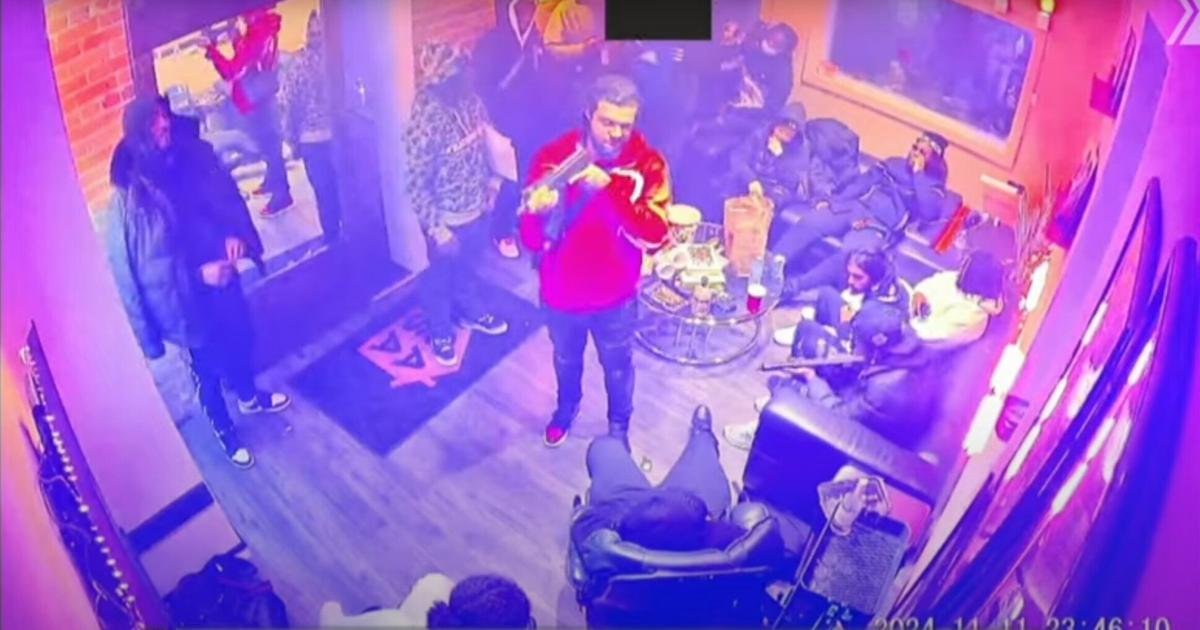
Two men cross paths inside a Toronto restaurant. Both are armed. Both are with friends.
Within minutes, the encounter escalates. Bullets fly inside the eatery on St. Clair Avenue West. A 23-year-old named Nakhari Henry-Robinson is killed.
Months later, Regent Park rapper Ridge “Biiig Rax” Kazumba is found guilty of second-degree murder in the August 2023 shooting. The now 29-year-old had just left a session at a nearby recording studio when he encountered Henry-Robinson at the restaurant.
Kazumba testified in court that he feared for his life. He was carrying a gun for protection at the time, he said; a friend had told him that there were people who wanted to kill him.
He offered the court a sobering explanation: “My reality, where I come from, when you kill an artist from Regent Park, it’s like a badge of honour.”
This April, he was sentenced to life in prison with no chance of parole for 12 years.
Some of the biggest rap names in this city have been cut down in recent years, either by shootings or incarceration.
Talking to numerous artists and insiders, the Star has pieced together the story of a scene wracked by both the systemic problems of our city and a fundamental shift in how music and content is being made.
For young, underground rappers, the risks are everywhere: There is the pressure to live up to the hype — the gangster-themed, gun-toting and drug-selling lifestyle that features in their lyrics. There are the generational street politics. And there is the toxic digital media culture that is spilling into the real world.

Traequan Mahoney, a popular Toronto rapper known as Burna Bandz, pictured during a photo shoot.
Submitted
Myers says in Toronto it’s well known that “some of the best talent are dead or in jail.”
The 34-year-old, who has been shot and served time in prison for possessing a handgun, says he’s seen a change in the scene himself.
Growing up in Toronto’s Malvern neighbourhood, he says, he was exposed to people who sold drugs and carried guns for protection. And so, he wrote lyrics about gangsters, drug-selling (trapping) and guns. His songs include raw lyrics of him taunting his rivals and bragging about being a gangster.
“I was young and dumb,” he says now.
Even then, he says “at that time, Toronto rap was still about (lyrical) bars and punchlines … it wasn’t like it is now, where you see all these rappers dying.”
From studio session to crime scene
Digital platforms such as YouTube and Instagram have spawned a do-it-yourself generation of rappers, who no longer have to wait on traditional radio exposure or record label push.
Those same platforms became breeding grounds for a reckless form of “crash out” culture, says Rodrigo Bascuñán, author of “Enter The Babylon System: Unpacking Gun Culture from Samuel Colt to 50 Cent” and a producer for the award-winning documentary series “Hip-Hop Evolution.”
Crash out culture describes some artists who spiral into “self-destructive behaviour that’s done for an online audience.”

Neighbourhood beefs featured in the lyrical jabs of some Toronto underground rappers taunting rivals online is increasingly leading to explosive and deadly consequences, says Toronto filmmaker and author Rodrigo Bascuñán.
File photo
“Because of the way the algorithms are, this is the stuff that goes viral,” says Bascuñán. “The paradigm shift from it being about music to it being about proving yourself online and showing who’s sliding on whose block became the forefront of the culture.”
In the past decade, Toronto’s scene has shifted in ways similar to American markets like Chicago, with its drill rap scene. There, rapper Chief Keef achieved mainstream success with “a narrative that was built around crimes that are almost taking place in real time and then put onto records,” Bascuñán says.
Some see online trolling as part of the rollout of some projects, and say that record labels use personal differences between rap artists as a marketing ploy.
But the neighbourhood beefs featured in the lyrical jabs of some Toronto underground rappers and the taunting of rivals online are increasingly leading to deadly consequences.
Social media sparked “a phenomenon that was really amplified digitally,” and “transformed hip-hop into just another form of content,” where the artists can gain followers with online antics, Bascuñán says.
The gun violence has robbed Toronto of a momentum that was amplified by Drake, who elevated the city’s global profile.
‘A structural problem with a soundtrack’
When you’re a young Black man with limited access to safety, housing, quality education, mental health supports and economic opportunity, “the risk of gun violence exposure always increases dramatically,” says Tanya Sharpe, a professor at the University of Toronto’s faculty of social work, who published a study on firearm-related homicides as a public health concern in Canada.

Tanya Sharpe, a researcher at the University of Toronto, said the stark homicide rates have had a “devastating impact” on the mental, physical and spiritual well-being of communities of colour who are disproportionately forced to cope with the murder of their loved ones.
Rene Johnston / Toronto Star
It isn’t a rap music problem, “it is a structural problem with a soundtrack,” says Sharpe. “If we frame gun violence as a product of rap culture, we relieve governments, institutions and policymakers of accountability.”
There are “generational issues” at play that transcend rap music, says Lucas Prince, a Toronto rap artist manager and independent record label owner.
Provocative lyrics used in tracks “might inflame the situation,” he says, “but I wouldn’t say that rap is the driver.”
He says the scene is made up of young artists rapping explicitly about the realities of inner-city life.

Shadrach Kabango, 43, a Juno award-winning rap artist known professionally as Shad, speaking of the cycle of violence that many find themselves in.
Submitted
Canadians “like to believe that we don’t have certain kind of dangers that affects Black people in particular,” says Shadrach Kabango, the Juno Award-winning rap artist known professionally as Shad.
The 43-year-old says he feels the lyrics of this generation address their existence in “uncompromising terms, so it repels some people from listening to the fact that it is a cry for help.”
“We would be wise to listen.”
A brutal toll in Toronto
Toronto rapper Quinton Gardiner, who performs as Pressa, talked during a recent podcast interview about the idea of wanting to live up to an image.
“Where I’m from, you gotta, like, live up to what you rap about,” Gardiner, who grew up in the Jane and Finch area, told the host of the Danza Project Podcast.
“Or else, the city won’t support you.”
Trying to prove the authenticity of your lyrics can make you a target, he says. Talking recklessly online can get you into trouble. So can the jewelry you wear. “Being a rapper is a dangerous job,” he said

Lucas Prince, pictured inside his Toronto office and recording studio, sits next to a wall featuring some of the Canadian certified gold and platinum Toronto rap records that he was a part of as a manager and record label executive.
Lance McMillan/Toronto Star
Jahvante Smart, 21, who performed as Smoke Dawg, was shot and killed on Queen Street West in June 2018. Abdulkadir Handule, an underground rapper called 21 Neat, was convicted of the murder.
By 2015, Smart, who often rapped about his hardscrabble upbringing in Regent Park, was a standout in the underground scene — earning his solo breakout moment with the popular single ’‘Trap House,’’ an ode to the drug-selling lifestyle. His talent caught the attention of Drake, who brought Smart on the road as an opening act on the European leg of the Boy Meets World Tour in 2017.
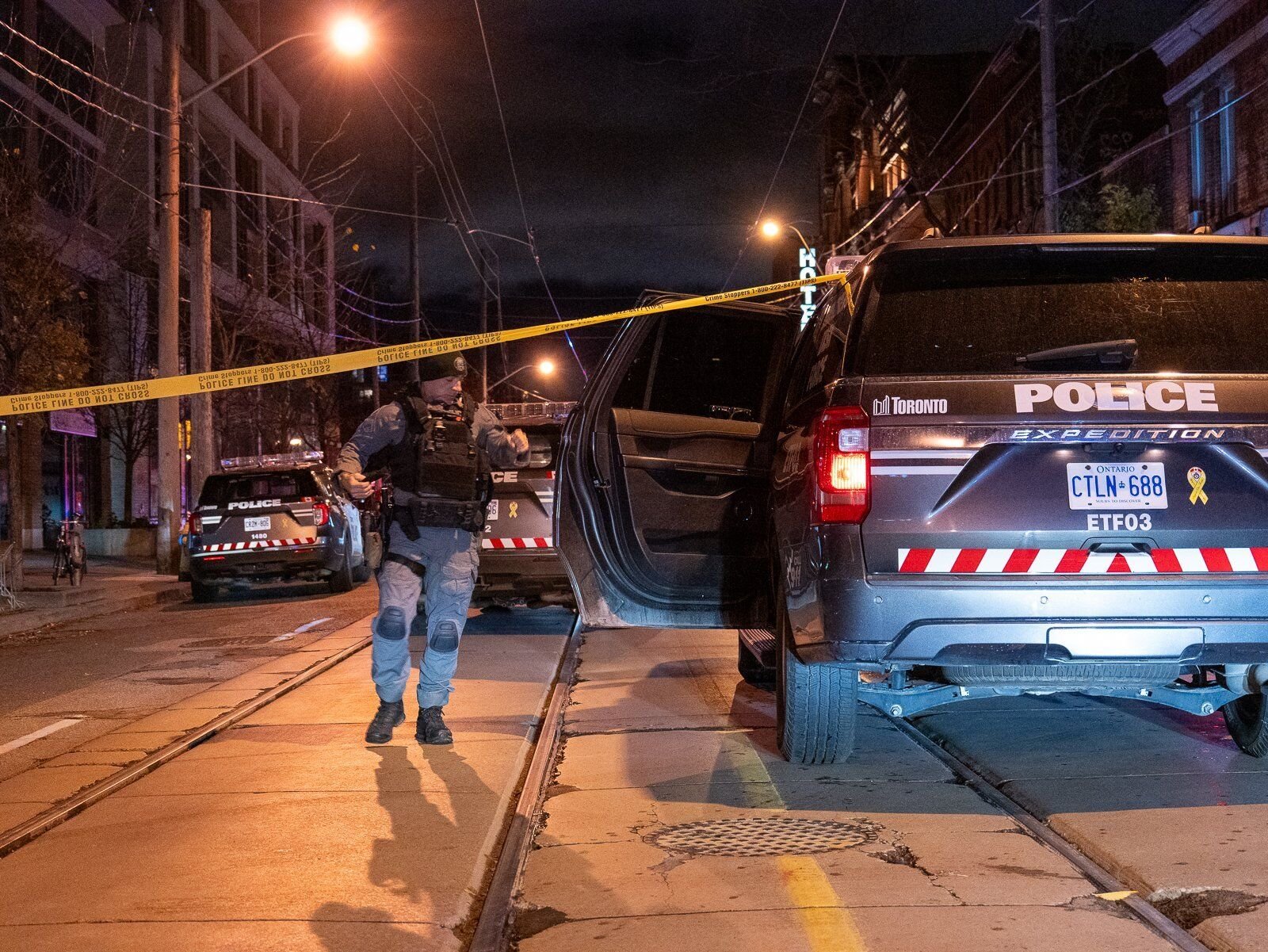
Police were called to Queen Street West and Sudbury Street around 11:20 p.m. Monday after an exchange of up to 100 shots between two groups.
Police were called to Queen Street West and Sudbury Street around 11:20 p.m. Monday after an exchange of up to 100 shots between two groups.
Dimarjio Jenkins, 21, known as Houdini, was ambushed and killed while walking along Blue Jays Way in May 2020. Jenkins’ silky delivery and lyrical prowess earned him a spot among the 20 Canadian artists to watch in 2020, on a list compiled by American media platform Complex. Jenkins released a steady output of underground favourites, including the Canadian platinum hit single “Late Nights,” and started to field interest from record labels.
Both Jenkins and Smart, whose songs have millions of streams and views on YouTube and Spotify, were seen as being on the cusp of big breakthroughs when they were killed.
This past February, Omer Niaz Muhammad, 24, of Hamilton, known as Lil OT, with his gritty and melodic songs, was shot dead. Muhammad was quickly building a reputation as an artist to watch and local hip-hop pundits said he was gaining traction in Toronto. While Muhammad talked of being in shootouts and getting shot at, confirmed by police reports, he also spoke openly about being a strong student who earned high grades.
‘The goal is always to make it out’

Traequan Mahoney, a popular Toronto rapper known as Burna Bandz, pictured during a photo shoot, said that while being an underground “rapper is definitely dangerous,” by the same token many artists have used music as a catalyst for change.
Submitted
Mahoney, who grew up with and performed alongside a popular collective of Toronto underground rap artists, has sold tens of thousands of records, including being featured on “Late Nights.”
In spring 2023, Mahoney was convicted of a gun charge, stemming from a shooting at a June 2020 vigil for Jenkins (Houdini) that was captured on video. He also received a four-year prison sentence after being convicted in Norfolk County of a 2018 break and enter and robbery with a firearm.
Mahoney says there’s always a lack of opportunity growing up in a marginalized neighbourhood and admits he fell into the culture he was seeing.
Asked about the factors at play in the gun violence faced by some rappers, Mahoney says, “I can’t pin that on the rap scene.”
“Being a rapper in Toronto, in certain people’s eyes, is looked at as more negative than positive,” says Mahoney.
“When you’re coming from the bottom you only know what you see.”
Muhammad, an artist behind “Market,” this year’s biggest underground rap song, talked about going in and out of jail since he was 17 years old and how he got entangled in “selling drugs and other different illegal things.”
Muhammad said he was living an illicit life all while building a music career.
“I’d be making music and maybe the day before I was doing like some crazy s—-,” he told the CBC.

Kofi ‘Friday’ Carmichael, the founder and host of “We Love Hip Hop” podcast said many artists are trying to use rap as a way out. “It’s the race to becoming a rich and famous rapper that used to do that illegal stuff,” Carmichael said.
Nick Lachance/Toronto Star
“It’s the race to becoming a rich and famous rapper that used to do that illegal stuff,” says Carmichael.
The next wave
Mahoney says while the underground scene did experience a “slowdown due to circumstances,” the genre still has several talented flag-bearers and “there’s still people doing big things in the city right now,” including Gardiner (Pressa) and Muhammad (Casper TNG).
Muhammad recently signed a record label deal with Universal Music Canada, which he told the CBC was a key factor to him being able to turn things around for the better and “beat the odds.”
“I’m trying to change the stigma that I have around my name,” Muhammad told the CBC about steering away from being labelled a “Toronto street guy,” and “a crash out.”
With new music on the horizon, Mahoney is also preparing for his return to the scene.
Mahoney says underground artists need to be mindful of the image they portray, because “your presentation goes a long way in life. Try not to just force negativity.”
“Artists also need to stay out of trouble and we gotta do a better job of protecting the artists in the city,” he added. “Learn from Burna’s mistakes.”