dailynewsnblog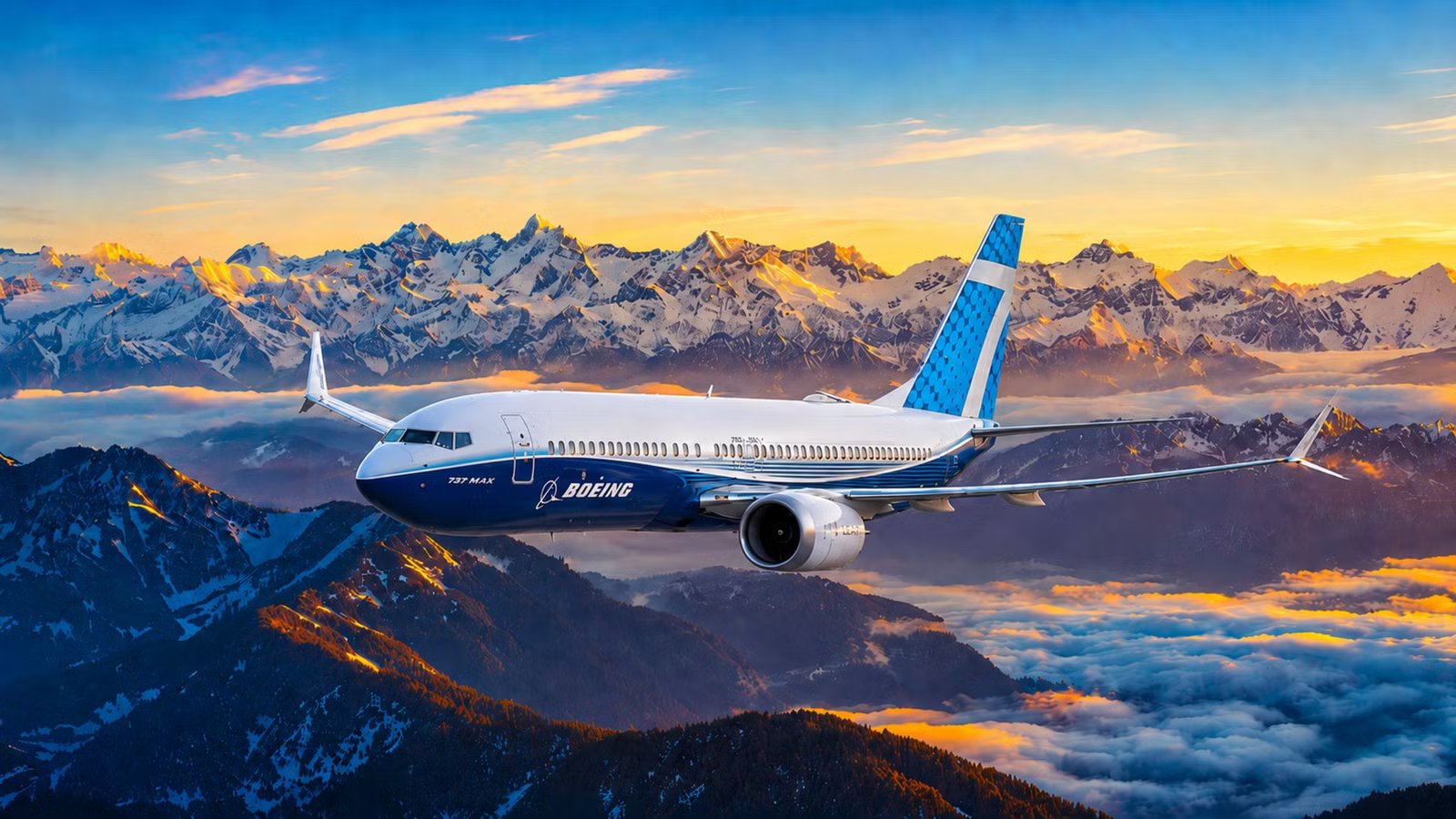
The Boeing 737 MAX 7 has finally been cleared for commercial service, more than eight years after the smallest member of the 737 MAX family first took to the skies. The Federal Aviation Administration (FAA) granted  Boeing an amended type certificate for the aircraft on Monday, bringing one of the manufacturer’s longest-running certification programs to an end. The regulator has also added the 737-7 to Boeing’s production certificate, allowing the company to manufacture the aircraft under its approved production system.
However, certification will not result in an immediate entry into service. Boeing said in a media statement that it and launch customer  Southwest Airlines are preparing the first aircraft for delivery, including bringing already-built jets up to the final certified configuration. Boeing continues to anticipate the first 737-7 delivery in 2027, while Southwest has said it will need approximately six months after certification to add the aircraft to its operating specifications, manuals, training programs, and maintenance procedures.
The End Of An Eight-Year Certification Campaign

The FAA’s approval follows a test program that began in 2018 and included more than 1,000 hours of flight and ground testing, extensive system-safety analysis, and additional human-factors reviews. Boeing said the process also required the certification of a redesigned engine anti-ice system intended to address a potential condition discovered during flight testing. Stephanie Pope, President and CEO of Boeing Commercial Airplanes, said the certification “validates the rigor of our airplane’s design” and recognizes the development team’s resilience.
“Our team of dedicated engineers and test experts worked through challenges, an extended pandemic, and the transition to new certification processes. Through it all, our team stayed focused on completing all requirements and delivering a safe and more capable airplane to our customers.”
The first 737 MAX 7 flew in March 2018, when Boeing expected the type to enter service with Southwest early the following year. Instead, its development was interrupted by the worldwide MAX grounding, the COVID-19 pandemic, tougher regulatory requirements introduced after the Boeing 737 MAX 8 crashes, and subsequent scrutiny of Boeing’s manufacturing and quality systems. The company had at one point expected certification before the end of 2022, making the eventual approval almost four years later than that revised target.
Date | MAX 7 milestone |
|---|---|
May 2013 | Southwest Airlines and Boeing launch the redesigned MAX 7 |
March 2018 | The first MAX 7 completes its maiden flight |
March 2019 | The worldwide 737 MAX grounding interrupts the certification program |
2022 | Boeing misses its revised target for MAX 7 certification |
2024 | Boeing withdraws its request for a temporary anti-ice-system exemption |
August 3, 2026 | The FAA grants the MAX 7 an amended type certificate |
2027 | First delivery and entry into commercial service are expected |
One of the final technical obstacles involved the 737 MAX’s engine anti-ice system. Boeing discovered that operating the system for an extended period in dry air could, under rare circumstances, cause parts of the engine inlet to overheat. The redesigned system is now incorporated into the MAX 7 and MAX 10 baseline configurations and is also due to be introduced on newly produced MAX 8s and MAX 9s and retrofitted across the existing fleet. The MAX 7’s certification therefore clears not only the aircraft itself, but also a technical issue affecting the wider family.
Southwest Dominates The MAX 7 Orderbook

No airline has more riding on the aircraft than Southwest. The Dallas-based carrier has approximately 258 MAX 7s on firm order, although that number has fluctuated — and likely will change further — as Southwest has repeatedly adjusted its MAX 7 and MAX 8 orders. The aircraft is intended to replace Southwest’s large fleet of aging 737-700s while preserving the airline’s long-standing strategy of operating only Boeing 737-family aircraft.
Customer | Publicly disclosed MAX 7 commitment | Intended role |
|---|---|---|
Southwest Airlines | 258 | Replace 737-700s and better match capacity with demand |
Allegiant Air | 24 | Support fleet renewal and serve lower-capacity leisure markets |
Luxair | 4 | Replace older 737s and support European network growth |
Ruili Airlines | 2 | Future narrowbody fleet development |
SkyUp Airlines | 2 | Future fleet renewal and expansion |
Southwest Chief Operating Officer Andrew Watterson has explained that the certification delay has not necessarily prevented the airline from opening individual routes, but has left it with the wrong mixture of aircraft sizes. Without the smaller MAX 7, Southwest has frequently had to deploy larger 175-seat MAX 8s and 737-800s in markets or at times of day when fewer seats would be more appropriate. The MAX 7 will give the airline greater flexibility to match capacity to demand without introducing an entirely different aircraft family such as the Airbus A220.
The remainder of the orderbook is small and includes a mixture of firm, converted, and model-flexible commitments. Allegiant Air originally ordered 30 MAX 7s as part of its 50-aircraft agreement with Boeing, but subsequently converted six to the higher-capacity Boeing 737 MAX 8200. Luxair has ordered four MAX 7s and is expected to become the European launch operator, while China’s Ruili Airlines and Ukraine’s SkyUp Airlines have each been associated with two aircraft. Order totals may continue to change, because several customers retain the ability to switch between MAX variants.
The MAX 10 Will Be Next

Certification allows Boeing to begin working through an inventory of MAX 7s that has accumulated during the delay. Cirium data indicates that approximately 30 aircraft have already been assembled and are awaiting delivery. Boeing must now modify those jets to match the final approved configuration, complete customer-specific work, and obtain individual airworthiness certificates before handing them over. Delivering those stored aircraft will allow Boeing to reduce inventory and convert completed jets into revenue and cash.
But the consequences of this certification extend well beyond the MAX 7. Boeing has also completed the final planned certification flight for the Boeing 737 MAX 10, which shares the updated anti-ice system and several regulatory workstreams with the smaller variant. FAA Deputy Administrator Chris Rocheleau said in July that the MAX 7 was “literally around the corner” and that the MAX 10 would be right behind it. Boeing says it is working to certify the larger aircraft during 2026, with first delivery also expected in 2027.
That approval is far more commercially significant for Boeing. The manufacturer has more than 1,500 of the variant on order globally, which accounts for more than a quarter of the company’s outstanding MAX orders. Just as importantly, it is also Boeing’s principal competitor to the highly successful Airbus A321neo at the upper end of the single-aisle market.
Nevertheless, certifying the MAX 7 removes one of the oldest unresolved issues facing the 737 program. The aircraft may never approach the sales success of the larger MAX variants, but after eight years of testing, delays, and regulatory scrutiny, Boeing can finally begin delivering the smallest and longest-range member of the MAX family to its largest customer.