dailynewsnblog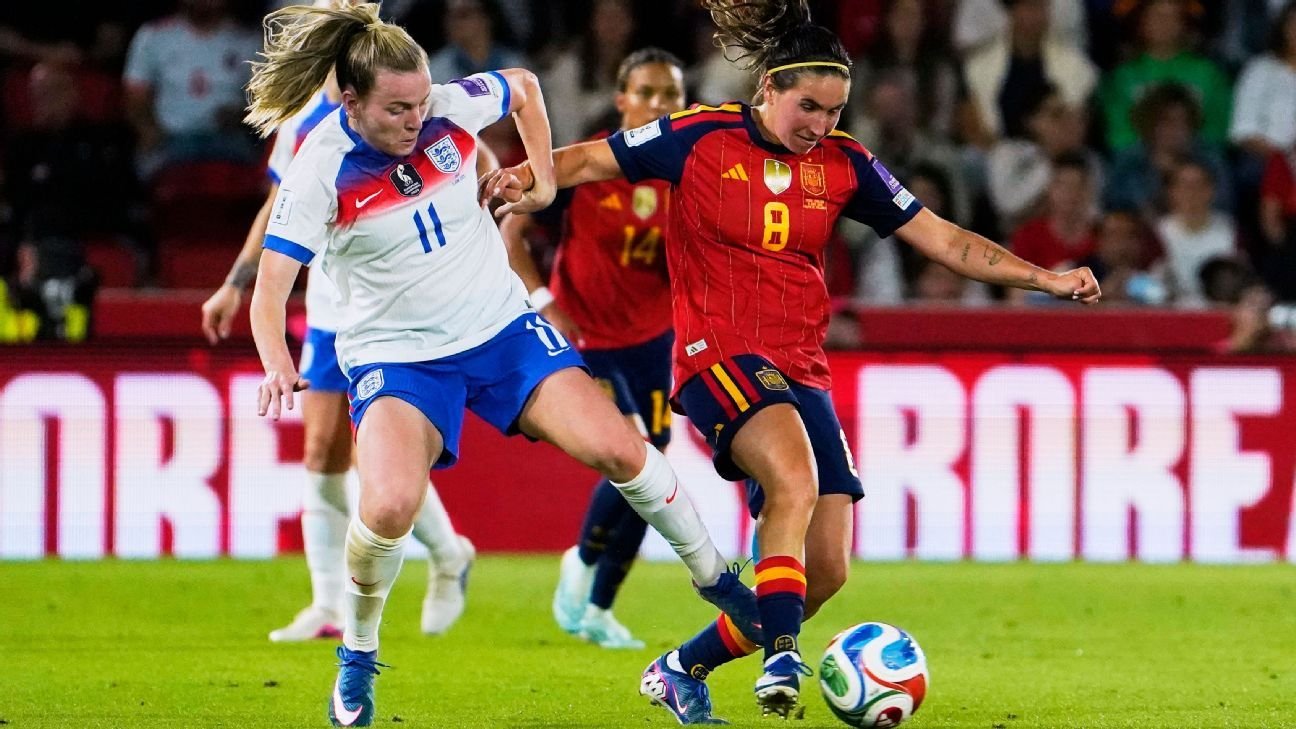

Emily Keogh

Multiple Authors
Women’s soccer could become the first battleground in the escalating conflict over FIFA’s highly controversial plan to commercialize its the World Cups and its leading competitions. After plans for his FIFA Forward Enterprise (FFE) were leaked, prompting widespread condemnation, UEFA even agreed to boycott FIFA competitions — including the World Cup — unless FIFA president Gianni Infantino backs down.
The timing could hardly be more significant. While the decision comes shortly after the conclusion of the 2026 men’s World Cup, it falls less than a year before the 2027 Women’s World Cup in Brazil, with European qualifying playoffs due to begin in October. The immediate consequences are even more severe for youth soccer. The FIFA U20 Women’s World Cup, hosted by Poland, is scheduled to begin in just 36 days, followed by the men’s (in Qatar) and women’s (in Morocco) U17 World Cups in October and November.
UEFA’s stance is necessary to protect the integrity of international soccer, but both FIFA’s proposals and the resulting standoff risk undermining years of progress in the women’s game. As such, a collective anger between players, coaches (as voiced by USWNT boss Emma Hayes), agents and national associations has been building since the news broke Tuesday night.
After decades of unprecedented growth, investment and rising global interest, women’s soccer would be hampered by a political power struggle between Infantino and the wider soccer community. And make no mistake: Women’s soccer cannot afford that.
Why UEFA is boycotting, and what it would look like
FIFA’s proposal — fronted entirely by its president, Infantino — would see football’s governing body sell a 20% minority stake in a newly created commercial subsidiary, the FIFA Forward Enterprise (FFE), which would control the governing body’s most valuable commercial and operational assets. These include broadcast rights, sponsorship agreements, ticketing and hospitality for the men’s and women’s World Cups, as well as other FIFA competitions.
Critics argue the plan risks shifting the focus of soccer’s flagship tournaments away from sporting integrity and instead prioritizes maximizing commercial returns. That could mean higher ticket prices, increasing the frequency of World Cups and ignoring growing concerns over player burnout and welfare, as well as fan accessibility to these events.
UEFA’s boycott has been reinforced by opposition from both Concacaf and the Asian Football Confederation (AFC). While neither confederation has formally threatened to boycott FIFA competitions, both have rejected the FFE proposal. Combined with UEFA’s 55 member associations, that represents 143 national federations out of a total 211 standing in opposition to the plans — well beyond the 106 votes Infantino requires for approval, all of which leaves both the proposal and FIFA’s president in an increasingly precarious position.
The potential sporting consequences of any boycott would be massive for any World Cup, but the women’s game is particularly vulnerable. It is virtually impossible to imagine a Women’s World Cup without Europe. A boycott would exclude reigning world champions Spain, European champions England, two-time winners Germany and traditional powerhouses France, Sweden and the Netherlands. Six of the top 10 teams in FIFA’s rankings would be absent from next summer’s tournament.
The scale of that loss is difficult to overstate. Four of the nine nations to have won the Women’s World Cup — Norway, Germany, the Netherlands and Spain — would not compete if UEFA boycotts, while three of the four semifinalists from the 2023 tournament would also be missing. Looking ahead to 2027, only two countries among the leading favorites, the United States and hosts Brazil, come from outside Europe.
Although FIFA’s proposal is rooted in commercial ambition, the reality is that the Women’s World Cup derives much of its global appeal from Europe’s biggest stars and strongest national teams. A tournament without Ballon d’Or winners Alexia Putellas and Aitana Bonmatí, or without England’s Lionesses — all of whom have become globally recognized figures since their Euro 2022 triumph — would diminish the competition’s prestige and commercial value.
FIFA set a self-imposed deadline of Sept. 19 for national FAs to respond to the proposal. Should Concacaf, the AFC or any further regional bodies move beyond rejecting the proposal and join a formal boycott, the consequences would be unprecedented.
A World Cup without all its confederations would be a World Cup in name only, leaving FIFA facing not only a governance crisis, but a profound challenge to the legitimacy of its flagship competition.
How a reduced World Cup would decimate women’s soccer
3:02
Infantino: FIFA proposal a golden opportunity for development
The 2023 FIFA Women’s World Cup generated around $570 million in revenue, allowing the tournament to break even financially. Commercial and marketing rights accounted for the largest share of that income, contributing $455.9 million.
Despite that success, the women’s game remains heavily reliant on the World Cup as its primary financial engine. A record $110 million prize pool was available in 2023, split between national federations and players, and for the first time, FIFA paid players directly rather than routing all prize money through federations.
Individual payments ranged from $30,000 for reaching the group stage to $270,000 for winning the tournament. Champions Spain received around $4.2 million, with each player earning approximately $270,000. Runners-up England received just over $3 million, with each Lioness taking home around $195,000.
However, prize money represents only part of a player’s earnings during a World Cup. Sponsorships, commercial opportunities and performance-related bonuses typically increase significantly during the tournament. For example, England’s squad spent months negotiating with the FA over bonus payments before eventually reaching an agreement.
FIFA’s decision to guarantee every player at least $30,000 for participating in the group stage was particularly significant for players from lower-ranked, smaller or developing nations. Many players outside the world’s elite leagues still earn modest salaries, work second jobs or struggle to make a living solely from soccer. For those players, World Cup prize money can represent a life-changing financial boost rather than simply a bonus.
The financial landscape is, understandably, very different in the men’s game. Prize money in their World Cup is substantially higher, although FIFA has repeatedly stated its ambition to achieve parity in player payments over time. The financial impact on players would be far smaller for most players, who typically earn the majority of their income at club level.
Clubs also benefit financially from the tournament. Through FIFA’s “Club Benefits Programme,” more than 1,000 clubs shared $11.3 million in compensation for releasing players to the competition. Barcelona and Chelsea women each received just under $250,000.
Those figures might seem modest compared with the men’s game, but they represent valuable income in women’s football, helping clubs remain competitive and supporting the wider ecosystem that allows the World Cup to showcase the sport at its highest level.
Any boycott, whether it is just UEFA — whose involvement makes up a significant portion of FIFA’s profit — or it extends to multiple confederations will significantly impact FIFA’s plans to generate revenue from the 2027 edition.
Women’s soccer can’t afford to be a battleground
While many in women’s soccer believe a boycott is necessary to protect the foundations of the game’s governance — sources called Infantino’s plans “unconscionable” — there is growing concern within the women’s game that it has become the sacrificial lamb in the battle against Infantino’s plan.
Sources have told ESPN they believe this situation would never have unfolded a year before a men’s World Cup, when the prospect of disruption would trigger widespread panic. Instead, they argue, FIFA has underestimated the consequences for women’s soccer. It’s already clear that the sport wasn’t even considered: In a report by The Guardian, Infantino’s FFE proposal to member associations ran for 25 pages, but did not even mention women’s soccer once.
Women’s soccer has consistently sought to position itself on the right side of history and has shown a willingness to stand together on issues that extend beyond the pitch. The United States women’s national team successfully fought for equal pay, players across the world have repeatedly spoken out against political and economic injustices, and the global game united behind Jenni Hermoso after she was forcibly kissed by former RFEF president Luis Rubiales during the team’s 2023 World Cup celebrations.
There are fears that granting FIFA greater commercial freedom could ultimately lead to an expanded tournament schedule, more competitions and an even heavier burden on players in pursuit of greater revenue. Players, agents and other sources within the women’s game told ESPN are already concerned about the direction things have been heading, with several elite stars being vocal about the excessive workload.
Others addressed the growing inaccessibility of FIFA’s competitions, referencing the “ridiculously high” ticket prices and travel costs that prevented many fans from being able to attend games.
The hope among those working in women’s soccer is that UEFA’s firm opposition, coupled with resistance from several confederations to FIFA’s proposal will force Infantino to back down before this Women’s World Cup cycle reaches a critical stage, minimizing any lasting impact.
Time is of the essence, though. The FIFA U20 Women’s World Cup is scheduled for September, and European Women’s World Cup playoff fixtures are due to begin in October, while UEFA’s plan to boycott has already been approved by all its member nations.
The coming days represent a defining moment for Infantino and the wider soccer landscape. As stakeholders seek to protect the integrity of the game, it is women’s soccer that stands on the front line of the battle and risks becoming the first casualties of an increasingly bitter governance battle.