dailynewsnblog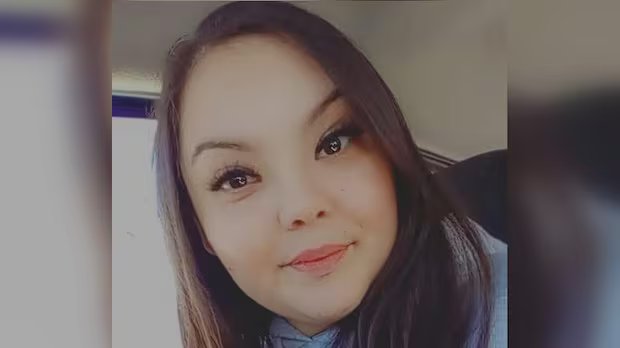
WARNING: This story contains details of intimate partner violence and vulgar language.
After more than 10 years together, Danielle Dobersheck was preparing to leave her long-term partner.
The 30-year-old texted her friend about how she was applying for a new apartment, making an appointment for a mediator and seeing if she qualified for a legal aid lawyer to help her negotiate her separation and child custody.
When her partner Cody Chubey returned from a stint working away, Dobersheck left their home and three children for a few days to get some space and think things over. She blocked his number and deleted him from her social media.
Then Chubey got a new number and messaged her.
“I see now I’m the monster not you,” the 35-year-old wrote. “You [were] f–kin right a narcissistic!!!!!!!”
His next message said, “love you forever and always,” followed with a kiss emoji and a broken heart emoji.

Dobersheck talked to him. She missed her kids terribly, and she returned to their home in Melfort, Sask. She was supposed to just take the kids and leave, but Chubey convinced her to stay, her eldest daughter told police.
The two of them went on a “date day” on March 9, 2024, that included a trip to Saskatoon for “smash therapy” (where you pay to smash up items in a private room) and a romantic night at a Melfort motel with alcohol and lingerie.
In that Melfort motel room, Chubey became enraged, accusing Dobersheck of cheating on him. In the early hours of March 10, he began brutally beating her in a sustained attack that left the beds, carpets and walls covered in blood. Audio recorded by a person in the room next door was played in court.
“Why did you betray me?” Chubey yelled.
“Tell me or I’ll keep kicking. I’ll kick you harder. You’re going to die if you don’t tell me.”
Dobersheck screamed. She begged for help.
She died.

Murder trial to continue in fall
Chubey is charged with first-degree murder for killing Dobersheck.
His trial began in June in Melfort Court of King’s Bench. His lawyer said he wasn’t disputing that Chubey’s actions killed Dobersheck, but that Chubey does not admit he intended to kill her — an essential element for proving first-degree murder.
The trial is expected to continue in the fall, after the defence requested an adjournment to arrange for expert evidence relating to Chubey’s mental state.

Warning: This story contains disturbing details. The Crown has closed its case at the murder trial of Cody Chubey, who admits he killed his ex-partner Danielle Dobersheck but does not admit that he intended to kill her. As Lisa Risom explains, the defence has brought Chubey’s mental health into question.
During the trial, there were some indications about what the defence may raise. For example, during the police interview with Dobersheck’s 13-year-old daughter that was played in court, the daughter talked about how her dad was supposed to be attending therapy.
She also told the officer about an incident just a few days before her mom died, when Chubey was playing a computer game and became angry, then went outside and began screaming things like, “Come get me.” The daughter said she assumed he had gotten angry at something online.
The 13-year-old said her mom had told her that her dad was having hallucinations.
Chubey’s defence lawyer Peter Abrametz’s cross-examination of Xaviera Cecila Bird, the family member who Dobersheck went to stay with for a few days before her death, also referred to Chubey’s mental health.
Abrametz asked Bird if Dobersheck had told her she was worried about Chubey’s health. Bird said Dobersheck told her that she thought Chubey was hearing voices in his head, and Dobersheck wanted him to see a doctor.

Family, friends talk about domestic violence
During the three days of evidence called by the Crown in June, the judge heard testimony about what happened in that motel room on that one night.
But the story of what happened to Dobersheck stretches back much further.
It is a case of domestic violence that culminated in death, in a province where the rate of intimate partner violence is double the national rate (742 victims per 100,000 population in Saskatchewan, versus 346 per 100,000 nationally).
It is a case of an Indigenous woman dying at the hands of her partner in a country where many more Indigenous victims report severe forms of intimate partner violence, compared to non-Indigenous victims (52 per cent compared to 23 per cent).
It is a case where a woman died when she was taking steps to leave the relationship — a period of time that brings the highest risk for domestic homicide, researchers say.
And it is a case that was in court the same month that the federal government passed a bill that criminalizes coercive control — a pattern of abusive behaviours used to control or dominate an intimate partner — and that categorizes femicides and murders involving coercive control as first-degree murder.
Dobersheck’s closest friends and family say there is too much silence around domestic violence in Saskatchewan, and that they want the public to better understand what happened to her.
CBC contacted Chubey’s lawyer Peter Abrametz to request comment for this story, but he said that he would “respectfully decline.”
Friend says she saw signs of abuse
Dana Lussier met Danielle Dobersheck about eight years ago, when they were both working on completing their Grade 12 studies at the Gabriel Dumont Institute in Prince Albert. Dobersheck was a member of the Lac La Ronge Indian Band.
They lived just around the corner from each other and Lussier ended up giving Dobersheck rides to school every day.
They became like sisters, Lussier said. She was pregnant when Dobersheck died, and Lussier gave her baby the middle name “Danny” in her friend’s honour.
Lussier said that when she first met Dobersheck, Chubey was in jail, but Dobersheck would tell her about what he would say to her.
“Even over the phone while he was in jail, before I even personally met him, he was verbally and mentally abusing Danielle,” Lussier said. “He would sit there and say she’s cheating on him and that she’s like a whore and she’s a stupid bitch.”
Lussier said Dobersheck told her about a time Chubey saw a message on Dobersheck’s phone from another man and he “totally lost it.”
She said she didn’t see Chubey being physically violent toward Dobersheck, but Dobersheck would arrive at Lussier’s house with bruises and tell her about Chubey beating her up.
On March 6, 2024, just a few days before she died, Dobersheck messaged Lussier about how lonely she was being away from her kids because “I haven’t left [their] side in months ’cause he doesn’t trust me to leave the house alone.”

In another message that day, Dobersheck told Lussier that Chubey “just f—d with my head so bad.”
Lussier said she heard Chubey say “countless times” in the past that he would kill Dobersheck.
“He would threaten, he’s like, ‘Well, I’m going to kill you one day, Danielle. You know that, right?'” she said.
“Like every time they fought, he would say that to her, often, but like he would say it as if he was joking, right? But like, that’s not a joke. That’s not something you joke about.”
Dobersheck and Chubey had two children together. They were seven and 10 when Dobersheck died. Dobersheck also had an older daughter, who was 13 and considered Chubey as her dad.

Dobersheck and Chubey broke up multiple times, but Lussier said they’d end up back together.
“That’s how he always reeled her back in, was because he had two kids with her, right?” Lussier said. “And then of course, Danielle, because she’s such a caring person, would always accept him back.”
Lussier said she talked to Dobersheck about leaving Chubey.
“But she was so head over heels in love with him, you couldn’t really tell her otherwise, right?”
‘She tried so hard’
Dobersheck’s father said his daughter wanted her children to have a two-parent family — unlike her own childhood.
“I know Danielle, because I was a single parent, I think she tried so hard to have a mom and a dad for her kids,” Darris Dobersheck said. “No matter what, she would always try to make things work in the end.”
As far as his daughter’s relationship with Chubey, Darris said he tried to stay out of it because one time that he had gotten involved, the two of them ended up getting back together, “and all of a sudden I was the bad guy, so to speak, and … they didn’t talk to me for a long time.”

‘Very serious’ about leaving, friend says
In the days leading up to her death on March 10, 2024, Dobersheck was taking some concrete steps to leave Chubey.
She shared details about them with her friend Adam Scott, a co-worker at Northeast Outreach and Support Services (NEOSS) in Melfort. They worked closely together in the TreeHouse program, an emergency receiving home for children who have been apprehended by the Ministry of Social Services.
Scott said he never saw things like bruises on Dobersheck, but that he would see her anxiety rising when Chubey was due back home after stints working away.
And in the last weeks of her life, it seemed worse.
“I could just see it in Danielle’s eyes, like just the fears, the exhaustion, like you could just tell the week before, that things were so different,” he said.
He said she was “very, very serious” about leaving Chubey.
Scott shared screenshots of messages that Dobersheck sent him from March 4 to 6, 2024.
She talked about getting an income letter and character reference for a rental application, and seeing if she qualified for legal aid.
In one of her messages, Dobersheck told Scott she was going to see if someone at NEOSS could help her with mediation.

Tracey Zwozdesky, outreach manager at NEOSS, said Dobersheck approached her.
“She … asked if I would be willing to do mediation for her and Cody surrounding the children, as she was trying to leave her DV [domestic violence] relationship and trying to communicate with him alone didn’t go well,” Zwozdesky said. “She said things would escalate quite quickly.”
Zwozdesky told Dobersheck that she would have to check with NEOSS’s executive director about whether she could do that. Zwozdesky said that while she is a registered social worker and has some mediation training, that’s not a service that NEOSS is contracted to provide.
Before she had a chance to ask her boss about it, Zwozdesky said, Dobersheck was dead.
Danger escalates during separation: research
Research shows that leaving an abusive partner puts women at the highest risk of becoming a victim of a domestic homicide.
That high-risk time period includes when they’re making plans to leave, taking concrete steps to leave and even many months after they leave.

Crystal Giesbrecht is the director of research at the Provincial Association of Transition Houses and Services of Saskatchewan (PATHS), a member association for agencies that provide intimate partner violence services in the province.
She does not have first-hand knowledge of Chubey and Dobersheck’s relationship, but reviewed media reports about the trial and some of the comments by friends and family interviewed for this story.
Giesbrecht referred to research by Jane Monckton Smith, a criminologist in the U.K., who studied men who kill their partners and found an eight-stage pattern, or “homicide timeline.”
“When something threatens the perpetrator’s control, like the victim ending the relationship, talking about a formal separation, or securing their own housing, that often leads to escalation,” Giesbrecht said.
“Sometimes that is the definitive thing that makes the perpetrator realize they’re not going to talk the victim into coming back this time. … And when it signifies that loss of control, that’s when the danger can really escalate.”

Other aspects of Chubey and Dobersheck’s relationship also fit the patterns of intimate partner violence, such as the accusations of infidelity.
“The perpetrator doesn’t actually think the victim is cheating,” Giesbrecht said. “In situations where there’s a high degree of control, the perpetrator knows where the victim is, and it’s usually at work or home with the children. But the accusations are a way to try to put the victim on the defensive.”
Threats to kill someone need to be taken very seriously, Giesbrecht said.
“That is someone who has thought about it. This is not something that is said flippantly or in anger.”

On the night that Dobersheck died, she and Chubey spent the day together and then got a motel room for the night.
Giesbrecht said that fits the pattern as well. She said the challenge with understanding intimate partner violence is that it’s not all bad, all the time. There are good times. And the victim loves their partner.
“But unfortunately, those good times are sometimes what can really exacerbate the danger and the risk, because it will delay the victim leaving.”
Experts can help make safety plan
If someone believes a loved one is a victim of intimate partner violence or coercive control, Giesbrecht said what’s important is to talk to them and to continue to be there for them.
“As hard as it is, I think just keep showing up and saying, ‘I don’t like seeing this. This makes me unhappy. I’m really worried and I’m scared for you, but I’m here for you and I’m going to keep being here and I’m going to keep listening.'”
Giesbrecht said her advice for someone ready to leave an abusive relationship is to contact an intimate partner violence specialist agency, like a domestic violence shelter or a counselling centre.
“They can help someone to make a safety plan and to put things in place to get ready when they do leave,” she said.
‘She saved me’
Dobersheck’s friend Dana Lussier credits Dobersheck for saving her from an abusive relationship.
Lussier said a previous partner would beat her “almost every day” and she wasn’t allowed to even look at an antique car driving down the road or she’d be accused of sleeping with the driver. She said she confided everything to Dobersheck.

One day, Dobersheck asked Lussier to give her a ride from Prince Albert to La Ronge for a funeral. Lussier didn’t want to do it, but Dobersheck talked her into it.
Lussier didn’t get home until 3 a.m. She said her partner was so furious that he started “choking the life out of me.” She somehow managed to kick him off of her, ran out of the house and never looked back.
“And so like, she saved me from him. She forced me out of there pretty much, like she didn’t even give me an option,” Lussier said.
“That was the best thing to happen to me. And she made me do it. And then I found my soulmate.”
If you’re in immediate danger or fear for your safety or that of others around you, please call 911. If you’re affected by family or intimate partner violence, you can look for help through crisis lines and local support services listed on this federal government website. You can also find support and local resources here.
Below are some things to look for that could indicate intimate partner violence, according to PATHS:
- Has the person shown signs of being anxious, depressed, or withdrawn?
- Are they using unhealthy behaviours, like increased substance use, to deal with stress related to the relationship?
- Have you seen unexplained physical injuries?
- Are they more isolated? For example, are they no longer able to visit with friends and family?
- Do they make excuses for their partner’s behaviour?
- Does the partner try to control what the person does? For example, what they wear, where they go, who they talk to, or if they can have a job.