dailynewsnblog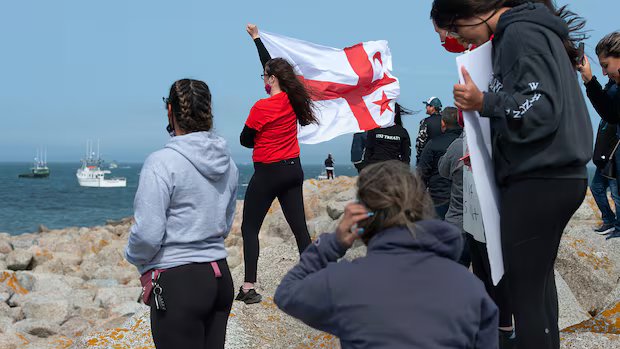

Listen to this article
Estimated 4 minutes
The audio version of this article is generated by AI-based technology. Mispronunciations can occur. We are working with our partners to continually review and improve the results.
A Nova Scotia judge has dismissed a lawsuit launched by a commercial fishing group that argued Sipekne’katik First Nation’s fishery in the province’s southwest was unlawful and wanted the court to declare the band does not have a treaty right to commercial lobster fishing.
In a ruling released Wednesday, Nova Scotia Supreme Court Justice Ann Smith said the statement of claim filed by the not-for-profit Unified Fisheries Conservation Alliance (UFCA) is “fatally flawed” and refused the group’s request to rule on the treaty right.
“Its claim is not a reasonable and effective way to bring the issues it raises before the court,” Smith said in a written decision.
“Negotiation between Canada and Sipekne’katik is both more reasonable and more effective to resolve the matter of treaty rights. The UFCA is free to pursue other means to achieve its goals, but this litigation, in these circumstances, is not the way to do so.”
The UFCA filed the lawsuit in 2024, after several years of what it has argued is unauthorized fishing in St. Marys Bay that has harmed lobster stocks and been detrimental to commercial fishermen and local communities.
Sipekne’katik conducts its fishery in the summer and fall outside of federal regulations. It has asserted its members have a treaty right to catch and sell lobster without commercial licences and are not restricted to the periods mandated by the federal government.
The fishery is contentious, facing opposition from commercial fishermen, and the band has accused federal fisheries officers of seizing traps.

It has been the source of previous litigation, including a suit filed in 2021 by Sipekne’katik that sought a declaration that the federal Fisheries Act infringed on its treaty right to fish for a “moderate livelihood.”
That lawsuit was discontinued last year, with the band citing escalating litigation costs that had topped $500,000, as well as “somewhat” encouraging progress in mediation between the First Nation and the federal government.
In this week’s decision dismissing the UFCA’s claim, Smith said while she recognized the commercial fishing group had legitimate concerns about the impact of the Sipekne’katik fishery, it had no “standing” and the court could not hear the case.
She said the UFCA was not seeking to challenge any legislation or argue that its rights were being breached. Instead, she said, it’s clear it wanted the court to declare the Fisheries Act and its regulations do not violate any Sipekne’katik rights.
“These motions broadly raise the question of whether a non-Aboriginal, but ‘interested’ person, can force a First Nation of Canada to participate as a defendant in litigation with it and Canada in an attempt to have a court declare that certain legislation does not violate that First Nations’ treaty rights,” Smith wrote.
Colin Sproul, the president of the UFCA, said in a statement that the group disagrees with the judge’s conclusions and its lawyers are exploring the possibility of an appeal.
He said it doesn’t appear the federal government and Sipekne’katik have furthered their negotiations, and “places like St. Marys Bay are suffering from the uncertainty and confusion that comes with a lack of resolution.”
“The court’s decision is silent on how those who have a long historical interest in the fisheries can get answers to questions that neither the federal government nor Sipekne’katik appear to want to answer,” the statement said.
Michelle Glasgow, the chief of Sipekne’katik, did not respond to requests for comment.
MORE TOP STORIES