dailynewsnblog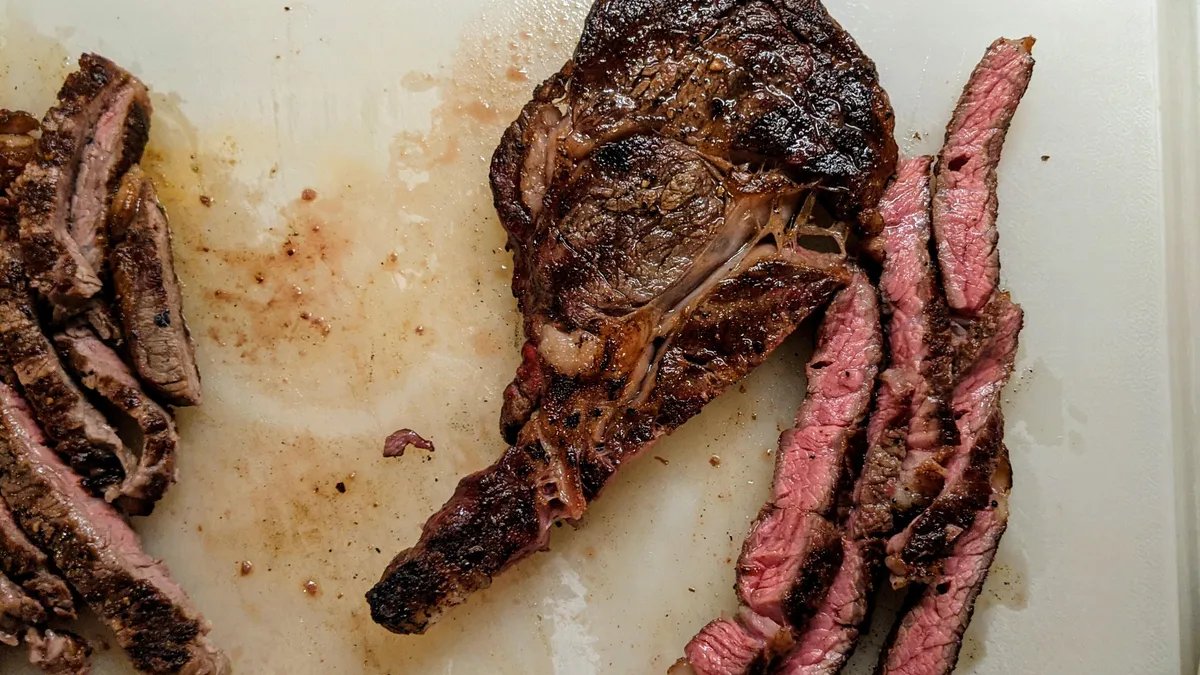
Good steak doesn’t need much gussying up with sauce or seasoning, but it does need to be cooked correctly. Overcook your strip or sirloin and both the texture and taste will suffer. Undercooking is less of a buzzkill, but having to put a steak back on the flame after slicing into it risks losing much of those important juices.
A perfectly cooked steak isn’t luck. It’s technique. Not seasoning, not searing — those matter, but the single most important skill is knowing precisely when to pull the meat off the heat. Miss that window by even a minute and everything else you did right becomes irrelevant. The best cut, the best crust, the best resting time — none of it saves a steak that’s gone a degree too far.
That’s why professional chefs don’t guess. They use specific methods to read doneness quickly and accurately, without cutting into the meat or reaching for a thermometer.
Read more: A Beef Expert Told Me the Best Cheap Steak Cuts to Look for at the Market
I spoke to Joe Flamm, chef-partner and culinary director of Chicago’s BLVD Steakhouse. “Doneness is such a preference and everyone has their own,” he said. “For something as simple as steak, prepared with just salt and fire, you want it exactly how you want it.”
A low-tech technique for testing doneness
Learning to check for doneness by feel doesn’t necessarily require hundreds of dollars of raw materials to get the requisite practice. Neither does it rely on any particular gadget. It’s not exactly a one-handed method, but it only involves your hands.
Whether or not you have the means or mentality to quit your job and go to culinary school, here’s a culinary school trick to understand doneness in meat, using the fleshy base of your thumb as a point of comparison in the resistance of the steak when poked.
Here it is: With one hand, gently touch your thumb and forefinger together, keeping the rest of your fingers relaxed, in a half-assed “A-OK” signal. You don’t want to press your thumb and forefinger together — simply make light contact between them. With the forefinger of your opposite hand, gently poke the fleshy base of your thumb.
You’re not pressing down here, just giving it a quick jab. This is approximately the level of resistance you should feel for a medium rare steak when similarly jabbed in the center of the meat. (Quick aside here about clean or gloved hands. Also, the steak will be hot on the outside, yes, but again, a brief jab is all that’s in order.)
Subsequently, as you move your thumb to lightly touch your middle finger, the tension in the base of your thumb increases, and this represents how a medium-cooked steak should feel. As you stretch your thumb to reach the ring finger, you’ve got medium well; the tension in the thumb when touched with the pinkie finger reveals well done.
Regardless of how you like your steak cooked, and how you’d personally define it, now you have a consistent point of comparison available to you at all times with which to practice, whether you’re cooking steak once a week or once a year.
Practice makes perfect
Fancy meat thermometers do a nice job at reading internal temps, but you can save some money and learn to test doneness like the pros do.
Doneness in steak is frequently associated with color, as the steak goes from bright red when rare, through various shades of pink, until it becomes well done and the pink is cooked completely out. (RIP, ribeye.) It’s difficult to gauge color without cutting into the steak, which you don’t want to do until it comes off of the heat and has a moment to rest. Otherwise, the juices spill out, resulting in a drier, tougher result, especially if you’re going to put it back on the fire for further cooking. It’s even more important not to do this prematurely if your preference leans toward medium-well or well-done; you want as much juice as possible left in the meat.
Doneness is also associated with temperature, with the internal temperature of the meat typically ranging from 120 to 160 degrees Fahrenheit as you move from rare to well done. This can be accomplished with a meat thermometer, but there is another method frequently applied by chefs that doesn’t require any gadgets.
Nailing the perfect doneness for your next steak takes nothing more than a few pokes.
With bigger cuts, such as a whole prime rib roast that will be sliced after cooking, “a thermometer is super helpful for consistency and accuracy,” says Flamm, but “for smaller cuts and for speed, many chefs can check it by feel,” he says. “If you’re cooking 100 filets a night, every night, it begins to fall into place.”
Why overcooking steak is bad
Overcooking steak is the fastest way to ruin a perfectly good piece of meat.
What’s a home cook to do who isn’t in the habit of cooking dozens of steaks on repeat, many times a week? Before we get to the shortcut trick to help you learn this, it’s important to understand the transformation your steak undergoes as it cooks to higher and higher temperatures.
In simple terms, the longer a steak cooks, the firmer the meat becomes, which is due to the chemical process it undergoes. “Whenever you cook a steak for a longer period, there’s a breaking point where fat and muscle are done breaking down,” explains Flamm, “and you’re just drying out the steak and losing moisture, which gives the steak a tougher texture.” This increasingly firm or tougher texture is key to checking the doneness of steak without relying on a thermometer.
Read more: I Did the Math to See if Buying Meat Online Is Cheaper Than the Grocery Store
What’s the best way to cook steak?
Searing steak followed by some indirect heat to bring it up to the desired doneness is the preferred method of many professional chefs.
So, what’s the best way to cook a steak? Opinions abound regarding direct heat versus indirect heat, hard searing and reverse searing, and even cooking steak in an air fryer. Flamm recommends a time-honored method: “For me, it’s searing the steak hard, and then using indirect heat to slowly let it render and come up in temp to the place where you want it to be,” he says, finishing your seared steak in the oven.
You can consult various recipes for time and temperature recommendations for the indirect heat method; just be sure to account for the fact that your steak will continue to cook while resting, and to take it out and give it a good jab every so often.
Read more: No, Your Grill I the Best Place to Cook Every Cut of Steak. Here’s What Chefs Recommend