dailynewsnblog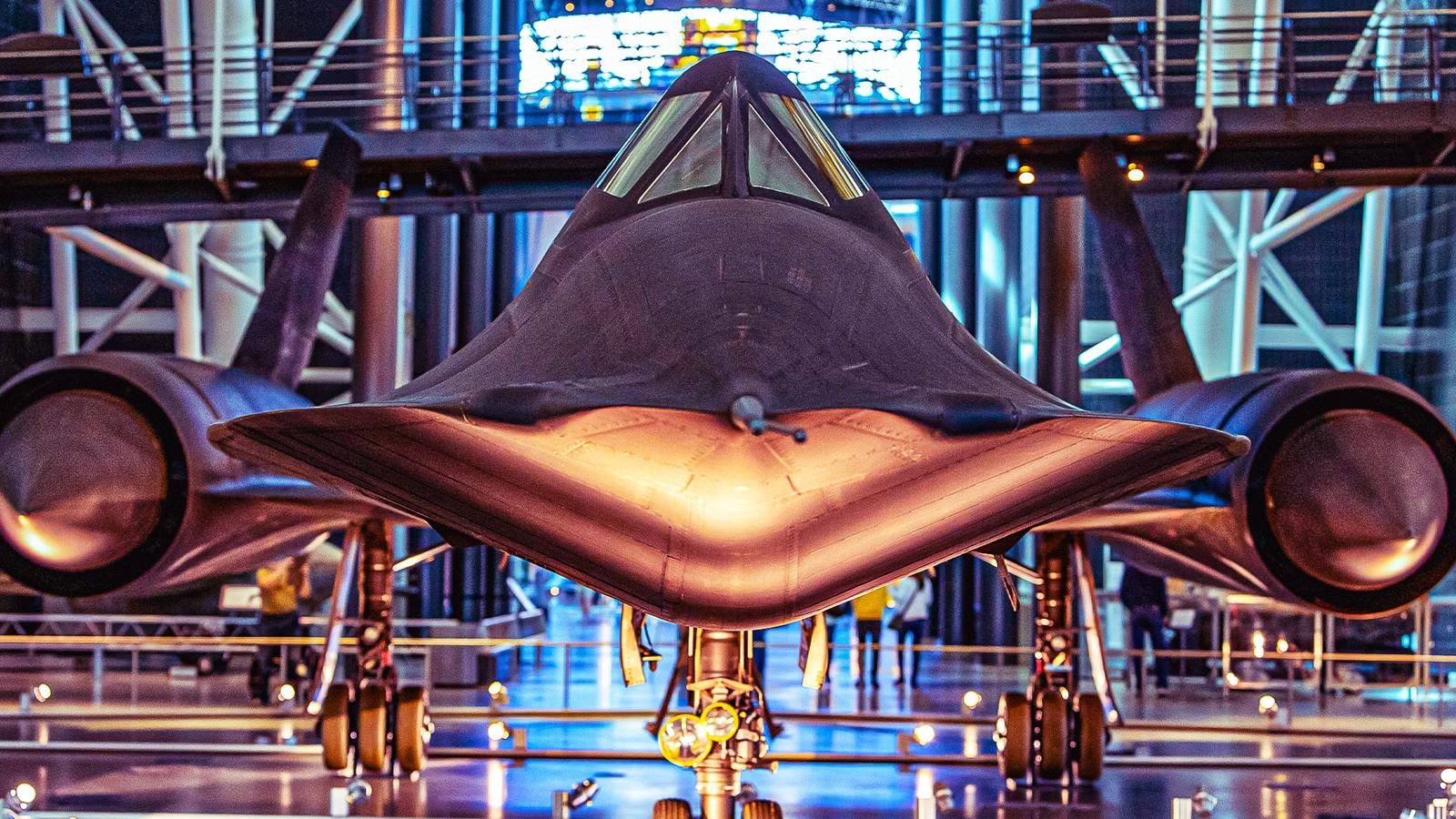
The incredible heat of air friction generated by the Lockheed SR-71 Blackbird caused the temperature of the plane to rise to more than 600 ℉ (300 ℃), which is far from comfortable for any human pilot. To cool down the inside of the jet enough to make it habitable for flight, the special Skunk Works division of Lockheed developed a sophisticated thermal management system with the plane’s titanium skin as the foundation.
The airframe was constructed from approximately 93% titanium alloy because conventional metals like aluminum would soften and melt at the temperatures generated by aerodynamic friction at Mach 3+. The Smithsonian explains that while the exotic B-120 alloy was the most crucial single ingredient in the cooling recipe for the Blackbird, the titanium skin alone could not keep the cockpit safe.
Its iconic black paint scheme was less to enhance its stealthiness but truly to serve as a heat conductor. The SR-71 also used its unique JP-7 fuel as a coolant, which was famous for having such a low flash point that you could throw a lit match in a bucket and it would not ignite. Finally, pilots wore full-pressure suits similar to astronaut gear. But the incredible titanium shell that encased the Blackbird was the first, and most crucial, line of defense against the supersonic blaze that engulfed it on every sortie.
Blackbird: Forged For The Supersonic Inferno

The SR-71 Blackbird’s titanium skin was a masterpiece of thermal engineering, designed to survive conditions that would melt a standard aircraft. Its high-strength beta alloy was known as Ti-13V-11Cr-3Al because it contained 13% vanadium, 11% chromium, and 3% aluminum. This specific blend allowed the metal to retain its structural integrity. In some areas, like near the engines, the outside temperatures could get up to 1000 ℉ (540 ℃).
The SR-71 Blackbird was constructed from three different titanium alloys, but the vast majority of its skin and primary structure was made from beta alloy. Titanium has very low heat conductivity, which means that friction heat stays localized on the outer skin rather than quickly transferring into the interior airframe. Titanium also provided the strength of steel but at roughly 50% of the weight, which was vital for a plane that needed to carry massive amounts of fuel. Chromium and aluminum stopped the metal from becoming brittle at high temperatures.
While beta alloy was the primary material, Lockheed’s Skunk Works used different alloys for some specialized parts. The ‘turkey feathers’ that acted as exhaust nozzles for the Pratt & Whitney J58 engines were made of Ti-5Al-2.5Sn. This titanium alloy was selected for superior weldability and stability at high heat. Meanwhile, a more common aerospace alloy, Ti-6Al-4V, was used for various structural reinforcements and the landing gear. Notably, the landing gear contained some of the largest pieces of titanium ever forged.

Making the SR-71’s skin was an unprecedented task because titanium was so reactive that standard aerospace methods were ineffective. Building the SR-71 required Lockheed’s Skunk Works to invent an entirely new industrial process. The extreme difficulty in machining titanium, which would work-harden and destroy standard drill bits, meant almost every part of the 32 operational SR-71s was hand-fitted. Skunk Works invented inert environment welding for the SR-71 because technicians had to use pure argon gas to displace all oxygen during the process.
Many parts were welded inside specialized argon-filled chambers where workers used built-in gloves to handle the pieces in a totally inert environment. If exposed to air during welding, the metal becomes brittle and shatters like glass because it is extremely ‘thirsty’ for oxygen, nitrogen, and hydrogen when heated. For larger assemblies that couldn’t fit in a box, they invented trailing shields that flooded both the front and back of the weld with argon until the metal cooled.
Standard shop tools were ‘poison’ to the SR-71’s titanium and the process had to use much slower cutting speeds combined with massive volumes of specialized, high-pressure coolants. The titanium was also found to be sensitive to chlorine and the cadmium plating used on standard tools. This forced engineers to wash parts with distilled water and replace all cadmium-plated tools in the factory. Engineers discovered that contact with cadmium caused galvanic corrosion that led to structural failure in the titanium.
In one of the most famous production mysteries, parts welded in the summer were failing, while those in winter were fine. The team traced the failure to the Burbank city water supply. In the summer, the city added more chlorine to prevent algae; this trace chlorine was reacting with the titanium during cleaning. From that point on, every part of the SR-71 was washed exclusively with distilled water.
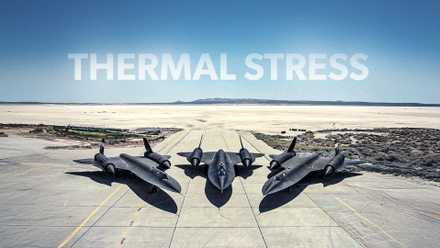
How The Lockheed SR-71 Blackbird’s Titanium Fuselage Withstands Extreme Thermal Stress
The technology behind the fastest warbird of all time.
SR-71 Trails: The Air Force’s Leaky Bird

The skin of the Blackbird was famously, and purposely, built with gaps and loose panels because the titanium would expand along its 107-foot length (32 meters) significantly. Estimates range from three to 12 inches of expansion and contraction during the ultra-high-speed flight profile of the SR-71. Because the fuel tanks were integrated into the airplane skin, as a function of using JP-7 cooling, it notoriously leaked copious amounts of fuel because the panels didn’t fit snugly at ambient air temperatures.
Once the aircraft reached Mach 3+, the friction-induced heat caused the titanium to expand, sealing the gaps and making the tanks liquid-tight. This also meant that large sections of the wing skin were corrugated parallel to the direction of flight, or rippled, to allow the metal to expand and contract like an accordion without warping or buckling.
If the titanium sheets were smooth or corrugated perpendicular to the nose, then there would be warping and buckling in flight, which would distort the aircraft structures. Surprisingly, at Mach 3, these grooves didn’t ruin the airflow. The air moved so fast that it skipped over the ridges. The corrugations actually guided the airflow straight back, improving directional stability.
The SR-71 Blackbird’s windows were not standard aerospace glass but high-purity solid quartz. Because the aircraft reached temperatures that would melt glue or distort glass, Corning Glass Works spent $2 million over three years to develop a new process. They used high-frequency sound waves in a process of ultrasonic fusing to bond the 1.25-inch-thick quartz windshield directly to the titanium frame without any traditional adhesives. The design also included air between the inner and outer panes and a special resin between the tempered glass sheets.

The SR-71 Blackbird’s Final Flight Set 4 Speed Records In Just 64 Minutes
The final day that the legendary jet streaked through America’s skies.
The Secret Sauce: JP-7

The jet fuel used on the SR-71 was different from that of other military aircraft of its era and modern successors as well. The JP-7 had an exceptionally low flash point because the tanks that it was kept in were integrated directly with the titanium skin of the plane. The wet wing design was crucial to help cool the skin of the plane as they were in direct contact with the tanks of JP-7. The lack of self-sealing tanks also caused the Blackbird’s profusely leaky taxi takeoffs and landings.
In most planes, fuel is just weight to be burned. In the SR-71, it acted as a heat sink to soak up the thermal energy that would otherwise melt the cockpit and avionics. Standard jet fuel was useless because it would have boiled away or exploded at the temperatures the Blackbird experienced. Before the special JP-7 fuel ever reached the engines, it was pumped through a complex series of heat exchangers. It acted as a coolant for the flight deck, electronics, and landing gear. Only after the fuel had absorbed as much heat as possible was it finally injected into the engines and burned.
This system actually improved engine efficiency, as the JP-7 was already pre-heated to nearly 300 ℉ (150 ℃). It was designed with very low vapor pressure so it wouldn’t boil off at the 80,000-foot altitudes where the SR-71 operated. Because JP-7 was so hard to ignite, the engines couldn’t start it with a normal spark. So, in addition to pre-heating, the SR-71 had to carry a separate tank of TEB, a chemical that explodes on contact with air to kickstart the combustion.

From 76 F-22 Raptors To 200 Next-Gen Fighters: How Much Larger America’s Air Superiority Fleet Could Get
A closer look at the future of air power in the US Armed Forces.
Sourced From The Soviet Backyard

In a famous Cold War irony, the US covertly purchased the raw titanium ore from the Soviet Union using shell companies, as they were the world’s largest supplier at the time. At the time, the US did not have sufficient domestic supplies of rutile ore, the sandy soil required to produce high-grade titanium. To bypass export restrictions and keep the project secret, the CIA orchestrated a massive clandestine operation, according to the BBC.
The CIA created a global network of false businesses and dummy corporations. To justify the massive quantities of titanium being ordered, one famous cover story used by these shell companies was that the metal was needed to build thousands of commercial pizza ovens. The Soviet government reportedly believed this, mockingly assuming Americans were too “lazy” to cook for themselves and needed mass-produced ovens to buy pizza instead.
Operations were often funneled through third-world countries to further obscure the trail back to the United States. Recent declassified documents suggest much of this titanium likely originated from mining sites and processing plants in Ukraine, specifically the Zaporizhzhia plant, according to The National Interest. Ultimately, the CIA secured enough titanium to construct 32 SR-71s for the US Air Force and over a dozen A-12 aircraft for the CIA.