dailynewsnblog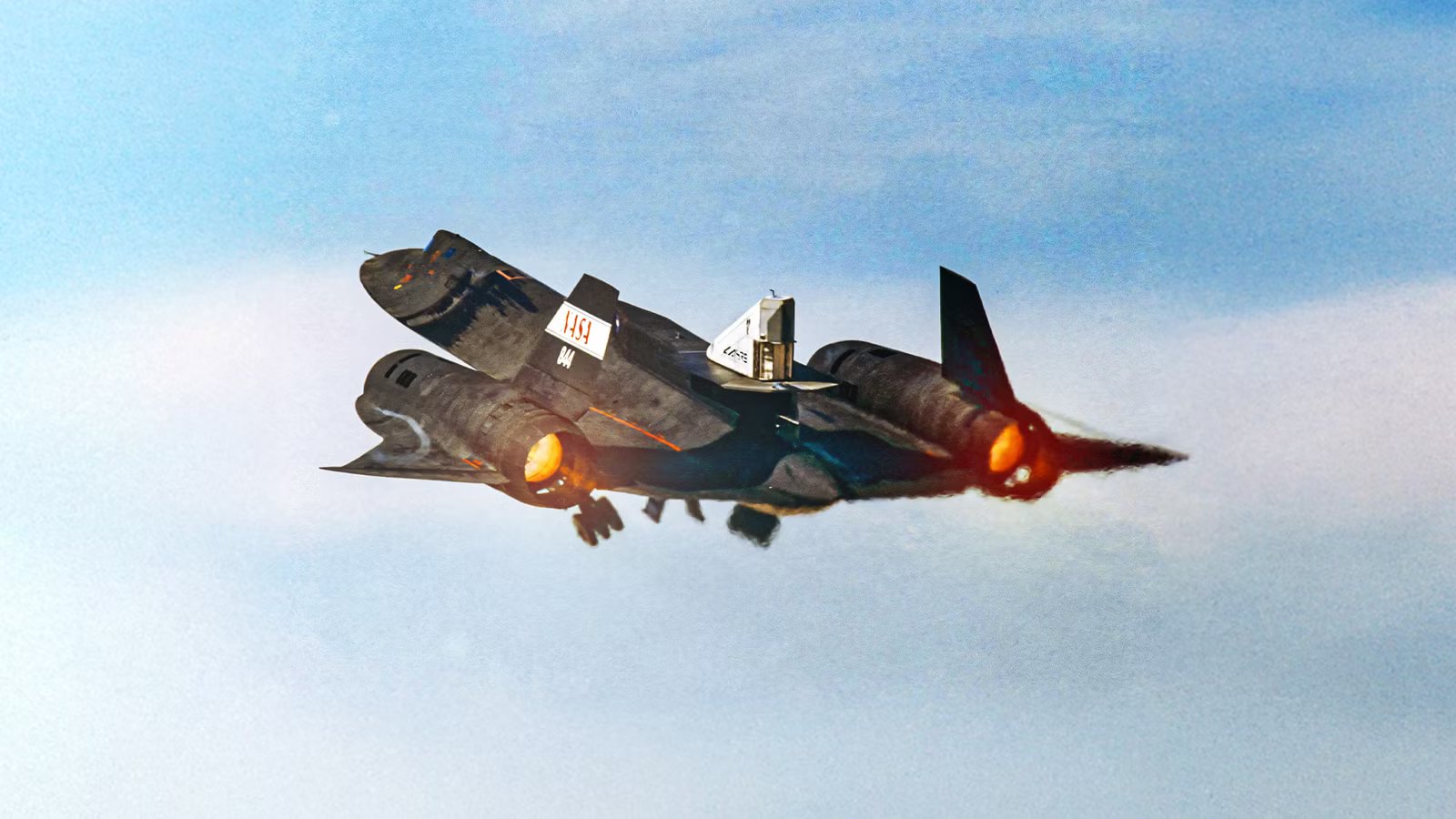
The SR-71 Blackbird remains one of the most remarkable aircraft ever constructed, not just because of its speed, but also because it could operate continuously in an environment that pushed aerospace engineering to its limits. Designed during the Cold War as a high-altitude reconnaissance platform, the aircraft routinely cruised at speeds above Mach 3, more than 2,000 miles per hour (3,219 km per hour), while flying higher than 80,000 feet (24,384 meters). At those velocities, the challenge was no longer simply aerodynamic efficiency or engine power. The surrounding atmosphere itself became an immense source of heat capable of weakening metals, distorting structures, and destroying conventional aircraft components.
As the Blackbird tore through the upper atmosphere, friction-heated sections of the airframe to temperatures ranging from approximately 600°F to more than 1,000°F (315°C to 538°C). Some of the hottest areas include the engine nacelles, wing leading edges, and forward fuselage near the cockpit. Lockheed engineers quickly realized that no ordinary aircraft structure could survive prolonged exposure to such temperatures. The SR-71, therefore, became as much a flying thermal-management system as a reconnaissance aircraft. Its titanium construction, expansion joints, specialized fuel system, and iconic dark coating all worked together to keep the aircraft structurally stable while operating at speeds few manned aircraft have ever approached.
The Atmosphere Became A Source Of Extreme Heat

For conventional aircraft, drag is usually considered a limitation that reduces efficiency and speed. In the case of the SR-71, aerodynamic friction evolved into an entirely different engineering problem. Traveling at more than three times the speed of sound meant the aircraft constantly compressed and superheated the surrounding air. That thermal energy was transferred directly into the Blackbird’s skin, steadily heating the airframe throughout the mission.
The hottest regions experienced temperatures high enough to fundamentally alter how the aircraft behaved structurally. The nose chines and engine inlet sections absorbed tremendous thermal loads, while cockpit surfaces became so warm that pilots occasionally heated meals against the inside of the canopy glass. Internal systems also required protection from the rising temperatures radiating inward through the titanium structure. Electronics, hydraulic lines, and fuel systems all had to function reliably despite the surrounding heat.
Unlike temporary bursts of speed achieved by fighter aircraft, the SR-71 maintained these conditions for extended periods. The aircraft was expected to sustain a Mach 3 cruise for hours rather than minutes. This forced engineers to stop treating heat as a side effect and instead design the entire aircraft around thermal endurance. The Blackbird succeeded because it controlled heat rather than trying to avoid it.
The Dark Coating Functioned As A Heat-Radiation System

The SR-71’s famous dark exterior was not applied for appearance or camouflage. The coating was specifically engineered to improve the aircraft’s ability to release heat into the surrounding atmosphere during high-speed flight. Although commonly described as black, the finish was actually an extremely dark blue containing specialized materials selected for thermal performance.
The coating possessed high-emissivity characteristics, meaning it could radiate heat away from the aircraft more effectively than untreated titanium surfaces. Historical testing showed the treated skin dispersed heat roughly 2.5 times faster than bare titanium alone. At temperatures approaching 1,000°F (538°C), that increased efficiency significantly reduced thermal stress across the airframe during prolonged missions.
Without this specialized coating, heat would have accumulated more aggressively throughout the aircraft’s structure, increasing fatigue and shortening operational lifespan. The paint effectively turned the SR-71’s outer skin into a large thermal radiator. Rather than trapping energy inside the airframe, the coating continuously released it back into the atmosphere. The aircraft’s dark appearance was therefore directly connected to its ability to survive Mach 3 flight.

The SR-71 Blackbird’s Final Flight Set 4 Speed Records In Just 64 Minutes
The final day that the legendary jet streaked through America’s skies.
Ferrite Additives Also Reduced Radar Visibility

The coating performed a second important role beyond thermal management. Engineers mixed ferrite-based compounds into the paint to help absorb portions of incoming radar energy. While primitive compared to later stealth technologies, this feature reduced the aircraft’s radar reflectivity and complicated enemy tracking efforts during reconnaissance operations.
The SR-71 was not invisible to radar systems, especially those operated by the Soviet Union, but reducing radar return still improved survivability. Enemy operators often struggled to maintain stable tracking solutions against an aircraft traveling above Mach 3 at altitudes exceeding 80,000 feet (24,384 meters). By combining speed, altitude, and reduced radar reflection, the Blackbird became extraordinarily difficult to intercept.
Simple Flying Quiz
What Aircraft Type Are You?
Five questions. One aircraft. Find out which plane best matches your personality.
Question 1 of 5
How do you prefer to travel?
Question 2 of 5
What’s your ideal weekend away?
Question 3 of 5
How do you handle a busy schedule?
Question 4 of 5
What matters most to you on a long trip?
Question 5 of 5
How do others describe you?
Your Result
The Explorer
Cessna 172
You value freedom, simplicity, and the joy of the journey itself. You’re happiest when you’re in control, taking life at your own pace and discovering the world one small airfield at a time. No crowds, no queues — just sky.
Your Result
The Workhorse
Boeing 737
Reliable, efficient, and always in demand. You get the job done without fuss, keeping things moving for everyone around you. You’re the backbone of any operation — proven, dependable, and trusted the world over.
Your Result
The Icon
Airbus A380
You think big. More space, more comfort, more presence — you believe in doing things properly and on a grand scale. When you walk into a room, people notice. You’re built for the long haul, and you do it in style.
Your Result
The Pioneer
Concorde
Speed, ambition, and a refusal to accept limits define you. Every second counts, and you’d rather break the sound barrier than wait in line. You were ahead of your time — bold, brilliant, and utterly unforgettable.
This dual-purpose coating represented an early example of multifunctional stealth engineering. Instead of adding separate radar-absorption systems, Lockheed incorporated radar-reduction properties directly into the aircraft’s thermal coating. Long before stealth aircraft became publicly acknowledged, the SR-71 demonstrated how advanced materials could improve survivability without dramatically changing the aircraft’s shape.
Titanium Allowed The Aircraft To Survive the Heat

Traditional aerospace materials could not tolerate the Blackbird’s operating temperatures. Aluminum, which formed the backbone of most aircraft structures during the era, weakened substantially under prolonged thermal stress. To overcome this limitation, Lockheed engineers constructed approximately 90% of the SR-71 using titanium alloy, a material capable of retaining strength at far higher temperatures.
Securing enough titanium during the Cold War proved extremely difficult because the United States lacked sufficient domestic supply. In one of the most ironic intelligence operations of the period, American intelligence agencies covertly purchased large quantities of Soviet titanium through front companies and indirect commercial transactions. Material sourced from the USSR ultimately became part of the aircraft designed to spy on Soviet military activity.
Working with titanium created enormous manufacturing challenges as well. The metal was difficult to machine and highly reactive during fabrication at elevated temperatures. Conventional tooling methods frequently failed, forcing engineers to develop entirely new production techniques. Building the SR-71 required advances not only in aerodynamics and propulsion, but also in metallurgy and industrial manufacturing.
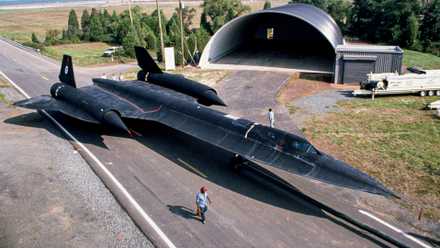
Why The SR-71 Blackbird Needed Twin Buick V8 Engines Just To Start
The wild V8 machines behind every SR-71 launch.
The Aircraft Was Designed To Expand During Flight

One of the most unusual aspects of the SR-71 was that the aircraft physically changed dimensions while operating at speed. As temperatures climbed during the sustained Mach 3 cruise, sections of the titanium airframe expanded by several inches due to thermal growth. Engineers anticipated this behavior and intentionally designed the surrounding aircraft.
Visible expansion gaps appeared throughout parts of the airframe while the aircraft sat on the ground. Panels often looked loosely fitted because they were engineered to align correctly only after heating up in flight. Corrugated skin sections and flexible structural joints allowed the aircraft to expand safely without warping or cracking under stress. The Blackbird effectively achieved its optimal shape only after reaching operating temperature.
Thermal expansion also explains why the aircraft became notorious for leaking fuel while parked. The fuel tanks were not fully sealed on the ground because the joints tightened only after the structure expanded during high-speed flight. As a result, SR-71 missions typically began with partial fuel loads followed almost immediately by aerial refueling after takeoff. What appeared to observers as a defect was actually a necessary consequence of designing an aircraft for extreme thermal conditions.
The Blackbird Was Engineered Around Physics Rather Than Appearance

The SR-71 Blackbird is often remembered for its speed records and futuristic appearance, but its greatest achievement was mastering one of aviation’s harshest thermal environments. Nearly every aspect of the aircraft’s design is traced back to the problem of heat. The titanium structure, expansion joints, fuel system, engine configuration, and dark coating all existed because conventional aircraft engineering could not survive prolonged Mach 3 operation.
Rather than fighting against the laws of physics, Lockheed engineers accepted the realities of aerodynamic heating and built the surrounding aircraft. The Blackbird functioned as a carefully balanced system in which thermal expansion, heat radiation, and structural stress were expected operating conditions rather than emergencies. This philosophy allowed the aircraft to maintain speeds and altitudes that remain extraordinary even by modern standards.
More than five decades after entering service, the SR-71 still holds the distinction of being the fastest air-breathing manned aircraft to operate successfully over sustained periods. Many modern aircraft surpass it in stealth, avionics, or maneuverability, but few machines have ever integrated materials science, propulsion, and thermal engineering so completely. The Blackbird’s iconic dark coating was not decorative. It was one of the key technologies that allowed the aircraft to survive at all.
Catch what other trackers miss
Emergency squawks, holds, NOTAMs — live signals, no signup.
Open tracker
Catch what other trackers miss
Emergency squawks, holds, NOTAMs — live signals, no signup.
Open tracker