dailynewsnblog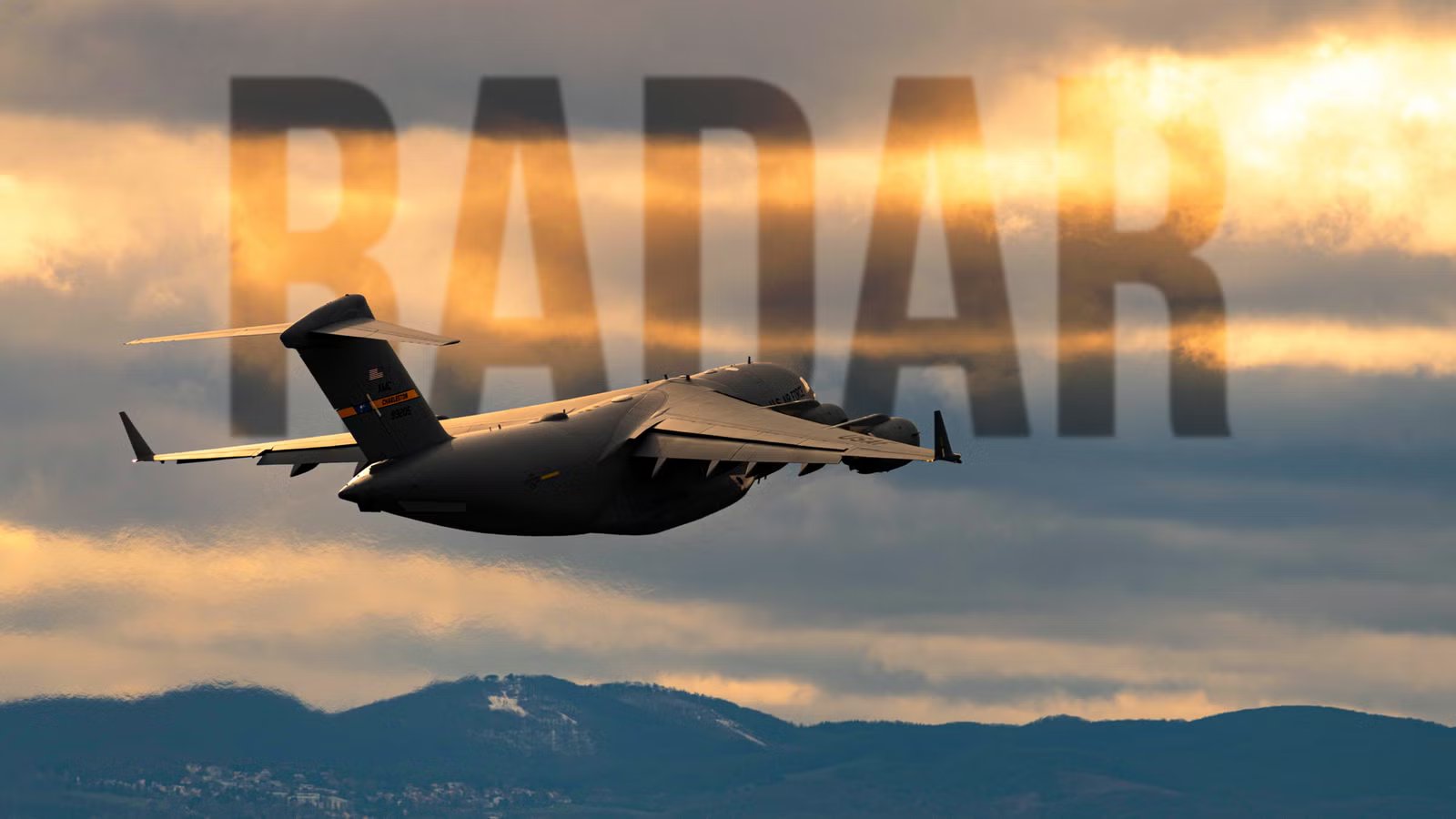
The  BoeingC-17 Globemaster III remains a cornerstone of modern airlift operations in 2026, but its real advantage lies in how it survives in hostile airspace. Equipped with systems like the AN/ALR-69A radar warning receiver, AN/AAR-47 missile approach warning system, AN/ALE-47 countermeasures dispenser, and LAIRCM (Large Aircraft Infrared Countermeasures), the C-17 can detect, classify, and defeat both radar-guided and infrared threats within seconds. Based on operational concepts and USAF system data, its survivability is built on integration—combining sensors, countermeasures, and automation into a single defensive architecture designed for today’s high-risk environments.
This article explains how that system works in practice, breaking down each component and how they interact under real-world conditions. From radar detection to missile warning and active countermeasures, you’ll see how the C-17 counters modern threats step by step, and why this matters for missions flown by the United States Air Force and its allies. It also explores the tactical procedures that complement these systems, giving a complete picture of how one of the world’s most capable military transport aircraft operates in contested airspace.
The AN/ALR-69A: How The C-17 Knows It Is Being Watched

At the core of the C-17’s threat awareness is the AN/ALR-69A digital radar warning receiver, effectively the aircraft’s ears in a spectrum filled with invisible emissions. Radar-guided systems—whether ground-based SAMs or airborne interceptors—must radiate energy to detect and track targets, and the ALR-69A is designed to pick up those signals, identify their source, and alert the crew, often before any weapon is launched.
Using antennas distributed across the fuselage and wingtips, the system maintains near-omnidirectional coverage thanks to a 16-channel broadband receiver. Detected signals are rapidly compared against a library of known emitters based on parameters like frequency and scan pattern, allowing the system to classify the threat within milliseconds—distinguishing, for example, between search and fire-control radars. The result is presented as directional symbols in the cockpit, with high-threat emissions triggering an audible warning and, if required, automatic countermeasure deployment.
What makes the ALR-69A particularly valuable in modern operations is its digital architecture and the capacity for its threat library to be continuously updated. The electromagnetic environment of any given conflict changes constantly: new radar systems are deployed, frequencies are shifted, and adversaries modify their emitter parameters specifically to confuse or defeat legacy warning receivers.
The digital foundation of the ALR-69A means that intelligence gathered from new radar encounters can be incorporated into the system’s database, keeping the C-17’s situational awareness current with evolving threat landscapes. For a fleet expected to operate into the 2040s and beyond, given the ongoing $266.6 million cockpit modernization program designed to keep the Globemaster flying until 2075, that adaptability is as important as raw detection capability itself.
The AN/AAR-47: Adding A Second Layer Against Heat-Seeking Missiles

Radar-guided weapons are only half of the threats that a Globemaster III on a combat mission may face. Man-portable infrared-homing missiles (MANPADS), the kind that can be carried and fired by a single soldier from a roadside, a rooftop, or the back of a pickup truck, represent one of the most persistent and statistically significant dangers to low-altitude military aircraft. These weapons produce no radar emissions at all, meaning the ALR-69A cannot provide any warning against them. That gap is precisely what the AN/AAR-47 Missile Approach Warning System is designed to close.
The AAR-47 is a passive electro-optical system, meaning it emits nothing itself and relies entirely on detecting radiation from its targets. Its sensors are tuned to the specific infrared signatures associated with rocket motor plumes: the intense heat generated by a missile’s propellant during the first seconds of flight. When the system detects a radiation source consistent with an approaching missile, its algorithms work to discriminate between genuine threats and background infrared noise, aircraft exhaust, sunlit terrain, industrial heat sources, and determine both whether the source is approaching and from which direction.
If the system detects a threat, it immediately interfaces with the ALE-47 countermeasures dispenser to initiate an automatic flare ejection sequence, all without requiring any input from the crew. The speed of this automatic handshake between detection and response is, in the MANPADS threat environment, the entire difference between survival and catastrophe — a reality that becomes even starker when one considers that the C-17 routinely operates from short, austere runways in exactly the kind of forward operating environments where MANPAD threats are most prevalent.

5 Largest Aircraft Fleets Operated By The US Air Force
From F-16 fighters to KC-135 tankers, these five aircraft types make up the largest fleets in the US Air Force in 2026.
The AN/ALE-47: The Active Response Mechanism That Defeats Inbound Threats

If the ALR-69A and AAR-47 are the C-17’s senses, the AN/ALE-47 Countermeasures Dispenser System is its reflex. Once a threat has been detected and classified by either of those upstream systems, it falls to the ALE-47 to physically defeat it — by deploying expendable countermeasures into the aircraft’s flight path that are specifically designed to lure an inbound weapon away from its intended target. The ALE-47 is the most operationally flexible component of the C-17’s defensive suite, capable of dispensing a wide range of countermeasure types and operating across a spectrum of automation levels depending on mission requirements and crew preferences.
At the most basic level, the ALE-47 carries and dispenses conventional chaff and flares. Chaff are bundles of aluminum-coated fibers that create false radar echoes, large enough to confuse or overwhelm a radar-guided missile’s seeker, while flares are pyrotechnical devices that produce intense infrared heat sources designed to draw heat-seeking missiles away from the aircraft’s engine exhaust. But the system’s capabilities extend well beyond these legacy countermeasures. The ALE-47 is also compatible with active expendable decoys, including the Miniature Air Launched Decoy variant and more advanced options such as the POET (Primed Oscillator Expendable Transponder) and GEN-X active jammers, which can broadcast radio frequency signals to actively confuse radar-guided seekers rather than simply providing a passive false target. This range of munitions gives crews and mission planners the ability to tailor the countermeasures loadout to the specific threat environment expected on a given mission.
The ALE-47 operates in three modes:
- Fully automatic: the system dispenses countermeasures autonomously based on sensor-detected threats
- Semi-automatic: suggests a response that the crew can approve with a single input
- Manual: the crew has full control over timing and type of countermeasures
In real operations, fully automatic mode is most commonly used because missile threats (e.g., MANPADS or radar-guided) develop too quickly for manual decision-making.
LAIRCM: The Laser System That Blinds Heat-Seeking Missiles In Flight

Even with the AAR-47 detecting missile launches and the ALE-47 deploying flares in response, the fundamental limitation of the expendable countermeasures is that they are finite. A sustained threat environment can exhaust a flare supply faster than it can be replenished on the ground. It was precisely this vulnerability that drove the C-17’s integration of the Large Aircraft Infrared Countermeasures system, known as LAIRCM: a directed-energy solution that defeats infrared-homing missiles by actively jamming the missile’s seeker head with a precisely aimed, high-intensity modulated laser beam.
LAIRCM operates by first detecting and tracking an incoming infrared-guided missile through its sensor suite. Once tracking is established, the system’s pointer-tracker assembly, mounted in a turret on the aircraft’s fuselage, slews to point a high-power laser directly at the incoming missile’s seeker. The laser is modulated at specific frequencies designed to “blind” the seeker, causing it to lose lock on the aircraft’s infrared signature and deviate from its intercept trajectory. Unlike flares, this process consumes no expendable inventory: the laser can engage sequential threats indefinitely as long as the aircraft has electrical power. This makes LAIRCM particularly valuable in environments where multiple MANPADS-equipped threats may be positioned along an approach corridor, a scenario that has been increasingly common in modern conflict zones.
The entire United States Air Force C-17 fleet completed a fleet-wide LAIRCM upgrade specifically targeting the MANPADS threat vector, that will keep the protection relevant throughout the C-17’s operational lifespan.

How The Eurofighter Typhoon’s AESA Radar Compares To The F-35’s AN/APG-81
The Eurofighter Typhoon’s CAPTOR-E radar and the F-35’s AN/APG-81 represent two different visions of air power, each with its own nuances.
Tactical Descent: The Flying Technique That Makes Electronics Irrelevant

Even with four integrated defensive systems working in concert, no amount of electronics can eliminate the risk of operating a large, slow, low-flying aircraft in a dangerous environment. The best defense against a missile is not to be where the missile expects you to be, and the C-17 crews incorporated that philosophy into their tactical flying procedures.
Among the most dramatic and operationally significant of these is the combat descent: a maneuver that uses the aircraft’s own engines as drag devices to achieve rates of descent that would be considered dangerously aggressive in any civilian context.
The C-17 can achieve descent rates of between 15,000 and 18,000 feet (4,572 and 5,486 meters) per minute by commanding all four Pratt & Whitney F117 turbofans into reverse thrust while still airborne — a technique that creates enormous aerodynamic drag while allowing the pilots to maintain precise attitude control over an aircraft that is, in these moments, essentially falling out of the sky in a deliberate and controlled manner.
The four-engine configuration that McDonnell Douglas chose for the Globemaster is fundamental to this very capability: commanding all four powerplants into reverse simultaneously delivers the braking force that makes these extreme descent profiles possible without sacrificing the controllability the crew needs to execute a precision landing at the bottom of a combat approach. By staying at high, safe altitudes for as long as possible and then diving steeply to the runway at the last moment, C-17 crews compress the time spent inside the missile engagement zone to its absolute minimum, denying ground-based threats the sustained tracking window they require to achieve a successful intercept.
In-flight thrust reversal also alters the aircraft’s infrared signature relative to its trajectory, complicating thermal lock for heat-seeking missiles during the most vulnerable moments before landing. Combined with steep descents, high sink rates, and tight spiral approaches, these methods reflect a doctrine in which onboard defensive systems are treated as a last line of defense rather than the primary one.
Integration: Why The C-17’s True Weapon Is The Sum of Its Systems

Perhaps the most important insight about the C-17’s defensive architecture is that no single system, whether radar warning, missile detection, expendables, or directed infrared countermeasures, is sufficient on its own. Each system addresses only part of the threat spectrum, so survivability depends on integrating them into a coherent, layered response across contested airspace.
What has changed in the C-17’s era is the degree of automation involved: where earlier systems required crew recognition, decision-making, and manual activation across multiple deliberate steps, the C-17’s integrated suite compresses those steps into an automatic response chain that operates faster than human reaction time. For the crew, the practical experience of the system working as designed is that an engagement may be declared, countered, and resolved before the pilot has fully consciously registered the audible warning tone from the RWR cockpit display.
Looking further ahead, the same platform that carries this remarkable defensive suite is already at the center of a broader strategic debate: as Air Mobility Command begins laying out a vision for a next-generation strategic airlifter capable of operating in even higher-threat environments, the survivability lessons embedded in the C-17’s layered architecture will almost certainly shape the performance requirements of whatever platform eventually follows it.
For now, however, the Globemaster’s combination of radar warning, missile detection, directed energy jamming, expendable countermeasures, and aggressive tactical flying procedures constitutes one of the most capable large-aircraft survivability systems ever fielded.