dailynewsnblog

Listen to this article
Estimated 5 minutes
The audio version of this article is generated by AI-based technology. Mispronunciations can occur. We are working with our partners to continually review and improve the results.
After selling off a large chunk of its Canadian assets nearly a decade ago, U.K.-based energy giant Shell is now expanding its operations in Alberta and British Columbia by acquiring Calgary-based ARC Resources for $22 billion.
It is the latest in a series of deals in the Canadian oilpatch in recent months, and more are expected as companies search the globe for secure, low-cost and long-term sources of oil and natural gas, especially after the disruptions caused by the U.S. war with Iran.
This investment by Shell could also signal the European firm is preparing to spend billions more in Canada by moving ahead with an expansion that would increase natural gas exports off the West Coast.
Monday’s deal for ARC is Shell’s largest acquisition in the last decade. ARC is primarily a natural gas producer with average production of approximately 410,000 barrels of oil equivalent per day.
“We’re having more supermajors start to look at Canada as a viable place to invest,” said BMO Capital Markets analyst Jeremy McCrea about the significance of the deal.
“This is probably the start of more things to come,” he said.

Trend reversal
Shell was one of several foreign companies to sharply reduce operations in Canada or leave the country altogether after selling the majority of its oilsands operations for $11 billion in 2017.
ConocoPhillips, meanwhile, sold most of its operations for $17 billion in 2017, while BP, TotalEnergies and other foreign companies also sold off most of their assets.
Over the last 12 months, however, the opposite trend has emerged. Domestic and international companies have made several acquisitions in Western Canada, including Cenovus winning a bidding war for MEG Energy, Ovintiv purchasing NuVista Energy, and Cygnet Energy buying Kiwetinohk Energy.
On Monday, Shell’s chief executive Wael Sawan said the transaction “establishes Canada as a heartland for Shell,” years after the company divested much of its Canadian footprint.
Experts point to several reasons for the renewed interest in Canada’s energy sector, including low-cost, abundant natural gas reserves. In the oilsands, companies have continued to find efficiencies and develop new technology, making it one of the lowest-cost sources of oil in North America.
For McCrea, the shift in policy and tone from the federal government — and its ambition to become an energy superpower — is also helping.
“The tide is definitely changing here,” he said.
“Shell has operations all over the world. If they’re choosing Canada … it’s an encouraging sign of how they see the rest of the world in terms of economics and potential upside.”
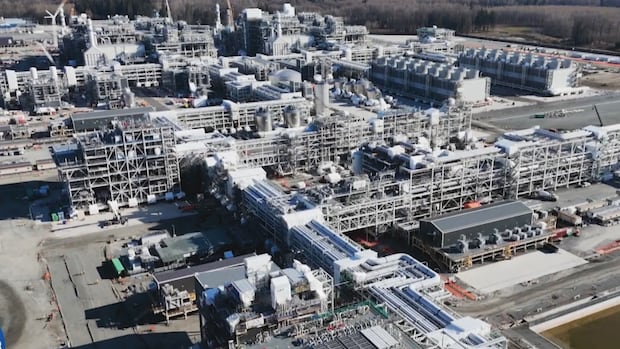
Global demand for liquified natural gas is growing, and Canada is trying to reinvent itself as a major player with several energy infrastructure projects in development. CBC’s Paula Duhatschek breaks down what it could take and why some worry Canada is making the move too late.
LNG expansion
Shell is the larger owner of LNG Canada, a consortium of companies that developed the country’s first liquified natural gas export facility in Kitimat, B.C., which began operating in July 2025.
Shell and its partners are developing a “Phase 2,” but have yet to make a final investment decision. The exact cost of the project is unknown, but would be in the billions of dollars.
Shell’s deal for ARC will boost its natural gas production, experts say, and give the company ample supply to export through the existing LNG Canada facility and a possible expansion.
“It’s a positive sign from the perspective that it certainly seems to paint the picture that Shell and its partners in LNG Canada look more likely to invest in phase two of LNG Canada,” said RBN Energy analyst Martin King.
LNG Canada is the only operational natural gas export terminal in B.C. However, several others are currently under construction or in development. Together, they would represent $109 billion in capital investment, according to Natural Resources Canada.
“It puts a little bit more push behind the whole LNG aura in British Columbia,” King said.
Canada’s energy sector still faces challenges, including the ability to export more oil and gas. Building new pipelines has been difficult, and projects have been plagued by delays and massive cost overruns.
Shell’s purchase of ARC is not only one of the largest in Canada in several years, but the biggest internationally since Chevron agreed to buy Hess in 2023.
The lack of deals by major oil and gas companies reflects a “dearth of attractive, long-duration resource,” said Andrew Dittmar, an analyst at energy consulting firm Enverus, in a report on the Shell acquisition.
At a time when the world is facing severe energy supply disruptions because of the conflict in the Middle East, more companies could be looking for a stake in the large oil and natural gas reserves of Western Canada.
“Within a global framework, Canada represents one of the most attractive opportunities with duration of high-quality resource for both gas in the Montney [basin in Alberta and B.C.] and crude in the oil sands,” he said.