dailynewsnblog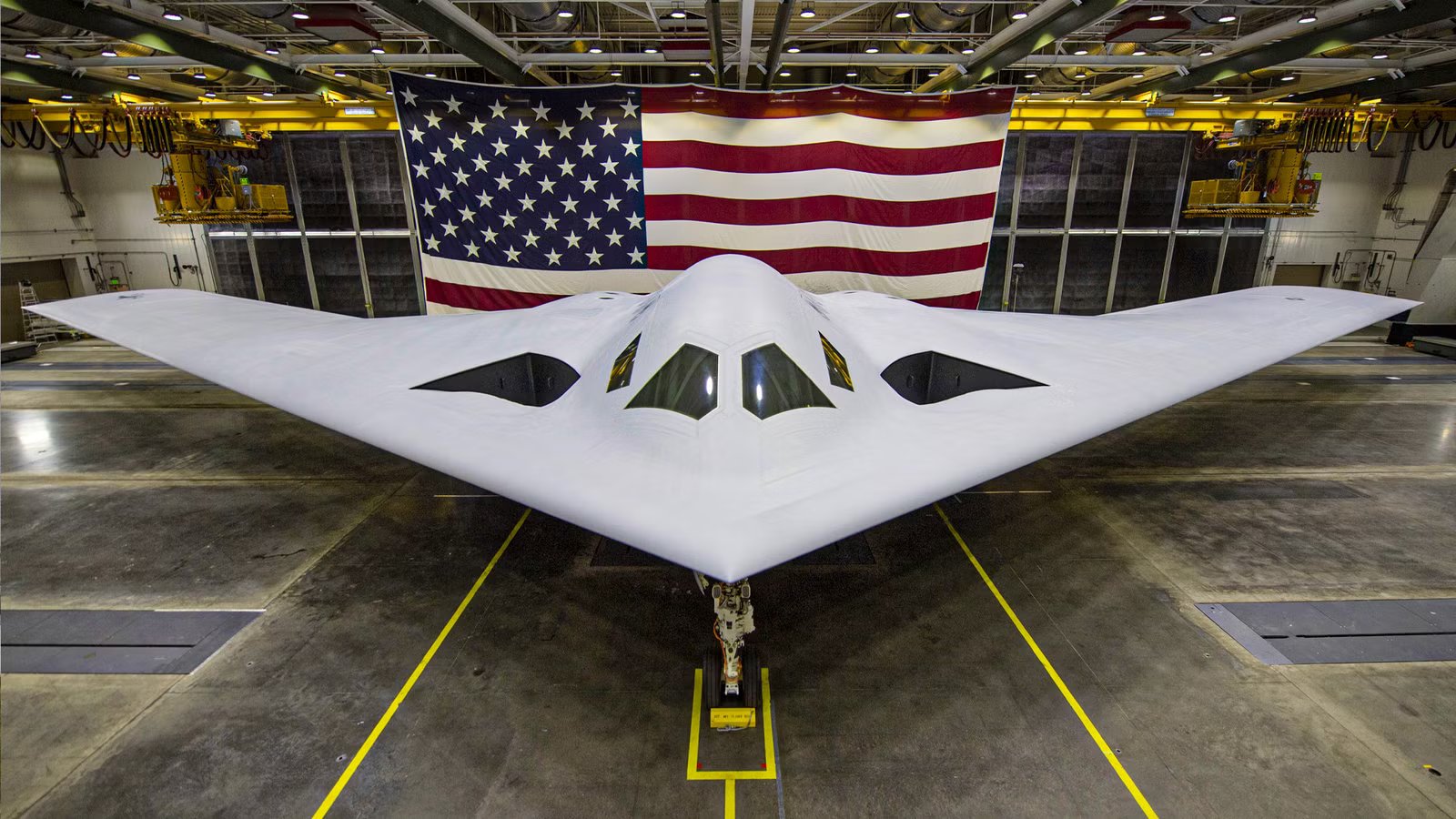
The United States Air Force has been flying the same three bomber platforms for decades: the Boeing B-52 H Stratofortress, the Rockwell B-1 Lancer, and the Northrop Grumman B-2 Spirit . Each of them has proven its relevance in recent operations — over Yemen, over Iran, and in sustained nuclear deterrence missions across the Pacific. But each one also carries a hard ceiling defined by either structural age, survivability against peer-level threats, or an architecture that has become prohibitively expensive to upgrade. The Northrop Grumman B-21 Raider was designed to have no equivalent ceiling, and it is the Air Force’s answer to all three problems simultaneously.
This article examines how the B-21 Raider compares with the three bombers it is ultimately intended to complement or replace. Looking at operational data, program details, and recent bomber force developments, it explores the strengths and limitations of each aircraft, the technological advances shaping the Raider’s design, and why the Air Force sees the B-21 as the foundation of its long-term global strike strategy.
Why The Existing Bomber Fleet Is Running Out Of Road

The USAF’s legacy bomber force is a masterclass in the limits of sustained relevance. The B-52H was designed in the late 1940s and first flew in 1952. The B-1B’s airframes accumulated structural fatigue at a rate no other heavy aircraft matches, a direct consequence of years of high-speed, low-altitude flying that is the most aerodynamically punishing regime a large aircraft can sustain. The B-2, for all its capability, was built on a proprietary classified architecture that has made every subsequent upgrade disproportionately expensive — and with just 19 operational aircraft, it is managed as a high-value, low-density asset rather than a deployable combat force.
According to the National Security Journal, the B-2’s staggering per-aircraft cost, exceeding $2 billion when development is amortized across the fleet, and its extreme maintenance burden are direct consequences of building a revolutionary aircraft in small numbers on a classified, non-modular architecture. The original Cold War plan called for 132 B-2s; budget cuts eventually reduced that to 21. That numerical constraint has defined every strategic calculus around the aircraft since: when seven B-2s flew from Whiteman Air Force Base, Missouri, to strike Iranian nuclear sites during Operation Midnight Hammer in June 2025, the deployment represented more than a third of the entire operational fleet.
More than 40 B-1Bs remain in service but are increasingly expensive to sustain, and the Air Force’s Bomber Vector plan calls for a phased retirement beginning in FY2028, with the type fully retired by the early 2030s. Surprisingly, the B-52’s future is more durable; the ongoing B-52J upgrade will keep the Stratofortress flying through the 2050s, as documented by Simple Flying, but it comes with an explicit caveat: the B-52J will never penetrate defended airspace, and no upgrade program intends to change that. The B-21 fills the gap between what the B-52J can do from outside the threat envelope and what needs to happen inside it.
B-21 Vs. B-2 Spirit: A Generational Leap From The Same Lineage

The superficial similarity in the shapes of the B-21 and the B-2 masks a generational gap in how they were designed, how they are maintained, and how they will evolve. Understanding the difference between them is the starting point for understanding why the B-21 matters.
The B-2 Spirit spans 172 feet (52.4 meters), stretches just 69 feet (21 meters) in length, carries up to 40,000 lb (18,144 kg) of ordnance across two internal weapon bays, and operates on four General Electric F118-GE-100 turbofan engines, each producing 17,300 lb of thrust. Its range exceeds 6,000 nautical miles (11,112 km) unrefueled — a figure extended essentially without limit by air-to-air refueling. The B-21 is estimated to be smaller than the B-2 — its precise dimensions remain classified — and carries a publicly stated unclassified payload of 30,000 lb (13,608 kg).
As previously detailed in Simple Flying, the Spirit’s radar cross-section is reportedly equivalent to that of a small bird despite its 172-foot wingspan, a Cold War-era achievement that remains extraordinary by any measure.
The B-2’s operational Achilles’ heel, however, has never been performance; it has been maintainability and deployability. According to The Defense Watch, the Spirit requires as many as 60 maintenance hours per flight hour, and its radar-absorbing material coatings demand climate-controlled, air-conditioned hangars that exist only at Whiteman AFB and a handful of overseas locations. That requirement has effectively barred the B-2 from forward deployment to the austere bases closest to the most strategically important potential conflict zones.
The B-21 is designed to operate from standard environmental shelters — meaning it can deploy to a vastly larger number of global bases — and according to Military Watch Magazine, its multi-spectral stealth approach covers radar, infrared, acoustic, and electronic emissions simultaneously, going beyond the B-2’s primarily radar-optimized signature reduction.
The deeper structural advantage of the B-21 over the B-2 is architectural. As written on Simple Flying, where the B-2’s proprietary systems require specialized teams and extended downtime for every upgrade, the B-21’s open, software-defined mission systems backbone allows new weapons, sensors, and network integrations to be pushed as software updates — the same approach that has defined the Lockheed MartinF-35‘s upgrade cadence. The B-2’s most debilitating operational weakness was never its radar cross-section but the impossibility of keeping that cross-section relevant at an affordable cost as threat environments evolved. The B-21 was designed from the ground up to solve exactly that problem.
7 Reasons Why The US Air Force Still Operates The B-52
From nuclear deterrence to missile truck missions, the B-52 Stratofortress remains essential to US airpower even in 2026.
B-21 Vs. B-1B Lancer: When Speed And Payload Meet Their Limits

The B-1B Lancer presents the most straightforward comparison in the entire bomber fleet discussion, because it is the platform whose capabilities and limitations are most immediately legible in recent operational history. The Lancer carries up to 75,000 lb (34,019 kg) of internal ordnance across three internal weapon bays, which is the largest internal conventional weapons load of any aircraft in the US inventory. And it can also reach Mach 1.25 on its four General Electric F101-GE-102 turbofans, each producing up to 30,780 lb of thrust with afterburning. Its unrefueled range exceeds 5,765 nautical miles (10,700 km). Those numbers made it a formidable conventional strike platform for three decades, and its performance during 2026 Iran Crisis demonstrated that the Lancer’s payload advantage remains real and operationally valuable when facing an air defense system of manageable capability.
The incorrect lesson to draw from those missions is that the B-1B’s performance model remains adequate for the threat environment the Air Force expects to face in a major conflict. As Simple Flying’s comparison of the Raider against the full bomber fleet has noted, the B-1B was designed for Cold War low-altitude penetration. It was a mission that wore its airframes down faster than any strategic bomber in American history, not to mention zero stealth capability. Iran’s air defense, however capable in certain bands, is not a peer-adversary integrated air defense system. Against China’s layered, multi-spectral threat environment, the Lancer’s raw speed and payload count for nothing if the aircraft cannot survive the approach corridor. The B-21 wins this comparison entirely through survivability, which is the only currency that matters for the next major conflict.
It is also worth noting that the B-21’s publicly stated unclassified payload of 30,000 lb (13,608 kg) may not represent the full picture. Classified weapons integration details may render the published gap with the B-1B less definitive than it appears. What is certain is that the B-21 is being designed to carry the AGM-158 JASSM-ER, the LRASM anti-ship missile, the B61-12 nuclear gravity bomb, and ultimately hypersonic weapons — a weapons suite that reflects the actual requirements of a high-end conflict, not the tonnage maximization calculus of a conventional strike aircraft. The B-1B’s payload advantage becomes strategically irrelevant if the aircraft cannot reach the target.
B-21 Vs. B-52J: Complementary Roles, Not Competition

The comparison between the B-21 and the B-52J is, uniquely in this discussion, not a competition. The Air Force’s Bomber Vector plan identifies just two platforms in the long-term bomber force: the B-21 Raider and the modernized B-52 Stratofortress. Their roles are deliberately complementary. One goes inside the threat envelope; the other operates outside it. Asking whether the B-21 “beats” the B-52 is approximately as useful as asking whether a scalpel beats a sledgehammer; the question misunderstands what each tool is for. The B-52J upgrade is genuine and significant.
The re-engining program — replacing the eight original Pratt & Whitney TF33s with eight Rolls-Royce F130 turbofans, adding a new radar, and modernizing communications and navigation equipment — will deliver 30% better fuel efficiency, eliminate the notoriously unreliable TF33 overhaul requirement, and keep all 76 Stratofortresses flying well past 2050, with initial operational capability targeted for 2033.
As examined by Simple Flying, the B-52 now carries the AGM-181A Long Range Standoff missile, which is a stealthy nuclear-armed cruise missile that allows the Stratofortress to hold targets at risk from far outside any defensive perimeter. Combined with a range of 8,800 nautical miles (16,297 km) unrefueled and a payload of up to 70,000 lb (31,751 kg), the B-52J will remain one of the most capable standoff strike platforms on the planet for decades.
What no B-52J upgrade will ever provide is the ability to penetrate a dense peer-adversary air defense environment. That is the B-21’s exclusive domain, and according to Simple Flying’s analysis of what separates these two stealth generations, the Raider’s combination of advanced stealth, open architecture, and forward-deployment flexibility makes it the only credible deep-penetration option for the 2030s and beyond. The two platforms divide the strategic strike mission cleanly: the B-52J launches from outside the threat envelope; the B-21 goes inside it. That complementarity, and not competition, is the logic of the future bomber force.
From Dogfights To Drone Strikes: The Military Aircraft Rewriting The Rules Of Combat
Modern air warfare is splitting into two: stealth aircraft and AI drones at one extreme, and improvised low-cost countermeasures at the other.
The Scale Advantage: Why 100+ Raiders Change Everything

The most strategically significant difference between the B-21 and every platform it replaces may simply be the number of airframes planned. According to The War Zone, while specific production rate figures remain classified, Aviation Week has reported that the baseline rate is understood to be close to eight aircraft per year. In February 2026, the Air Force and Northrop Grumman signed a $4.5 billion agreement — funded through the FY2025 “One Big Beautiful Bill” reconciliation legislation — to increase that production capacity by a further 25%, compressing the delivery timeline while maintaining cost and performance discipline. The Air Force’s confirmed procurement target is at least 100 aircraft, with Defense Secretary Pete Hegseth telling lawmakers the service will eventually need “a lot more” than that number, and planning discussions of a 145-aircraft fleet already appearing in official documents.
The arithmetic of that scale advantage is stark. As detailed on Simple Flying, at 100 aircraft the B-21 fleet would already be more than five times larger than the 19 operational B-2s it replaces; at 145 aircraft, more than sevenfold. Scale changes operational calculus in ways that raw specifications cannot: more aircraft means genuine redundancy against combat losses, improved readiness rates through a distributed maintenance burden, the ability to deploy simultaneously across multiple theaters, and a pricing dynamic the 21-aircraft B-2 program could never achieve. The B-21’s flyaway unit cost is targeted at approximately $700 million — a figure that, while substantial, represents roughly a third of what each B-2 costs when development expenditure is spread across the fleet.
Northrop Grumman CEO Kathy Warden framed the production acceleration with characteristic precision at the Bernstein Strategic Decisions Conference in May 2026: As we move through the completion of the test program and into production, we look forward to the opportunity to build these faster, and that’s the agreement we have now come to with the Air Force, which also opens up the opportunity for [the Air Force] to potentially buy even more. The first operational B-21 is expected to arrive at Ellsworth Air Force Base in South Dakota in 2027. The program is building a better bomber, and enough of them to make changes.
The B-21 Wins — On Paper And On Doctrine

The strongest argument for the B-21 is the alignment between what it was designed to do and what the United States military actually needs from a bomber in the 2030s throughout the 21st century. All three have been adapted, upgraded, and repurposed with remarkable ingenuity — but adaptation has a ceiling that the next war’s threat environment is now approaching.
According to Simple Flying’s analysis of B-21 and B-2 capability, the Raider was engineered with that threat environment as the starting condition rather than a retrofit. Its multi-spectral stealth addresses radar, infrared, and electronic signature simultaneously.
Its open architecture allows weapons and sensor integration on timescales that match adversary capability development rather than legacy acquisition timelines. Its forward-deployment flexibility addresses the operational constraints that have limited B-2’s strategic reach for three decades. And its optionally manned design philosophy positions the airframe for a future where autonomous or semi-autonomous strike missions may eventually render a permanent crew unnecessary in the highest-threat environments. As Simple Flying has noted in its detailed size and capability comparison of the two types, the B-21 is smaller than the B-2, although it encompasses a broader operational concept.
The bomber comparison debate ultimately resolves to a single question: which aircraft can reach the target, deliver weapons, and return from the environment where the next major conflict will be fought? For operations against adversaries with degraded or moderate air defenses, all three legacy platforms remain relevant and will remain so for their remaining service lives. For operations against a peer adversary with a mature integrated air defense system, the answer is the B-21. The B-2 can do it today with 19 aircraft. The B-21 will do it from 2027 with a fleet designed to be large enough, affordable enough, and strategically flexible enough to be a genuine backbone rather than an exquisite showpiece.