dailynewsnblog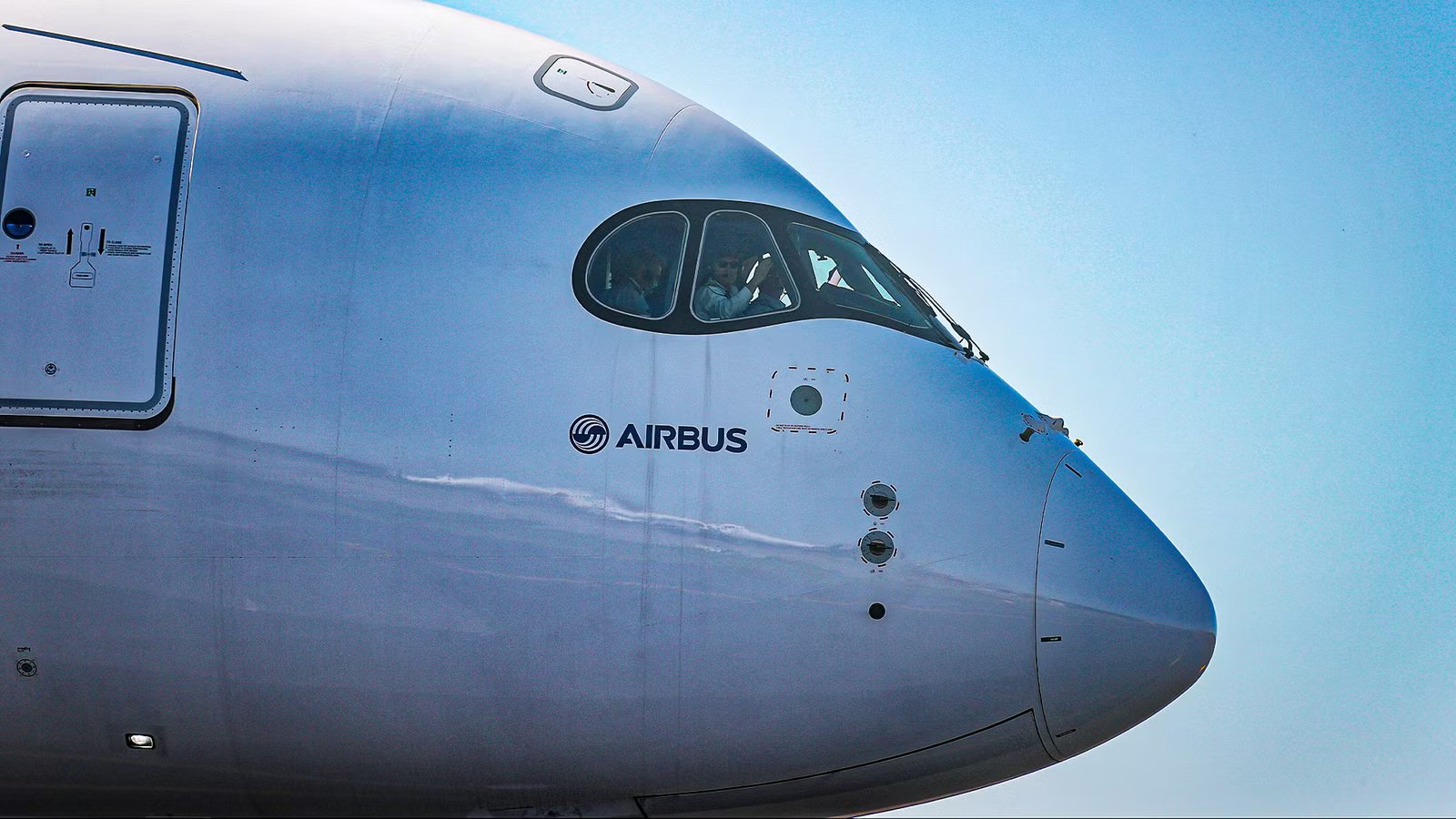
In 2026, the Airbus A350 occupies a remarkably strong position in the widebody aircraft market, combining advanced technology, impressive range capabilities, and strong airline adoption. While competition in the long-haul sector has always been intense, recent developments have shifted the balance in Airbus’ favor, particularly as  Boeing continues to navigate delays and strategic trade-offs across its widebody lineup. The A350 has steadily evolved into a benchmark aircraft for efficiency and ultra-long-haul performance, setting a high standard that its rivals are still working to match.
At the same time, Boeing’s widebody family, including the 787 Dreamliner, the long-serving 777-300ER, and the next-generation 777X, continues to offer distinct advantages in flexibility, payload, and economics depending on the mission profile. Rather than a simple winner-takes-all comparison, the competitive landscape in 2026 reflects a series of trade-offs between range, capacity, cost, and availability, with the A350 emerging as particularly dominant in certain high-value segments.
The Airbus A350’s Position In 2026

As of 2026, the Airbus A350 has matured into one of the most capable and commercially successful widebody aircraft in operation. Designed from the outset with composite materials, advanced aerodynamics, and next-generation engines, the aircraft delivers a combination of fuel efficiency and long-range capability that aligns closely with modern airline priorities. Its two primary variants, the Airbus A350-900 and the larger Airbus A350-1000, allow carriers to tailor capacity while maintaining strong performance across both medium and ultra-long-haul routes.
The aircraft’s appeal is particularly evident in its ability to serve routes that push the limits of commercial aviation. With ranges extending well beyond 9,200 miles (14,805 km) in standard configurations, and even further in specialized variants, the Airbus A350 has enabled airlines to rethink route planning in ways that were previously impractical. This has made it especially attractive for carriers pursuing point-to-point long-haul strategies, bypassing traditional hub structures.  Singapore Airlines currently operates the world’s longest non-stop commercial flight with its A350s, connecting its hub at Singapore Changi Airport (SIN) with New York John F. Kennedy International Airport (JFK).
Equally important is the Airbus A350’s passenger experience, which includes wider cabins, higher humidity levels, and lower cabin altitude compared to older widebodies. While these factors may seem secondary to raw performance metrics, they play a growing role in airline decision-making, particularly for premium-heavy routes where customer comfort directly impacts revenue.

Boeing 777X Vs. Airbus A350-1000: Who Will Win The Battle For Tomorrow’s Flagship?
The 777X is nearly ready for service, how will it fare against Airbus’s A350?
A350 vs Boeing 787: A Tale Of Two Strategies

The competition between the Airbus A350 and the Boeing 787 is perhaps the most nuanced and closely matched rivalry in the widebody segment. While both aircraft share a focus on fuel efficiency and composite construction, they were designed with fundamentally different philosophies that continue to shape their respective roles in airline fleets.
The Airbus A350-1000 significantly outperforms the largest variant of the 787 family – the Boeing 787-10, in terms of range. With an approximate 37% advantage, around 10,011 miles (16,111 km) compared to 7,284 miles (11,722 km), the A350 is capable of operating ultra-long-haul flights of up to 18 hours or more. These flights remain out of reach for the 787-10, which is optimized for shorter long-haul routes where range requirements are less extreme.
However, the Boeing 787 maintains a clear advantage in acquisition cost and operational flexibility. Its smaller size and lower trip cost make it ideal for opening new routes with uncertain demand, allowing airlines to experiment with long-haul services without committing to the higher capacity of the A350. This flexibility has made the 787 particularly popular among carriers expanding into secondary international markets.
Ultimately, the Airbus A350 and Boeing 787 represent two distinct visions for long-haul aviation. Airbus has prioritized capacity and range, creating an aircraft capable of handling the most demanding routes, while Boeing has focused on versatility and cost efficiency, enabling airlines to deploy the 787 across a broader range of missions. In 2026, both approaches remain valid, but the A350’s superior range gives it a decisive edge in the ultra-long-haul niche.
A350 Vs Boeing 777-300ER: Legacy Meets Efficiency

Despite being an older design, the Boeing 777-300ER continues to play a central role in global aviation, particularly among major international carriers such as  Emirates, Qatar Airways, and Cathay Pacific. Its reputation for reliability and performance has made it a cornerstone of long-haul fleets, and its capabilities remain impressive even when compared to newer aircraft.
One of the Boeing 777-300ER’s defining features is its powerful General Electric GE90-115B engines, which provide exceptional thrust and enable the aircraft to carry heavy payloads over long distances. This high payload-to-range ratio has made it especially valuable on routes with strong cargo demand, where the ability to carry both passengers and freight efficiently is a key consideration.
However, when compared directly to the Airbus A350-900, the newer aircraft demonstrates clear advantages in both range and fuel efficiency. Even in standard configurations, the A350 can fly farther while consuming less fuel per seat, reflecting advances in materials and engine technology that were not available when the 777-300ER was designed.
In its Ultra Long Range (ULR) configuration, the Airbus A350 extends this advantage even further, approaching the ability to operate near-global routes without refueling. This capability opens up new possibilities for airlines, particularly on routes where nonstop service provides a competitive edge over one-stop alternatives.
Nevertheless, the Boeing 777-300ER’s strengths ensure that it remains relevant. Airlines continue to value their cargo capacity, robustness, and proven track record, particularly in markets where demand consistently fills their large cabins. In this sense, the comparison between the two aircraft highlights a broader industry dynamic, where newer technology competes with established reliability and versatility.

Why Might The World’s Largest Twinjet Aircraft Have Airbus Worried?
Will the 777X’s innovative features and larger capacity outshine the A350-1000’s fuel efficiency and range?
A350 Vs Boeing 777X: Delays And Disruption

Shutterstock | Simple Flying
The Airbus A350’s most significant competitive advantage in 2026 may lie in its position relative to the Boeing 777X, an aircraft that has faced substantial delays and uncertainty. Originally scheduled to enter service in 2020, the 777X is now not expected to see its first deliveries until 2027, creating a gap that Airbus has effectively exploited.
These delays have had far-reaching implications for airlines that had planned their fleet strategies around the Boeing 777X. Carriers such as Emirates, Lufthansa,  Qatar Airways, Cathay Pacific, and Singapore Airlines have all been affected, with some forced to extend the life of older aircraft or seek alternative solutions while waiting for the new aircraft. The financial impact has also been significant, with Boeing recording billions in additional costs tied to the program.
In contrast, the Airbus A350 has been readily available and fully operational, allowing the European manufacturer to secure orders that might otherwise have gone to the 777X. This has been particularly evident in the ultra-long-haul sector, where airlines require both range and reliability without the uncertainty associated with delayed programs. While the 777X promises improvements in capacity and efficiency once it enters service, its absence in the market has given the A350 a clear and uncontested lead in certain categories. By the time the 777X becomes widely available, Airbus will have had several additional years to strengthen its position and expand its customer base.
Ultra-Long-Haul Leadership And Project Sunrise

Qantas, Simple Flying
One of the most compelling demonstrations of the Airbus A350’s capabilities is its role in enabling ultra-long-haul operations that were once considered impractical. This is best exemplified by Qantas’ Project Sunrise initiative, which aims to connect Sydney Airport (SYD) with the likes of  London Heathrow Airport (LHR) and New York John F. Kennedy International Airport (JFK), nonstop flights lasting up to 22 hours.
The aircraft selected for the  oneworld carrier’s ambitious program is a specialized version of the A350-1000, configured for maximum range and equipped with Rolls-Royce Trent XWB-97 engines. The first fully assembled aircraft rolled out in April 2026, marking a significant milestone in the project’s development, and deliveries are expected by the end of the year, with commercial operations planned to begin in early 2027.
These flights, covering nearly 11,507 miles (18,517 km), represent a new frontier in commercial aviation. They require not only exceptional aircraft performance but also careful consideration of passenger comfort, crew management, and operational logistics. The Airbus A350’s ability to meet these challenges underscores its position as the leading platform for ultra-long-haul travel.
No direct competitor currently matches this combination of range and readiness. While the Boeing 777X may eventually offer similar capabilities, its delayed entry into service means that the A350 will define this segment for the foreseeable future. The 787, meanwhile, lacks the range to compete in this category, reinforcing the A350’s unique role.

Here’s How Much A Boeing 787 Costs Compared To An Airbus A330neo
The two types are among the most sought-after airliners on the market.
Market Positioning And Airline Strategy

The way airlines deploy the Airbus A350 compared to Boeing’s widebody aircraft reveals much about its strengths and limitations. Rather than replacing all other aircraft types, the A350 tends to complement them, taking on the longest and most demanding routes while smaller or more flexible aircraft handle other segments. For many carriers, the A350 serves as a flagship aircraft, operating premium-heavy routes where its efficiency and passenger comfort can be fully leveraged. This includes not only ultra-long-haul flights but also high-profile connections between major global cities, where competition is intense and differentiation matters.
At the same time, airlines continue to rely on the Boeing 787 for route development and on the 777-300ER for high-capacity operations, particularly in markets with strong cargo demand. The delayed 777X is expected to eventually replace the latter, but until it enters service, the Airbus A350 faces less direct competition in the upper end of the market. In this context, the A350’s success is not simply a result of superior performance in one area, but rather its ability to align with evolving airline strategies. As carriers prioritize efficiency, flexibility, and passenger experience, the aircraft’s design choices have proven to be well-suited to the demands of modern aviation.