dailynewsnblog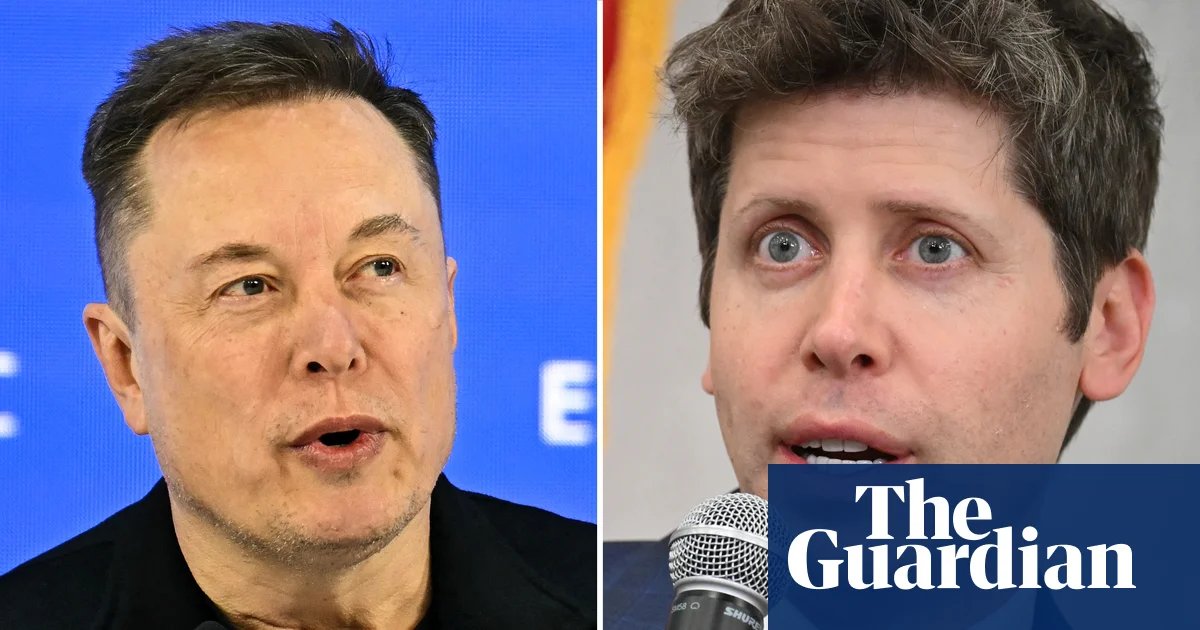
On Monday morning, a jury in Oakland, California, handed a resounding victory to Sam Altman and OpenAI in their long, bitter courtroom battle with Elon Musk.
The federal jury found Altman, OpenAI and its president, Greg Brockman, not liable for Elon Musk’s claims that they unjustly enriched themselves and broke a founding contract made with Musk when founding the startup. The unanimous verdict, delivered after less than two hours of deliberation, is a stark rebuke of Musk and his lawyer’s claims that Altman “stole a charity” through his leadership of OpenAI.
The jury’s decision, affirmed immediately by the judge’s dismissal of all charges, provides the AI firm with a stamp of approval for its for-profit plans, already in motion, and a clear path ahead to go public later this year at around a $1tn valuation. Musk’s demands that Altman be removed as CEO and that the for-profit arm of the company transfer some $150bn to the non-profit arm would have jeopardized the blockbuster initial public offering.
A delay to OpenAI’s financial bonanza may have been one of Musk’s goals. SpaceX – the centibillionaire’s mega-business that combines a titular rocket launching business, the satellite internet service Starlink and OpenAI competitor xAI – is reportedly planning to go public in June.
OpenAI’s plans now seem all but guaranteed, given that the world’s richest man couldn’t put a stop to them. Wall Street, ever wary of upheaval and uncertainty, is likely breathing a sigh of relief, said professor Sarah Kreps, director of the Tech Policy Institute at Cornell University. She called the ruling a reflection of the tough reality that developing frontier AI is expensive and that maintaining non-profit status is not viable in the face of fierce, capital-intensive competition.
“The decision is likely to reassure investors and the broader AI sector because it avoids a potentially chaotic outcome that could have challenged OpenAI’s commercial structure, Microsoft partnership, and future fundraising plans,” she said. “Purely nonprofit models are difficult to sustain at the cutting edge.”
What the trial did not deliver, though, were answers to major questions of the AI boom about safety, governance and labor. Musk had little claim to the mantle of champion of AI safety, given his own company’s many egregious lapses in reining in its chatbot’s offenses.
“Let’s not confuse the jury’s verdict with justice or accountability for the people of California,” said Catherine Bracy, CEO of the organization Tech Equity. She said Musk lost “on a technicality”, referencing the lawsuit’s statute of limitations and called for the state’s attorney general to revisit his agreement with OpenAI that allowed for its conversion to a for-profit enterprise. The jury found that Musk’s suit, which was filed in 2024, did not fall within the statute of limitations to bring his case. One of the key legal arguments in the trial surrounded whether the harms that Musk alleged took place – including his breach of charitable trust claim – occurred before certain dates. OpenAI argued that Musk was well aware of the company’s plans to pursue a for-profit structure as early as 2017 and therefore his case was filed outside the three-year limit.
Kreps echoed Bracy’s point: “That the trial turned on a procedural issue about timing leaves a lot of questions and debates unresolved, like how these systems should be governed, and who benefits from them economically, and whether the pace of deployment is becoming disconnected from broader public comfort with the technology.”
Musk’s lawyers said he would appeal the case. Despite their loss, they claimed they had achieved their goal of exposing Sam Altman’s deceptions. Attorney Steve Molo claimed that the testimony was “valuable for the world to see” and that the jury’s decision was a “technical” one.
OpenAI’s statement was a more straightforward proclamation of victory: “Mr Musk can tell his stories,” said attorney William Savitt. “What the jury found today is just that: stories, not facts.” He added that the jury’s verdict was “not a technical decision; it’s a substantive one”.
Whoever the victor, the trial demonstrated that a small cabal, mostly men, rules the AI industry. As I wrote in April, this trial’s central element was not a fight over AI’s benefit to humanity as it was the hateful vendetta that Musk brought against Altman.
“The trial also served as a reminder of how much the future of AI still depends on a remarkably small group of powerful tech figures and their personal rivalries,” said Kreps. “It highlighted a broader disconnect between the people building these systems and many of the people increasingly expected to live and work alongside them.”
Nick Robins-Early contributed reporting