dailynewsnblog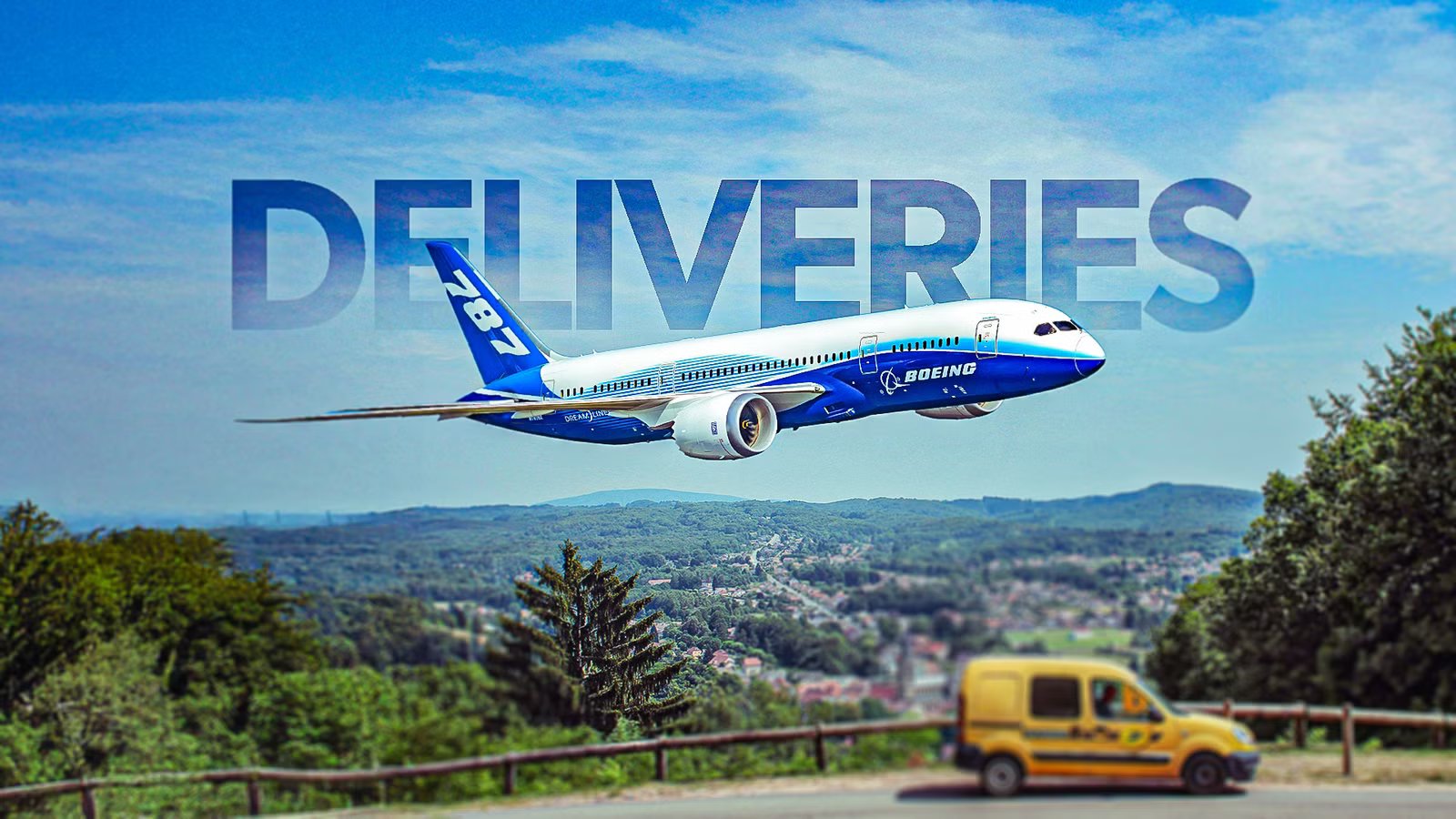
After several years of struggles with aircraft production rates, quality control issues, aircraft groundings, delivery halts, and certification delays,  Boeing appears to be getting back on track. 2025 saw Boeing outsell long-time rival Airbus for the first time since 2018, while the planemaker is also preparing to ramp up production of its best-selling 737 MAX and 787 programs. 2025 also saw Boeing’s highest delivery figures since 2018, and a significant increase in deliveries compared to years past.
While Boeing has made improvements with production volumes, the entire aviation industry is still struggling with supply chain constraints. This has increased lead times for a variety of components, delaying aircraft deliveries as a whole. In addition, both Airbus and Boeing are struggling with quality control, which can lead to further delays. It’s become far more difficult to manufacture and deliver an aircraft on time in 2025 compared to 2019, an issue that both planemakers are wrestling with.
Boeing’s Current Product Lineup

Boeing currently sells and produces variants from the 737, 767, 777, and 787 families. The 737 is currently sold as the fourth-generation Boeing 737 MAX, consisting of the 737 MAX 7, 737 MAX 8 (including the 737 MAX 200 subvariant), 737 MAX 9, and the 737 MAX 10. While all four variants are currently on sale, Boeing only produces the 737 MAX 8 and 737 MAX 9 variants. This is because the 737 MAX 7 and 737 MAX 10 have not yet been certified, a process that has been delayed for years.
The widebody Boeing 767, while famous for its use as a small passenger widebody, is only sold as the 767-300F and 767-2C, also known as the KC-46 Pegasus, and is produced in very small numbers. Both aircraft continue to be delivered throughout 2025 and 2026. Meanwhile, the Boeing 777 is actively being delivered as the venerable 777F, the most popular new-build freighter on sale, while the Boeing 777X family (consisting of the 777-8, 777-8F, and 777-9) is still undergoing development.
This leaves Boeing’s other winning aircraft family, the 787 Dreamliner. 2025 was one of the best years ever for the 787 program, and the type has received over 2,300 orders across its lifespan. While sales of the 787-8 have slowed down in recent years, the 787-9 is as popular as ever, holding its place as the most widely-ordered widebody aircraft variant of all time. The 787-10, meanwhile, is growing in popularity in part due to recently certified increases in gross weight, boosting the aircraft’s capability.
The Delivery Rate Of The Boeing 737

The Boeing 737’s delivery rate has been volatile over the past several years. The 737 MAX was grounded from March 2019 to November 2020, and the COVID-19 pandemic further disrupted 737 MAX production. Many subsequent 737 MAX deliveries were of white tail planes built during the grounding. As Boeing began to stabilize the aircraft’s production, a door plug blew out on an Alaska Airlines Boeing 737 MAX 9 in January 2024, leading the FAA to impose a production cap for the 737 MAX program.
The FAA had capped 737 MAX production at 38 aircraft per month, although Boeing was cleared in October 2025 to raise monthly production rates to 42 aircraft. In 2025, the planemaker ended up delivering 440 new 737 MAX 8s and 737 MAX 9s, while it may deliver over 500 new 737 MAX aircraft in 2026. While Boeing is currently only delivering the 737 MAX 8 and 737 MAX 9, the company is expecting to certify the 737 MAX 10 later in 2026, with first deliveries to occur in 2027.
|
Variants |
Number Built |
|---|---|
|
Boeing 737 MAX 8/9 |
2,120 |
|
Boeing 737 MAX 7/10 (Not yet certified) |
35 |
The 737 continues to trail behind the competing Airbus A320neo family, but the aircraft is holding its own in the marketplace. The 737 MAX 8 and 737 MAX 10 are proving particularly popular, especially as the A320neo family is now sold out for years. In addition, dual sourcing has become more popular in the airline industry as both manufacturers struggle with production delays, and larger airlines are often able to justify operating both types in their fleets.

How Many 737s Has Boeing Delivered Over The Past 5 Years?
Boeing has failed to ramp up 737 deliveries over the last few years to match those of its last ‘normal’ year in 2018.
Looking At The Boeing Widebodies

While steadier than the Boeing 737, the 787’s production has also experienced some hiccups in recent years. After the pandemic, Boeing shut down the 787’s final assembly line in Everett, consolidating 787 production in North Charleston. The 787 also experienced numerous production halts earlier in the decade due to quality control issues, but here, too, the company is turning around its fortunes. Boeing was producing between four and five 787s at the beginning of 2025, but had stabilized at roughly eight per month by the end of the year.
The company is preparing to open a second final assembly line at the North Charleston facility, initially intending to produce ten 787s per month in 2026. Long term, the facility should be capable of producing between 14 to 16 Boeing 787s every month. In 2025, Boeing delivered 88 787s, while it should be capable of delivering up to 120 new 787s in 2026. Long term, Boeing intends to deliver between 168 to 192 new 787s every year, which will meet or exceed pre-pandemic rates.
Boeing is delivering roughly three 777Fs per month, with 2025 seeing 35 new deliveries in total. Boeing is expecting to certify the 777X in late 2026 with first deliveries set for 2027, and once the 777X is certified, Boeing plans to ramp up combined 777 production to four per month initially. Boeing has already built over 20 customer-ready 777-9s, so the company will focus on delivering these planes before ramping up production. Meanwhile, the company delivered 30 767s in 2025, but will cease production of the commercial 767-300F in 2027.
Boeing’s Overall Annual Production Rate

In 2024, Boeing delivered just 348 aircraft, whereas the company delivered 600 commercial aircraft in 2025. The 737 MAX program is currently at 42 per month, with Boeing planning two increases in 2026. By the end of the year, the planemaker hopes to be producing 53 737 MAX aircraft per month. In 2026, Boeing may be able to deliver between 500 to 550 737 MAX aircraft. Long-term, Boeing is looking to build and deliver well over 600 737 MAX aircraft per year.
The future is also bright for the 787 Dreamliner. With the second final assembly line opening in 2026, the company is hoping to produce ten 787s per month, and the long-term production rate is expected to increase to 16 per month. This means that in the distant future, Boeing could end up producing over 190 Boeing 787s per month. But even in 2026, Boeing may be able to deliver close to 120 787s, which is an incredibly high rate for a widebody and nearly matches pre-COVID levels.
|
Aircraft |
Variants In Production |
Facility |
|---|---|---|
|
Boeing 737 |
737 MAX 7, 737 MAX 8, 737 MAX 9, 737 MAX 10 |
Renton, Washington |
|
Boeing 767 |
767-2C (KC-46), 767-300F |
Everett, Washington |
|
Boeing 777 |
777F, 777-9 |
Everett, Washington |
|
Boeing 787 |
787-8, 787-9, 787-9 |
North Charleston, South Carolina |
The Boeing 777 will remain at low volumes until the 777-9 is certified and the already-produced aircraft have been delivered, while production of the 767-300F will end in 2027. As a whole, the company should be capable of delivering well over 650 aircraft in 2026, while Boeing should be able to deliver between 800 and 900 airliners per year in the distant future. Of course, this will rely on the company’s ability to reliably produce its airliners promptly without sacrificing quality, which is a struggle in today’s market.

How Many 787 Dreamliners Has Boeing Delivered Over The Past 5 Years?
Boeing’s 787 deliveries remain at a third to half compared to their pre-pandemic heights while Boeing’s overall deliveries are also down.
Comparing To Airbus’s Annual Production Rates

Airbus delivered 793 commercial aircraft in 2025. The company is generally producing roughly 50 A320neo family aircraft per month, and 2025 saw the company deliver a total of 607 examples. Airbus is planning to boost A320neo production to 75 per month by 2027, which will allow the company to deliver up to 900 A320neo aircraft per year. In addition, Airbus is producing between seven and eight A220s per month, with plans to boost A220 production to 12 per month by mid-2026, and eventually to 14 per month, although this rate does not have a fixed date.
Airbus will soon be able to deliver over 1,000 narrowbody airliners every year, which is more than Boeing’s total annual output. However, the company’s widebody production volume is significantly lower than Boeing’s. Airbus is only building four A330s per month, with no plans to increase production until 2029 (five per month). Meanwhile, the A350 is currently being produced at a rate of roughly five aircraft per month, but Airbus plans to boost production to 10 per month in 2026 and 12 per month in 2028.
Combined, Airbus’s widebody production rates could exceed those of the Boeing 787 by the end of the decade, but Boeing is also building the 777X, which will put it ahead in the twin-aisle market. However, Airbus sells such a huge volume of A320neo family aircraft that Airbus could be producing 1,100 aircraft yearly by the end of the decade, significantly more than the 800 to 900 units that Boeing will likely be producing in the same time period.