dailynewsnblog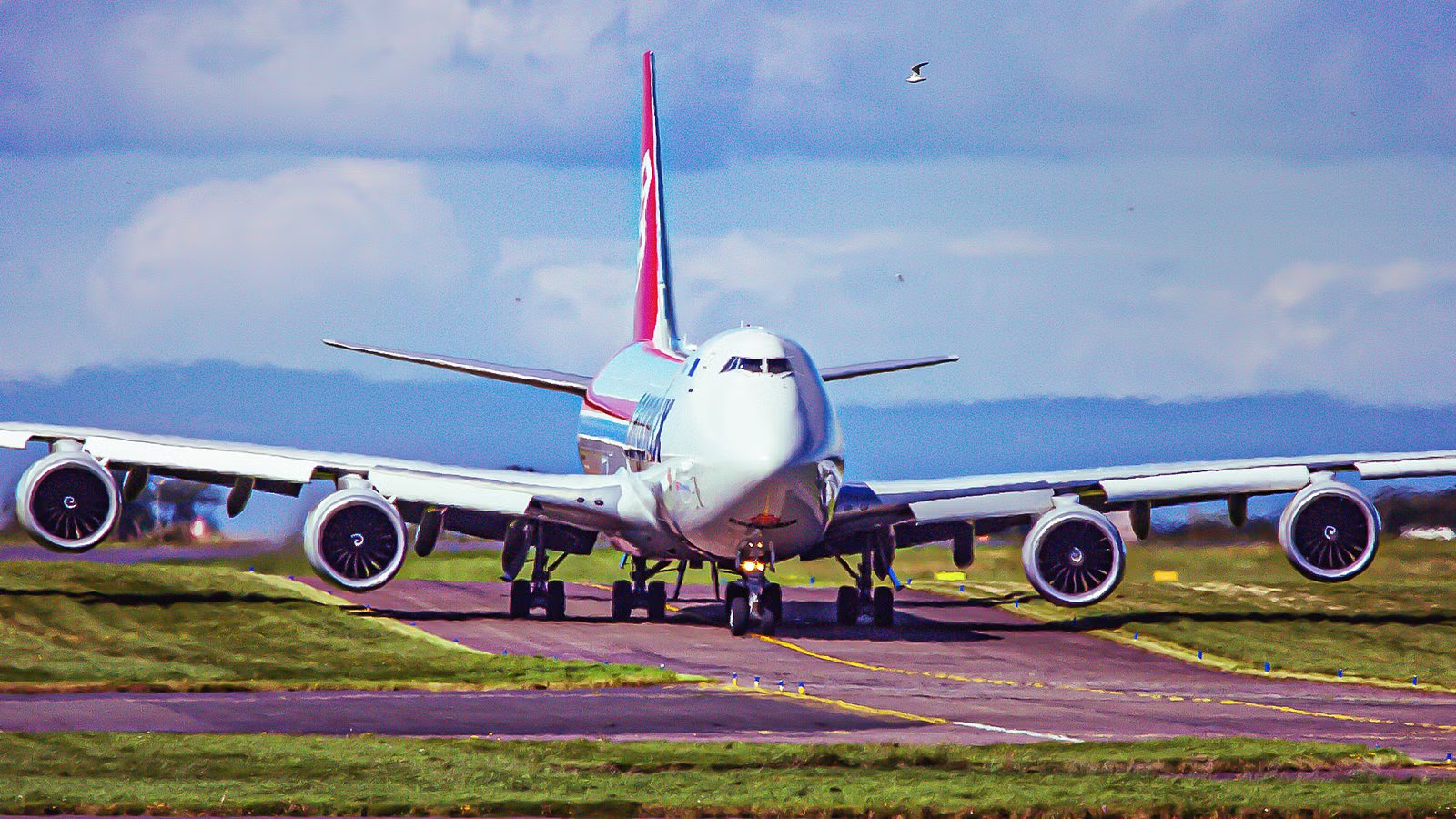
While airlines have many choices to purchase modern, fuel-efficient passenger aircraft, the choices are more limited for cargo operators. Buyers can acquire the Boeing 767-300F and the 777F (both of which are set to end production soon due to emissions regulations), or the in-development Airbus A350F and 777-8F. In addition, there’s also the option of purchasing used passenger planes for conversion, and until recently, the Boeing 747.
The Boeing 747 has largely disappeared from passenger service, due to its large size and high fuel consumption, and sales of the latest 747-8 were dismal. However, the 747-8F sold more than double the number of the passenger 747-8, while the 747-400F remains popular. These planes are the largest freighters in widespread commercial use, and the 747-8F is one of the most fuel-efficient cargo planes in service, while capital costs are low for essentially all 747-400Fs in service.
Luxembourg – Jakarta
Cargolux

Cargolux, one of Europe’s largest freight airlines, exclusively operates the Boeing 747, and its network is a mix of chartered operations and scheduled routes. In 2019, the carrier launched scheduled nonstop services between its main hub in Luxembourg Airport and Jakarta Soekarno-Hatta International Airport, currently using a mix of the 747-400F and the 747-8F. At the time of launch, this was Cargolux’s 16th destination in Asia-Pacific to receive scheduled service.
Cargolux is the only freight airline to operate scheduled nonstop flights between Europe and Indonesia. Using its 747s, the carrier primarily transports items like apparel, footwear, pharmaceuticals, perishables, and live animals on this route, but it can also carry large outsize cargo. Using the 747, Cargolux can carry high payloads, and the plane’s immense interior volume means that unit costs are low. Of course, it would be nearly unimaginable to open a new route with a 747 in the passenger world.
However, Cargolux captures lucrative freight flows on this route, and cargo airlines also find it easier to fill up a 747 than passenger airlines. The airline currently operates 26 Boeing 747s, split between 12 747-400Fs (including six 747-400ERFs) and 14 747-8Fs. Cargolux also holds orders for ten Boeing 777-8Fs with six options, which are intended to directly replace the 747-400F fleet. They will operate alongside the 747-8F for many years, as these planes are significantly younger, more efficient, and more capable than the 747-400F.
Leipzig – Shanghai
Atlas Air

Atlas Air operates nonstop services from Leipzig/Halle Airport to Shanghai Pudong International Airport with the 747-8F. While Atlas Air is primarily an ACMI (Aircraft, Crew, Maintenance, Insurance) carrier that provides charter services, this route has historically been run under the Polar Air Cargo brand, which is a joint venture between Atlas Air and DHL. However, this joint venture was dissolved in 2025, and Atlas Air has since absorbed the 747s as well as the 777s operating under Polar Air Cargo, while DHL absorbed the 767s.
While the Airbus A350F and Boeing 777-8F are positioned as direct replacements for the Boeing 747-400F, the 747-8F has no replacement on the horizon. It’s nearly 20 feet (six meters) longer than the 747-400F, and has a much greater payload capacity of nearly 140 tons. With its reprofiled wing and four General Electric GEnx-2B engines, the 747-8F is also much more efficient than the 747-400F, with greater range as well.
|
Aircraft |
Entry Into Service |
Engines |
|---|---|---|
|
Boeing 747-400 |
1989 |
4x General Electric CF6, Pratt & Whitney PW4000 or Rolls-Royce RB211 |
|
Boeing 747-8 |
2011 |
4x General Electric GEnx |
Leipzig Halle Airport (LEJ) is one of Europe’s largest cargo hubs, while Shanghai Pudong is Asia’s second-busiest airport for cargo operations and the third-busiest worldwide. Demand is extremely high for freight services between the two airports, and flights can also last upwards of ten hours. The 747-8F is the ideal aircraft both to meet demand and to keep operating costs low, given its relative fuel efficiency compared to older freighter aircraft.

The 7 Longest Nonstop Flights In The World In 2026
Four out of the seven routes use the Boeing 787.
Louisville – Anchorage
UPS Airlines

Louisville Muhammad Ali International Airport is the home of UPS’s Worldport, its largest hub where many of its flights originate and terminate, while its hub at Anchorage Ted Stevens International Airport is arguably its most critical base. While some modern freighters have the range to connect Worldport to Asia, this would require taking less cargo to accommodate the weight of the added fuel. This is why UPS Airlines and other cargo operators stop in Anchorage when flying between the US and Asia.
The stopover in Anchorage allows  UPS Airlines to refuel and take more cargo without making a significant detour, as the great circle routes between many Asian and North American cities fly close to Anchorage anyway. However, the other benefit of the stopover is the opportunity for sorting. Excluding Anchorage, UPS Airlines has eight hubs in the US and five in Asia. To meet demand, UPS would need to connect each of its Asian hubs with each of its US hubs, but the Anchorage stopover allows UPS to consolidate packages onto fewer flights.
|
UPS Airlines North America Hubs |
UPS Airlines Europe Hubs |
UPS Airlines Asia Hubs |
|---|---|---|
|
Louisville (Worldport) |
Cologne/Bonn |
Clark |
|
Anchorage |
East Midlands |
Hong Kong |
|
Columbia |
Kuala Lumpur |
|
|
Chicago-Rockford |
Shanghai-Pudong |
|
|
Dallas/Fort Worth |
Shenzhen |
|
|
Hamilton (Canada) |
||
|
Miami |
||
|
Ontario |
||
|
Philadelphia |
||
|
San Juan |
||
|
Seattle-Boeing Field |
Anchorage essentially acts as a central scissor hub for UPS, as well as for competitor FedEx Express. This system allows for more efficient routings and boosts the operating economics of each flight, similar to how a central hub airport works for a passenger airline. Given the importance of Anchorage, it’s no surprise that UPS Airlines uses its largest aircraft, the 747-8F, to connect it to Worldport.
Seoul – Los Angeles
Korean Air Cargo

Korean Air is notable for being one of only three operators of the passenger 747-8 (with the other two being Air China and Lufthansa), and it’s the only one of the three to also operate the 747-8F. With seven examples, these planes outnumber the carrier’s passenger 747-8 fleet, and Korean Air Cargo also operates four 747-400ERFs, complementing its 12-strong fleet of Boeing 777Fs.
While the 777-8F is positioned as a 747-400F replacement, the last-generation 777F is ill-suited for this task. It’s over 20 feet (seven meters) shorter than the 747-400F, and the 777F can only carry 103 tons of payload. A 747-400F can carry 113 tons of payload, while the 747-400ERF’s payload capacity is in excess of 120 tons. While the 777F has a longer range and burns less fuel, it’s a fundamentally smaller aircraft.
Korean Air Cargo heavily uses its 747 freighters on its highest-demand routes, with the newer and more fuel-efficient 747-8F also operating some of its longest flights. Los Angeles International Airport (LAX) is a major outstation for Korean Air Cargo, and the carrier’s cargo facilities at LAX are capable of handling two 747s simultaneously. In addition, Korean Air Cargo flies the 747 to multiple other US cities, including San Francisco, Seattle, and Chicago, in addition to other major cities in Europe and Asia.

The Aircraft Replacing The Boeing 747 Freighter
When the Boeing 747 freighter era ends, discover how Boeing’s 777s and Airbus’ A350F will redefine the future of global air cargo.
Luxembourg – Hong Kong
Cargolux

Regular nonstop flights by Cargolux with the Boeing 747-8F connect Luxembourg to the world’s busiest cargo airport. While Hong Kong is slowly losing its status as Asia’s premier business and financial hub, Hong Kong International Airport continues to hold its position as the world’s largest cargo hub due to its integral location in the Pearl River Delta. The huge level of demand alone can support regular flights with the 747-8F.
Luxembourg and Hong Kong are 5,044 NM (9,342 km) apart by great circle distance, with current airspace restrictions in Russia and the Middle East resulting in longer routings. This is already pushing the range of the Boeing 747-400F, the 747-8F, and even the 777F to the limit, but the 747-8F’s GEnx engines also make it far more fuel efficient than the 747-400Fs in Cargolux’s fleet.
The 747 has been replaced in passenger service largely because its size and capabilities weren’t needed or could largely be replicated by planes that were cheaper to operate. Cargo operators, however, have greater need for the 747’s qualities, and it’s only with the upcoming Airbus A350F and the 777-8F that its capabilities will be replaced. This is not the case, however, with the 747-8F, and so the plane remains irreplaceable.
Louisville – Dubai
UPS Airlines

The 747-8F is the flagship aircraft in UPS Airlines’ fleet, as it’s the largest, most capable, and most fuel-efficient aircraft in its fleet. Cargo airlines tend to prefer buying cheaper, used aircraft as fuel efficiency is less important since these carriers use their planes less, but UPS Airlines bought 30 new 747-8Fs specifically to be used on its longest routes.
This is the case for its route from the Worldport hub in Louisville to Dubai Al Maktoum International Airport (also known as Dubai World Central). At 6,438 NM (11,924 km), this is UPS Airlines’ longest route, and it’s also the world’s longest regularly scheduled 747-8 route ever. While this is UPS’s longest route, it’s shorter than FedEx Express’ nonstop route from its Memphis Superhub to Dubai World Central, which is flown with the Boeing 777F.
Although this route overflies UPS Airlines’ hubs in Europe, it cuts a day of transit time to Dubai, and therefore allows UPS Airlines to ship packages from the US to the Middle East much quicker. The Middle East is a growing market for UPS and other shipping companies, which makes connecting it nonstop to Worldport extremely lucrative. This is a route that would also be possible with the 777F, but the 747-8F carries far more cargo.