dailynewsnblog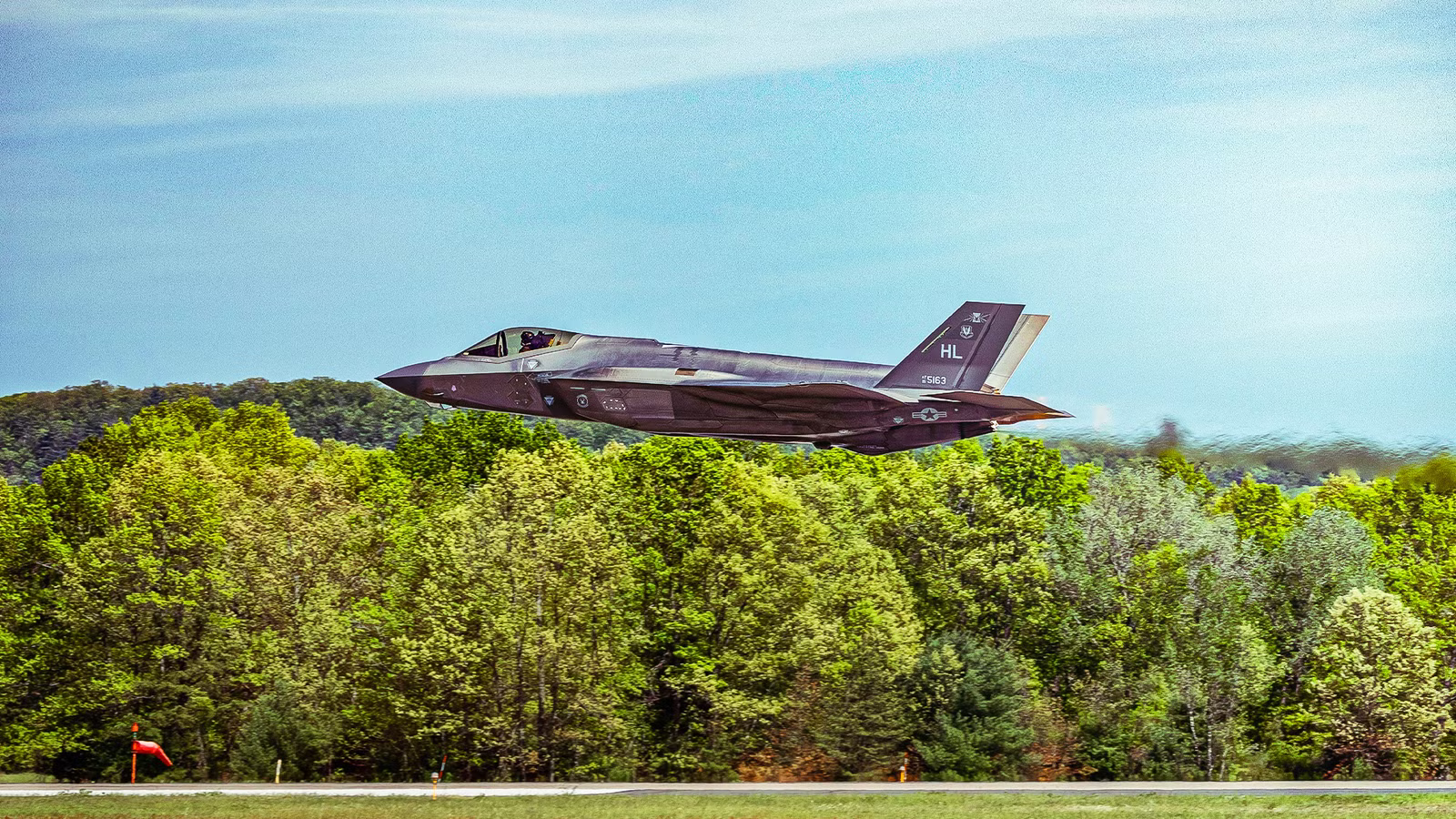
How many Lockheed Martin F-35 Lightning II does the United States Air Force fly in 2026? It sounds like a question with a straightforward answer, especially for a fighter fleet that has become one of the most closely watched parts of America’s airpower. But the number depends on what counts as an F-35 in the first place, and the answer changes if we talk about the aircraft delivered, the ones in the inventory, or the ones which service actually counts for combat.
We will examine how those different numbers are calculated, what the Air Force’s combat-coded figure actually means, how procurement has changed, and what the latest buying plans could mean for the fleet’s growth. The result reveals why the number attached to the F-35 fleet is not necessarily the most relevant one.
Why Is There No Single Official Count Of Air Force F-35As?

The Air Force has about 544 F-35A in 2026, according to the Pentagon’s Selected Acquisition Report plan, as reported by Air & Space Forces Magazine. That plan projects 25 new jets fielded during the year and three expected losses, which implies the fleet started 2026 with nearly 522 aircraft. Only 344 are counted as combat-coded for FY2026, about 63% of the total.
The clearest public milestone came on July 9, 2025, when, according to Air Data News, the service received its 500th F-35A at the Florida Air National Guard’s 125th Fighter Wing in Jacksonville International Airport (JAX). That made Jacksonville the fourth Air National Guard wing to fly the jet, after units in Vermont, Wisconsin, and Alabama.
The F-35A is the conventional-takeoff variant: a single-engine stealth fighter 51.4 feet (15.7 meters) long, with a 35-foot (10.7-meter) wingspan and a top speed near Mach 1.6, or 1,200 mph (1,930 kph). As Simple Flying previously explained, it is the Air Force’s primary variant. The Congressional Research Service put the inventory at 412 in mid-2024, so the fleet grew by roughly 130 jets in about two years.
The jets are spread widely. The F-35A flies from Hill Air Force Base in Utah, where the first operational squadrons formed, to Eielson AFB (EIL) in Alaska and RAF Lakenheath (LKZ) in England. The USAF’s share is the largest by a wide margin, which is why its count is the one analysts watch.
What Does “Combat-Coded” Mean, And Why Is It Only 344 Of 544?

The number depends on what is being counted. A delivery means Lockheed Martin handed over a jet, an inventory figure counts every airframe the service owns, and a combat-coded figure counts only aircraft assigned to fly missions. The Air Force’s fighter roadmap, which Air & Space Forces Magazine analyzed, uses a metric called Combat Coded Total Aircraft Inventory, which replaced the Primary Mission Aircraft Inventory. The old yardstick left out backup jets and attrition reserve, while the new one counts every fighter coded for combat. Uncrewed Collaborative Combat Aircraft are deliberately excluded.
Against the Air Force’s 1,271 combat-coded fighters in FY2026, the 344 combat-coded F-35As make up about 27% of the force. Both the 544 and the 344 are plan figures from different documents, so the comparison is approximate rather than exact, and either could move as deliveries and retirements land.
The same roadmap, as Defence Industry Europe summarized, keeps the Lockheed Martin F-16 force stable at 488 jets, so the Fighting Falcon still outnumbers the F-35A in the combat-coded fleet. The Congressional Budget Office, in its 2026 projection of fighter fleets, expects the F-35A to overtake the F-16C and D as the Defense Department’s largest fighter fleet only in 2030.
Why Did The Air Force Ask For Only 24 F-35As In FY2026?

The Air Force’s own position is that the F-35 is the foundation of the fighter fleet, but that the fleet is too small. Its latest force structure review, reported by Breaking Defense and by The Aviationist, says the service needs 1,558 combat-coded fighters overall, against the 1,271 it has in 2026. That is a shortfall of 287 jets, or an increase of about 23%.
But the service asked for only 24 F-35A for FY2026, half the 48 it had previously projected, because it shifted money toward the F-47 and additional  Boeing F-15EX, according to Air & Space Forces Magazine. The Air Force chief of staff at the time said, as Defense One reported, that full-rate buying would not resume until Lockheed Martin made progress on the delayed Block 4 upgrade.
Analysts have been blunter. David Deptula of the Mitchell Institute called the 38-jet FY2027 request “budget triage” in comments to Air & Space Forces Magazine. The request is 14 more than FY2026 but ten fewer than the Air Force asked for in 2025. Combined with 24 F-15EX, Military Times noted, the total fighter buy reaches 62, which is ten short of the 72 a year National Guard generals say is needed to stop the fleet from shrinking. Simple Flying traced how the cut, combined with a halted Fairchild A-10 Warthog retirement, set up a projected fighter shortfall around 2030, and a separate look at the A-10 showed why critics doubt the F-35A can cover everything the Warthog does.
Lockheed Martin delivered a record 191 F-35s in 2025, according to the company, but the figure needs some context: many of those aircraft were delayed from earlier years because of TR-3 hardware and software problems. The surge therefore demonstrates that Lockheed can significantly increase deliveries when those bottlenecks ease, but it doesn’t by itself prove that the factory can sustainably produce 191 aircraft a year, or that it can reliably exceed the Pentagon’s planned procurement rate.
How Far Is The Fleet From What The Air Force Needs?

Inside the Air Force, the F-35A is the largest of the stealth fleets but not yet the largest fighter. The Lockheed Martin F-22 Raptor force is being trimmed to 134 aircraft, while the F-16 holds at 488. The alternative the service is also buying is the Boeing F-15EX, a non-stealth fighter, and the FY2027 request includes 24 of them alongside the 38 F-35As.
Against other air forces, the American fleet is still in a class of its own. As detailed in Simple Flying’s ranking of the largest F-35 operators, the Air Force has agreed to procure as many as 1,763 F-35A, while the United Kingdom has committed to 138 F-35B and Australia ordered 100 F-35As. The US Navy and US Marine Corps ordered 340 carrier-capable F-35Cs, and even adding the British and Australian commitments to that figure gives 578 jets, one third of the Air Force’s goal alone.
The roadmap also puts some hard numbers on that problem. Reaching 1,558 fighters by 2035 would require maxing out F-35 production at 100 jets a year and adding 36 more F-15EXs annually. Lockheed Martin has said it can build 156 F-35s in a given year, according to Air & Space Forces Magazine, so the real obstacle is the budget rather than the industrial base. So, the Air Force’s problem is not scale against rivals, but pace against its own goal. That makes the pace of fleet growth the most important number.
How Long Would It Take To Close The Gap At Today’s Buy Rate?

The biggest risk is that the 38-jet request is not secured. Only 24 of the 38 are included in the base budget, and the Senate version of the defense authorization bill, per Breaking Defense, keeps the quantity at 24. The other 14 depend on a reconciliation package, as Air & Space Forces Magazine reported. A stopgap funding law signed on September 2 runs through December 11, according to the Congress.gov appropriations table.
The arithmetic starts with a 1,219-aircraft gap: 1,763 F-35As in the long-term goal versus 544 in the projected 2026 inventory. Divided by 38 a year, that takes around 32 years, pointing to roughly 2059. Subtract three losses a year, the rate the Select Acquisition Report plan assumes for 2026, and the fleet grows by 35 a year, which pushes the finish line toward 2062.
Losses and funding timing are important too. Each additional jet lost adds about ten days to the wait at a 38-jet pace, and a stopgap law holds most programs at FY2026 levels, so the larger FY2027 buy cannot start until Congress settles the appropriations bills.
The Numbers To Watch After The 500-Jet Milestone

The 500th F-35A marked a useful milestone, but the number that matters for the Air Force now is how quickly those aircraft become part of the combat-coded fleet. The gap between the 544 aircraft projected in the inventory and the 344 counted as combat-coded shows why deliveries alone do not tell the whole story.
The next major test is the FY2027 budget. The Air Force has requested 38 F-35As, but only 24 are included in the base budget. The other 14 depend on the reconciliation process, while the current stopgap funding law runs through December 11. If Congress funds all 38, the service can at least maintain the higher purchase rate it has requested. If it stays at 24, the fleet will add aircraft more slowly than the current plan assumes.
That makes the next few years easier to judge. The big uncertainty is no longer whether the Air Force can reach 500 F-35A, but how many of the aircraft it buys can be added to the combat-coded force, and how quickly that number moves toward the level the service says it needs.