dailynewsnblog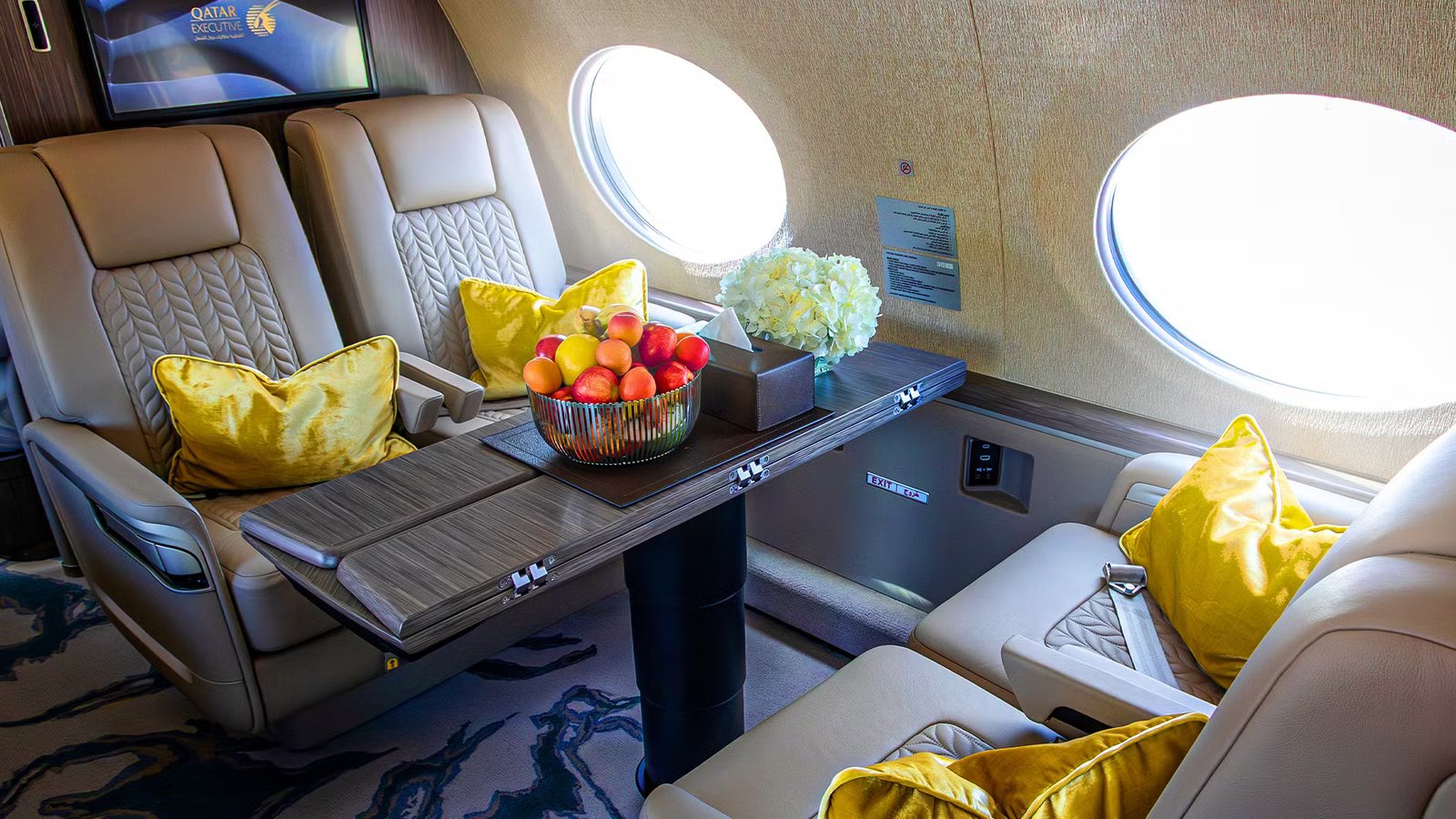
According to industry reports, large-cabin private jets such as the Gulfstream G700 and G800 are now dominating the high-end charter segment. This appears to be a reflection of a structural market shift toward larger private aircraft with longer range, making them better suited for intercontinental flights. However, the reason these jets have become so influential is different from what you might expect, and not simply because wealthy travelers want the newest and most comfortable jets.
On paper, these Gulfstream jets sit at the most expensive end of the private charter market. The Gulfstream G700 is estimated at around $15,000 to $18,000 per hour in 2026, while the longer-range Gulfstream G800 can command roughly $17,000 to $20,000 per hour. However, those figures do not tell the whole story, and the real shift is a result of the per-seat math. With space for up to 19 passengers and enough range for major intercontinental routes, airplanes like the G700 and G800 can make more financial sense compared to smaller jets as group size increases. As a result, the question for charter customers is no longer just which jet is cheapest per hour, but which aircraft delivers the best mission outcome.
Why Large Cabin Jets Are No Longer A Niche

Wikimedia Commons | Simple Flying
The rise of the large-cabin Gulfstream G700 and G800 in the private charter industry is not only about more comfortable jets with more capabilities, but increasingly about economics. At first glance, paying around $15,000 to $18,000 per hour for a G700, or $17,000 to $20,000 per hour for a G800, makes these aircraft appear to be among the most expensive options in an already expensive market. However, on long-haul routes with larger groups, the math changes quickly. Once the cost is spread across ten, twelve, or even nineteen passengers, per-seat costs start to fall fast.
This is the quiet reason bigger Gulfstreams have taken such a strong position in the high-end charter market. Industry reports suggest that large-cabin jets, including the G700 and G800, now account for more than 65% of the upper end of the market, reflecting a broader shift toward longer-range, premium private travel. These airplanes are not being chosen only because they are newer or more comfortable. They are being selected because they solve several problems at once: they offer greater capacity, longer range, and improved cabin layouts with additional comfort.
This is especially relevant on transatlantic and intercontinental routes, where the headline hourly rate does not tell the full story. A smaller jet may be cheaper per hour, but it also has less capacity, offers less usable cabin space, requires stricter payload compromises, or may be less suitable for an overnight sector with a full group onboard. For charter customers flying routes, such as New York to London or Dubai to London, the practical question is therefore no longer simply which jet is cheapest. It is when the larger Gulfstream delivers a better outcome per passenger, hour, and flight.

How Much Does A New Gulfstream G700 Cost In 2025?
The base price of the Gulfstream G700 has increased since its Introduction in 2019.
When Do Expensive Aircraft Start To Make Financial Sense?

To understand when these large-cabin Gulfstreams start to make financial sense, the overall benefits of the larger jet need to justify the high hourly rate. A G700 at an estimated $15,000 to $18,000 per hour, or a G800 at around $17,000 to $20,000 per hour, is clearly expensive. However, on longer missions with larger groups, the value comes from reducing per-seat costs while combining range, cabin comfort, and capacity.
A simplified New York to London example shows how the calculation changes. If a G700 is priced near the midpoint of its estimated price range, at around $16,500 per hour, a seven-hour transatlantic flight would generate roughly $115,500 in air time before additional costs such as repositioning, handling, catering, taxes, and landing fees. With eight passengers onboard, that works out to around $14,400 per passenger. With 12 passengers, it falls to around $9,600 per passenger. With 16 passengers, it drops to around $7,200, and at the typical capacity of 19 passengers, it falls to just over $6,000 per passenger.
That does not make the airplane cheap, but it explains why the biggest jets can become easier to justify. A smaller jet may cost less per hour, but it may also carry fewer passengers, offer less baggage flexibility, or provide a cabin that is less suitable for sleeping and working on a long-haul flight. In some cases, choosing a smaller jet could also mean splitting a group across two jets or accepting a fuel stop, both of which can weaken the apparent saving. Once a charter customer is looking to fly a larger group, such as a family, sports team, board of directors, or an executive team, the larger Gulfstream becomes a more practical means of transport rather than just a luxury upgrade.
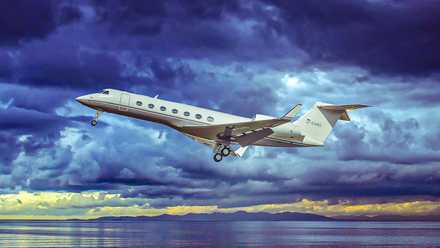
The 5 Most Popular Gulfstream Business Jets
A look at five business jets produced by Gulfstream that have become popular over the years.
How The G700 And G800 Compare

While the Gulfstream G700 and G800 sit close together in Gulfstream’s ultra-long-range family, they are not designed around the same priority. The G700 is designed with a focus on the cabin, featuring up to five living areas and the longest cabin in the family, primarily for passengers who want maximum usable space once airborne. On longer routes, this additional space can make a major difference. A group of business travelers can separate work, dining, and rest areas, while families or larger parties can spread out without the cabin feeling overloaded.
The G800 takes a slightly different approach and gives up some of the G700’s cabin size in exchange for an extended range of around 8,200 nautical miles (15,186 km) compared to 7,750 nautical miles (14,353 km) for the G700. That makes the aircraft a more compelling option when the value of the flight depends on avoiding a technical stop. For routes at the edge of the private jet range, such as London to Perth, Los Angeles to Sydney, or New York to Johannesburg, the G800’s advantage is not simply that it flies farther on paper, but that it can remove hours of extra travel time and reduce the risk of delays during refueling by avoiding refueling stops altogether.
Specification | Gulfstream G700 | Gulfstream G800 |
|---|---|---|
Maximum range | 7,750 nautical miles (14,353 km) | 8,200 nautical miles (15,186 km) |
Maximum speed | Mach 0.935 | Mach 0.935 |
High-speed cruise | Mach 0.90 | Mach 0.87–0.90 |
Cabin length | 56 ft 11 in (17.35 m) | 46 ft 8 in (14.22 m) |
Living areas | Up to 5 | Up to 4 |
Typical charter capacity | 12–19 passengers | 11–16 passengers |
Estimated hourly charter rate in 2026 | $15,000–$18,000 | $17,000–$20,000 |
Source: Jettly | ||
The contrast between the two aircraft matters for charter customers as the best jet is not always the newest or the most expensive. A G700 may be the better fit when the passenger group is larger, the flight is long but comfortably within range, and cabin flexibility matters most. A G800 makes more sense when the itinerary is range-critical, and the cost premium can be justified by eliminating a stop.

Gulfstream G700 Vs Bombardier Global 7500: Which Jet Is Cheaper?
These aircraft dominate the ultra-long-range business jet category.
Why Operators Like Large-Cabin Gulfstreams Too

The shift toward large-cabin Gulfstreams is not only being driven by passengers. Operators also have strong reasons to like aircraft such as the G700 and G800, since these jets can serve the premium end of the charter market, where customers often book longer flights for larger groups, and with more complex itineraries. This creates a degree of flexibility, highly relevant for operators, as it allows for a more diverse range of services.
For operators, these jets also fit the broader move toward fleet modernization. Charter providers and aircraft operators are investing in newer private jets with improved cabins, avionics, range, and efficiency, partly because customers increasingly expect more than simple aircraft access. They want digital booking, transparent pricing, integrated ground services, reliable connectivity, and airplanes that can support high-end long-haul missions. A newer jet gives operators a product that can command a premium hourly rate while also meeting these changing expectations.
Catch what other flight trackers miss
Emergency squawks, holds, NOTAMs — live signals, no signup.
Open tracker
Catch what other flight trackers miss
Emergency squawks, holds, NOTAMs — live signals, no signup.
Open tracker
Availability and utilization also help explain the appeal, as private jets are expensive assets that are only worthwhile with high utilization on high-value flights. A seven- to ten-hour charter generates far more aircraft time than a short regional flight, while the ability to serve charter demands gives operators more ways to market the aircraft. Supply constraints can make the newest aircraft harder to source at short notice, potentially supporting pricing for operators with access to the right fleet. In that sense, the rise of the G700 and G800 is not just about what customers want, but also about what operators can monetize most effectively.
Ultimately, large-cabin Gulfstreams work because they align both sides of the charter equation. Customers get more range, more usable cabin space, and a better per-passenger outcome on complex long-haul trips, while operators get aircraft that can command premium rates on high-value routes. That is why the rise of the G700 and G800 is not just a story about luxury, but about how the economics of high-end private aviation have shifted toward bigger, longer-range aircraft.