dailynewsnblog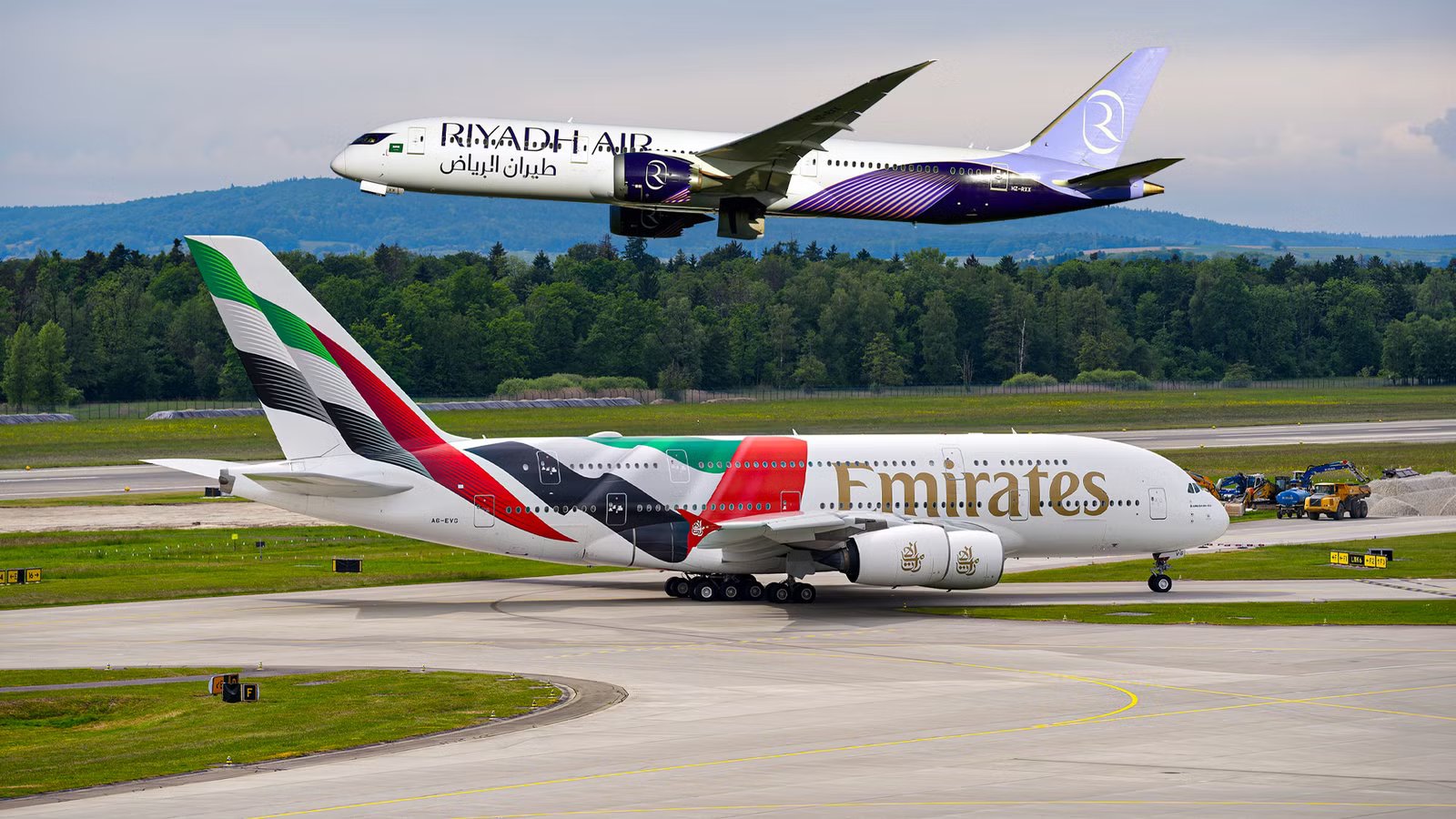
Aviation in the Middle East is getting even hotter and has entered its most volatile chapter yet. With the official launch of public ticket sales and scheduled commercial routes by Saudi Arabia’s  Riyadh Air, the long-standing monopoly of incumbent mega-carriers faces an existential challenge. Backed by the massive financial engine of the Public Investment Fund, this newcomer is entering the market with a baseline expectation of global dominance, targeting more than 100 destinations by 2030.
Dubai-based  Emirates, the traditional heavyweight of ultra-premium global transit, is answering this threat not with price wars, but with a colossal $2 billion defensive strategy. The way forward is to overhaul its existing widebody fleet and raise the stakes on its legendary onboard soft product. Emirates aims to construct a luxury moat that no new start-up, regardless of capital, can easily cross. This multi-layered defense reveals how the world’s most profitable international carrier plans to protect its crown against a state-funded rival built specifically to overpower it.
The Origins Of A New Rivalry

The timing of this confrontation could not have been more interesting. Emirates recently reported a historical record annual profit of AED 22.8 billion ($6.2 billion) for the fiscal year ending March 31, 2026, giving the Dubai carrier unprecedented financial leverage to reinvest in its brand. However, Riyadh Air operates under the virtually unlimited mandate of the Saudi National Aviation Strategy, throwing away the traditional financial barriers that keep new airlines from scaling instantly.
This conflict moves beyond simple corporate rivalry into a geopolitical race for geographic transit dominance. For over two decades, Dubai has stood as the undisputed global crossroads, using its hub-and-spoke architecture to capture premium traffic moving between west and east. Riyadh Air’s rapid rollout of high-profile routes, including  London Heathrow Airport (LHR) and Manchester Airport (MAN), seems more like a deliberate attempt to divert these lucrative passenger streams directly through King Khalid International Airport (RUH) instead.
To survive the challenge, Emirates has to rely on its hard-earned operational scale and immediate brand recognition. A brand-new airline can order the latest widebody frames, but it cannot immediately replicate decades of premium consumer loyalty or a fully matured global network. Emirates, therefore, is choosing to deploy its record cash reserves into immediate passenger experience upgrades, giving the Saudi upstart a rapidly moving target that is not easy to chase.
Bringing The Fleet Up To Speed

Emirates’ entire defensive strategy rests upon an aggressive, hyper-accelerated aircraft interior modernization project. Emirates is stripping down and rebuilding the interiors of 219 widebody aircraft, split between its flagship Airbus A380 double-decker jets and its trusted Boeing 777 fleet. The process involves completely removing every seat, carpet, and bulkhead panel to install standard-setting configurations that maintain consistency across all major long-haul corridors.
The ultimate weapon in this hard-product modernization is the widespread integration of the highly praised premium economy cabin. Inserting this mid-tier luxury option into routes historically dominated by binary business and economy layouts allows Emirates to capture high-yield leisure travelers who want upgraded comfort but avoid full premium pricing. Riyadh Air has anticipated this by installing a four-class layout right out of the gate on its incoming Boeing 787-9 aircraft, recognizing that the battle for modern corporate and premium leisure spend is won or lost in these multi-tiered cabin ecosystems.
The economic realities of these structural choices will dictate route profitability as both carriers go head-to-head on flagship sectors like Dubai to Riyadh and London Heathrow. Emirates can distribute its massive capital investment across an immense active fleet, so the unit cost of upgrading each aircraft remains manageable. If aircraft delivery delays continue to plague the wider aviation industry into late 2026, Emirates’ ability to refresh its active fleet rather than waiting on manufacturer backlogs will provide a distinct tactical advantage over an opponent relying entirely on new orders to arrive.
The Experience Makes Or Breaks The Flight

Seating arrangements form the foundation of passenger comfort, but the ultimate battle for premium consumer mindshare plays out through meticulous soft-product curation. Being limited by the confines of the aircraft cabin means that the sensory details of the journey become the main way an airline differentiates itself from its peers. Emirates understands this dynamic intimately, which is why a significant portion of its multi-billion-dollar investments is directed toward experiential touchpoints that passengers can touch, smell, and taste.
This commitment is clearly visible in the recent rollout of the 18th iteration of its exclusive luxury Bvlgari amenity kits. Gradually appearing on select long-haul routes throughout the year, these redesigned kits are carefully customized by gender and cabin class to mirror the warm tones of the newly retrofitted cabins. First class female passengers receive exclusive 30-milliliter bottles of high-perfumery Le Gemme Sahare Eau de Parfum, an opulent fragrance inspired by desert landscapes featuring notes of ambergris and Taif rose.
These ultra-luxury touchpoints are highly functional tools designed to retain elite flyers who might otherwise be tempted by Riyadh Air’s fresh alternatives. Then, matching these premium cosmetic and fragrance offerings with sustainable elements like recycled fabrics and eco-friendly kraft paper packaging, Emirates addresses modern customer expectations without sacrificing a shred of the indulgence it is famous for.
The Ground Race

An elite onboard product loses its competitive edge if the ground transit experience fails to match that same level of luxury. The multi-billion-dollar premium cabins flying through the skies of the Middle East need equally advanced infrastructure on the ground to process passengers smoothly. Because of this dependency, the corporate rivalry between the two carriers is also pushing forward a massive construction race to build the ultimate global transit facility which has already lingered in the background for some time.
Dubai is defending its title by using a proven multi-concourse setup at Dubai International (DXB) while preparing a long-term transition to a massive multibillion-dollar expansion at Al Maktoum International (DWC). Meanwhile, Saudi Arabia is building its defense by constructing the brand-new King Salman International Airport in Riyadh. Backed by sovereign wealth, this mega-hub is designed to handle 120 million passengers annually by the end of the decade, presenting a direct challenge to Dubai’s traditional hub-and-spoke monopoly.
Gaining the loyalty of high-yield business travelers is all about minimizing ground friction through private terminal entrances, dedicated customs lanes, and ultra-luxury lounges. Emirates has spent three decades perfecting this ground-handling ecosystem, giving it a deep operational advantage. Riyadh Air has to build these premium ground environments from a completely blank slate, turning the construction of its physical airport layout into a critical element of its market entry strategy.
Catch what other flight trackers miss
Emergency squawks, holds, NOTAMs — live signals, no signup.
Open tracker
Catch what other flight trackers miss
Emergency squawks, holds, NOTAMs — live signals, no signup.
Open tracker
Is Financial Backing Enough?

Startups like Riyadh Air are few and far between, as not many have the financial backing that the new Saudi airline has, but can that actually be enough to challenge an airline as established as Emirates? Capital on its own is not enough, but how effectively that capital replicates decades of route optimization and global connectivity is where the equation can start to change.
A clean-sheet design allows a new carrier to install cutting-edge technology like massive 15.6-inch (39.6 centimeters) 4K OLED screens and four dedicated USB-C ports at every seat without dismantling old systems, but it still lacks immediate network depth. The established giant has a mature global hub that processes millions of transit passengers seamlessly across six continents, creating a massive scheduling advantage that a startup would need years to duplicate.
The reality is that high-spending corporate travelers and frequent flyers do not shift their alliances based on seat width alone. The ultimate luxury in modern aviation is time, which is dictated entirely by frequency of flights and minimal layover windows, making the established hub a formidable defensive fortress, even if there is a seemingly unlimited pot of money to invest.
The New Middle Eastern Golden Era?

The unfolding rivalry between these two titans of the skies marks the beginning of a profound change across the entire landscape of international aviation. Billions of dollars are flowing into hardware upgrades and cabin refinements, and the baseline expectation for long-haul passenger comfort is permanently shifting upward, pushing rival carriers outside the region to adapt or risk obsolescence.
For the everyday traveler, this means the mid-tier cabin is no longer treated as an afterthought or a slightly wider economy section. Premium economy has now evolved into an upscale comfort tier, offering travelers legitimate luxury elements at a fraction of the cost of a fully flat bed. Both Riyadh Air and Emirates are showing this with their respective premium economy products, demonstrating how this part of the cabin is where battles are being fought.
The geopolitical push to transform the region into a premier global tourism and logistics axis guarantees that this capacity war will intensify. As the new entrant scales up its widebody fleet, the battleground will move beyond hardware into the digital realm, where biometrics, personalized catering, and seamless cloud-based entertainment will define the next generation of airline loyalty.