dailynewsnblog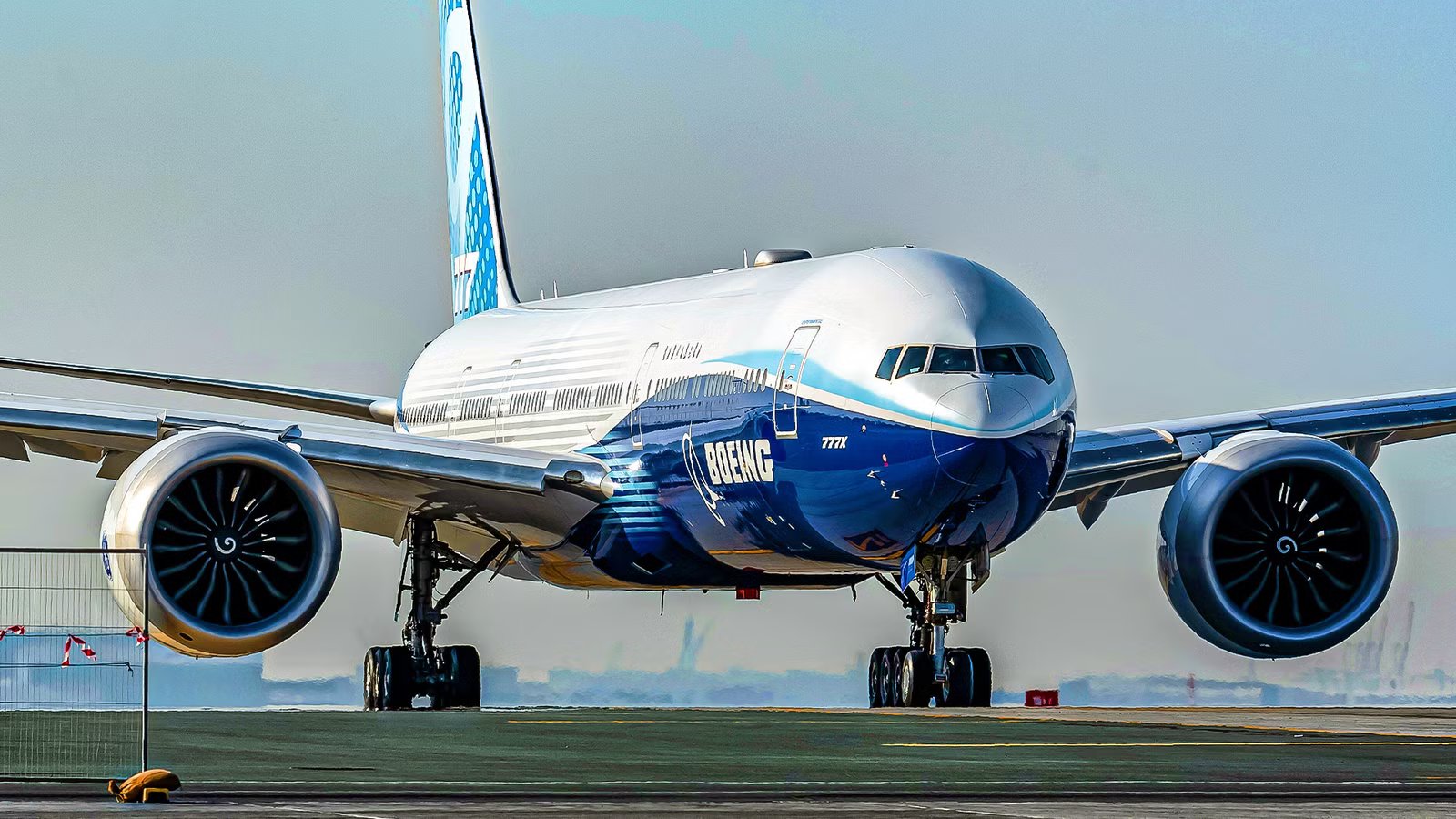
An engine like the CFM56 is easy to work on, in part because it’s a known motor that has been in service for decades and has global support. It’s easy to arrange maintenance for the engine, while parts are cheap to source and can be delivered quickly. But with any new engine, it takes time to scale up a maintenance network, particularly today, as new models are becoming increasingly complex, and this is the exact challenge that early Boeing 777X operators will face with the aircraft’s General Electric GE9X engines.
Engines are the most complicated and expensive components of any aircraft, making maintenance challenging. Recent engine models have also faced reliability and durability issues, with the Rolls-Royce Trent 1000 and Pratt & Whitney PW1000G models being infamously troublesome. While General Electric has a proven track record with the preceding GEnx and GE90, this doesn’t guarantee that the GE9X will be trouble-free. Even if it is, however, this also doesn’t mean that maintenance will be easy.
What’s New With The GE9X?

The General Electric GE9X promises to deliver a fuel-efficiency improvement of up to 10% over the second-generation GE90 powering the Boeing 777-200LR, 777F, and 777-300ER. This is possible through the engine’s bypass ratio of 10:1, among the highest of any in-service turbofan. It’ll have an overall pressure ratio of 60:1, up from the GE90’s pressure ratio of 40:1, while the high-pressure core is designed with a 27:1 pressure ratio. These figures are the highest of any commercial turbofan engine.
Mechanically, the GE9X has a fan diameter of 134 inches (340 cm), along with only 16 fan blades, fewer than either the GEnx or GE90. The blades are constructed out of fourth-generation carbon fiber reinforced polymer (CFRP), while 65 components are constructed out of ceramic matrix composites (CMCs). The extensive use of CMC allows the engine to run hotter with higher pressure ratios without compromising durability, and the GE9X has the most CMC components of any production turbofan in history.
While the engine will be fuel efficient, it’s the promised durability that’s arguably most important. The 777-9 competes against the Airbus A350-1000, which is equipped with the Rolls-Royce Trent XWB-97. The engine is highly efficient, but has faced durability challenges in harsh conditions. The GE9X’s reported advantage in this area is a key selling point, and it will be critical for the engine to deliver on its promises in the long-run for the 777-9 to compete against the A350-1000. In the same vein, durability will be crucial for the GE9X to be competitive against the Trent XWB-97.
The Facilities That Will Initially Service The GE9X

There are only a handful of facilities currently certified to service the GE9X. General Electric’s facility in Nantgarw, Wales, will lead the GE9X’s entry into service program and will be the flagship overhaul plant for the engine. General Electric has signed an agreement with HAECO for a future plant in Xiamen to serve as part of the GE9X’s global MRO (maintenance, repair, overhaul) network, while also breaking ground on a new on-wing support facility in Dubai for the GE9X.
GE9X repair and support services will also be conducted in Singapore, while the company is partnering with Lufthansa Technik on a new MRO facility in Poland. As a whole, these locations will provide crucial support for the 777X’s largest and most important customers, but the network as a whole is quite small. This is to be expected with any new engine, as it takes time for engine manufacturers to develop a large support network with in-house facilities and contracts with third parties.
Recent Aircraft Engine Programs | Introduction | ||
|---|---|---|---|
General Electric GE9X (777X) | 2027 (projected) | Pratt & Whitney PW1100G (A320neo) | 2016 |
Pratt & Whitney PW1900G (E-Jet E2) | 2018 | Rolls-Royce Trent XWB (A350) | 2015 |
Rolls-Royce Trent 7000 (A330neo) | 2017 | General Electric GEnx-1B (787) | 2012 |
CFM LEAP-1B (737 MAX) | 2017 | General Electric GEnx-2B (747-8) | 2011 |
CFM LEAP-1A (A320neo) | 2016 | Rolls-Royce Trent 1000 (787) | 2011 |
Pratt & Whitney PW1500G (A220) | 2016 |
What this does, however, is restrict maintenance and support availability during the 777X’s first few years in service, until this network is expanded. Again, this shouldn’t be too much of a concern, as the 777X’s initial production rate will be limited, and it will take time until the aircraft is operated in large numbers. However, it will be important for General Electric to scale up its support and MRO availability in the aircraft’s early years. That way, customers can keep their planes flying as long as possible and keep maintenance costs low.
The Requirements To Service The GE9X

While the GE9X’s support network is currently small, General Electric’s moves indicated that the company has planned ahead to accommodate a large in-service fleet. So far, the size of the maintenance and support network has primarily been dictated by demand, but there’s another aspect to this, in that the GE9X itself is cutting-edge and complex. As such, service facilities will need to obtain the required tooling and develop procedures in compliance with General Electric’s practices to properly support the GE9X.
Catch what other flight trackers miss
Emergency squawks, holds, NOTAMs — live signals, no signup.
Open tracker
Catch what other flight trackers miss
Emergency squawks, holds, NOTAMs — live signals, no signup.
Open tracker
The GE9X makes more use of CMC components than any other engine in-service, while its 16 CFRP fan blades are the largest ever built. In addition, it also makes use of advanced combustor technology and features an extensive use of 3D-printed components. The GE9X has several parts differences from either the GE90 or the GEnx, and this will require specialized tooling, new equipment, and training for technicians. All of this takes time and costs substantial sums of money.
Worldwide, independent MRO companies make money from performing service work for other airlines, and some carriers operate their own MRO divisions that perform substantial work for other airlines. Delta TechOps and Lufthansa Technik are two of the best examples. While General Electric is mainly focused on ensuring availability for GE9X support, these companies don’t yet have any incentive to join the GE9X network until the engine is in service and widely used. Expect that as General Electric grows its own support network, independent companies will also join as the 777X becomes more popular.
The Importance Of Reliability And Durability

Turbofan engines have become increasingly advanced and complicated in the quest for greater fuel efficiency. Engine manufacturers are increasingly pushing the envelope, upping pressure ratios and increasing temperatures to boost thermal efficiency. However, this can also come at the expense of durability. The Rolls-Royce Trent 1000 faced this exact issue, resulting in early inspections and repairs, which led to worldwide fleet groundings as Rolls-Royce couldn’t keep up with the demand. This is the same situation faced by the Pratt & Whitney PW1000G.
Of course, the Trent 1000 and PW1000G have been in service for years and are widely used around the world. The GE9X has yet to enter service. Still, the small support network may prove problematic if the GE9X faces durability issues, which are a possibility given how cutting-edge the engine is. While General Electric is confident in the engine and airlines appear to be responding positively to test data, any potential issue with the GE9X will be worsened by a lack of maintenance support.
What’s more likely, however, is initial teething issues with the engine, as essentially every new turbofan model experiences some sort of early problem upon entry into service. Typically, this is quickly mitigated through improvements that address the issue and are quickly implemented in the in-service fleet. However, this may again rely on MRO and support availability, depending on the nature of the improvements. While General Electric has surely taken this into account and will be ready to address any early problems, it will need to ensure support availability for its customers.
The GE90 And GEnx Support Networks

Unlike the GE9X, the GE90 and GEnx are known, proven engines that have been in service for years, with the GE90 dating back to the 1990s. They’re renowned for their durability and reliability, quickly becoming among the most successful widebody jet engines in history, and there are thousands of these engines in service today. In part, the reliable operation of these engines is due to General Electric’s extensive support network, which ensures availability for all customers.
General Electric directly operates multiple facilities for the GE90, including in Nantgarw, Petropolis, and Kuala Lumpur, while also partnering with several other companies for additional locations in Singapore, Doha, and Dubai, among other locations. Some of these sites have full MRO capability, while others are on-wing support centers. Meanwhile, the GEnx can be serviced at six authorized MRO facilities as well as eight on-wing support centers, ensuring global coverage.
Boeing Airlines In Production | Engine Choices |
|---|---|
Boeing 737 MAX | CFM LEAP-1B (50/50 joint venture between General Electric and Safran) |
Boeing 777X | General Electric GE9X |
Boeing 787 | General Electric GEnx-1B, Rolls-Royce Trent 1000 |
This level of worldwide support is what General Electric will be aiming to replace with the GE9X. Today, aircraft sales performance is increasingly tied to the qualities of the engine, and this is especially important for programs like the 777X that only offer one choice of engine model. The GE9X’s in-service performance, reliability, and durability will be a key driver behind 777X sales, but the plane’s success will also count heavily on service availability. Given General Electric’s past successes, the company is well-positioned to further scale up its support network, helping ensure future sales for the GE9X and the 777X.