dailynewsnblog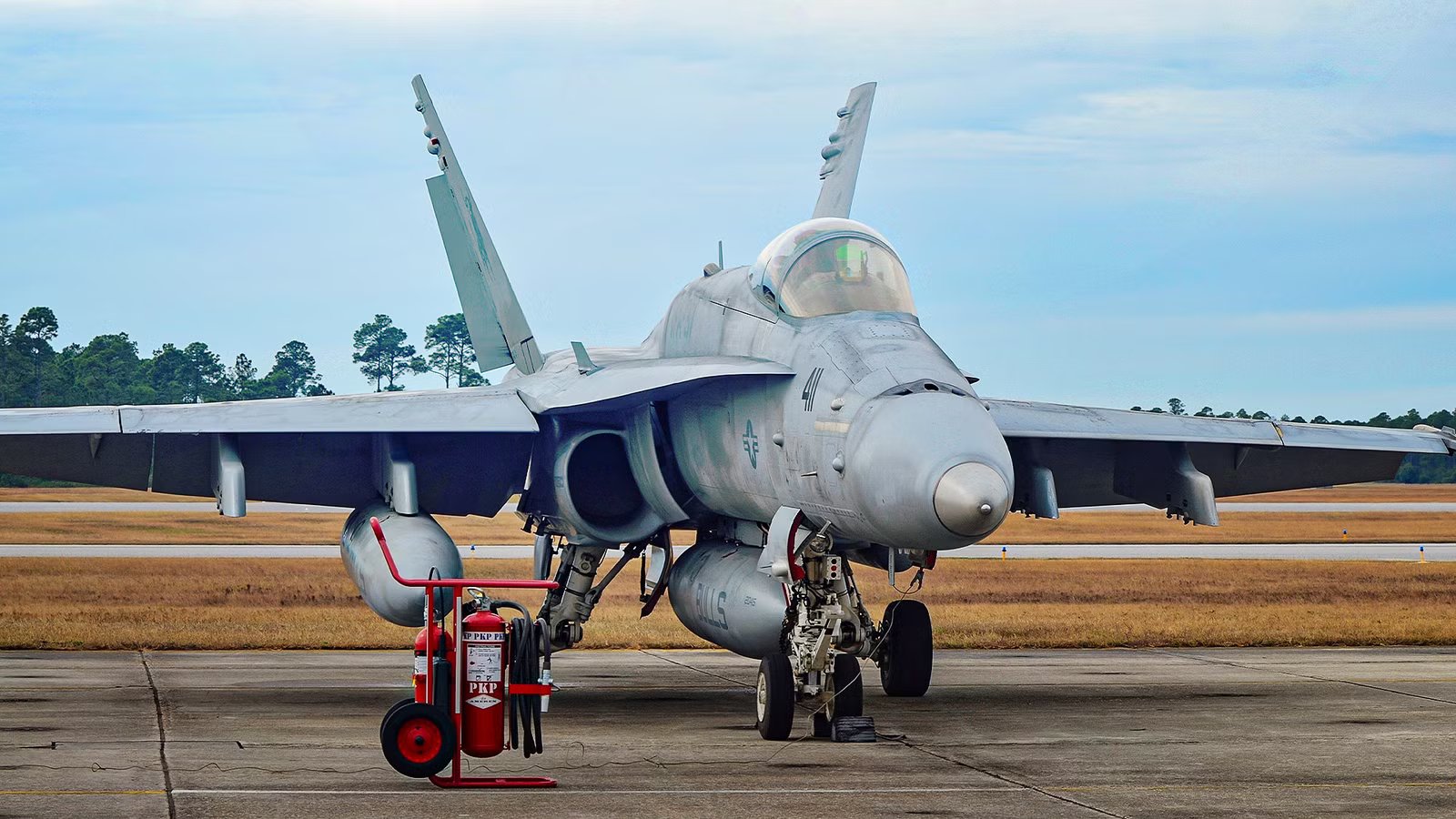
Just days ago,  Boeing successfully completed the first flight of its MQ-25A Stingray unmanned carrier-capable drone. This aircraft is meant to augment the US Navy Air Wing with an unprecedented form of manned-unmanned teaming. The drone will primarily provide aerial refueling to American naval aviation squadrons. However, it also introduces capabilities in intelligence surveillance and reconnaissance that can significantly enhance the mission of strike fighter squadrons.
The Navy has allocated $771 million to produce three drones by 2029. These aircraft will be the first in a series that will revolutionize naval aviation. Relieving manned strike fighters from the ‘Buddy Tanker Mission’ will free up anywhere from 20% to 33% of the combat-capable fighter jets in the Air Wing, which are currently preoccupied with providing extra gas to their squadron mates in the air.
Push Button Gas On The Fly

The latest and greatest version of the Boeing F/A-18E/F Super Hornet is the Block III iteration, which incorporates software that allows the pilot to both summon a Stingray drone to rendezvous in flight and deploy its drogue refueling probe.
When the MQ-25A enters service, it will be a revolution in the history of Naval Aviation as well as one of the most dynamic force enhancements in the history of the US Navy’s Aviation community. The drone is engineered to be controlled by operators from a station on the aircraft carrier. However, it is also designed to accept tactical commands from pilots in the air to actively respond to the needs of naval aviators on the fly.
The pilot simply issues a command, while the artificial intelligence that automates the MQ-25A plans its own flight path and executes the necessary pattern to maneuver into position as the Navy or Marine Corps pilot dictates. Pilots of the Lockheed Martin F-35C Lightning II 5th generation stealth fighter jets will also be able to do exactly the same thing.
The New Breed Of Buddy Tankers

While the pilot provides tactical direction, the MQ-25A remains a primarily autonomous system. For routine operations like carrier deck handling, takeoff, and landing, it will be managed by Air Vehicle Pilots at the Unmanned Carrier Aviation Mission Control System MD-5 Ground Control Station on the aircraft carrier. Flight deck operators will use handheld controllers to taxi the MQ-25A, working with traditional taxi directors before launching via catapult.
Once airborne, AVPs will switch from active steering to supervising control, allowing the drone to fly autonomously via pre-set waypoints. While the carrier handles the overall mission profile, receiving pilots can take tactical control once in the air using software interfaces in the cockpit. It’s in fighter jets or on airborne command platforms like the Grumman E-2D Hawkeye that will be able to use Link 16 commands to direct the Stingray.
Date / Milestone | Stingray Progress Description |
|---|---|
Aug 2018 | Contract Award: Navy selects Boeing for the $805M MQ-25 engineering and development contract. |
Sept 2019 | T1 First Flight: First flight of the prototype. |
June 2021 | First Aerial Refueling: MQ-25 T1 successfully refuels a Navy F/A-18F Super Hornet for the first time. |
Dec 2021 | Carrier Integration: First MQ-25 prototype deck handling tests completed aboard USS George H.W. Bush. |
Dec 2024 | CVN Capability: USS George H.W. Bush becomes the first carrier fully equipped with an Unmanned Air Warfare Center. |
Apr 25, 2026 | Production First Flight: The first production-representative MQ-25A airframe completes its maiden flight. |
Late 2026 | Pax River Testing: Aircraft transfers to NAS Patuxent River for formal Navy mission systems verification. |
2027 – 2028 | Sea Trials: Extensive carrier qualifications (CAT/TRAP) using production-representative aircraft. |
2029 (Current Goal) | Initial Operational Capability (IOC): First squadron ready for deployment (delayed from original 2026 target). |
Data link will enable pilots to order the drone to vector into a specific pattern for interception and then extend the refueling drogue in order for the pilot to make the rendezvous. The drone will autonomously maintain its flight path and stabilize the hose-and-drogue system while the receiving pilot performs the actual plug. If communication is lost, the drone can automatically execute a back-up plan to regain contact or return to the carrier for a landing using the Joint Precision Approach Landing System.
How Many Drones Does The US Department Of Defense Operate?
The rapidly growing fleet of unmanned aircraft.
Intelligence Surveillance Reconnaissance For The Air Wing

The primary mission of the Stingray is to be a flying gas station for the Air Wing, but it is also going to be equipped and programmed to perform persistent maritime patrol when it is not in demand. Boeing is expected to equip a retractable electro-optical infrared turret under the nose of the drone. With this, the MQ-25A will be able to cue targets from hundreds of miles away and relay that targeting data to the F/A-18 or other assets like the EA-18G Growler for electronic jamming or missile engagement.
This secondary mission will provide a significant enhancement for the carrier strike group without the commitment of additional aircrew and reducing wear and tear on higher performance airframes. The high-bypass Rolls-Royce AE3007 engine equipped on the Stingray gives it a loiter time of around 10 hours, which allows it to perform extended mission sets on every sortie. In between pumping gas for strike fighters, the MQ-25A will surveil large swaths of open ocean to identify potential surface threats and populate the common operating picture on the battle space data link for the CSG.
The Stingray will effectively become a scout for the Air Wing through the first implementation of manned unmanned teaming, or MUM-T, ever put into practice by Naval Aviation. Aircrew on Super Hornets or Hawkeyes will be able to command the Stingray to investigate a specific area of interest by directing it to follow a new flight path over data link.
The drone will automatically gather imagery and sensor data to relay back to the CSG and airborne platforms. It could potentially be able to coordinate with maritime patrol aircraft like the Boeing P-8 Poseidon as well, while acting as a forward-deployed sensor node.
Why The US Navy Is Quietly Expanding Its Aircraft Carrier Fleet
America is getting more of the mighty flat tops.
The Super Hornet’s Plug And Play Fly by Wire

A pilot inside a Super Hornet will be able to use the large area display inside the glass cockpit layout to check the status of an MQ-25A Stingray and input commands for the drone. In a refueling mission, the pilot can tap the screen to send tactical commands, like ordering the MQ-25A to release its refueling drogue, directly through data link. The hardware that makes this possible is the distributed targeting processor network and the tactical targeting network technology.
The DTP-N computer is a major upgrade over legacy systems, which provides 17 times more processing power than its predecessors. This central avionic engine drives the complex algorithms and third-party applications installed inside the cockpit, giving the Super Hornet the capability of controlling not just one, but multiple drones simultaneously. Meanwhile, the TTNT is a high-speed, low-latency data link receiver and transmitter capable of transferring massive amounts of data, including live video feeds, between Stingray drones and Super Hornets in real time.
On an aerial refueling rendezvous, most of the command input by a pilot will be limited to simple instructions. On the other hand, coordinating with a Stingray on an ISR mission will transform the interface inside the Super Hornet into a command node. Using the touch screen display will give the pilot access to imagery and all of the data being gathered by the drone wherever it is flying.
While the touchscreen is used for configuration, critical tactical steering or sensor cueing is often integrated into the hands-on throttle-and-stick controls, minimizing the time the pilot spends looking inside the cockpit during combat. As The Aviationist writes, the goal of this interface is to reduce the pilot’s workload by making drone control as intuitive as adjusting a flight instrument, allowing them to remain focused on the primary mission.
US Navy Pilots In Training Will Now Make Their 1st Carrier Landing In An F/A-18 Or F-35
No tailhook required to earn wings of gold?
Stingray: The First Of Its Kind

The first production-grade MQ-25A took flight on April 25 from Mid-America St Louis airport in Illinois. During this 2.5-hour flight, the autonomous aircraft proved a number of performance features in preparation for its very first flight to Naval Station Patuxent River in Maryland. During this, Navy AVP operators controlled the drone during the first test flight. The flight validated the aircraft’s Rolls-Royce AE 3007N engine performance, basic flight controls, and autonomous taxi, takeoff, and landing capabilities.
This flight officially launched a rigorous flight test program designed to expand the Stingray’s performance envelope. Unlike the earlier T1 prototype, which first flew in September 2019, this production-representative airframe features a retractable EO/IR turret and other mission-specific modifications.
Specification | Boeing MQ-25A Stingray |
|---|---|
Primary Mission | Aerial Refueling & ISR |
Propulsion | 1x Rolls-Royce AE 3007N (10,000 pounds thrust) |
Fuel Offload | 14,000 – 16,000 lb (6,350-7,257 kg) |
Range | 500+ Nautical Miles |
Length | 51 feet (15.5 meters) |
Wingspan (Extended) | 75 feet (22.9 meters) |
Wingspan (Folded) | 31.2 feet (9.5 meters) |
Height | 10.8 feet (3.3 meters) |
Testing is expected to progress to deck handling along with arrested landings and catapult launches from aircraft carriers at sea this year. The USS George H.W. Bush, CVN-77, was the first carrier to be equipped with a dedicated Unmanned Air Warfare Center, making it the likely candidate for the drone’s first operational cruise.
The first four Stingray aircraft are under the original $805 million development contract. The Navy currently plans to procure 76 MQ-25A aircraft, with the goal of reaching Initial Operational Capability by 2029. The current estimated cost per unit is $209 million for each aircraft, according to Congressional review. The MQ-25A is a pathfinder for the Air Wing of the Future, where the Navy eventually aims for up to 60% of the carrier air wing to be uncrewed.