dailynewsnblog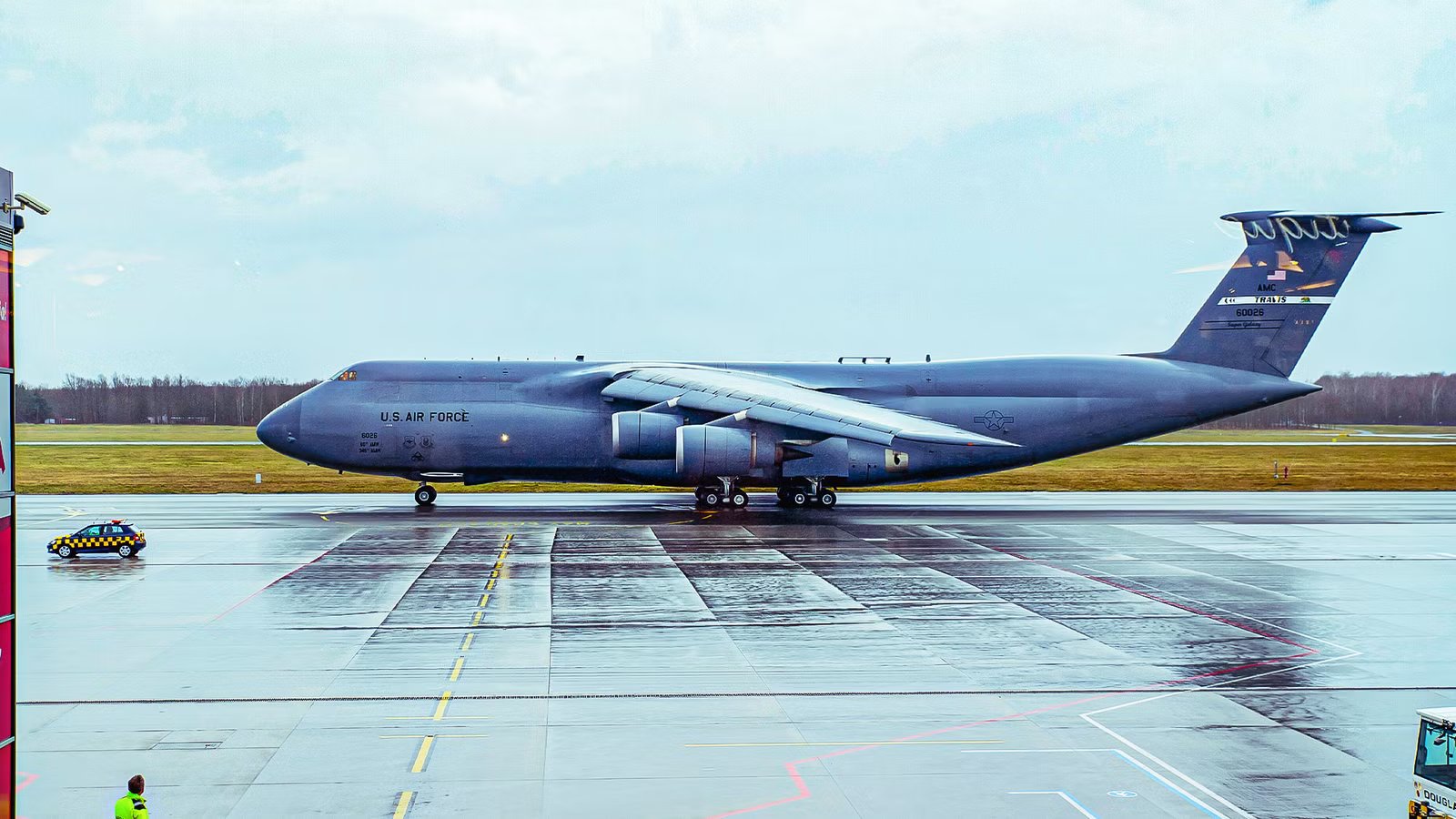
The Lockheed C-5 Galaxy proved indispensable to the USAF to fulfill this critical expeditionary mission. To this day, no successor has been made due to the engineering challenge and cost-prohibitive technical barriers. Instead, it has been upgraded to the C-5M standard, known as the Super Galaxy. Even after the end of the Vietnam conflict and the eventual fall of the Soviet Union, the C-5 has remained one of the most valuable assets in the USAF inventory because of its unmatched cargo capacity, which enables US troops to deploy forces en masse better than any other military in the world.
The Mission of Lockheed’s Leviathan

The Vietnam conflict made it clear how urgent it is to build the capacity to swiftly deploy American forces and weaponry abroad. The Department of Defense called for a massive transport capable of transporting heavy tanks, helicopters, and almost any other kind of battle gear anywhere on the planet. In 1965, Lockheed emerged victorious in the competition to design and construct the supersized vehicle. The criteria were intimidating. The transport had to weigh more than twice as much at takeoff as Lockheed’s last military transport aircraft, the C-141.
The key requirement for the transport was to be spacious enough for all the equipment required for a US Army division to deploy halfway across the world. Primarily, the challenging criterion was to transport an M60 tank, which no plane in the USAF could do at that time. Lockheed not only met that benchmark, but the C-5 could accommodate a CH-47 Chinook helicopter or four Sheridan light tanks.
The project nearly bankrupted Lockheed due to its massive size and complex development cycle. It was the first military plane program to incur a $1 billion cost overrun from initial projections and approvals. The final unit production cost of the C-5B was $167.7 million, or $372 million per plane in 2025 dollars. While still in development, the program was targeted by news organizations as an example of reckless and unnecessary defense spending.
The plane was deployed to Vietnam almost immediately after its operational certification. The C-5 quickly established itself as a vital component of the war effort due to its ability to deliver almost 98% of the Army’s arsenal. Since then, it has served in every American military campaign, from open conflicts and peacekeeping missions to humanitarian relief efforts. It assisted the British-led peacekeeping effort in Zimbabwe in 1979 and transported aid to war-torn Rwanda in 1994.
America’s Most Gargantuan Airlifter

The first C-5 was delivered to the USAF in 1970. The enormous jet weighed twice as much as the last transport that Lockheed had delivered to the Air Force, the C-141 Starlifter. Its cargo compartment is five times larger than the C-141, and the C-5 is still one of the biggest military aircraft in the world. It doesn’t even fit inside many hangars, so the Air Force simply cuts holes in the doors for the whale-shaped tail to stick out.
As a 247-foot-long aircraft, the C-5 has a gargantuan ramp presence. It is twelve feet longer than an Airbus A380 superjumbo civilian jetliner and has a wingspan of 222 feet, with one wing equaling the length of a basketball court. The roughly 34,000-cubic-foot cargo bay can accommodate a main battle tank or six utility helicopters. Standing 65 feet tall, it is as tall as a six-and-a-half-story building.
The ‘warehouse,’ or cargo deck, of the aircraft measures 143 feet long, 13 feet high, and 19 feet wide. Although only one M1A2 Abrams tank is technically 50% heavier than the C-5’s maximum cargo weight, the massive jet is capable of carrying two of them if needed. Alternatively, a C-5 can transport six M2 Bradley combat vehicles, six UH-60 Blackhawk helicopters, or 350 passengers along with supplies. Air Force historian John Leland commented to Popular Mechanics in 2023:
“[The C-5] symbolized the size, power, might and majesty of the United States Air Force,”
Because it has cargo ramps on both the front and back, the C-5 can load and unload freight with exceptional speed. It has a ‘kneeling’ landing gear system that allows lowering the parked aircraft to facilitate drive-on/drive-off vehicle loading and adjusts the cargo floor to standard truck-bed height, as well as five landing gears totaling 28 wheels to distribute the weight. The C-5 features a 25-degree wing sweep, and its distinctive high T-tail is a part of its aerodynamics that are optimized for high airspeeds.
Why Doesn’t The Largest Military Transport Aircraft In US Have Winglets?
A look at the key factors that led to the engineering decision, such as structural trade-offs, mission profile, and operational realities.
Don’t Fix It If Ain’t Broke: Super Galaxy

When the C-5 debuted, it was packed with groundbreaking technology, but those systems were also temperamental. It quickly earned a nickname that has stuck ever since: FRED. The acronym, as the military folks enjoy inventing, stands for Freaking Ridiculous Electronic Disaster, with the F substituted for profanity often and the E potentially being Economic or Environmental, depending on who you ask. All the same, the fleet has continued to serve the nation well and even underwent a massive overhaul in 2018.
Despite its nickname and high initial procurement prices, the upgrade program proved to be much more cost-effective than procuring newer, smaller Boeing C-17 Globemaster III replacement airframes. At the time that the fleet was modernized, a new C-17 cost about $200 million compared to $75 million for an upgraded C-5M. Not to mention, the C-5’s volume of 36 standard pallets and 265,000 pounds (120,000 kg) of cargo is roughly double that of the newer C-17.
The most valuable upgrade was the transition from General Electric TF-39 engines to GE CF6-80C2-L1F commercial engines. This upgrade offers a 22% increase in thrust, a 30% shorter take-off roll, and a 58% faster climb rate, enabling more cargo to be carried over longer distances. Total payload was even bumped up to 285,000 pounds (130,000 kg) with the Super Galaxy upgrades.
Why Some Countries Still Buy Old Military Aircraft
A closer look at the booming marketplace for used fighters around the world.
The Fleet Over The Years: By The Numbers

The C-5 Galaxy, which was designed in the 1960s to replace the C-133 Cargomaster and to complement the smaller C-141 Starlifter, had a difficult design period. Wing fractures caused the aircraft to not be deployed until 1970. Lockheed-Georgia Co. delivered the first operational C-5A Galaxy to the 437th Airlift Wing in 1970.
In 1989, the last 50 C-5Bs were delivered, adding to the existing 76 C-5As in the Air Force’s airlift inventory. The C-5B included over 100 system modifications to improve reliability and maintainability. Today, the Air Force maintains a fleet of 52 C-5s, stationed at Dover Air Force Base in Delaware, Travis AFB in California, Lackland AFB in Texas, and Westover Air Reserve Base in Massachusetts.
In 1989, two space cargo modified C-5Cs were delivered, allowing the aircraft to carry the space shuttle’s large cargo container. In 1998, Air Mobility Command began an aggressive program to modernize the C-5s, including upgrading avionics, navigation, surveillance, and air traffic management systems, adding new safety equipment, and installing a new autopilot system.
5 Air Forces With Superior Fleets In 2026
A closer look at the most capable military air powers in the world.
Strategic Airlift For Tomorrow’s Mission

The USAF is looking to potentially produce its next-generation airlift in the form of a blended-wing-body (BWB) aircraft. This aircraft would completely eliminate traditional wingtips and maximize lift by using the airplane’s fuselage as a primary surface. The project aims to eventually replace both the Lockheed C-5M Galaxy and the C-17A Globemaster III starting in the mid-2040s with a new plane that emphasizes greater speed, stealth, and operational flexibility.
The Next Generation Airlift platform is being designed to merge the strategic reach of the C-5 with the tactical flexibility of the C-17 into a single, highly survivable airframe. It is being specifically built for contested logistics with the ability to deliver cargo while under direct threat from modern air defenses. To survive against near-peer adversaries, the NGAL will move away from the massive, radar-reflective profiles of legacy transports.
The Air Force is heavily investing in BWB technology, which integrates the wings and fuselage into a single aerodynamic shape. This design naturally reduces the aircraft’s radar cross-section and eliminates the sharp angles of traditional tail fins. Unlike current transports that rely on basic flares, the NGAL will feature advanced defensive systems designed to defeat long-range surface-to-air missiles and drone swarms.
The NGAL will be shielded to reduce both heat and noise signatures, making the plane harder to track from the ground. This will enhance ‘all aspect stealth,’ or low observability from all forms of sensors. Complementing its stealthiness will be a host of features to reduce ground time, like automated loading and unloading through its massive cargo hold. Additionally, the NGAL is expected to operate from shorter, damaged, or unpaved runways, reducing its dependence on major, easily targeted airbases.