dailynewsnblog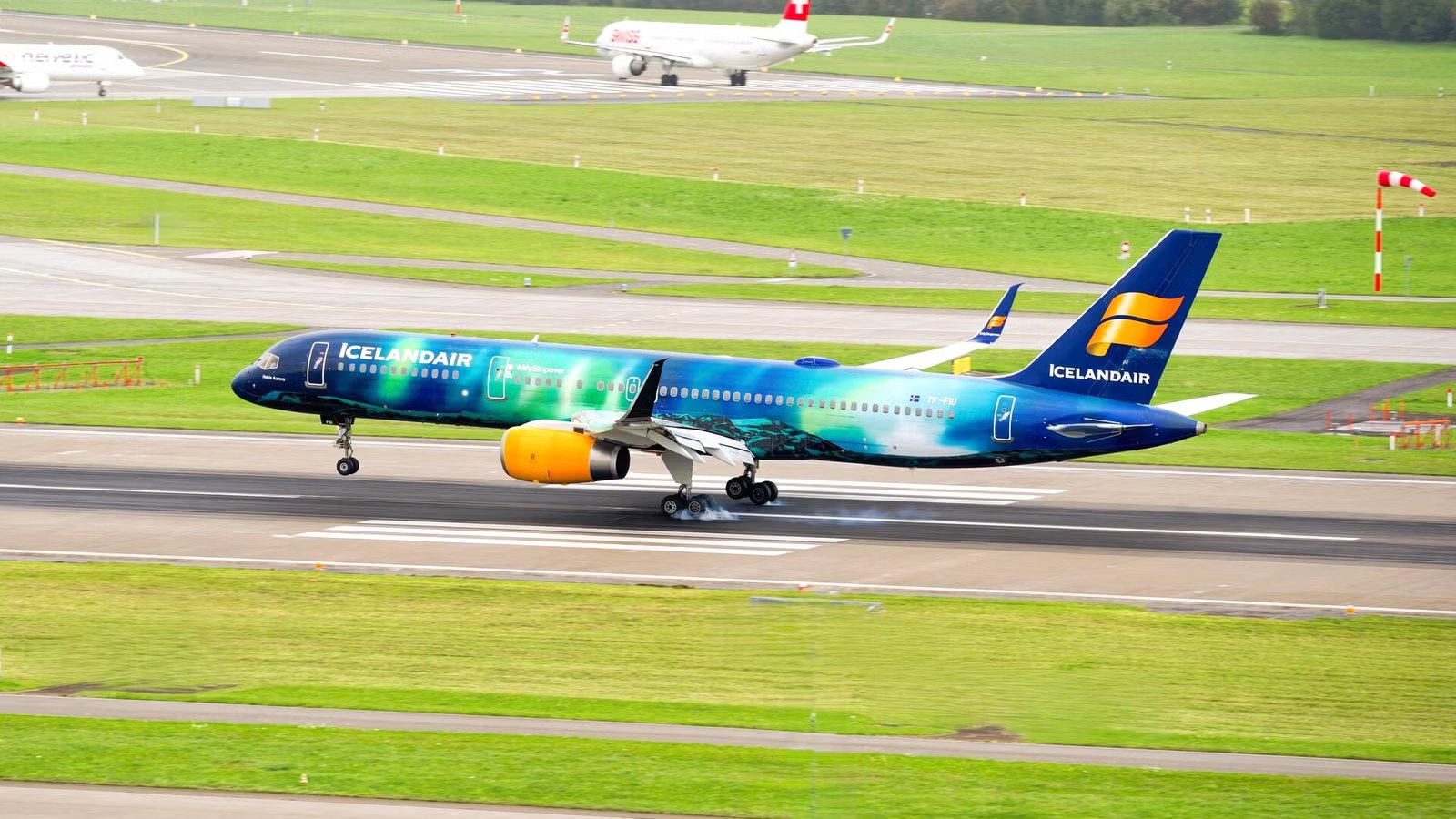
Icelandair Is Pulling Forward The 757 Retirement

Icelandair had previously expected to continue flying the Boeing 757 until the end of summer 2027. That timeline has now changed. Speaking at Routes Europe 2026 in Rimini, Italy, Icelandair Director of Network Planning and Scheduling Snorri Tomasson said that high fuel prices have had a direct impact on the airline’s schedule and fleet planning:
“At the beginning of the year, we were anticipating flying the 757s until the end of summer 2027, but we will be retiring them this coming winter.”
That is a major acceleration for an aircraft that has been part of Icelandair’s identity for decades. Over the years, the airline has operated a total of 36 of the type, including 34 Boeing 757-200s, and two of the larger Boeing 757-300s. It currently has just eight remaining in its fleet, with an average age of 26.5 years.
The reason for the accelerated retirement is simple: the 757 is still very capable, but increasingly expensive. Tomasson said the 757s “have been great for Icelandair,” but also noted that they are now “very high on variable cost,” particularly because of fuel burn. In the current high-fuel-price environment, that matters. The aircraft that once gave Icelandair a structural advantage on thinner transatlantic routes is now being displaced by newer aircraft that can do much of the same work at a lower trip cost.
This also goes beyond fuel. Older aircraft typically bring higher maintenance costs, more complex parts support, and less flexibility when an airline is trying to simplify operations. Icelandair is not simply retiring older jets; it is trying to move the center of gravity of its network toward a more efficient fleet built around the Boeing 737 MAX and Airbus A321LR, with the Airbus A321XLR to follow later in the decade. According to Tomasson, the replacement of the 757s is fundamental to maintaining the airline’s current route network:
“The new generation aircraft will be more fuel efficient, and we will then be able to maintain routes which otherwise would maybe not be in the network next winter.”
Where Icelandair Still Flies The 757

The Boeing 757 still has a very visible role in Icelandair’s schedule, especially on longer routes and higher-demand markets. Based on data from Cirium looking at flights scheduled from June 2026 through March 2027,  Denver International Airport (DEN) is by far the largest 757 destination, with 432 flights.
  Oslo Gardermoen Airport (OSL) is second with 310 flights, followed by
  London Heathrow Airport (LHR) and Copenhagen Airport (CPH).
|
Rank |
Destination |
Number of Icelandair 757 flights, Jun 2026–Mar 2027 |
|---|---|---|
|
1 |
Denver (DEN) |
432 |
|
2 |
Oslo (OSL) |
310 |
|
3 |
London Heathrow (LHR) |
182 |
|
4 |
Copenhagen (CPH) |
132 |
|
5 |
Rome Fiumicino (FCO) |
52 |
|
6 |
Zurich (ZRH) |
46 |
|
7 |
Barcelona (BCN) |
44 |
|
8 |
Dublin (DUB) |
32 |
|
9 |
Amsterdam (AMS) |
22 |
|
10 |
Milan Malpensa (MXP) |
12 |
That spread says a lot about why the 757 was so valuable to Icelandair. It can handle long North Atlantic missions such as Denver while also being useful on the more dense European services to the larger cities in the airline’s network. It was the 757’s ability to adapt to this flexible middle ground between long-haul and short-haul that made the whole connecting model work.
The aircraft replacing the 757 are the Boeing 737 MAX and Airbus A321LR. Icelandair already has a large MAX fleet, with 17 Boeing 737 MAX 8s and another four Boeing 737 MAX 9s in operation. Additionally, the airline has six A321LRs (with three more on order), which are used on its longest missions, such as the US West Coast. Icelandair also has 13 A321XLRs on order, which are expected to arrive toward the end of the decade.
The A321LR is a good example of how the generational upgrade from the 757 changes the economics of some routes. Tomasson specifically pointed to Portland International Airport (PDX) as an example of a market that was historically more seasonal but can now work in winter because the LR’s unit economics are so much better. So retiring the 757 is not just about short-term fuel and maintenance costs, but more strategically, about building a more robust network and deriving greater yields from it.

Why Is The Boeing 757 Still Used for Transatlantic Flights?
The aircraft remains economically viable for some transatlantic routes even as it is progressively replaced by aircraft like the A321XLR.
The 757 Club Is Getting Very Small

Icelandair’s accelerated retirement is part of a much broader global trend. The Boeing 757 remains popular in cargo service, particularly with express freight operators, but the passenger fleet has thinned dramatically. Among passenger airlines, the type is now concentrated overwhelmingly in the United States, where  Delta Air Lines and
  United Airlines remain by far the largest operators.
|
Rank |
Passenger airline |
Country |
757-200 |
757-300 |
Total |
|---|---|---|---|---|---|
|
1 |
Delta Air Lines |
United States |
74 |
16 |
90 |
|
2 |
United Airlines |
United States |
40 |
21 |
61 |
|
3 |
Azur Air |
Russia |
10 |
10 |
|
|
4 |
Icelandair |
Iceland |
8 |
8 |
|
|
5 |
Skyline Express |
Ukraine |
5 |
5 |
|
|
6 |
SCAT Airlines |
Kazakhstan |
3 |
3 |
|
|
7 |
Fly Khiva |
Uzbekistan |
2 |
2 |
|
|
8 |
MIAT Mongolian Airlines |
Mongolia |
1 |
1 |
Delta remains the largest passenger 757 operator, and the type still plays a useful role across domestic, transcontinental, leisure, and some international flying. However, Delta’s broader narrowbody renewal is increasingly centered on the Airbus A321neo, with the airline continuing to order more of the type as it refreshes its fleet. United’s 757 replacement path is clearer still: the airline’s incoming Airbus A321XLRs are expected to take over many of the thinner long-haul routes that have historically made the 757 so useful.
The smaller operators are harder to read, partly because several use the aircraft for charter, leisure, or irregular flying rather than large scheduled networks. But the direction of travel is obvious. As maintenance costs rise and newer narrowbodies offer similar range with lower fuel burn, the passenger 757 is being pushed into a smaller and smaller corner of the market.
For Icelandair, though, the retirement carries a deeper meaning. This is the airline that arguably did more than any other to show how a long-range narrowbody could support a transatlantic hub built around connecting flows rather than a huge home market. The 737 MAX, A321LR, and future A321XLR will continue that idea in a more modern form. But when the last Icelandair 757 leaves the fleet this winter, it will close the book on the aircraft that made that model famous.