dailynewsnblog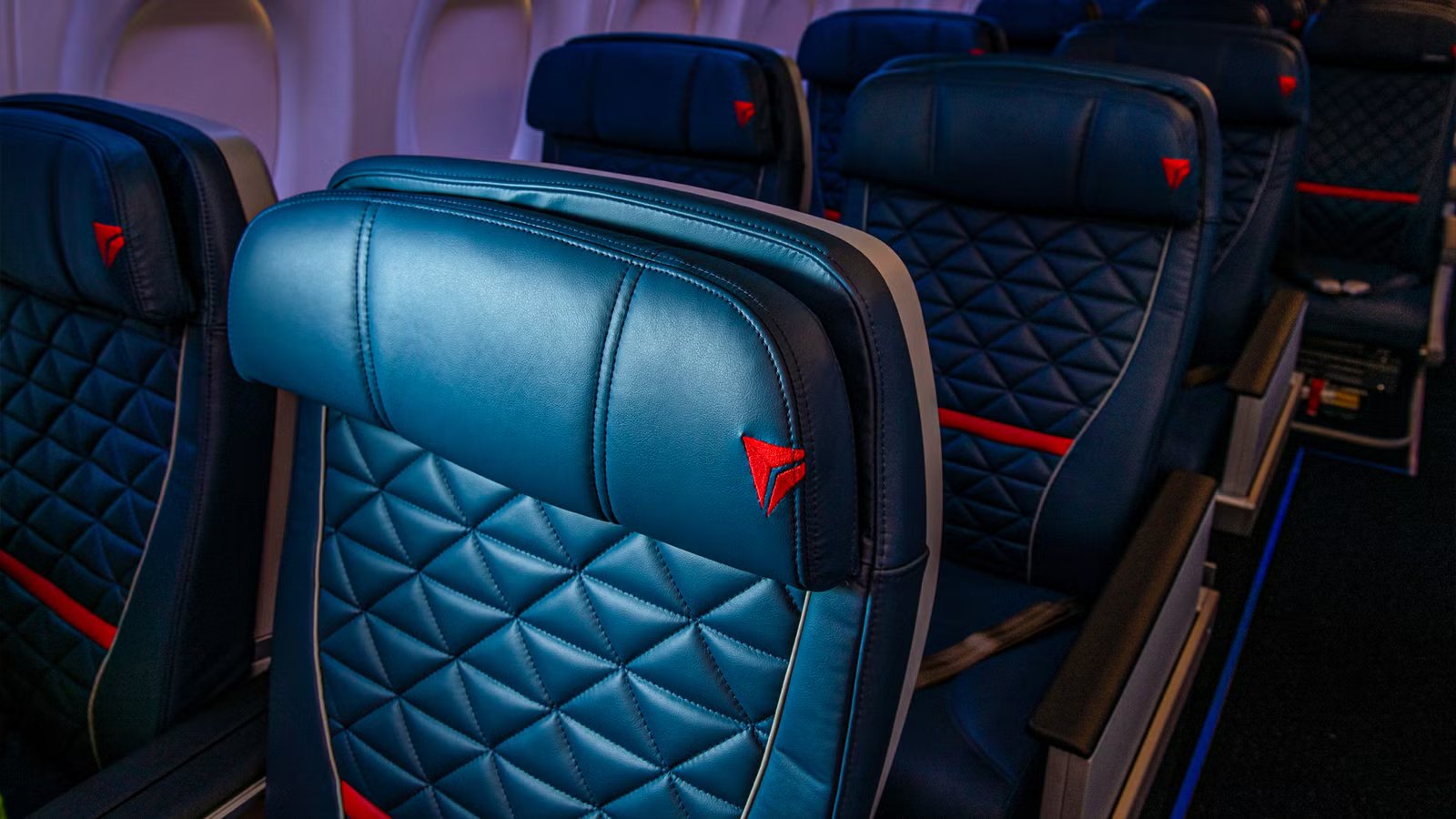
Domestic first class in the United States was traditionally a prime opportunity for upgrades. Airlines used to be far more generous with allowing elite members to simply take an empty seat in first class, and frontline employees were also given a high level of freedom to permit upgrades based on their own judgment. Today, however, policies are far stricter, with gate agents and flight attendants essentially prohibited from upgrading passengers on their own merit, and upgrade availability is also far scarcer.
It’s extremely difficult to score a free upgrade on any routes unless you hold a top elite status, and even if you’re a top member, these can be difficult to come by because inventory is limited. This is often the case regardless of how many seats are actually open, because airlines do not always make all open seats available for complimentary upgrades. The game of upgrades, as well as points and miles in general, has essentially become a hamster wheel, where members work to earn more miles for status but can never seem to maximize their value apart from a select few.
Airlines Are Selling More First Class Seats

Traditionally, airlines earn most of their revenue from premium cabins, but in the US, this wasn’t always the case. Two decades ago, carriers like  Delta Air Lines were only selling about 10% of their first class seats to paying customers, while the rest were filled with loyal flyers upgrading. First class was essentially upgrade class. While there was money to be made from loyalty programs at the time, US airlines in the 2000s were generally struggling to earn revenue from domestic premium cabins.
In the 2010s, there were two major developments that enabled airlines to properly monetize their premium seats. The first is that carriers drastically reduced the price of first class seats, making them more accessible. Today, first class may be priced two or three times what economy costs, while in the past, US airlines priced first class more than ten times higher than economy. While this initially decreased margins, it led to a general surge in demand for these seats, especially because it also decreased the appeal of simply buying first class rather than upgrading.
In addition, US airlines have switched their loyalty programs towards a spend-based system, making it harder to earn a large number of points unless you hold a co-branded credit card. Today, Delta reports that it sells about 90% of its first class seats, with its peers reporting similar figures. While elite frequent flyers are still eligible to be placed on complimentary upgrade lists, the size of loyalty programs and the structure of complimentary upgrades mean that only a select number of elite members will ever actually be moved.
Catch what other flight trackers miss
Emergency squawks, holds, NOTAMs — live signals, no signup.
Open tracker
Catch what other flight trackers miss
Emergency squawks, holds, NOTAMs — live signals, no signup.
Open tracker
The General Increase In Premium Demand

In the 2000s, the US aviation industry was in decline, but demand has been on the rise in the 2010s and 2020s, especially for premium seats. Delta was a leader in monetizing premium revenue, as it sought to elevate its brand image through lucrative SkyMiles partnerships, investing in its product, and through coherent marketing strategies. United Airlines is currently following a very similar strategy, while American Airlines moved downmarket in the 2010s and is not earning the same profits as its competitors.
Business travel has largely recovered from the COVID-19 pandemic, and the US has also seen a dramatic rise in premium leisure travelers, a demographic that largely behaves like leisure customers but is willing to pay for a nicer experience. In addition, economy has become tighter than in the past, which has also contributed to a record high demand for domestic first class seats. Aircraft configurations have not changed much in the past few decades, but US airlines are increasingly taking delivery of larger planes that are replacing smaller aircraft with fewer premium seats.
With carriers monetizing premium cabins better and with demand as high as ever, there’s no need for airlines to give their seats away, and carriers like Delta or United often even attempt to sell reasonably-priced upgrades to customers rather than upgrading frequent flyers for free, because this earns more revenue than a complimentary upgrade. Current market conditions have also seen the legacy carriers attempt to sell more extra economy legroom seats at a premium, since it costs very little to repitch cabins with them, and demand is high for these more expensive seats.

Here’s What Cabin Crew Notice About Passengers Flying Business Class For The 1st Time
Premium cabin demand has only continued to grow.
Why Upgrades Don’t Occur Even When Space Is Available

Airlines are typically very good at filling up their premium cabins, but this doesn’t necessarily mean that every seat goes out occupied. However, airlines set an inventory of seats that are available for an upgrade, and this inventory is occasionally smaller than the number of empty seats. On widebody aircraft, this is sometimes due to catering constraints, as an airline may not have loaded enough meals for a full business class cabin, but this is less of a concern for narrowbody flights.
Permitting upgrades to premium cabins essentially earns airlines no direct revenue, which is why carriers heavily push paid upgrades instead, which adds more revenue even if it’s marginal. What’s more, someone who pays to upgrade may be more likely to sign up for the carrier’s frequent flyer program if they have a positive experience, and are therefore more likely to earn miles to spend on future flights, earning the airline more money.
Some carriers may choose to unexpectedly upgrade a passenger to a premium seat, but this is not common in the US. Again, this is to drive loyalty program engagement, and airlines that engage in this practice typically target passengers who are not frequent travelers. Someone who is a frequent flyer may already be engaged with the carrier’s loyalty program and may be less likely to pay for premium seats in the future, especially if they’ve already received complimentary upgrades.
The Size And Structure Of Upgrade Lists

All three US legacy carriers operate a complimentary upgrade list on most flights within North America, apart from select premium transcontinental routes and on select routes to Hawaii. However, these lists can have upwards of 30 passengers listed, which means that only a small percentage of passengers placed on these lists actually get moved. Delta SkyMiles, American AAdvantage, and United MileagePlus each have over 100 million members, but the three carriers’ narrowbodies only have a maximum of either 20 or 24 first class seats in the case of Delta and United’s Boeing 757-300s.
US airlines determine upgrade list placements using algorithms that weigh elite status, original fare type, whether they hold a co-branded credit card, and time of request. In addition, those with a higher elite status get their upgrades cleared earlier, ranging from 24 hours before departure to days before a flight. This is a uniquely US approach, and these carriers rarely perform operational upgrades. When these airlines do perform operational upgrades, it’s strictly based on a similar algorithm, and front-line employees are not permitted to make their own judgment on who to upgrade.
|
Aircraft |
General First Class Cabin Size |
|---|---|
|
Airbus A220 Airbus A319 Boeing 717 Boeing 737-700 |
12 |
|
Airbus A320 |
12 or 16 |
|
Boeing 737-800/737 MAX 8 |
16 |
|
Airbus A321/A321neo Boeing 737-900ER/737 MAX 9 Boeing 757-200 |
20 |
|
Boeing 757-300 |
24 |
On longer flights, US airlines do not operate complimentary upgrade lists, instead requiring customers to pay for an upgrade using either cash or miles. However, these carriers do offer upgrade certificates as a reward for reaching higher status tiers, and these can be used with specific conditions. These airlines only give out a limited number of upgrade certificates to their top members, while also selling a majority of their business class seats to paying customers.
United Airlines’ MileagePlus Is Now A Pay-To-Play Program: Here’s What Changed
Why you now need a United credit card to get any real value out of MileagePlus.
The Psychology Of Frequent Flyer Programs

Today, loyalty programs generate the majority of profits for  American Airlines, Delta Air Lines, and
  United Airlines. This is because airlines sell huge volumes of their miles in bulk to their loyalty program partners, especially credit card providers, and these miles are sold for much higher values than what customers typically redeem them for. What’s more, all three operate spend-based loyalty programs so that mileage earnings are directly tied to how much customers spend with either the airline or the airline’s partner.
The problem for customers is that this generally makes it harder to earn a high number of miles. These aren’t so much frequent flyer programs, but rather, frequent spender programs, and this means that loyalty programs only provide true value to wealthy individuals who can afford to spend thousands of dollars per year with an airline’s loyalty program. Meanwhile, lucrative benefits are generally becoming harder to access, with upgrades being a prime example.
|
Loyalty Program |
Estimated Number Of Members |
|---|---|
|
Delta SkyMiles |
130 million |
|
American AAdvantage |
115 million |
|
United MileagePlus |
100 million |
Airline loyalty programs have become a hamster wheel for many people, where members are increasingly having to work harder to take advantage of perks that remain elusive to many. What’s more, many airlines have devalued their miles. As such, the game of points and miles, which was developed as a way to reward frequent flyers for their business, has instead become a profit center for carriers that hold strength over the market, while customers have little choice but to accept the status quo.