dailynewsnblog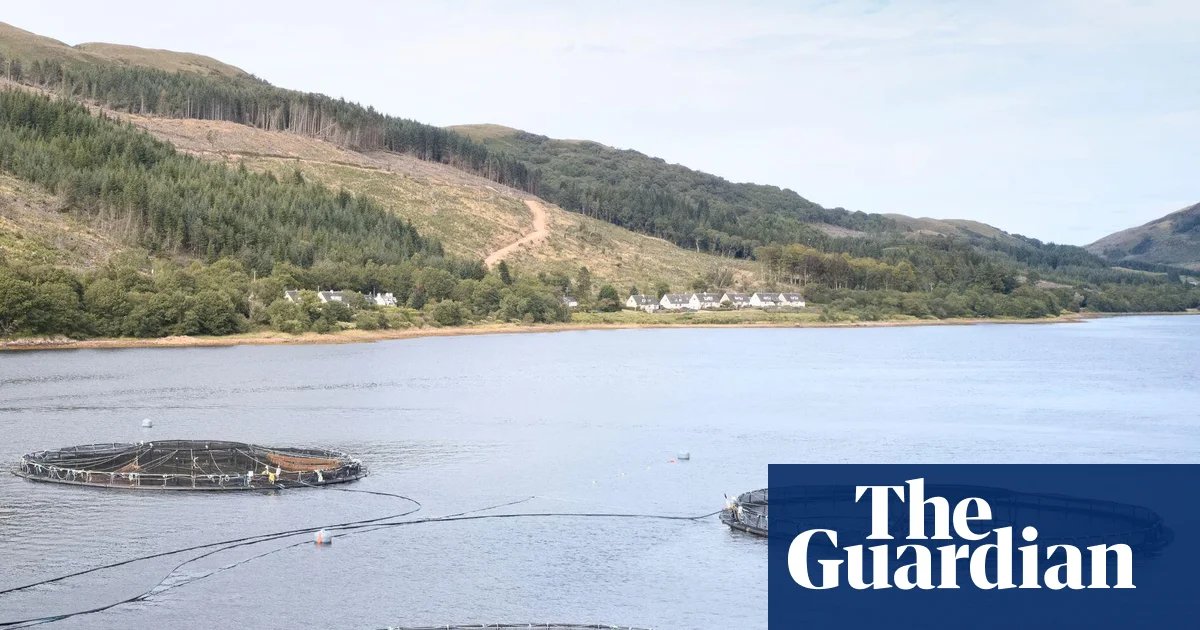
Millions of fish deaths caused by accidental poisoning and suffocation on Scottish salmon farms have been revealed after the inspection agency was forced to share its reports.
The UK government’s Animal and Plant Health Agency (APHA) had refused to release inspection reports, claiming it would cause “significant detriment” to companies, including to their reputations.
However, the Information Commissioner’s Office (ICO) ruled there were no valid grounds to withhold the information, a decision the campaign group Animal Equality UK hailed as a “watershed moment for public transparency”.
The ICO’s decision has led to the release of some of APHA’s inspection reports documenting details of the scale and cause of deaths on some farms.
One recorded that more than 100,000 fish suffocated at an on-land salmon farm operated by Scotland’s largest salmon farming company, Mowi, in 2021 after a worker left them unattended and their access to oxygen ceased.
In a separate incident at the same site in the same month, a buildup of hydrogen sulphide killed more than 1 million fish in 10 hours. APHA took no enforcement action.
Another report states that at a site operated by Bakkafrost certified by the RSPCA, 600,000 fish died from hydrogen sulphide buildup in 2022. The problem recurred months later on an even larger scale, killing more than 1.5 million fish. Again, no enforcement action followed.
At a trout farm, APHA found that approximately 70,000 fish had died in 2023, with 7,800 survivors subsequently killed as “economically unviable”, but the site had never reported any deaths to the Fish Health Inspectorate. APHA advised the operator to seek veterinary advice and emailed it a copy of the code of good practice.
In reaching its decision, the ICO said APHA had already released some reports previously, which weakened the argument for not publishing others. It said the fact that the most recent reports dated from 2024 “undermines the suggestion that disclosure would still pose a real and significant risk to commercial interests”.
Despite the reports being released, the ruling still means a freedom of information request will have to be submitted to APHA to obtain future reports, rather than them being routinely published.
Abigail Penny, the executive director of Animal Equality UK, said: “APHA’s culture of secrecy has to end. The public has every right to know what is happening on these farms and whether regulators are doing their jobs.
“People are utterly exhausted by the same cycle repeating itself – corporations inflicting suffering on animals, showing little remorse, while the bodies paid by taxpayers to hold them accountable look the other way.
“This tight-lipped approach serves neither the public, nor animals; it serves only the salmon farming industry. This information belongs to the public and should not be buried in bureaucracy to shield global conglomerates from proper scrutiny.”
Animal Equality has published footage that it says was filmed at a Scottish salmon farm operated by Scottish Sea Farms in March, in an effort to push APHA to release more recent inspection reports.
The charity says the video was taken at the Fiunary farm and shows salmon suffering from blindness, open wounds, severe sea lice infestations and missing noses. Scottish Sea Farms supplies salmon to Marks & Spencer and Fiunary is known to provide salmon to Co-op.
Animal Equality instructed the law firm Advocates for Animals to submit a formal complaint about conditions at Fiunary to APHA and is demanding that APHA confirms what action it has taken, if any, and releases all inspection reports for the site and its operator, in line with the ICO’s ruling.
An APHA spokesperson said it was committed to openness and transparency. “We carefully consider information requests on a case-by-case basis. Exemptions are only applied on grounds of confidentiality or commercial sensitivity, where full disclosure could prohibit APHA from effectively carrying out its functions,” they said.
“We treat all reports of suspected cases of poor welfare at salmon farms seriously and we will not hesitate to take further action if we find evidence of cruelty or neglect.”
A spokesperson for Salmon Scotland, responding on behalf of all of the producers named in this article, said: “Claims made by activists are often taken out of context and present a misleading picture of what is happening on farms. Scotland’s salmon farmers support transparency around the UK’s most popular fish.
“Farms operate to world-leading welfare standards, backed by strict regulation, veterinary oversight, regular audits, and inspections. Survival rates, which are voluntarily published by the sector, are at record highs, and more than £1bn has been invested in innovation, veterinary care, technology and stock management to continually improve welfare.”
A Co-op spokesperson said it set high standards for suppliers, using only RSPCA-assured Scottish salmon. They added: “We are aware of the footage relating to the Fiunary site and are engaging urgently with our supplier to understand the full context. We take any reports relating to animal welfare extremely seriously and will take swift action should our standards not be met.”