dailynewsnblog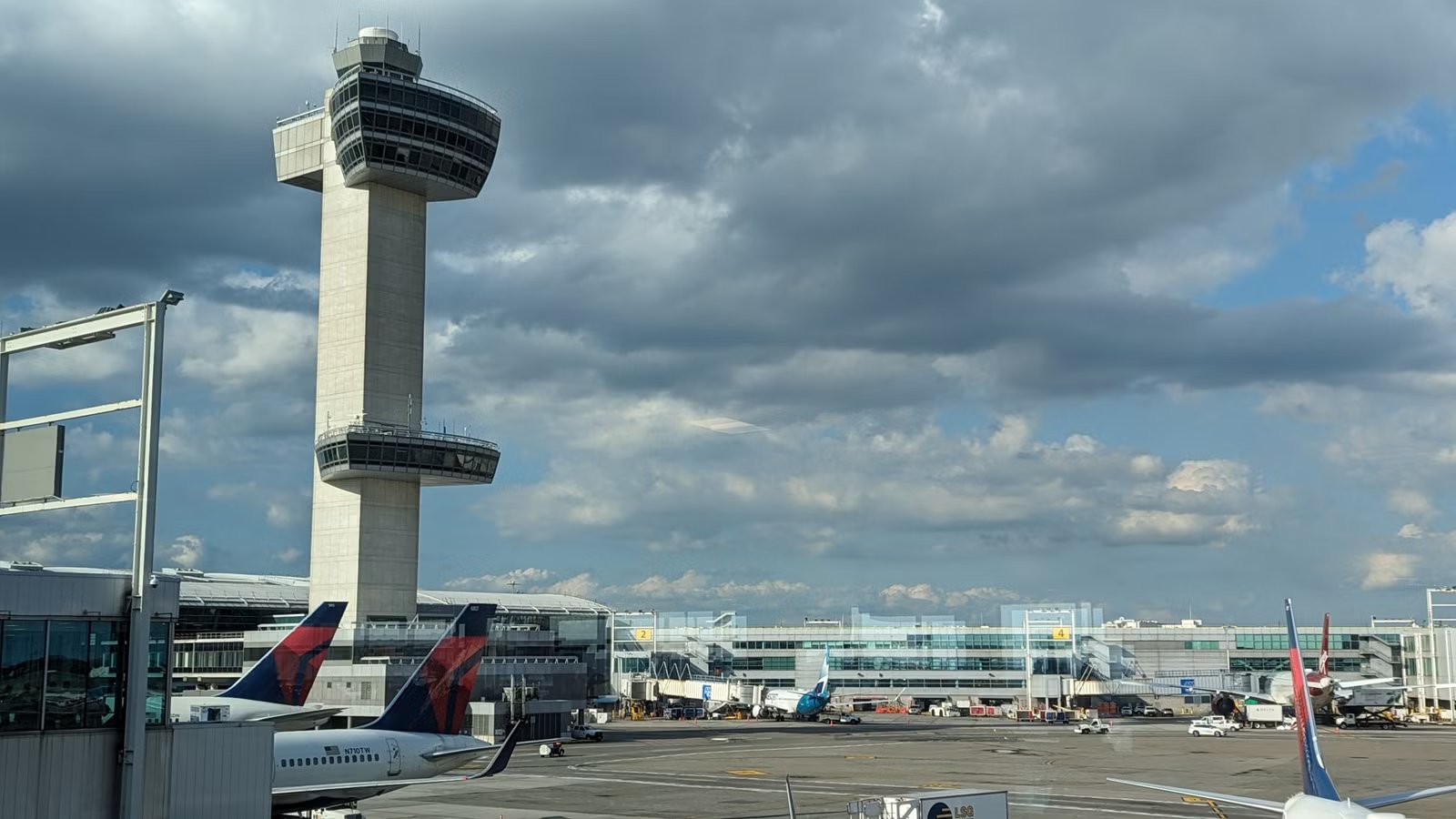
More than 500 flights were canceled and over 4,000 delayed Friday as severe thunderstorms combined with ongoing air traffic control staffing shortages to disrupt operations at New York City’s three major airports,  John F. Kennedy International Airport (JFK),
  LaGuardia Airport(LGA), and
  Newark Liberty International Airport (EWR) experienced widespread delays throughout the day, leaving thousands of travelers facing lengthy waits, missed connections, and uncertain travel plans. The New York area ranked among the nation’s hardest-hit aviation hubs as airlines struggled to recover from weather-related disruptions.
The Federal Aviation Administration (FAA) attributed the disruptions to a combination of hazardous weather and limited air traffic control capacity, both of which reduced the number of aircraft that could safely depart and arrive. Officials warned travelers to expect continued delays as storms moved through the Northeast, while airlines urged passengers to check flight status before heading to the airport. The latest disruptions underscore the mounting pressure on one of the country’s busiest air travel corridors, where operational challenges have become increasingly common during periods of severe weather.
Severe Weather & Staffing Shortages Created A Difficult Combination

Thunderstorms passing through the New York metropolitan area forced the FAA to implement traffic management initiatives, including ground delays and reduced arrival rates at several airports. At the same time, ongoing shortages of certified air traffic controllers further limited operational capacity, preventing airports from quickly recovering as weather conditions improved. According to ABC7 New York, the FAA cited both adverse weather and staffing constraints as key factors behind the widespread delays affecting flights across the region.
Weather disruptions routinely slow airport operations because controllers must increase spacing between aircraft during storms, while lightning, heavy rain, and reduced visibility can temporarily halt ground operations. When staffing is already below desired levels, recovery becomes significantly more difficult, as fewer controllers are available to manage the backlog of aircraft waiting to depart or arrive. The FAA’s daily operational reports have repeatedly identified thunderstorms and staffing limitations as major contributors to delays across the Northeast during periods of heavy travel.
Airlines & Passengers Felt The Ripple Effects Throughout The Day

The disruptions extended well beyond the New York metropolitan area because JFK, LGA, and EWR serve as major connecting hubs for domestic and international flights. Delays at those airports frequently cascade through airline networks, affecting aircraft, flight crews, and passengers scheduled to travel to destinations across the United States and overseas.
Delays and Cancellations at New York Airports Friday, July 10 | ||
|---|---|---|
Airport | Total Delays | Total Cancellations |
JFK | 369 | 160 |
LGA | 428 | 132 |
EWR | 429 | 36 |
PHL | 386 | 15 |
HPN | 36 | 4 |
Source: FlightAware | ||
Travelers reported long lines at customer service counters as airlines worked to accommodate passengers whose flights had been canceled or significantly delayed. Many carriers issued travel waivers that allowed customers to change itineraries without paying standard change fees, helping some passengers avoid additional costs as they adjusted their plans. However, limited seat availability on later flights meant that many travelers faced extended waits before reaching their destinations. The FAA advises passengers to monitor airline communications and check flight status regularly, particularly during periods of rapidly changing weather that can alter airport operations with little notice.
New York’s Aviation System Continues To Face Operational Pressure

Friday’s disruptions reflect broader challenges facing New York’s airspace, one of the most complex and congested aviation systems in the world. Even under normal conditions, the region’s airports operate with limited flexibility due to high traffic volumes and tightly coordinated flight schedules. When thunderstorms reduce airport capacity or controller staffing falls below operational needs, delays can escalate rapidly and spread throughout the national air transportation network.
Federal officials have acknowledged that air traffic control staffing remains a concern as efforts continue to recruit and train additional controllers. Because certification takes years, workforce shortages cannot be resolved quickly, leaving weather events more likely to produce significant disruptions during peak travel periods. Although airlines continue to work with the FAA to improve operational resilience, passengers flying through New York should expect occasional delays when severe weather coincides with constrained air traffic control resources. Friday’s combination of cancellations and delays serves as another reminder of how quickly external factors can disrupt one of the nation’s busiest travel corridors.