dailynewsnblog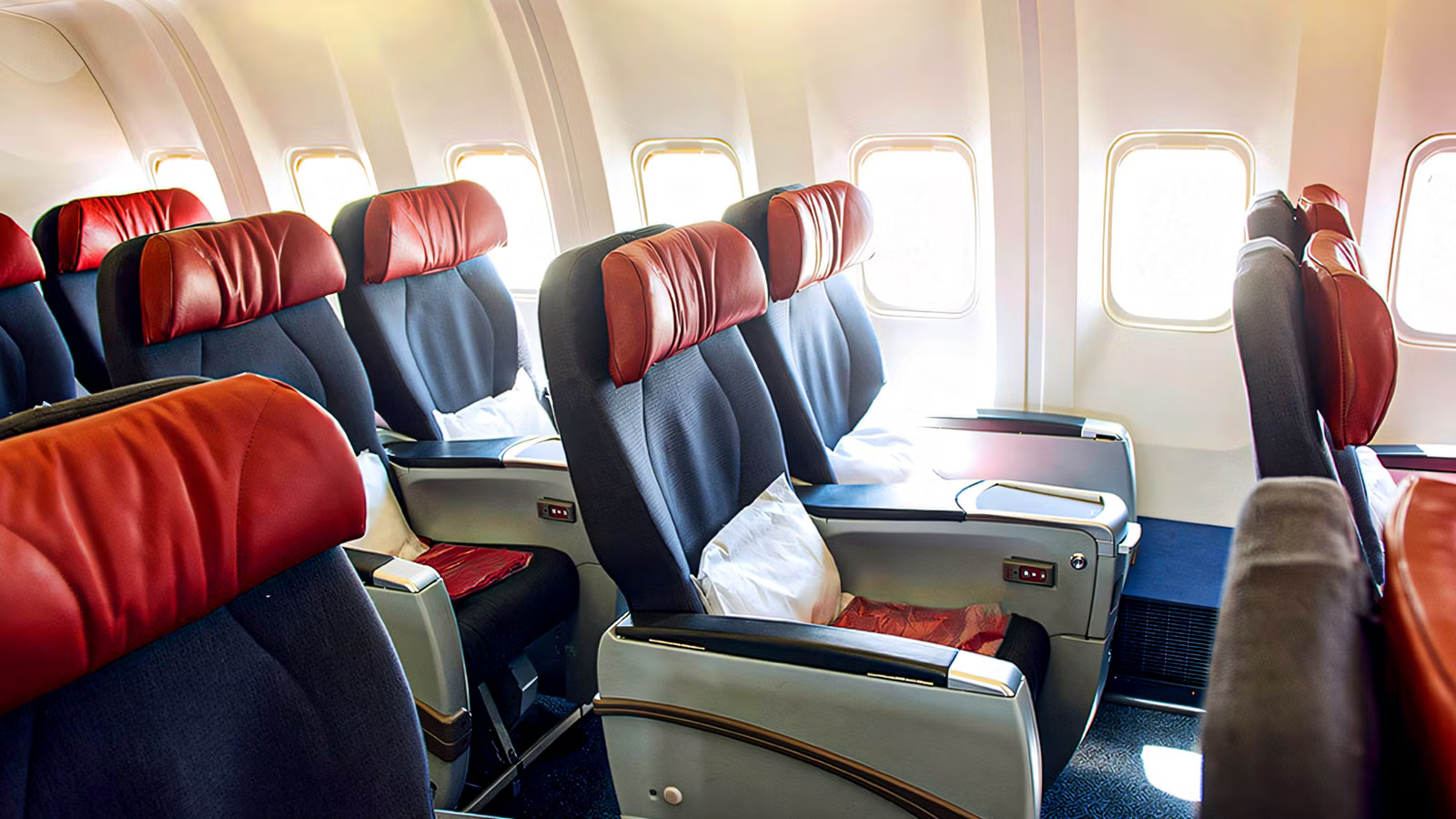
The gap between  Air Canada Premium Economy and Signature Class is becoming harder to judge by cabin hierarchy alone. In 2026, a premium economy ticket can cost roughly 60% of a comparable higher-cabin fare in sample pricing, yet the product still includes a wider seat, substantially more legroom, priority airport services, and two checked bags—benefits that make the middle cabin increasingly compelling when sleep is not the main objective.
That raises a more interesting question than whether premium economy is simply “cheaper” than business class: when does paying the remaining 40% for Air Canada Signature Class actually buy something the passenger will use? The answer depends on the flight’s direction and timing, how much passengers value a lie-flat bed, and how Air Canada’s new Glowing Hearted cabins are reshaping the premium ladder.
Why Air Canada Premium Economy Is Becoming The Value Middle Ground

Air Canada Premium Economy occupies an unusually useful position between standard Economy and Signature Class. On its long-haul aircraft, the cabin provides a substantially larger seat and more legroom, while retaining priority airport services and a two-bag allowance. Air Canada describes Premium Economy as offering larger seats, more recline, and extra legroom, alongside priority boarding, check-in, and baggage handling.
The physical difference is also significant. Air Canada Premium Economy generally provides around 38 inches of pitch, compared with approximately 31 inches in economy, while seat width varies by aircraft but can reach 19.5 or 20 inches. On the Boeing 787-8, for example, the cabin uses a 2-3-2 arrangement and has 38-inch pitch and 19.5-inch-wide seats. That doesn’t turn the seat into a bed, but it does offer a very different proposition than spending a long-haul flight in a standard economy class seat.
The economics get particularly interesting when comparing fares, not just cabin layouts. A December 2025 analysis of Air Canada fares used a Toronto-Vancouver example in which Premium Economy was priced below Signature Class, while a sample Premium Economy fare cited by Chexy was CA$850 ($596), compared with CA$1,401 ($983) for the higher fare—about 61% of the latter. That is not a transatlantic fare comparison, but it illustrates why the “60%” figure is useful as a snapshot of the price relationship rather than a fixed Air Canada pricing rule.
The more important question, however, is whether the flight makes the missing Signature feature—the bed— important at all.
The Daytime Transatlantic Flight Changes The Equation

For a daytime transatlantic flight, the value calculation can look very different from an overnight departure. A passenger flying west from Europe to Canada or the United States will often spend much of the journey awake, especially because they arrive later in the local day. That doesn’t make a lie-flat bed irrelevant, but it can reduce the time you get to use its main advantage.
This is where Premium Economy’s specifications stand out. A 38-inch pitch and roughly 19.5- to 20-inch width provide noticeably more personal space than Economy, while the seat still reclines and can include a footrest and adjustable headrest depending on the aircraft. Air Canada’s Premium Economy product also includes enhanced meals and beverages, while priority check-in, boarding, and baggage handling make some elements of the airport experience closer to the higher cabin.
Air Canada cabin | Typical seat pitch | Lie-flat bed | Priority services | Checked bags |
Economy | ~31 in / 79 cm | No | Limited by fare | Fare-dependent |
Premium Economy | ~38 in / 97 cm | No | Yes | 2 |
Signature Class | ~79-80 in / 201-203 cm bed | Yes | Yes | 2 |
The key difference is that Premium Economy does not try to replicate Signature Class. Air Canada describes Signature Class as offering lie-flat Executive Pods on select aircraft, plus enhanced dining, priority services, and lounge access. On the airline’s widebody aircraft, the seat converts into a fully flat bed, with the Executive Pod reaching up to 79 inches in length.
That makes the choice less about which cabin is luxurious and which isn’t, and more about how many hours the passenger plans to spend sleeping. For overnight eastbound travel, that distinction becomes much harder to ignore.
Air Canada’s New Fleet Makes The Premium Divide Even Clearer

Air Canada’s 2026 fleet renewal adds another dimension to the cabin equation because the airline is improving its premium products at the top while expanding premium seating onto aircraft designed for new transatlantic markets. The centerpiece is the carrier’s Glowing Hearted cabin standard, which Air Canada unveiled in April 2026 for the Airbus A321XLR and Boeing 787-10.
The A321XLR is particularly significant because it introduces lie-flat Signature Class to a single-aisle aircraft for the first time at Air Canada. The aircraft has 14 Signature Class seats and 168 Economy seats, with the airline using the type to connect its Canadian hubs with European destinations that may not require a widebody aircraft. Its first international operation was scheduled between Montréal-Trudeau International Airport (YUL) and Toulouse-Blagnac Airport (TLS), while Air Canada also planned A321XLR service to destinations including  Berlin Brandenburg Airport (BER).
Meanwhile, the 787-10 pushes the premium product in the opposite direction. Air Canada is introducing Signature Plus, an elevated product within the business-class cabin with more space, greater privacy, and companion seating. The airline says the Signature Plus seats provide a 6 feet, 7 inches (2-meter) bed, plus a dedicated guest seat and higher privacy walls; the two center seats also feature retractable privacy panels. This creates a curious effect. As Air Canada makes its top cabin highly sophisticated, the distance between Premium Economy and Signature Class is actually becoming easier to understand—but not necessarily easier to justify on every flight.
Catch what other flight trackers miss
Emergency squawks, holds, NOTAMs — live signals, no signup.
Open tracker
Catch what other flight trackers miss
Emergency squawks, holds, NOTAMs — live signals, no signup.
Open tracker
The 60% Fare Relationship Is Really About What The Passenger Buys

The strongest argument for premium economy isn’t that it offers an almost business class experience at a lower price. The fundamental hardware remains different: one is a reclining seat designed for sitting and resting, while the other is a private-style pod designed to convert into a bed. Air Canada’s own description makes that distinction clear, with Signature Class offering lie-flat Executive Pods while Premium Economy emphasizes space, recline, and personalized service.
Instead, Premium Economy removes several pain points associated with economy without charging the full price of a lie-flat product. Passengers receive priority check-in, boarding, and baggage handling; two checked bags; larger seats; and more legroom. Going’s 2026 review also places Premium Economy at roughly 30% above standard Economy on average, although fares vary considerably by route, timing and availability.
Passenger priority | Premium Economy | Signature Class |
Extra legroom | 38 in / 97 cm pitch | Lie-flat seat |
Sleeping | Recliner | 79-80 in / 201-203 cm bed |
Priority airport services | Yes | Yes |
Two checked bags | Yes | Yes |
Main value proposition | Space and daytime comfort | Sleep and privacy |
Sample fare relationship | ~60% of Signature in cited example | 100% |
That matters because the marginal benefit of Signature Class is concentrated in a few major features. The bed is the biggest one. Lounge access, enhanced dining, additional privacy, and a more premium service sequence add further value, but the ability to sleep horizontally fundamentally changes what a passenger can do during an overnight flight. Air Canada also provides Signature Class customers with access to its premium ground experience, including Maple Leaf Lounges and, for eligible passengers, the Signature Suite at  Toronto Pearson International Airport (YYZ).
For an overnight departure, those advantages can be worth paying for because the passenger is effectively purchasing a sleeping environment as much as transportation. For a daytime return, the calculation can shift toward space, food, baggage and airport convenience—precisely the areas where Premium Economy already delivers a substantial upgrade over economy.
Glowing Hearted Could Strengthen Premium Economy’s Role

Air Canada’s cabin strategy could produce an unusual outcome: heavy investment in Signature Class may make Premium Economy more clearly defined, not obsolete. The Glowing Hearted program is upgrading every cabin with features including larger 4K OLED entertainment screens, Bluetooth audio, additional power and USB-C connectivity, while Premium Economy receives extended privacy wings.
The A321XLR illustrates why this matters operationally. Air Canada plans to receive 30 A321XLRs, split between 15 leased aircraft and 15 acquired directly from Airbus, while also ordering 14 Boeing 787-10s and eight A350-1000s. The airline says the A321XLR will bridge the gap between short-haul and long-haul flying, including new and existing transatlantic markets.
For passengers, that means the Premium Economy-versus-Signature decision could apply across a wider range of missions. A narrowbody aircraft operating a relatively short transatlantic route may make a 38-inch premium seat particularly attractive to a passenger who values extra space but does not need to sleep. Conversely, a longer overnight sector operated by a widebody aircraft makes the lie-flat Signature product more important.
The airline’s expanding European network reinforces that distinction. Air Canada announced new 2026 services including Montréal-Berlin, Montréal-Nantes, Toronto-Ponta Delgada and Halifax-Brussels, while describing its summer 2026 schedule as giving it North America’s second-largest transatlantic network by destinations. As the network expands, the number of situations in which flight timing becomes part of the cabin-selection calculation grows too.
The Next Test Will Be How Passengers Value The Bed

Air Canada’s evolving premium strategy creates two distinct reasons to pay more than Economy fares. Premium Economy is built around additional personal space, a more comfortable recliner, enhanced service and a smoother airport experience, while Signature Class increasingly revolves around one defining capability: turning the aircraft seat into a genuine bed. The arrival of the Glowing Hearted cabins does not blur that distinction; if anything, it divides the premium ladder more clearly by what passengers actually need from the flight.
That distinction becomes particularly relevant as Air Canada expands its transatlantic network and introduces aircraft with very different premium configurations. The Airbus A321XLR brings 14 lie-flat Signature Class seats to a single-aisle aircraft, while the Boeing 787-10 introduces Signature Plus, adding a companion seat and greater privacy to the airline’s highest-end business-class offering. At the same time, Air Canada’s expanding European schedule means passengers will encounter different departure times, flight lengths, and aircraft on routes where the choice between a 38-inch Premium Economy recliner and a 79-80-inch Signature bed can have very different consequences.
The remaining question is not simply whether Premium Economy is “worth it” compared with Signature Class, because the answer can change with the clock. On a daytime transatlantic flight, the roughly 40% savings in the cited sample pricing can make Premium Economy particularly relevant when the passenger is unlikely to use Signature Class’s main advantage for several hours of sleep. On an overnight sector, however, that same price difference buys the feature that can fundamentally change the journey—and how passengers value that sleeping window will determine where Air Canada’s new premium ladder draws its most important dividing line.