dailynewsnblog
 Delta Air Lines’ Medallion program no longer rewards how often you fly. It rewards how much you spend. The airline eliminated Medallion Qualification Miles and Segments entirely, replacing them with a single metric tied to dollars spent on Delta tickets and co-branded American Express cards. The backlash when the changes were first announced in 2023 was severe enough that Delta’s CEO publicly admitted the airline had gone too far, but the structural shift was never reversed. The thresholds came down. The model stayed.
For travelers trying to reach Diamond Medallion, the highest public tier in the program, the question is no longer how many flights it takes but how to assemble $28,000 in qualifying dollars from the right combination of ticket purchases and credit card spending. Here is what each Medallion tier requires in 2026, how the Amex card mechanics work, and how Delta’s system compares to  United Airlines and
  American Airlines, and what a realistic path to the top actually looks like.
How Delta Rebuilt Its Loyalty Program Around Spending

For most of its history, Delta’s Medallion program worked like every other major airline loyalty program. Status was earned through a combination of miles flown and dollars spent, with Medallion Qualification Miles, Medallion Qualification Segments, and Medallion Qualification Dollars all counting toward annual thresholds. A passenger who flew enough miles could qualify for status even without particularly high spending, and the system rewarded frequency and distance as much as revenue.
Delta eliminated that structure entirely. Starting with the 2024 status year, Medallion qualification is based solely on MQDs. Miles flown and segments completed no longer count toward status. The only metric that matters is how much money a passenger spends on Delta tickets, Delta Vacations, and through co-branded American Express cards that convert everyday spending into MQD credit. The change tied elite status directly to revenue contribution rather than travel patterns, making it possible to earn Medallion status primarily through credit card spending rather than flying.
The initial thresholds announced in September 2023 were significantly higher than what Delta ultimately implemented. The original Diamond threshold was set at $35,000, Platinum at $18,000, Gold at $12,000, and Silver at $6,000. The reaction from Delta’s loyalty base was immediate and overwhelmingly negative. CEO Ed Bastian publicly acknowledged that the airline had gone too far, and Delta revised the numbers downward before they took full effect. The 2026 thresholds settled at $28,000 for Diamond, $15,000 for Platinum, $10,000 for Gold, and $5,000 for Silver. The structure did not change. The numbers simply got smaller. The spend-based, Amex-integrated model is permanent, and the rollback narrative that followed the backlash overstates how much Delta actually conceded.
The 2026 MQD Thresholds And What Each Tier Gets You

Silver Medallion at $5,000 in MQDs is the entry point and the easiest tier to reach for moderately frequent travelers. It provides unlimited complimentary upgrades on domestic flights when available, priority check-in and boarding, and a 40% bonus on base SkyMiles earnings. The upgrades are clear at the lowest priority among all Medallion tiers, which, on competitive routes, means they rarely come through, but on off-peak domestic flights they add up over a full year. Silver is the tier most passengers reach through a combination of a few business trips and routine Amex card spending.
Gold Medallion at $10,000 adds meaningful upgrade priority over Silver, a 60% mileage bonus, and access to Sky Priority handling at check-in, security, and boarding across Delta and SkyTeam partner airlines. Gold members also receive complimentary preferred seats in the main cabin. The jump from Silver to Gold is where upgrades start clearing more consistently on domestic routes, particularly midweek.
Platinum Medallion at $15,000 introduces Choice Benefits, a menu of annual perks that includes bonus miles, regional upgrade certificates, and a reduced Amex statement credit that dropped from $400 to $250 for 2026. Platinum members receive an 80% mileage bonus and higher upgrade priority, making domestic upgrades reliable on most routes outside the busiest Friday and Sunday corridors. Platinum also earns complimentary Delta Sky Club access when flying Delta on a same-day ticket.
Diamond Medallion at $28,000 sits at the top. It provides the highest upgrade priority in the program, a 120% mileage bonus, the most valuable Choice Benefits package, including Global Upgrade Certificates usable on international premium cabins, and a dedicated Diamond phone line. The Amex statement credit at Diamond dropped from $700 to $500 for 2026. The gap between Platinum and Diamond is $13,000 in additional MQDs, which makes it the steepest single jump between any two tiers.

How Many SkyMiles Do You Need To Fly In Delta One?
The answer is not as straightforward as it may seem.
How The Amex Cards Make Or Break The Math
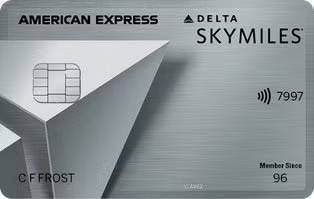
The co-branded American Express cards are not a supplementary earning tool in Delta’s current program. Each eligible Delta Amex card provides a $2,500 MQD headstart at the beginning of the qualification year, credited automatically once the card’s annual fee posts. A passenger holding a single Delta Reserve Amex starts the year with $2,500 in MQDs before buying a single flight. A household with both a Delta Platinum Amex and a Delta Reserve Amex can stack two headstarts for $5,000, which qualifies for Silver Medallion without any flying at all.
Beyond the headstart, everyday spending on the cards generates additional MQDs through the Boost mechanic. The Delta Platinum Amex earns $1 in MQDs for every $20 spent. The Delta Reserve earns $1 per $10. On the Reserve card, a passenger spending $100,000 annually on everyday purchases generates $10,000 in MQDs from card spend.
Sky Club access is also tied to the Amex relationship. Amex Platinum cardholders receive six Sky Club visits per year. Delta Reserve holders receive 10. Both caps apply regardless of Medallion status unless the cardholder spends $75,000 or more on the card in a calendar year, which removes the visit limit entirely. The visit caps were part of the 2023 changes designed to reduce Sky Club overcrowding, and they created a clear incentive to concentrate spending on a single Delta Amex card rather than distribute it across multiple products.
Catch what other flight trackers miss
Emergency squawks, holds, NOTAMs — live signals, no signup.
Open tracker
Catch what other flight trackers miss
Emergency squawks, holds, NOTAMs — live signals, no signup.
Open tracker
How Delta Diamond Compares To United 1K And American Executive Platinum

All three U.S. legacy carriers now use spend-based qualification systems for their top-tier status, but the mechanics differ in ways that matter. Delta Diamond requires $28,000 in MQDs, with no flight minimum beyond ticket purchases. United 1K requires either 60 qualifying flights plus $22,000 in PQPs, or $28,000 in PQPs alone with a minimum of four United segments. The top-tier spend threshold is identical at $28,000 on both carriers, but United still rewards frequent flying by offering a lower spend requirement for passengers who hit the flight count.
American Airlines uses a different system entirely. Executive Platinum requires 200,000 Loyalty Points, earned through a combination of ticket purchases, co-branded Citi card spend, and partner activity. The Loyalty Points system makes direct dollar comparisons to Delta and United difficult because points accrue at different rates depending on fare class, cabin, and card bonuses. A rough estimate for a traveler earning primarily through American flights puts the effective spend at roughly $25,000 to $35,000 depending on the mix of domestic economy and premium international tickets. American’s qualification year also runs March to February rather than the calendar year used by Delta and United.
The most significant structural difference is how each program values flying versus spending. United is the only one of the three that still offers a meaningful incentive to fly frequently: a reduced PQP threshold for passengers who hit 60 qualifying flights. Delta has eliminated that distinction entirely. American falls somewhere in between, with Loyalty Points earned at higher rates on premium fares and AA-marketed flights, but no separate flight-count metric.

The Striking Differences Between Delta Premium Select & United Premium Plus
Despite enormous similarities, there are striking differences between the premium economy products on these two American giants.
How Airline Loyalty Programs Have Changed Over The Decades

When American Airlines launched AAdvantage in 1981, the concept was straightforward. Passengers earned miles based on how far they flew, and those miles could be redeemed for free flights. United followed with MileagePlus the same year, and Delta launched SkyMiles shortly after. The programs were designed to reward frequency and distance. A passenger who flew 100,000 miles in a year earned twice as much as one who flew 50,000, regardless of what either of them paid for their tickets. Status tiers were introduced, granting upgrades, lounge access, and priority handling to passengers who flew the most.
That model held for roughly three decades. The shift began in the early 2010s when Delta became the first major carrier to introduce revenue-based mileage earning, awarding miles based on ticket price rather than distance flown. A $500 cross-country flight and a $200 cross-country flight on the same route now produce different earning outcomes. United and American followed with their own versions. By the mid-2010s, all three legacy carriers had moved away from distance-based earning toward systems that tied rewards more directly to passenger spending.
The 2020s completed the transition. Delta eliminated flight-based qualification metrics entirely and moved to a pure spend model. United retained a hybrid approach that still rewards flight frequency alongside spending. American adopted a Loyalty Points system that blends ticket revenue and card spending into a single earning currency. The result across all three carriers is that elite status in 2026 is earned primarily through revenue contribution rather than miles flown, as mentioned.