dailynewsnblog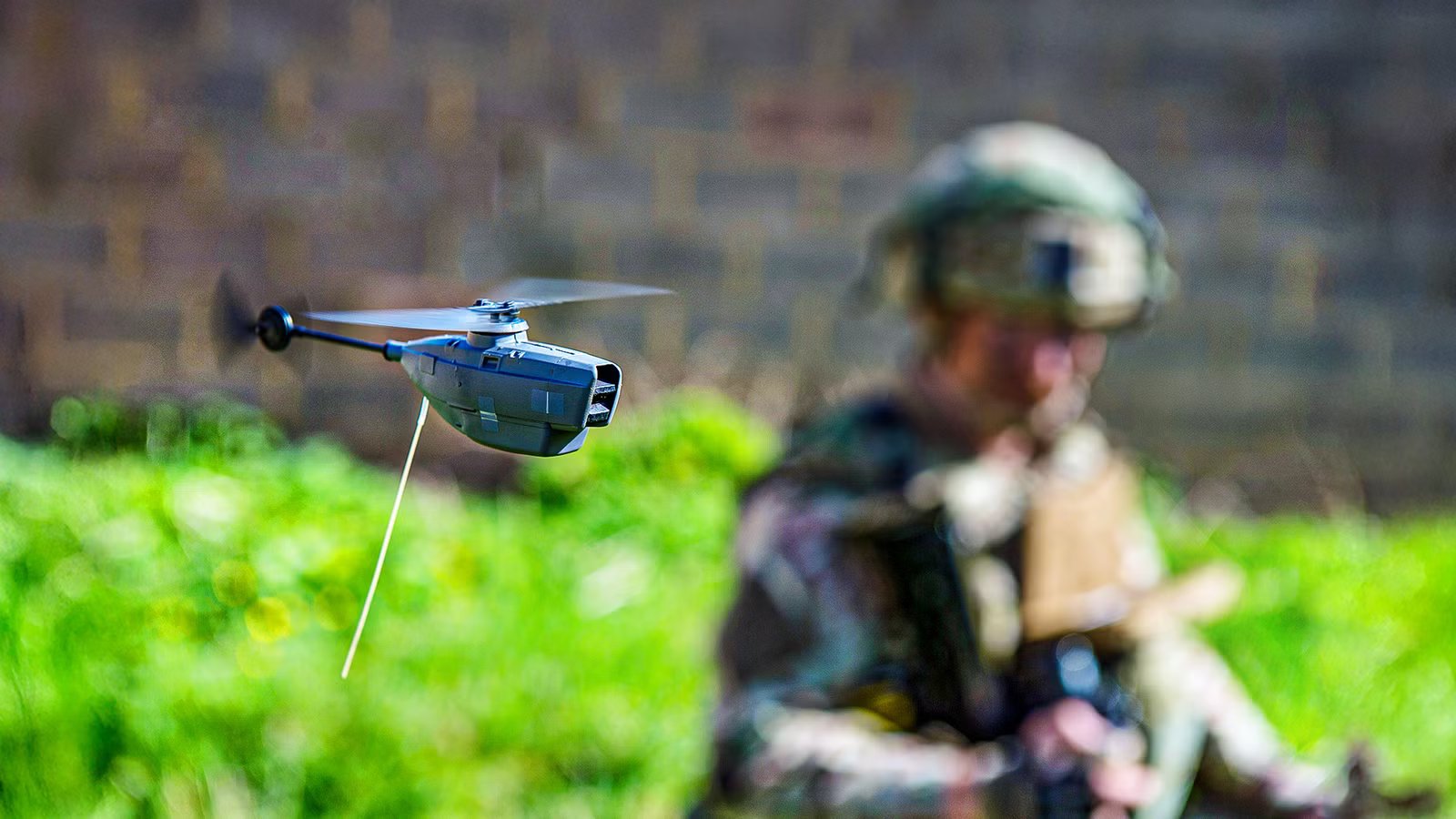
The US Army has taken a major step forward as the military attempts to innovate its unmanned aircraft systems programs to be more competitive on the 21st-century battlefield. The UAS marketplace is a core component of the new drone dominance plan, which aims to procure over one million uncrewed platforms over the next three years. The marketplace launched in March with 30 different airframes and is scaling towards at least 70, with potential for even more.
The Army’s online drone shop was developed in partnership with Amazon Web Services and the Army Enterprise Cloud Management Agency. The online platform allows military units, federal agencies, and international allies to browse, evaluate, and purchase vetted devices. The digital storefront operates like a modern e-commerce platform. It is intended to give troops a rapid supply chain that can keep pace with the modern battlefield.
The Army’s Amazon For Drones

The marketplace reportedly allows Army users to filter by cost, range, speed, payload capacity, and flight endurance to match their mission needs when shopping for a drone. Soldier feedback is included in the portal through a review system. All systems go through an onboarding process to ensure they perform as advertised, and modular integration is one of the highest priorities. In addition to verifying payload customizability, the Army also checks that every system complies with National Defense Authorization Act cybersecurity rules before a drone can be offered.
As a central project under the far-reaching Drone Dominance Program, the Army has categorized the different systems by group to distinguish capability levels and mission applications. Group 1 and 2 drones are small, lightweight systems under 55 pounds, such as the Aerovironment RQ-11 Raven. Group 3 drones are expanding to include tactical UAS up to 1,320 pounds in the future. The portal includes a commercial solution opening that is available indefinitely for new companies to pitch products, allowing for continuous evolution as emerging threats evolve.
The Army was inspired by rapid drone acquisition models seen in Ukraine that cut standard procurement times from years down to days or weeks. Another important part of the program is the Counter-UAS marketplace that falls under the purview of Joint Interagency Task Force 401. This portal provides access to anti-drone equipment like radars, electronic warfare systems, and kinetic interceptors such as the Merops Drone. The combination of the UAS and C-UAS markets is intended to provide a comprehensive solution for every army unit and coalition allies through foreign military sales.
The Army Adapts To Overcome

The Russian invasion of Ukraine, which began in 2022, has served as the impetus behind the Army’s massive drone rearming. The devastation wrought on armored vehicles, infantry, parked aircraft, and even low-flying helicopters by inexpensive drones spotlights the outsized asymmetric power that they afford. Ukraine has a far smaller military, industrial base, and raw material reserve, and yet it has used innovation to withstand the onslaught of the Russian Federation’s armed forces against all odds.
By virtue of the decades-long Cold War arms race between the United States and the Soviet Union, the Russian military is a close analog to the United States Armed Forces. Since Russia emerged from the collapse of its former socialist government, it has inherited leftover military equipment and made some improvements; its military is not as significant as the US’. Still, the clear disparity in performance between Ukrainian drones that cost tens of thousands of dollars and multi-million dollar weapons platforms fielded by Russia provided a clear warning to the Pentagon.
The Department of Defense is now rushing to close the clear capability gap highlighted by Ukraine’s stunning Battlefield victories against a larger and, at least theoretically, better-equipped force. One of the best examples is the Patriot missile system, which costs millions of dollars per shot to destroy a drone, versus the new Merops and Sting interceptor drones that are roughly $2,000 each and deliver the same capability. Operation Epic Fury has only served to cement the clear urgency of the DDP and other UAS initiatives, like the collaborative combat aircraft loyal wingman drone program.
The US Air Force Wants 1,000 AI Drones To Fly Alongside Its F-35s
The grand plan for an uncrewed air force.
The Influence Of The Iran Conflict

The beginning of Operation Epic Fury triggered broader drone-arming efforts in the US Military due to the clear and present threat presented by Iran’s uncrewed systems. The US military’s struggle to stop Iranian-designed Shahed-136 one-way, suicide drones led Army Secretary Dan Driscoll to initiate an unprecedented acquisition program to counter the imminent, large-scale threat. The Army completed procurement of 13,000 Merops Interceptor drones in just eight days under Driscoll, doing what would normally take years under the traditional bureaucratic process, according to Inside Unmanned Systems.
The Iranian Shahed-136 reportedly cost between $30,000 and $50,000 to produce, while the American Military was initially using anti-aircraft missiles to destroy them that cost hundreds of thousands, or even millions of dollars per launch. This enormous asymmetric disparity in the cost of weapon systems puts the American forces at a huge disadvantage despite their technical dominance. In the months that have followed, it has been widely reported that the US forces have consumed years’ worth of advanced missile production from the inventory.
The United States consumed between 30% and 50% of its entire national inventory for several of its most critical missile and interceptor stockpiles during the intense weeks of Operation Epic Fury. Some of the expensive and complex missiles used include the Army’s Patriot, the Navy’s Standard Missile 2 and 6, Evolved Sea Sparrow, and AMRAAM, as well as AIM-9X air-to-air missiles used by multiple service branches. Particular note was the exceptionally high expenditure of Terminal High Altitude Area Defense missiles, which are very sophisticated and slow to construct. It’s estimated that between 40% and 50% of the THAAD Stockpile is gone, according to CSIS.
The 5 Most Advanced Military Drones In Service Today
A closer look at some of the deadliest remote controlled planes in the sky.
Lessons Learned From Ukraine’s Defenders

Ukraine has experienced an average of more than 100 attacks by Russian drones per day since the invasion began in 2022. The Russian invasion force has launched mass attacks with as many as 800 drones in a single widespread onslaught. Even more impressively, Ukraine has made almost four million drones in 2025 and aims for seven million this year, according to CFR. Iran has employed a similar strategy since the US and Israel began Operation Epic Fury, targeting nearly every nation in its region with 2,000 drone strikes so far.
To date, the US lacks sufficient reserves of expendable and attritable unmanned aircraft to deploy a similar offensive strategy or counter such an attack with a defensive swarm of ‘one-way’ drones. The invasion of Ukraine showed the DOD that drones are now the dominant battlefield weapon, even at the squad level of infantry tactics, according to Military.com reporting. Secretary Hegseth ordered the US military to arm every US Army squad with unmanned systems by the end of 2026 in response to this evidence.
The war in Iran has further accelerated these initiatives, particularly as the US faces the same low-cost drone swarms it observed in Ukraine. The US recently debuted the LUCAS (Low-Cost Uncrewed Combat Attack System), a one-way attack drone modeled after Iran’s successful Shahed-136. America has also moved to draw on Ukraine’s expertise in fighting these exact systems, gained over nearly four years, to advance US programs.
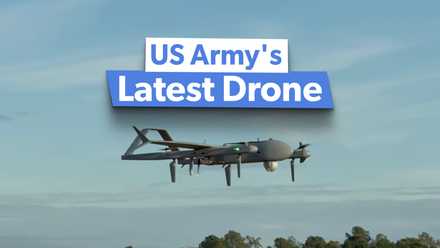
5 Fast Facts On The US Army’s Latest Drone
The US Army has an exciting new drone that will bring a new level of battlefield endurance and versatility to the frontline.
Vertical Integrating Army Drones: SkyFoundry

The SkyFoundry is a new flagship industrial initiative designed to mass-produce small drones at a scale never before seen in American history. It will provide the physical manufacturing backbone for the broader strategic goals of the DDP and Replicator. Through SkyFoundry, the Army plans to field at least one million drones within the next three years. This new doctrine will treat drones as expendable munitions rather than a reusable platform like conventional aircraft.
It aims to transform traditional military depots into high-tech manufacturing hubs capable of churning out one million drones annually. The program aims to reach a capacity of 10,000 drones per month by late 2026. The federal government will own the rights to the drone designs and can reallocate production to different sites or vendors as needed to sustain output.
The program is led by the Army Material Command and utilizes a Government-Owned, Government-Operated Contractor Augmented model. A key element of the plan is also decoupling the supply chain from China, ensuring that components like rare earth materials and brushless motors are sourced domestically or from allied nations. The main production facility will be at the Red River Army Depot in Texas, with supporting facilities at the Bluegrass Army Depot in Kentucky and Rock Island Arsenal in Illinois.