dailynewsnblog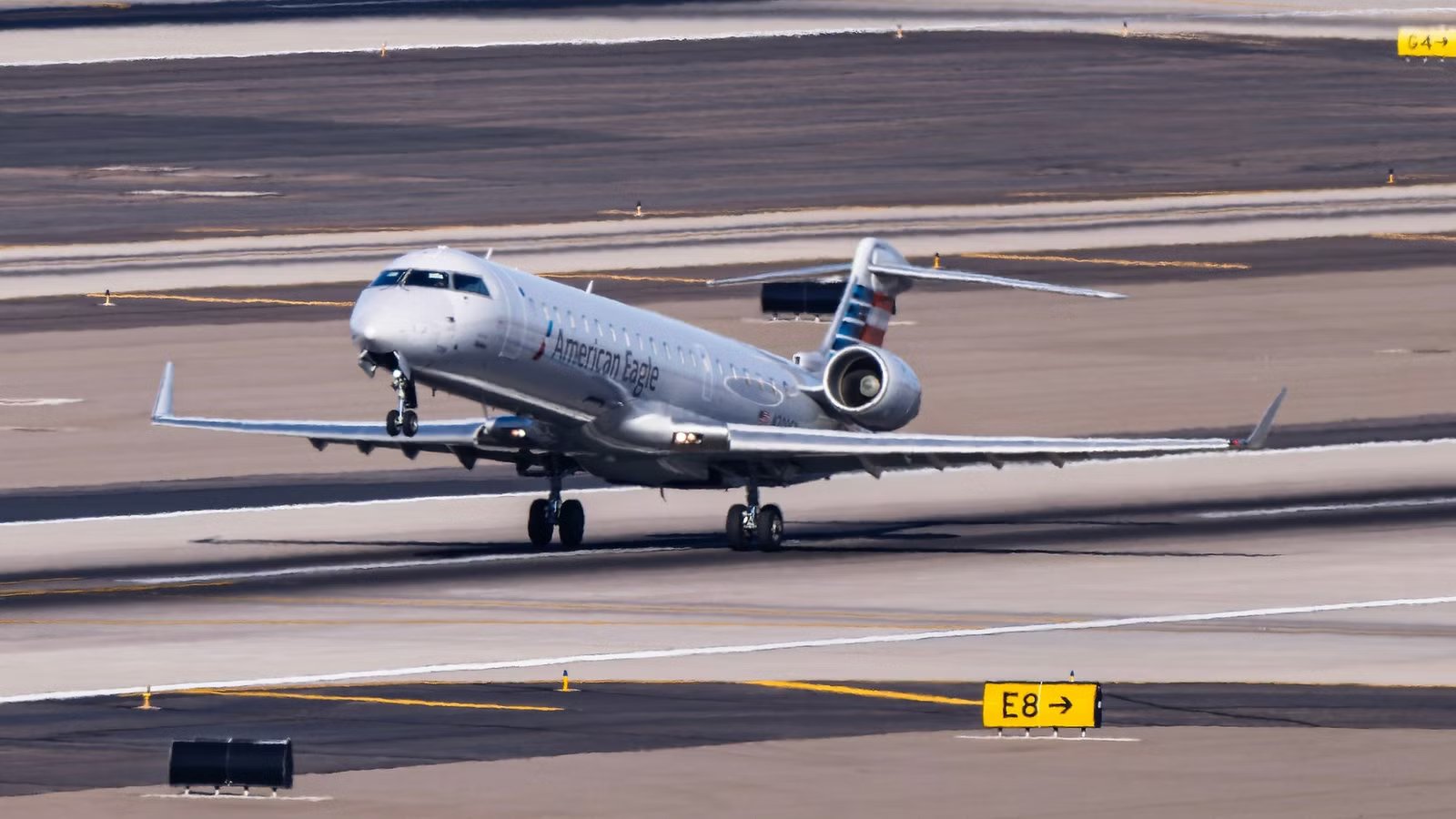
Just over a year ago, on January 29, 2025, an American Airlines flight operated by a PSA Airlines Bombardier CRJ700 under the American Eagle regional banner collided with a US Army Black Hawk helicopter while on approach to  Ronald Reagan Washington National Airport (DCA). The flight had originated in Wichita, Kansas, and its collision with the Sikorsky UH-60 resulted in the deaths of all 67 people on the two aircraft.
The high-profile nature of the tragic accident raised many questions, both in the aviation industry and among the general public, and the findings of the National Transportation Safety Board’s final report into the mid-air collision have been highly anticipated. Yesterday, the NTSB shared these findings with the world through the publication of its final report, which found one main probable cause and several other causal and contributing factors.
Examining The Main Causes

When all was said and done, after more than a year of intense investigative work, the NTSB determined “that the probable cause of this accident was the Federal Aviation Administration’s (FAA) placement of a helicopter route in close proximity to a runway approach path.” Its report also cited the FAA’s “failure to regularly review and evaluate helicopter routes and available data, and to act on recommendations to mitigate the risk of a collision.“
The NTSB also highlighted several operational shortcomings as causal factors. These included “the air traffic system’s overreliance on visual separation in order to promote efficient traffic flow without consideration for the limitations of the see-and-avoid concept,” and “the lack of effective pilot-applied visual separation by the helicopter crew, which resulted in a midair collision.” Overstretched ATC resources also played a role:
“Additional causal factors were the tower team’s loss of situation awareness and degraded performance due to the high workload of the combined helicopter and local control positions.”
Multiple Other Contributing Factors

In terms of air traffic control staff being overstretched, the NTSB highlights “the absence of a risk assessment process to identify and mitigate real-time operational risk factors, which resulted in misprioritization of duties, inadequate traffic advisories, and the lack of safety alerts to both flight crews.” The US has long been suffering from a shortage of controllers, but it was arguably this accident that thrust the crisis most firmly into the public view.
At the time of the crash, the US Army helicopter was flying above the maximum permitted altitude for the route that it was on, exacerbating the already high risk of a mid-air collision in the area. On this front, the NTSB highlights “the Army’s failure to ensure pilots were aware of the effects of error tolerances on barometric altimeters in their helicopters” as having been a contributing factor. This was why the helicopter was flying too high.
Elsewhere, the report notes that limitations with the two aircraft’s TCAS software rendered it ineffective in warning the crews of the impending crash, while “an unsustainable airport arrival rate [and] airline scheduling practices” at DCA “degraded safety over time” at the airport. Furthermore, the FAA, in addition to placing a helicopter route too close to the flight path, also failed to “implement previous NTSB recommendations” in the area.

FAA Ignored Pushes To Adjust Flight Paths Around Reagan National Airport In 2013, NTSB Says
The NTSB is pointing the finger squarely towards organizational failures at the FAA for the 2025 Potomac River midair collision.
A Wide Range Of Recommendations

It is often said that safety regulations are written in blood, and correspondingly, the NTSB has issued a wide range of recommendations as a result of the crash of American Airlines Flight 5342 to ensure that such a tragedy does not occur again. These apply to various groups, including governmental bodies, with the Department of Transportation and the Department of War Policy Board on Federal Aviation among those involved.
The bulk of the recommendations, however, concern the FAA and the US Army. The latter, for instance, has been advised to revise its training procedures for helicopter pilots in Washington DC, and emphasize the chance of altimeter errors, among other things. Meanwhile, among the 33 recommendations made to the FAA, key themes are air traffic control duty limits, scheduling caps, and reworking visual separation training.