dailynewsnblog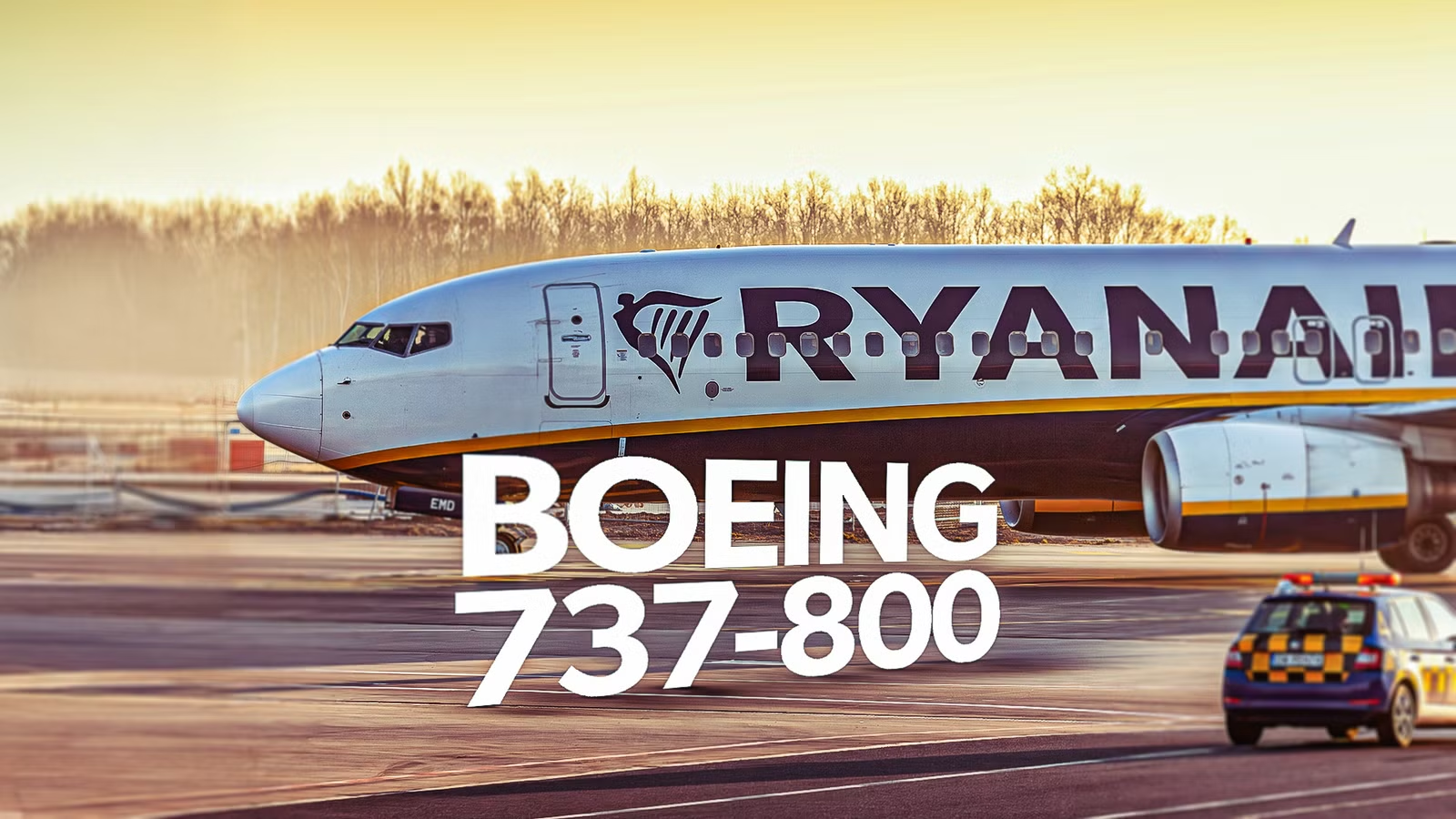
On July 10, a Boeing 737-800 Next Generation jetliner operated by Ryanair’s subsidiary Malta Air suffered an uncontained engine failure during initial ascent. While CEO Michael O’Leary placed the blame on foreign object damage, the National Transportation Safety Board has not yet ruled out equipment age or service issues in the CFM56 engine’s catastrophic malfunction.
The initial investigation report has not yet been published, but the case has brought additional scrutiny due to the injury of a traveler who was seated at the window when it shattered in midair. 61-year-old Serbian passenger, Ljubisa Karović, was partially sucked headfirst out of the broken window.
Too Early To Call the Malta Air Case Clear Cut

Ryanair flight FR-1879 had departed Thessaloniki (SKG) for Memmingen (FMM) before suffering that uncontained engine failure that initiated its emergency landing. The aircraft experienced rapid decompression around 15,000 feet after debris broke the window at seat 11F, forcing the crew to descend immediately and return to SKG roughly 75 minutes after takeoff.
While it is possible that FOD is solely responsible for the engine failure, the analysis has only just begun, and investigators will explore every potential cause in the interest of preventing future incidents. The age of the plane is one of the reasons that the NTSB cannot yet rule out service and condition as potential sources of fault.
The 18-year-old 737-800 was delivered to Ryanair in 2008 before being transferred to Malta Air in 2022, according to Planespotters.net data. Additionally, the Administrator of the Federal Aviation Administration, Brian Bedford, told Reuters that the early signs of the mishap mirror previous engine failures experienced by Southwest Airlines 737 NGs due to turbine fan blade fatigue, according to Reuters.
While leading a review of the Ryanair financial results for the second quarter, O’Leary gave this comment on the mishap, as quoted by the Irish Star:
“Initial indication would suggest it looks like foreign object damage to the engine on takeoff at Thessaloniki, but we don’t have, we can’t say that definitively.”
An Emerging Trend: The NTSB’s Investigative Imperative

Following O’Leary’s comments on July 20, NTSB Chair Jennifer Homendy contradicted his statement by saying the agency had made no such determination. She added that the CEO had violated the agency’s rules on disclosure in a letter directly addressed to O’Leary. The distinctly similar mechanical failures of the two SWA mishaps and loss of life had already led NTSB investigators to examine if the incident resulted from metal fatigue in aging Boeing 737 NG models.
The Ryanair incident mirrors the 2016 and 2018 Southwest accidents referenced by Bedford because of the nearly identical explosive failures of CFM56 power plants. It was later found that these incidents were caused by fan blade metal fatigue, leading to uncontained debris that shattered fuselage windows and caused passenger depressurization events.
The first such mishap, SWA Flight 3472, was able to land without injury. Tragically, passenger Jennifer Riordan died aboard Flight 1380 after she could not be pulled back into the cabin after explosive decompression, according to Kreindler Law. Seven other flyers were also injured after the second uncontained engine failure, which occurred at cruising altitude.
Ensuring Safety Of Flight Through Meticulous Analysis

Preceding NTSB Chair Robert Sumwalt stated that the crack in the fan blade that caused the CFM56 to fail on SWA 1380 was “certainly not detectable from looking at it from the outside.” Investigators later discovered the microscopic fatigue cracks started years prior. The stress failures bypassed standard visual and fluorescent penetrant tests.
The maker, FM International, and the FAA used eddy current inspection to detect invisible, subsurface cracks inside the blade roots. In 2023, the FAA issued an Airworthiness Directive requiring airlines to retrofit and reinforce the engine cowlings across the global 737 NG fleet to better contain future blade separations, but the compliance deadline is set for July 2028.
The NTSB has possession of the failed Ryanair engine components and is performing advanced laboratory testing on the broken fan blades now. FAA Administrator Bryan Bedford stated that while early indications don’t automatically guarantee a perfect match to Southwest, this incident may force a re-evaluation of the global fleet.