dailynewsnblog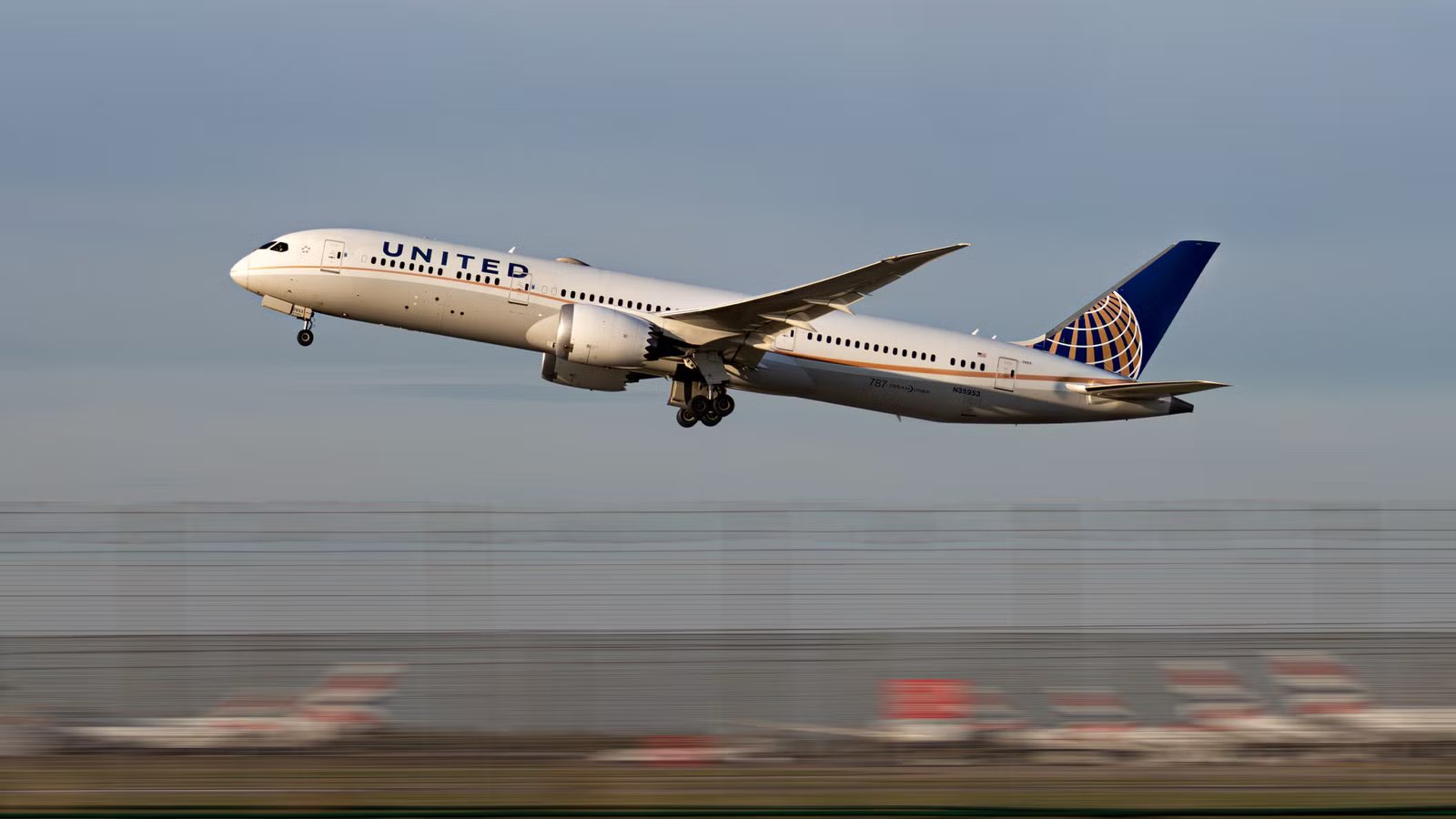
A senior Boeing 787 captain at United Airlines can earn more than half a million dollars annually in 2026 before retirement contributions, while comparable widebody captains at American Airlines approach similar yet slightly lower figures, and Delta Air Lines continues matching legacy-carrier pay growth through new labor agreements. Based on updated contract data from various airline salary analyses and all publicly available data, the Boeing 787 Dreamliner has become one of the highest-paying aircraft assignments in commercial aviation, but only at a small group of US legacy airlines.
The reason is rooted in how modern airline pilot compensation works. Widebody pilots flying aircraft such as the Boeing 787 and Airbus A350 receive significantly higher hourly pay rates than narrowbody crews, particularly on international routes requiring ETOPS qualifications and augmented operations. At major US carriers, those hourly rates can now exceed $465 per flight hour for senior captains, with additional 401(k) contributions of up to 18%, tax-free per diem payments, and profit-sharing bonuses pushing total compensation even higher. With US legacy airlines aggressively competing for pilots and reopening labor negotiations in 2026, Dreamliner pay has become one of the clearest indicators of the value of experienced widebody crews in the modern aviation market.
Understanding How Airline Pilot Pay Actually Works

Before looking at individual airlines, it is important to understand how airline pilot compensation is structured in the United States. Unlike many professions in which employees receive fixed annual salaries, airline pilots are paid primarily through negotiated hourly rates set in collective bargaining agreements. These contracts establish pay scales based on aircraft type, seat position, and years of service.
According to Acron Aviation Academy, most major US airlines guarantee between 70 and 85 credit hours per month. A common benchmark used throughout the industry is roughly 75 credit hours per month, translating to approximately 900 flight credit hours annually. This means a pilot’s yearly compensation is generally calculated by multiplying the contractual hourly rate by somewhere between 900 and 1,000 credit hours.
The system also explains why widebody flying matters so much financially. Pilots are paid from the moment an aircraft pushes back from the gate until it arrives at the destination gate. Time spent preparing flight plans, conducting pre-flight inspections, attending crew briefings, or boarding passengers is generally unpaid. As a result, pilots seek the most efficient combination of high hourly pay and long-haul flying, where a single international trip can generate substantial credited time.
Simple Flying notes that captain pay can range from 50% to 200% higher than first officer compensation, depending on aircraft type and seniority. That gap becomes especially dramatic on widebody fleets. While a narrowbody first officer may still be building experience and seniority, a senior Boeing 787 captain operating international routes can already be earning compensation packages that rival those of senior corporate executives.
Why The Boeing 787 Commands A Premium

Widebody aircraft have always carried higher pay scales than narrowbody jets, but the Boeing 787 Dreamliner sits near the top of the modern airline pay pyramid. Airlines reserve these aircraft for long-haul international missions requiring advanced operational experience, ETOPS qualifications, augmented crews, and complex scheduling. As a result, carriers frequently charge premium hourly rates for Dreamliner flights.
The financial advantages extend beyond basic wages. According to US Flight Co, airline pilots also receive per diem payments while away from base, typically ranging from $2 to $3 per hour, tax-free. For long-haul international crews spending days abroad between flights, these allowances can add several hundred dollars per month to their regular earnings.
Senior widebody captains are therefore operating in a compensation category far above the national average. Pelican Flight School reports that experienced captains flying aircraft such as the  Boeing 787 or Airbus A350 on international routes routinely earn between $450,000 and $550,000 annually. Those numbers become even more remarkable once retirement benefits are added. Several major US airlines contribute 16% to 18% to pilots’ retirement plans, regardless of whether pilots contribute themselves.
Estimated Widebody Compensation Structure At Major US Airlines (2026)
Compensation Element | Typical Widebody Captain Value |
Base Hourly Rate | $400–$500+ per hour |
Annual Credit Hours | 900–1,000 |
Estimated Base Salary | $400,000–$550,000 |
Per Diem Payments | $5,000–$10,000 annually |
401(k) Contribution | 16%–18% employer contribution |
Profit Sharing | Varies by airline profitability |
One reason the Boeing 787 has become such a coveted aircraft among pilots is the combination of technology and lifestyle. The aircraft is highly automated, fuel-efficient, and optimized for ultra-long-haul operations. Dreamliner schedules often include fewer flight segments than those of domestic narrowbody operations, meaning pilots may spend fewer days working while still earning substantial pay and enjoying greater comfort, too.
Over $400,000: The US Airlines With The Highest Widebody Captain Pay In 2026
A combination of factors, from global pilot shortages to union bargaining power, has pushed widebody captain pay to unprecedented heights.
American Airlines: Dreamliner Pay Nears Half A Million

At  American Airlines, Boeing 787 captains are among the airline’s highest-paid aviators. According to data compiled by The Aero World, a first-year captain flying the Boeing 777 or Boeing 787 earns a minimum hourly wage of $410.37. Using a typical 80-hour monthly schedule, that equates to nearly $394,000 annually.
The scale rises steadily with seniority. By year twelve, American Airlines Boeing 777 and 787 captains earn approximately $447.24 per hour, equivalent to around $429,350 annually before per diem, overtime opportunities, and retirement contributions are included. These figures place American’s senior Dreamliner captains among the best-paid airline employees in the United States.
The difference between captain and first officer pay also highlights the importance of career progression in airline aviation. First officers flying the Boeing 777 or 787 at American begin at around $116.05 per hour, translating to approximately $111,408 annually. However, by year twelve, widebody first officers can reach roughly $305.50 per hour, generating close to $293,280 per year.
American Airlines Boeing 787 / 777 Pilot Pay Scale
Position | Year 1 | Year 12 |
Captain | $410.37/hr (~$393,955 annually) | $447.24/hr (~$429,350 annually) |
First Officer | $116.05/hr (~$111,408 annually) | $305.50/hr (~$293,280 annually) |
These numbers also illustrate one of the defining realities of airline careers: patience and seniority matter enormously. A newly hired first officer flying the same aircraft as a senior captain may earn less than one-third as much despite sharing cockpit responsibilities on the same route.
For many pilots, however, the attraction lies in the long-term trajectory. Widebody fleet assignments are typically awarded through seniority bidding systems. Pilots spend years building experience before finally securing positions on aircraft like the Boeing 787, where both pay and schedule quality improve significantly.
United And Delta Are Driving The Widebody Salary Race

If American Airlines pays extremely well for Boeing 787 flying,  United Airlines and
  Delta Air Lines are increasingly setting the benchmark for the entire industry. Following a wave of post-pandemic labor negotiations, both airlines secured some of the most lucrative pilot contracts ever seen in commercial aviation, particularly for widebody operations.
According to Bandana Resources, a year-12 Boeing 787 captain at United earns approximately $558,156 annually, or about $465.13 per hour. A contracted raise scheduled for January 2027 is expected to push that figure close to $598,000 annually, equivalent to roughly $498.25 per hour.
The retirement package is equally striking. United contributes 17% to pilot 401(k) retirement accounts in 2025, rising to 18% in 2026. That means a captain earning more than half a million dollars annually could see another $90,000 or more deposited directly into retirement savings by the airline.
The Aero World also notes that United’s widebody first officers, operating aircraft such as the Boeing 787, Boeing 777, and Boeing 767-400ER, are Boeing 767-400ER are among the highest-paid first officers in the industry. Their compensation reflects the complexity of long-haul international operations and the seniority required to secure those positions.
Meanwhile, Delta Air Lines demonstrates how strong widebody premiums have become across the legacy airline market. According to Simple Flying, a year-one Airbus A350 captain at Delta earns over $300 per hour, while a year-one Boeing 737 captain earns closer to $240 per flight hour.
That comparison highlights the structural premium airlines attach to international widebody operations. Both captains may have similar levels of experience, but the pilot commanding the larger long-haul aircraft receives substantially higher compensation due to the operational complexity, international scheduling demands, and the aircraft’s prestige.
Delta’s top captains can reportedly earn as much as $400,000 annually, positioning the airline competitively alongside American and United, even though they don’t operate Boeing 787, but a comparable Airbus A350. While Delta’s Boeing 787 exposure is still limited to orders, compared to its extensive Airbus A350 operations, the principle remains the same across premium long-haul fleets.
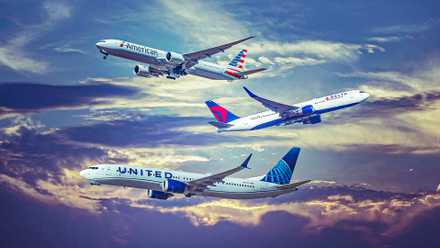
A Look At The Salaries Of The US Big 3 Airline Pilots In 2026
Airlines are in a fierce competition for top talent, and pilots are reaping the rewards.
The US-Europe Salary Gap Remains Massive

The extraordinary compensation available to US widebody pilots becomes even clearer when compared with international counterparts. Senior Boeing 777 captains at major US airlines like Delta or United can earn between $400,000 and $420,000 annually before factoring in profit sharing and retirement contributions.
In Europe, however, compensation levels are considerably lower despite similar operational demands.  Lufthansa Airbus A350 captains reportedly earn around €250,000 annually, while
  Air France and
  British Airways long-haul captains fall within similar ranges. Once taxation and purchasing power are taken into account, the US compensation advantage remains significant.
Several structural factors explain the disparity. US airline pilot unions have historically negotiated aggressively around profit sharing, retirement contributions, and widebody premiums. The United States also operates a uniquely large domestic aviation market that generates enormous revenue for major legacy carriers.
The result is that the Boeing 787 captain role at a major US carrier increasingly resembles a top-tier executive position in terms of compensation. It is not uncommon for experienced pilots at airlines like United to earn compensation packages that approach or exceed those of physicians, attorneys, or senior corporate managers.
Not Every Dreamliner Pilot Is Earning Half A Million Dollars

Despite the eye-catching numbers, the reality is that many Boeing 787 pilots still earn far less than the industry’s highest-paid captains. Aggregate salary data often paints a very different picture because it includes entry-level first officers, lower-paying carriers, cargo operators, and regional variations.
According to ZipRecruiter, the average widebody pilot salary in the United States as of February 2026 is approximately $135,080 annually. The majority of salaries range from $108,500 to $129,000, while the top 10% of earners earn around $200,500. That disparity exists because “Boeing 787 pilot” is an extremely broad category. A newly upgraded first officer at a lower-paying airline will not approach the compensation earned by a senior captain at United or American. Seniority remains the defining factor throughout an airline pilot’s career.
The broader labor market also helps contextualize these elite earnings. Epic Flight Academy cites US Bureau of Labor Statistics data showing that the median salary for airline pilots, copilots, and flight engineers in 2024 was $226,600. Salaries continued rising throughout 2025 as airlines competed for qualified crews.
What makes widebody flying so unique is how dramatically it exceeds even those elevated industry averages. The Boeing 787 has effectively become aviation’s equivalent of a premium executive office — but access depends on landing a coveted position at the right airline and staying long enough to climb the seniority ladder.
For aspiring pilots, that reality shapes career decisions from the very beginning. Choosing the right regional airline pathway, joining a legacy carrier early, and surviving the long progression toward widebody captaincy can ultimately mean the difference between earning a respectable six-figure income and building one of the highest-paying careers in commercial transportation.