dailynewsnblog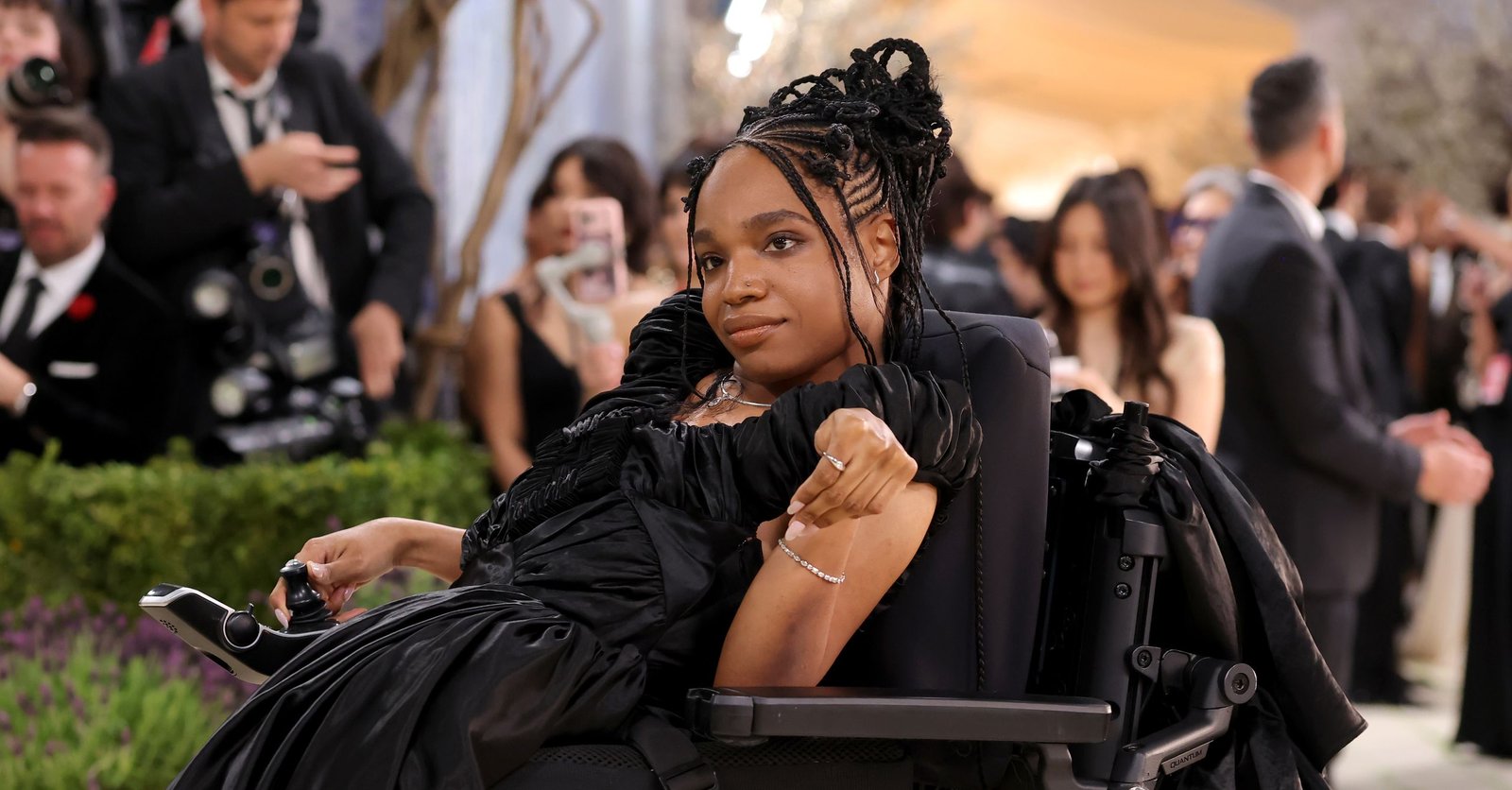
Every year, the Metropolitan Museum of Art’s Costume Institute (and its star-studded Met Gala invite list) promise to deliver. Thoughtful exhibitions, spearheaded by head curator Andrew Bolton, are orchestrated years in advance. Celebrities and designers begin planning looks months ahead. Publications begin prepping social teams, articles, and posts with weeks of anticipation even before an extravagant, bedazzled gown hits the red carpeted steps.
The Met Gala is a machine built for spectacle. But, historically, it hasn’t always been the case for everyone—until now, that is.
After almost eight decades of the first Monday in May, this year’s exhibition and corresponding gala are the first to be intentionally accessible for disabled attendees.

(Image credit: Mike Coppola/Getty Images)

(Image credit: TIMOTHY A. CLARY / AFP via Getty Images)
The Metropolitan Museum of Art worked hand-in-hand with Tilting the Lens, an organization focused on elevating and amplifying disabled voices in arts, culture, community, and fashion. More than urging companies to include accessibility as a checkbox to mark off, Tilting the Lens and its CEO and co-founder, Sinéad Burke, have embedded equity into every step of its mission and the partners it works with. Ahead of the Met Gala, museum co-chairs and organizers tapped Burke and Tilting The Lens as consultants for the Costume Institute’s 2026 exhibition, “Costume Art,” which examines fashion’s role in perception and the body. Naturally, bodies that have been sidelined for eons in the fashion eco-system, were intentionally put on center stage.
Alongside highlighting pregnant figures and plus-size figures, the exhibition features a highlighted section, titled “The Disabled Body,” which draws from the inspiration and wardrobes of Burke, athlete Aimee Mullins, model Antwan Tolliver, swimwear designer Sonia Vera, and runway model and musician Aariana Rose Philip.

“We’re not creating a new hierarchy, we’re just trying to create more of an equitability between artworks and bodies,” Bolton shared with Vogue. All body types, including disabled ones, are on full display and celebrated, he acknowledged. While typical beauty standards haven’t wavered, “The Disabled Body” gives us a glimpse of true equity in the fashion industry.
For Philip, in particular, the moment feels poignant: she is the first wheelchair user to attend fashion’s biggest night (Tilting the Lens also worked with the Met to coordinate a photo spot for disabled attendees who were unable to use the entrance up the steps, allowing them to have their fully-fleshed fashion moment). In 2018, Philip became the first-ever Black, transgender, and physically disabled model to be represented by a major modeling agency, under Elite Model Management.
Alongside highlighting pregnant figures and plus-size figures, the exhibition features a highlighted section, titled “The Disabled Body,” which draws from the inspiration and wardrobes of Burke, athlete Aimee Mullins, model Antwan Tolliver, swimwear designer Sonia Vera, and runway model and musician Aariana Rose Philip.

(Image credit: Taylor Hill/WireImage)
“I think it’s a huge moment for the disabled community to be able to dress the first person, first wheelchair user, and at the Met Gala,” Taymour shared with Who What Wear. Taymour shared that the dress wasn’t just built on aesthetics—an asymmetric hemline and the way the garment is cut is meant to highlight Aariana’s body without taking away any of her chair’s functionality. “It’s just such a moment for Collina Strada, for me, and to be able to do it with Aariana is so important, because we’ve worked with each other for over six years, and she’s just such a special person to me,” Taymour added. “I’m just super honored to be able to be able to be a part of it.”
Beyond the red carpet, the significance of this year’s exhibition lingers in what it signals for fashion at large. For decades, adaptive design has existed on the margins—treated as a niche rather than an integral part of the industry’s future. By placing disabled bodies at the center of one of fashion’s most visible and influential platforms, the Costume Institute is doing more than making a statement; it’s setting a precedent. The question, now, is whether brands and institutions will follow through once the cameras are gone.

(Image credit: Jamie McCarthy/Getty Images)
The fashion industry has always been obsessed with the body: shaping it, restricting it, idealizing it. Rarely has it reckoned with the full spectrum of bodies that engage with it daily, though. In centering disabled perspectives not just as inspiration, but as spearheaders of design and culture, “Costume Art” challenges an industry that has historically prioritized fantasy over function, and aesthetics over access. “Costume art is all about different types of bodies and how fashion becomes art because of embodiment,” Burke, who worked hand-in-hand with the Costume Institute team for 18 months, told model Ashley Graham on Vogue’s livestream. “We are spotlighting bodies, disabled designers, and disabled models,” Burke reflected on the night.”
Let’s face it—there’s still a long way to go. Although there’s a lot to celebrate when it comes to the Met Gala’s strides towards true disabled representation, there’s still a void of talent, designers, and fashion players who belong in the room just as much as any able-bodied celebrity. We can’t keep going another few decades before disabled talent can be in the major rooms again.
This year’s “Costume Art” exhibition opens to the public on May 6, 2026. You can view the full collection at the Anna Wintour Costume Center at Metropolitan Museum of Art in New York.