dailynewsnblog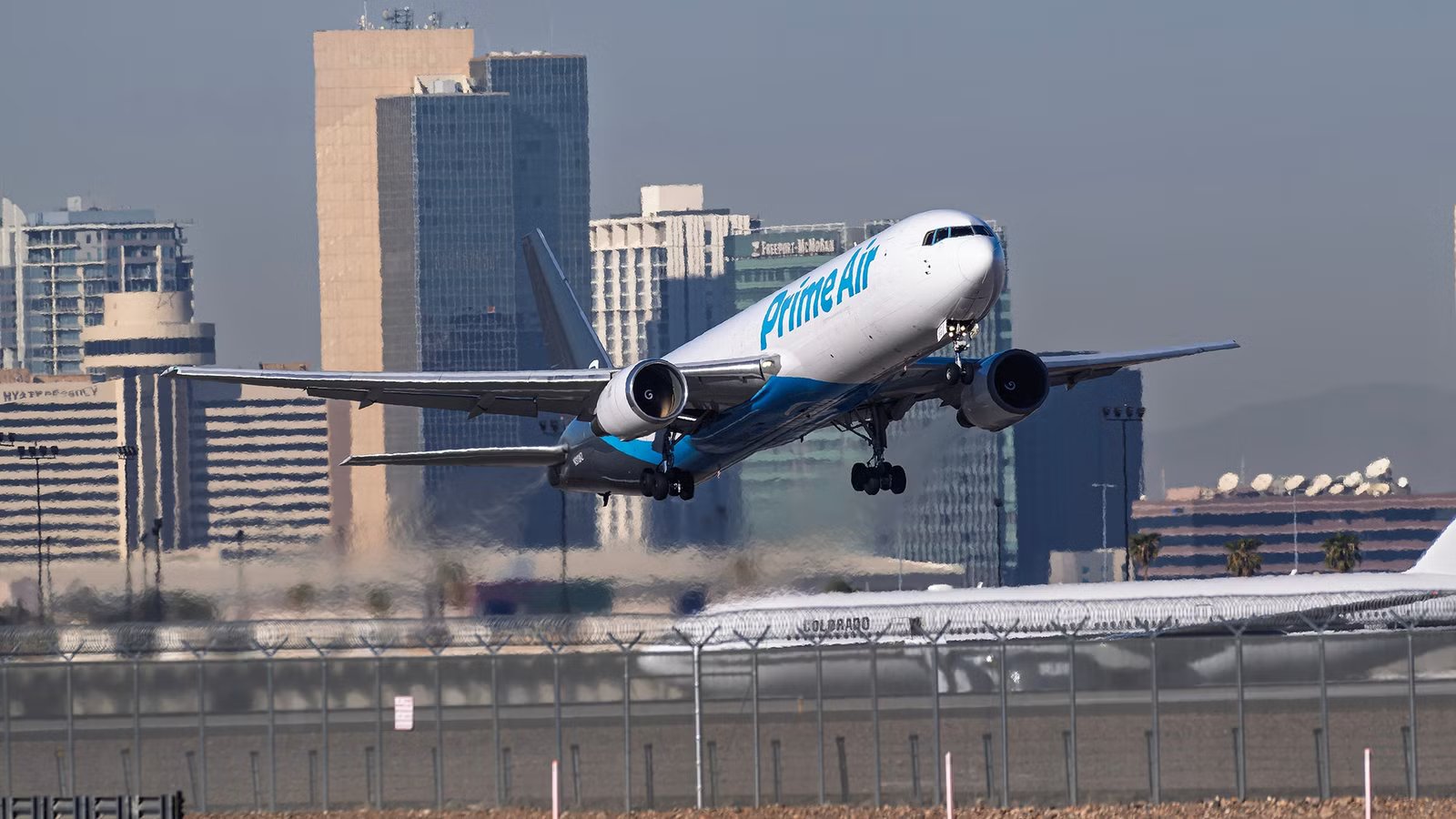
The National Transportation Safety Board ( NTSB) has released a summary of cockpit voice recorder (CVR) data from the Amazon Prime Air Boeing 767 crash at  Miami International Airport (MIA) on Sunday. It reveals that the crew received seven cockpit warnings in the final moments of the approach, consisting of two “sink rate” and five “too low terrain” alerts.
It has also emerged that one pilot repeatedly warned the other about the 767’s excessive speed more than a minute before touchdown. The NTSB says there was not a “consistent verbal response” to the warnings, raising questions about how the crew managed the approach in the moments before the crash.
New Details Point To Problems During The Approach

The NTSB’s latest update offers a more detailed sequence of events on Sunday, when five people died after the Amazon Prime Air-branded Boeing 767-300F overran MIA’s Runway 30 and collided with two vehicles. Cockpit recordings show that multiple automated alerts sounded on final approach — indicating the jet was descending too quickly or getting too close to the ground — while also revealing an apparent breakdown in communication between the two pilots.
Time before end of recording | What happened |
|---|---|
1 minute 42 seconds | A pilot calls for Flaps 20; warns that the aircraft is too fast. |
1 minute 12 seconds | “One thousand” callout. |
1 minute 4 seconds | “Sink rate, sink rate” callout. |
57 seconds | Second “sink rate, sink rate” callout. |
50 seconds | “Minimums” callout. |
48 seconds | “Too low terrain” callout, annunciated four times. |
41 seconds | A pilot calls for Flaps 30. |
39 seconds | “Too low terrain” callout. |
31 seconds | Sound of the aircraft touching down. |
15 seconds | A pilot calls for a go-around. |
10 seconds | Sounds similar to the aircraft leaving the paved runway. |
End of recording | The CVR recording ends. |
The sequence shows the approach becoming increasingly unstable as the 767 neared the runway. After one pilot issued repeat warnings over the aircraft’s excessive speed, the crew received two “sink rate, sink rate” warnings, followed by five “too low terrain” alerts in the seconds leading up to touchdown. The pilot’s concerns over airspeed began around 70 seconds before touchdown and continued throughout the recording. The NTSB said:
“The other pilot cautioned they were too fast. The other pilot made additional comments regarding the aircraft’s excessive speed throughout the remainder of the recording. There was not a consistent verbal response to the comments about speed.”
As reported by Simple Flying yesterday, the crew then attempted a go-around approximately 16 seconds after touchdown, releasing the brakes and throttling up to go-around power. However, this was aborted just four seconds later, leaving the 767 with only seconds of runway remaining before it left the paved surface. The NTSB also stated that there is no indication either thrust reversers or speed brakes were used at any moment during the landing.
Late Landing Configuration As 767 Runs Out Of Runway

The recordings also reveal that the 767 was late in adopting its proper landing configuration. Flaps were set to 5 degrees at two minutes and 53 seconds, followed by Flaps 15 at two minutes and 14 seconds. However, Flaps 30 — which is the 767’s normal landing setting — was not requested until 41 seconds before the end of the recording, and only 10 seconds before the jet made its initial touchdown.
At one point, the jet dropped 400 feet in just four seconds before eventually touching down close to the halfway point of Runway 30. According to an independent reconstruction by Smart Mobility Solutions based on flight tracking data, the 767 made its initial touchdown at around 4,360 feet from the physical runway threshold, leaving approximately 5,000 feet of runway remaining to stop or throttle up for a go-around.
Flight data shows the aircraft’s nose and right main landing gear touched down at 158 knots, but its left gear didn’t make ground contact until a full 11 seconds later at 134 knots. There were also strong winds reported at the time, although investigators have yet to confirm whether this contributed to the accident.
Investigators Still Examining Why The Landing Continued

Questions remain over why the crew persisted with their landing, despite the multiple warnings and unstable approach. Speaking to Reuters, aviation safety consultant Anthony Brickhouse criticized the decision to continue with the landing, stating there were “several cues that their approach was not stable” while highlighting a “definite breakdown in crew resource management.”
Both pilots survived the crash and were interviewed by investigators on Wednesday. They have been identified as Captain Joseph Carroll, 55, and First Officer Jaime Felipe Silva Molina, 37, of 21 Air, which operates freighter services on behalf of Amazon Prime Air. The NTSB has not revealed which pilot was flying during the accident or which one made the repeated comments about excessive speed.