dailynewsnblog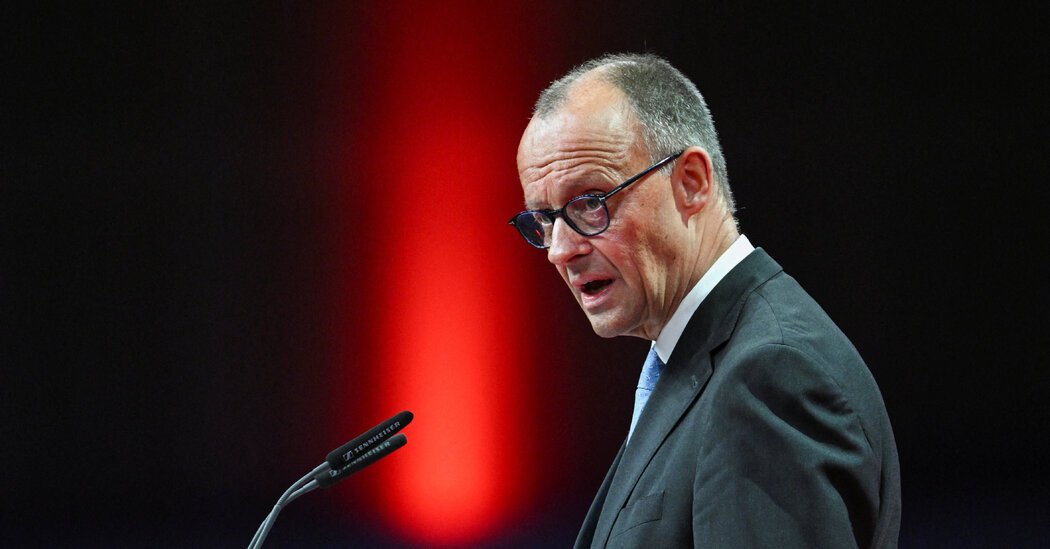
In the days after he infuriated President Trump by criticizing America’s war in Iran, Friedrich Merz, the chancellor of Germany, professed affection for the United States. When the Pentagon abruptly said it would pull 5,000 troops from Germany, Mr. Merz and his aides projected calm.
What Mr. Merz did not do was apologize.
In refusing to back down, Mr. Merz was adopting what has by now become a widespread tactic among European leaders who have provoked Mr. Trump’s wrath during the war.
European leaders are struggling to influence the course of the conflict and to manage its economic and security consequences. They are venting those frustrations, with little remorse.
If that move seems familiar to Mr. Trump, it should be. It is one of his favorites.
The president has built and sustained a political brand, in part, on a don’t-back-down approach. The list of comments and actions he has been asked to apologize for, but has not, is lengthy and ever-growing.
It includes calling Senator John McCain, who spent five years as a prisoner of war in Vietnam, “not a war hero”; a wide range of comments disparaging people from other countries, like Haiti and Somalia; and, most recently and still ongoing, a feud with Pope Leo XIV.
The pope has repeatedly criticized the war the United States and Israel are waging against Iran, without apology. Mr. Trump has sought to equate that criticism with a desire for Iran to acquire a nuclear weapon — a charge he also leveled at Mr. Merz after his remarks this month that the United States had “no strategy” in Iran.
The Vatican has long opposed nuclear weapons, Pope Leo noted last week. “If someone wants to criticize me for proclaiming the Gospel, let him do so truthfully,” the pope told reporters.
Leaders across Europe similarly brushed off Mr. Trump when he reacted angrily to their criticisms of the war, their refusal to allow the United States full use of European military bases to launch attacks on Iran, and their unwillingness to meet his demands to send military force to open shipping lanes in the Strait of Hormuz.
Keir Starmer, the domestically embattled British prime minister, told an interviewer last month that he was “fed up” with pressure from Mr. Trump over the war.
Giorgia Meloni, the Italian prime minister, was once seen as a key European ally of the president but increasingly finds Mr. Trump to be a weight on her political fortunes at home. She called his criticism of Pope Leo “unacceptable.”
After a meeting with Secretary of State Marco Rubio last week, which appeared intended to smooth relations between the countries, Ms. Meloni did not back off the comment. She said she and Mr. Rubio had shared a “frank dialogue, between allies who defend their own national interests but who both know how precious Western unity is.”
Mr. Merz used similar language after his comments to a group of German high school students this month, in which he said Iranian negotiators had “humiliated” the United States. The comments appeared to spur the surprise Pentagon announcement that it would relocate 5,000 of the about 35,000 U.S. troops in Germany.
Pressed by an interviewer, Caren Miosga, on the German public television network ARD, soon after the troop withdrawal announcement, Mr. Merz acknowledged a rift with Mr. Trump over the comments but did not apologize for them.
“We have a different view of this war, that is no secret,” Mr. Merz said, when asked if he would make the same comments again about Mr. Trump and the war. “I am not alone in that.”
Domestically, Mr. Merz has faced almost no pressure to back off his criticism of Mr. Trump. The war remains unpopular in Germany and across Europe. It has pushed up gas prices. Its rising economic toll appears to have helped Germany’s three opposition parties in Parliament gain in the polls — the far-left Die Linke, the center-left Greens and the far-right Alternative for Germany, or AfD.
Still, some analysts say the chancellor could have chosen his words more carefully.
“You cannot humiliate this president or be seen to be doing that,” said Cathryn Clüver Ashbrook, a political analyst in Berlin, who wrote a German book about Mr. Trump, “The American Wake-Up Call.”
Mr. Merz, she noted, criticized Mr. Trump with a German-language expression that is akin to saying that the Iranians played the president for a fool. “There is no other way that the White House would have read that,” she said.
In his television interview, Mr. Merz did not answer directly when asked if he would still phrase his criticism in the same way. He also suggested he could mend fences with the president.