dailynewsnblog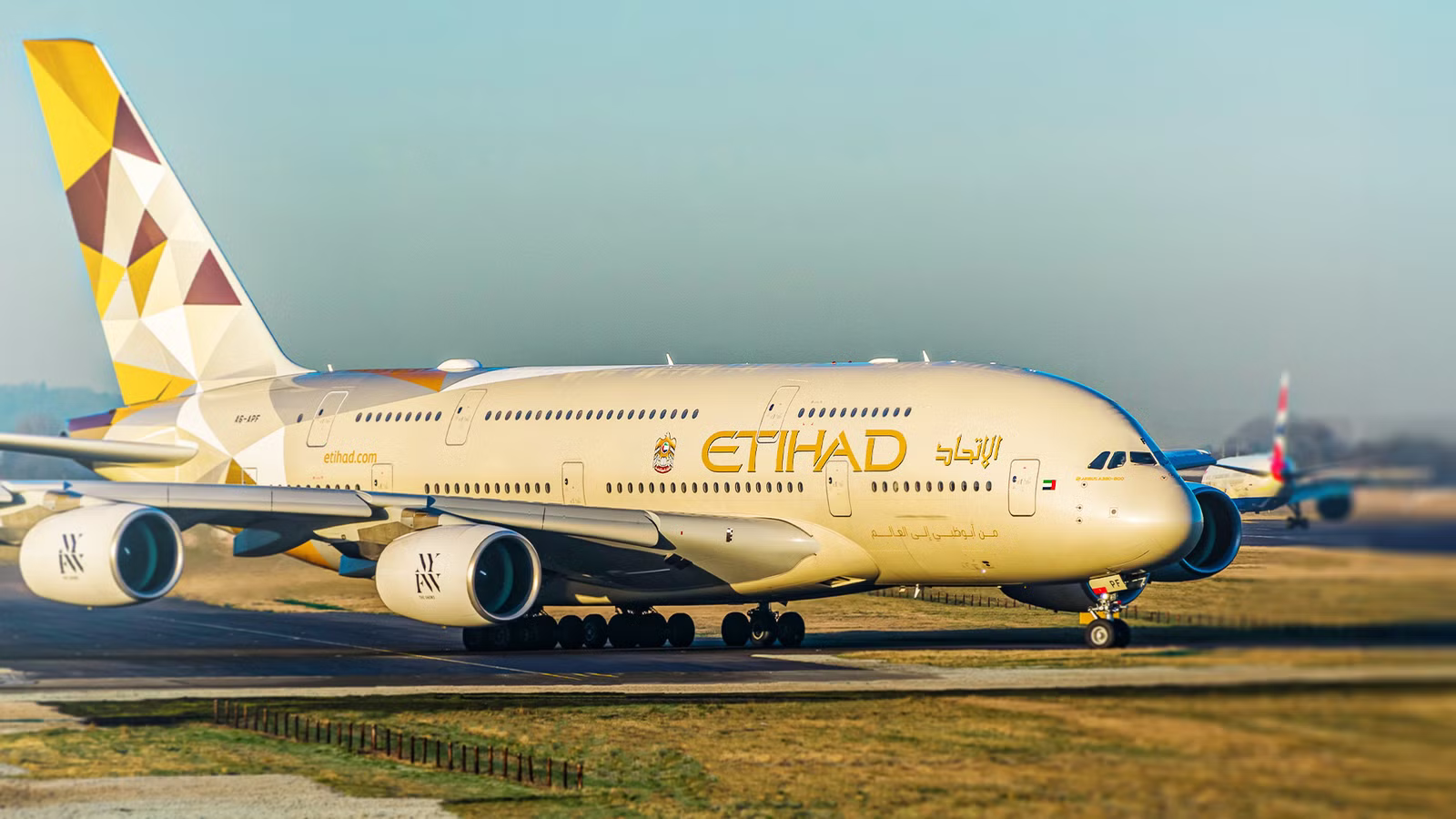
The Airbus A380 was once the staple in the  Etihad Airways fleet. However, Abu Dhabi’s flag carrier parked its entire double-decker fleet at the onset of the 2020 aviation crisis. Six years later, against a backdrop of widebody delivery delays and unprecedented global premium demand, that premature obituary has been entirely inverted. With the final stored aircraft touching down back on September 17, Etihad has completed the total operational revival of all nine surviving superjumbos.
Bringing these massive double-decker jets back from prolonged storage in the French Pyrenees was a great logistical challenge. Between heavy structural checks, engine overhauls, and complex cabin re-certifications, Etihad’s decision to reactivate registration A6-APB alongside its eight sister airframes is a landmark calculation by chief executive Antonoaldo Neves to preserve market share across key global corridors. How an aircraft designed for an earlier era of aviation managed to solve Abu Dhabi’s modern airport slot constraints can be followed directly across global aviation routes on the Simple Flying Live Flight Tracker.
Back In Favor At Etihad?

The operational recovery reached its final milestone when registration A6-APB departed Tarbes-Lourdes Pyrenees Airport (LDE) after multi-month reactivation work, restoring Etihad’s active double-decker fleet count to nine aircraft. Out of the original ten superjumbos delivered to Abu Dhabi, nine airframes have now successfully rejoined active flight line duty, while a single airframe, A6-APA, was designated to be scrapped in 2025, as per FlightRadar24. The complete return of the viable fleet marks a total reversal of the airline’s original pandemic-era strategy, which had written off the superjumbo in favor of smaller dual-engine widebodies.
The initial restart program began cautiously in July 2023 with four aircraft dedicated strictly to high-density runs between Abu Dhabi International Airport (AUH) and  London Heathrow Airport (LHR), detailed in Simple Flying coverage. However, as international travel demand surged and persistent supply chain issues delayed the delivery of replacement Boeing 777X and Airbus A350-1000 aircraft, Etihad leadership steadily expanded the reactivation timeline, committing to return two additional units per year through late 2026. Restoring each four-engine jet was an investment running into tens of millions of dollars, encompassing comprehensive maintenance checks, engine overhauls for the Engine Alliance GP7200 powerplants, and deep systems re-certifications that are needed after years in desert storage.
Committing such significant capital to reactivate nine four-engine giants gives a window into the extraordinary operational pressure facing Abu Dhabi’s hub infrastructure today. Rather than serving as a temporary stopgap while waiting for newer long-range airframes to arrive, the superjumbo has re-emerged as the central pillar supporting the carrier’s aggressive global network expansion.
The Only Aircraft Fit For The Job

So why exactly is Etihad heading back toward the 486-seat superjumbo? The decision mainly comes from an industry-wide shortfall in long-haul widebody deliveries coupled with strict slot caps at key international hubs. When Etihad originally planned its post-2020 fleet plan around twin-engine Airbus A350-1000 and Boeing 787-10 airframes, executive assumptions were based on predictable delivery schedules from European and American manufacturers. However, multi-year supply chain disruptions and ongoing program certification delays left the Abu Dhabi carrier with insufficient seat availability to capture surging long-haul traffic across its core hub connections.
Ongoing delays to the Boeing 777X program, alongside supply constraints on twin-engine widebodies, squeezed long-haul seat capacity precisely as passenger volume through AUH exceeded historical records, as per WAM. On heavily constrained international corridors, particularly to popular European destinations, carriers cannot just add extra daily departure slots to meet growing passenger numbers. With daily slot availability strictly capped, increasing passenger throughput requires scaling up aircraft seating capacity per landing slot. The double-decker superjumbo returning instantly expanded seat count on key routes by more than 40% compared to dual-engine widebodies, upping the total yield per allocated departure slot.
However, returning nine four-engine giants to high-utilization flight lines is an entirely new operational puzzle for Etihad network planners. Unlike flexible twin-engine fleets that can effortlessly rotate across regional routes, a tight nine-aircraft superjumbo sub-fleet needs more focused ground handling support, high-yield passenger density, and meticulous maintenance buffering to maintain sustainable line efficiency. That operational reality sharply narrows the specific international corridors where these airframes can realistically operate.
Where Is The Superjumbo Flying To?

Following a high-frequency international schedule with a compact sub-fleet of nine superjumbos can really only work with a precision-engineered hub turnaround schedule out of AUH. Etihad balances this active fleet by assigning eight airframes to continuous line rotations while holding the ninth aircraft in reserve at Abu Dhabi for further maintenance checks for the time being, as per AeroTime.
The tight rotational pattern underpins five primary long-haul destinations currently anchored by Etihad’s superjumbos: London Heathrow Airport (LHR),  Paris Charles De Gaulle Airport (CDG),
  Tokyo Narita Airport (NRT), Singapore Changi Airport (SIN), and
  Toronto Pearson International Airport (YYZ). LHR sees the heaviest allocation with up to three daily rotations, as per Fleet Wire, while CDG and SIN capture high-volume European and Southeast Asian connections. Meanwhile, the long transatlantic sector to YYZ, stretching over 5,900 nautical miles (10,926 km), and the high-density East Asian corridor into NRT is at the outer range limits of Etihad’s double-decker network, testing aircraft endurance across 14-hour flight legs.
Managing five distinct long-haul vectors with only nine aircraft leaves virtually zero tolerance for unscheduled downtime across the fleet. Every scheduled maintenance check at Abu Dhabi must align precisely with ground turnarounds between long-haul flight pairings to prevent potential flight delays. Maintaining that delicate balance means having constant real-time operational oversight, and Etihad is doing just that to keep its fleet running smoothly.
Where To Find Using The Tracker

Monitoring the daily movements of Abu Dhabi’s superjumbos is easy with global ADS-B flight tracking systems, giving dispatchers and aviation enthusiasts the chance to follow individual airframe rotations across AUH in real time. Each aircraft in the double-decker fleet carries a specific tail registration within the block ranging from A6-APB through A6-APJ. By entering these registration numbers into the live tracker, you can watch how Etihad rotates its active fleet across five major international destinations, pinpointing exact aircraft callsigns and tracking real-time route assignments as flights traverse European, Asian, and North American airspace.
Lead airframe A6-APA was decommissioned and dismantled at Tarbes-Lourdes Pyrenees Airport, serving as a donor airframe to supply spare parts for its nine remaining sister ships. The remaining nine airframes, A6-APB through A6-APJ, now constitute the active operational fleet. The return of A6-APB on September 17, 2026, brought the final end to the multi-year reactivation program, bringing all nine viable superjumbos back onto active flight lines that can now be followed on the flight tracker whenever they take to the skies.
Catch what other trackers miss
Emergency squawks, holds, NOTAMs — live signals, no signup.
Open tracker
With A6-APA providing critical structural spare parts, Etihad has stabilized component availability to keep dispatch reliability high. However, maintaining such intensive technical oversight is only financially sustainable if each flight generates exceptional passenger revenue per available seat mile.
The Most Expensive Seats In The Sky?

To cover the steep direct operating costs and higher fuel burn of four massive Engine Alliance GP7200 powerplants, Etihad uses an ultra-premium cabin layout that generates exceptional revenue per flight leg. The carrier’s 486-seat double-decker configuration is led by The Residence, a 3-room private luxury suite on the upper deck featuring a living room, private bedroom, and ensuite shower, alongside nine First Apartments, 70 Business Studios, and 405 economy seats. Etihad concentrates high-yield luxury hardware on top of a dense 405-seat main-deck economy cabin, all with a view to getting the most revenue out of each flight because it cannot add more flights to its most popular destinations.
A modern dual-engine widebody like the A350-1000 burns significantly less fuel over a 7,000 miles (11,265 km) stage length, but its lower total seat count limits total earning potential on slot-constrained routes. On a flagship sector like LHR to AUH, selling a single round-trip ticket for The Residence alongside high-fare First Class Apartments can generate over $50,000 in premium revenue alone, directly offsetting the quad-jet fuel penalty before accounting for belly cargo or lower-deck passenger fares.
However, maintaining high premium load factors means constant market demand has to be present across changing economic conditions. The A380s will be accumulating flight hours and approaching their next heavy maintenance intervals, so network planners need to be continuously evaluating whether the increased ticket prices can consistently outpace quad-jet fuel burn and engine overhaul costs.
Is The A380 Back For Good?

The complete reactivation of Etihad’s nine active A380s is unfortunately not a sign that the world is moving back to 4-engine widebodies, but rather, it demonstrates how older ultra-large aircraft can serve as effective strategic buffers during times of MRO and delivery disruption. Getting every bit of value from its restored superjumbos, Etihad has successfully insulated its network growth from ongoing manufacturer delays, because double-decker capacity remains unmatched on slot-constrained trunk routes.
 Boeing and Airbus are working tirelessly to stabilize long-haul delivery schedules for the 777-9 and additional A350-1000s, so the A380’s time is most definitely limited. Whether registration A6-APB and its other active sister airframes remain in active service into the next decade or face final retirement will really depend on how quickly replacement widebodies arrive to inherit Abu Dhabi’s highest-density international routes.