dailynewsnblog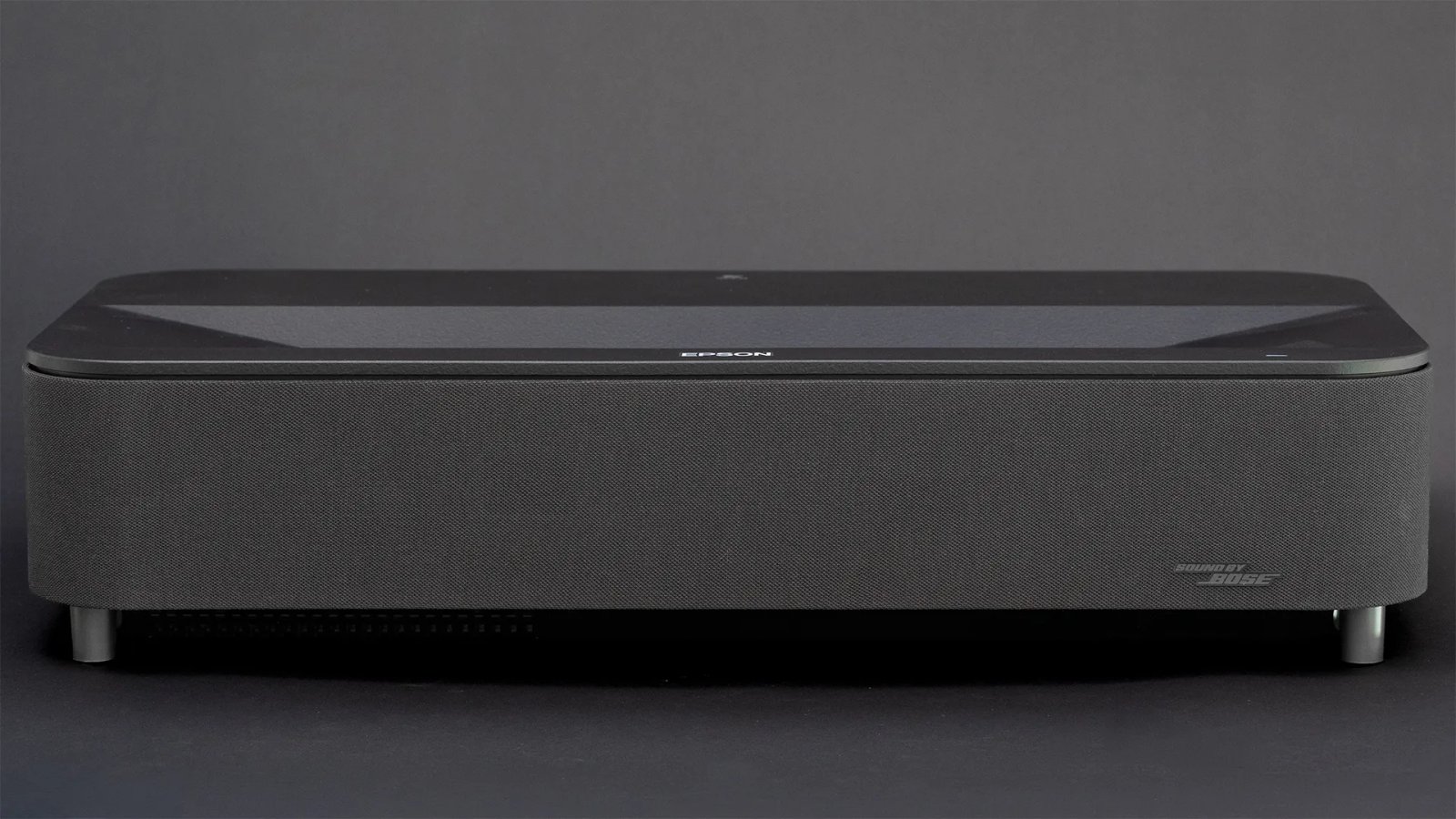
I’ve only just begun my ultrashort throw projector testing for CNET, but Epson’s Lifestudio Grand Plus is an early, if exceedingly expensive, standout. It’s extremely bright and has great color. While the projector’s detail and contrast aren’t quite as good as competitors like the Xgimi Aura 2, the Epson basically steamrolls others with its impressive light output. Its Bose-designed audio system sounds great too.
At $3,800, this projector costs a lot of money. You can get similar and, in some ways better, performance out of any number of traditional projectors. Those projectors don’t need a special screen like all UST projectors do, either. But if you only have room for a UST projector and price isn’t an issue, then this is where to start.

Epson Lifestudio Grand Plus
Pros & Cons
-
Extremely bright -
Great color -
Balanced sound
-
Not particularly loud -
No lens cover -
Boring design
Specs and such
- Resolution: 4K
- Lumens: 4,000 (claimed)
- Zoom: No
- Lens shift: No
- Image tech and light source type: 3LCD, Laser
Like other ultrashort throw projectors, it doesn’t have lens shift or optical zoom. To get a rectangular image that fits your screen, you’ll need some time to get the placement perfect. Not only does this mean getting it precisely perpendicular to the wall, but also getting the height to the bottom of the screen correct.
Alternately, you can use digital zoom and keystone correction, though this will reduce resolution since you’re not using the full LCD chip. Interestingly, the Lifestudio Grand Plus has a manual focus lever instead of the more common electronic focus.
 Geoffrey Morrison/CNET
Epson claims 4,000 lumens. In its most accurate mode, I measured 2,136, an impressive number in its own right. Running full bore, I measured 3,688. That is a lot of light coming off a 102-inch screen. I’ve only measured one projector that was brighter, and it cost $5,000. Contrast, never a strength of liquid crystal displays, was a respectable 1,430:1. That’s in the same range as the latest crop of high-end digital light processing projectors. The dynamic contrast was an extremely impressive 409,600:1. I’m not sure I’ve measured one that high. However, this is achieved by dimming the image during darker scenes. So at any one moment the contrast is, and subjectively looks, like 1,430:1.
Connections
- HDMI inputs: 3
- USB ports: 2, plus 1 for power only and 1 more for service
- Audio: eARC, Optical, 3.5mm headphone, 2 full range, 1 woofer
- Internet: Wi-Fi, Ethernet
- Streaming interface: Google TV
Like other UST projectors, the Lifestudio Grand Plus is designed to be the central hub for your entertainment system. As such, it has three HDMI inputs in addition to the built-in Google TV. In case you want to free up some bandwidth on your home’s Wi-Fi, there’s an Ethernet connection.
 Geoffrey Morrison/CNET
While most projectors treat sound as an afterthought (and rightly so — they’re tiny boxes best paired with a soundbar or a receiver and speakers), UST projectors are typically used alone. Epson partnered with Bose for the Epson’s audio. The power rating isn’t listed, but the device has two 45mm full-range drivers and a single 80mm woofer. There are several EQ settings, including an effective dialogue-boosting mode. The Cinema mode creates a decently spacious sound. While the sound overall is smoother, more even and natural sounding than the Xgimi and AWOL Vision, it was also the quietest of the bunch. Even at max volume, it barely competed with a nearby, though admittedly noisy, air conditioner.
Picture quality comparisons
Xgimi Aura 2
AWOL Vision Aetherion Pro
This is my first round of UST projector testing, so logically I’m comparing these models to each other. The Aetherion Pro is basically the same price as the Lifestudio Grand Plus. The Aura 2 is over $1,000 cheaper. Just something to keep in mind.
I connected each of the projectors to a distribution amplifier and viewed them side-by-side on a 1.0-gain screen. I strongly recommend pairing a UST projector with either an ambient light rejecting or ceiling light rejecting screen. For testing, measurements and consistency with other reviews, I used my standard screen, but I also checked how they all looked on a CLR screen.
In most ways, the Epson outperformed the other two projectors quite handily, most notably in terms of brightness. In their most accurate modes, the Epson was nearly twice as bright as the Xgimi and AWOL. Comparing them against each other using their brightest modes instead, the Epson was slightly more than twice as bright. That is a lot of light on screen.
 Geoffrey Morrison/CNET
Epson projectors have rarely lacked in terms of light output, but usually that came at the expense of contrast. While the Lifestudio Grand Plus did have the lowest contrast ratio of these three projectors, its 1,430:1 is in the same range as many recent non-UST 4K projectors I’ve reviewed recently. While the Xgimi and AWOL looked punchier than the Epson, it didn’t look washed out.
Color was also a notable standout. Its colors were more accurate, with more natural skin and other tones, than either of the other projectors. While the AWOL managed some impressively deep colors with HDR, it didn’t have the same naturalness as the Epson.
 Geoffrey Morrison/CNET
Where things turned a bit were with detail. All three projectors are 4K, but DLP projectors (Xgimi and AWOL) tend to look sharper on screen, especially with motion, than Epson’s LCD. This wasn’t like the difference between 1080p and 4K, but the Epson was slightly softer when viewed side by side.
If we take price out of the equation and just judge on objective and subjective performance, the Epson is the clear winner out of these three.
Lifestudio Grand Plus with the LCD
Before now, I haven’t found a projector’s looks to be particularly important. After all, the vast majority of them will get mounted on a ceiling — out of sight and out of mind. Sure, there have been a handful of interesting models, but that didn’t impact a review score at all. UST projectors, however, are permanently in your eyeline. The other two models I tested to launch our UST testing both have an interesting visual style. The Lifestudio Grand Plus is just a wide black (or white) box. It’s not super important, but for $3,800 I’d expect a bit more. After all, this is the same company who just recently launched a gorgeous projector with the Flex Plus.
 Geoffrey Morrison/CNET
That aside, what’s left is price and performance. I’ve long felt that all UST projectors are overpriced for their performance… and I still feel that way. Epson’s own 5050 and LS11000 are perennially on CNET’s best projectors list, are around the same price, and don’t need (arguably, require) a special screen like all UST projectors do. There’s clearly a market for UST projectors, and if you feel for whatever reason you can’t fit a traditional projector, clearly some are better than others.
Epson seems to want to overcome any potential shortcomings by using absolute brute force. The 3,688 lumens output is a tremendous amount of light. In my years of testing, only the Xgimi Titan Noir Pro could produce more light, and that’s even more expensive. Paired with an ALR or CLR screen, this is definitely TV-levels of light on a massive scale — but a massive scale with a massive price. If you can afford it, though, this much brightness probably means you won’t notice the big black box underneath the screen anyway.

See full bio