dailynewsnblog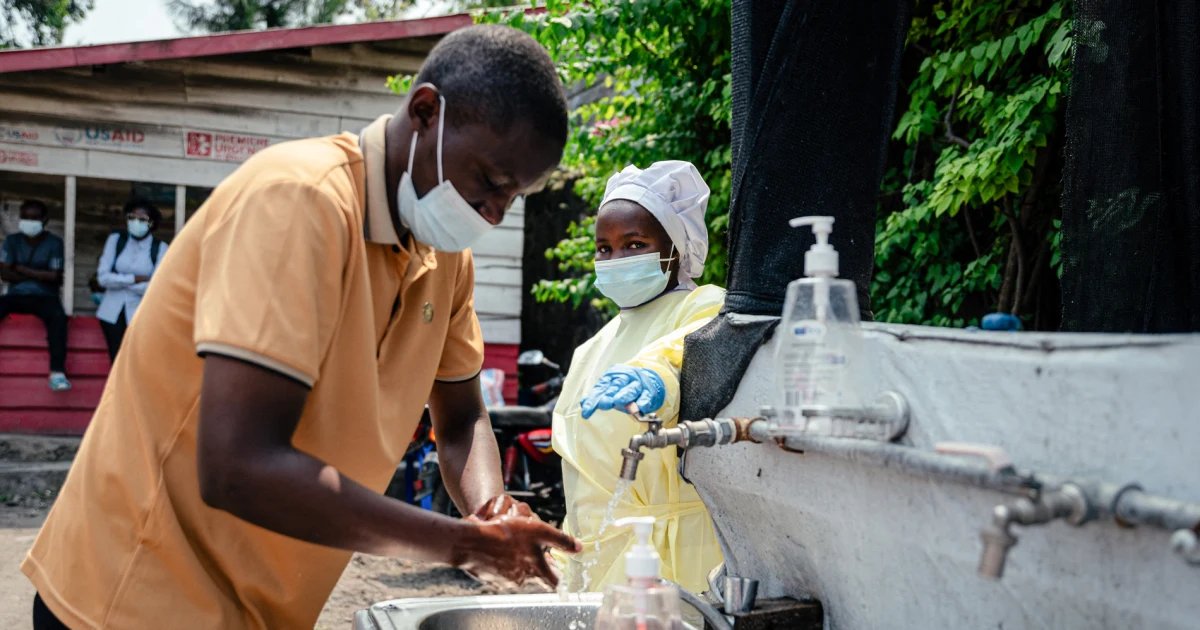
The death toll from an Ebola outbreak in central Africa rose sharply Tuesday, with the head of the World Health Organization expressing concern over the “scale and speed of the epidemic.”
Subscribe to read this story ad-free
Get unlimited access to ad-free articles and exclusive content.

At least 131 people are believed to have been killed and 531 suspected to have been infected in the latest outbreak, according to the Congolese Ministry of Health. An American missionary was among those who tested positive for the deadly disease.
Global health experts are worried about the capacity of this outbreak to cause widespread illness and death in central Africa — not least because this rare strain of the disease, the Bundibugyo virus, has no approved vaccine or treatment. The outbreak was also undetected for weeks, adding to the complexities in containing it.

Cases have been reported as far away as the capital, Kinshasa, some 600 miles from the outbreak’s epicenter in the eastern Ituri province, as well as in neighboring Uganda.
Tedros Adhanom Ghebreyesus, director-general of the World Health Organization, said early Tuesday that he was “deeply concerned about the scale and speed of the epidemic.”
The number of suspected cases has risen dramatically from the 300 believed infected and 88 killed as of Monday.
Also cause for concern are the presence of cases in urban areas, the deaths of healthcare workers, and significant population movement in the region as well as a lack of vaccines, Tedros said.

The WHO’s Emergency Committee is set to convene later Tuesday to discuss the outbreak.
President Donald Trump said that he too was “concerned” about the situation, noting that the outbreak was so far confined to central Africa. Health experts say the likelihood of Ebola spreading in wealthy countries is very low because it spreads through bodily fluids rather than in the air.
Among those infected is a U.S. citizen who has tested positive and been flown to Germany, the WHO director told the 79th World Health Assembly in Geneva, Switzerland.
Germany was doing so at the request of the U.S. government, a German Ministry of Health spokesperson told NBC News. The country has “a nationwide network of experts for the management and care of patients with diseases caused by highly pathogenic agents,” the spokesperson said.
An American missionary named Dr. Peter Stafford has tested positive for the virus, according to the international missionary organization Serge. He was exposed to the virus while treating patients in Nyankunde Hospital in the northeastern corner of Congo, where he has worked since 2023, Serge said.
He got tested after presenting with symptoms of the virus, which includes fever, muscle fatigue, diarrhea and vomiting.
Two other physicians working in the region, including his wife, Dr. Rebekah Stafford, and another man, Dr. Patrick LaRochelle, remain asymptomatic but were keeping to strict quarantine protocols, Serge said.
It was not clear from the missionary group’s statement whether Stafford was the same American being airlifted to Germany.
There have been only a couple of previous Bundibugyo outbreaks — one in Uganda in 2007 and one in Congo in 2012. The fatality rate during those incidents ranged from 30% to 50%, according to the WHO.
This is a developing story. Please check back for updates.