dailynewsnblog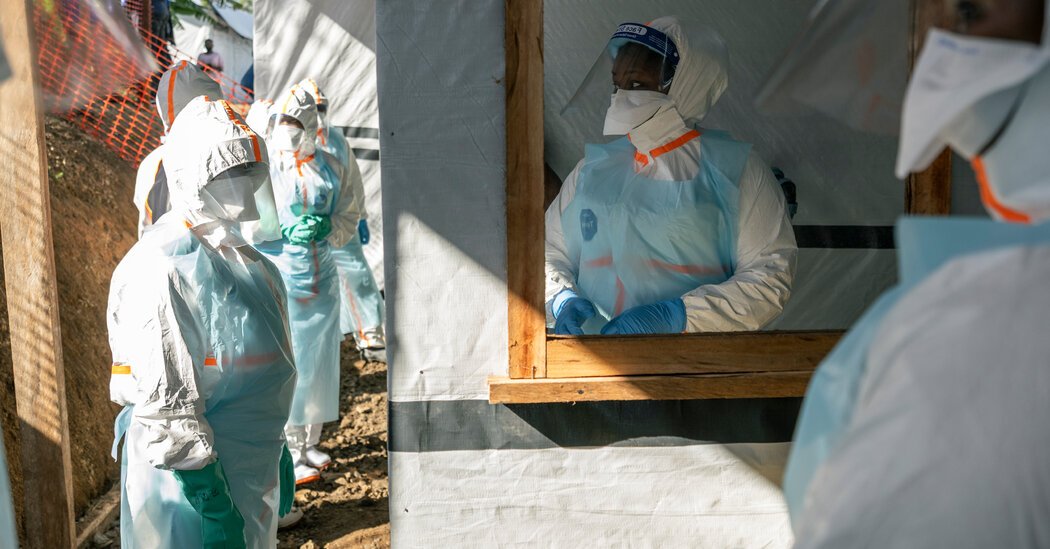
The Ebola outbreak in the Democratic Republic of Congo may have begun as early as February and may exceed 20,000 cases over the next three months, according to modeling published on Friday by the Centers for Disease Control and Prevention.
Still, the overall risk to Americans over that period is low, the agency said in a second assessment, noting that previous large outbreaks have resulted in very few cases in the United States. The C.D.C. published both reports in its flagship journal, the Morbidity and Mortality Weekly Report.
In Congo and Uganda, the outbreak of the virus, known as Bundibugyo, has grown to nearly 400 confirmed cases and 65 deaths. Those numbers are expected to rise sharply as officials trace the contacts of those known to have the disease. Fewer than half of contacts of confirmed cases are currently being identified, according to the World Health Organization.
Political violence, population mobility and deep mistrust of health workers have made it extremely challenging to diagnose patients and to keep them isolated. Dozens of patients have fled from medical centers, and crowds of distraught mourners have disrupted safe burials of those who have died from the disease.
If only 20 percent of patients with Ebola isolate within two days of symptom onset, the likelihood of an outbreak that exceeds 20,000 cases within three months is 65 percent, according to the C.D.C. If 70 percent of patients were to isolate, however, there is only a 5 percent chance for the outbreak to grow beyond 10,000 cases within three months.
“This highlights the critical importance of rapid case identification and isolation,” Jason Asher, director of the C.D.C.’s Center for Forecasting and Outbreak Analytics, told reporters on Friday.
There are no official estimates of the percent of people with Ebola who are being isolated. But Dr. Satish Pillai, who is leading the C.D.C.’s Ebola response, said, “I would believe that the percentages are on the lower end of the scenarios.”
The risk of Ebola appearing in the United States may change if cases are detected in urban, international hubs from which importation into the country is more likely. But the C.D.C. can confirm a diagnosis within hours, and its laboratory response network extends that capacity to 41 states and local public health labs across the country, the agency said.
The current risk of importation is low in part because the United States has barred entry to all noncitizens who may have passed through the region for at least 21 days, the agency said. It is still unclear whether the administration will allow citizens who are known to have Ebola to re-enter the country.