dailynewsnblog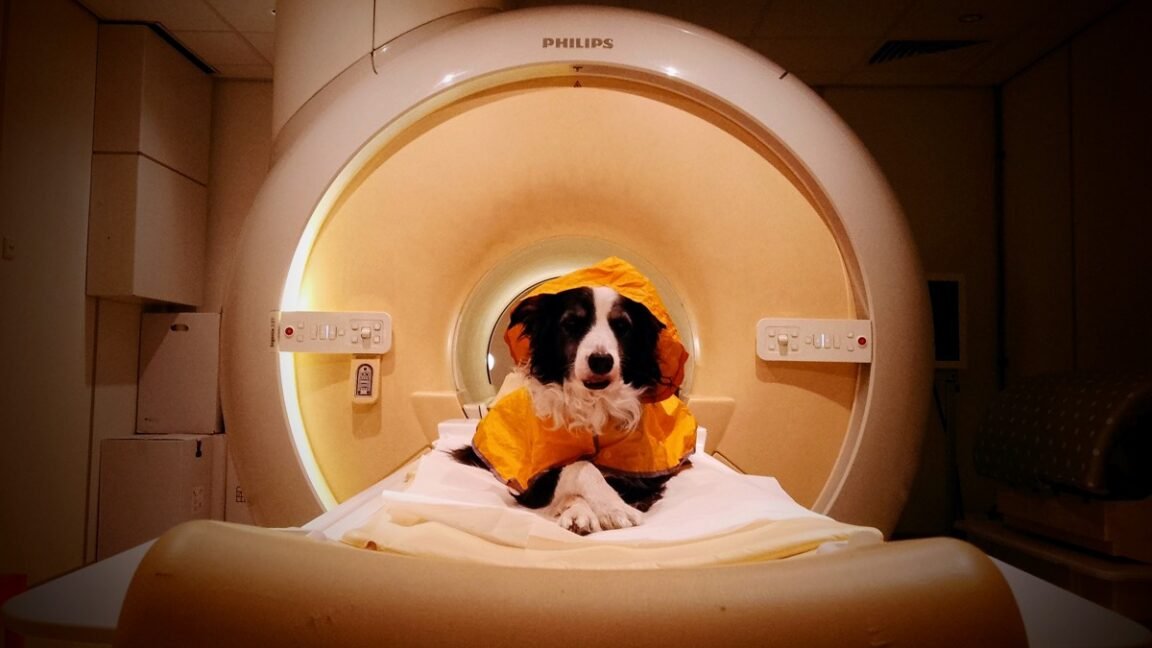
Any dog owner would tell you that their canine companions are attuned to their humans’ emotional state and respond accordingly. Scientists have performed fMRI scans on dogs and identified a specific brain region that processes happy human facial expresses, like a smile, according to a new paper published in the journal iScience. They also found that dogs can tell the difference between negative facial expressions, specifically anger, sadness, and fear.
“Humans are really good at picking up small details on the face, and so are dogs,” said co-author Raúl Hernández-Pérez of the University of Vienna. “This makes dogs very interesting. By studying their brains, we can understand what adaptations have developed to support their remarkable social and emotional understanding of humans.”
Prior behavioral studies have shown that dogs are sensitive to emotion in human faces. Dogs will, for example, choose a box their human has identified with a happy expression over one the human treats with fear or disgust. Past fMRI studies found that an area in the canine left temporal cortex showed a stronger response to human faces compared to dog faces, as well as a greater response in the caudate, hippocampus, and amygdala to human faces showing emotion versus neutral faces.
This latest study sought to use fMRI to unravel the underlying neural correlates of processing human facial expressions in dogs. For the first experiment, the team recruited eight dogs (six border collies, one labrador, and one gold retriever) who lived with humans and were well-socialized. Seven of the dogs had previously participated in fMRI studies and were trained to sit still in a sphinx position during the scan; the new participant, Molly, underwent training using the same protocol. The researchers provided the dogs with a chin rest to support their heads during the scan and ear muffs for noise protection. No restraints were used.
Each dog was randomly shown a series of human faces as stimuli, with either neutral or happy expressions, for seven seconds while in the MRI machine. They used the faces of strangers to rule out any familiarity effects. The resulting analysis showed that the temporal cortex (associated with higher cognitive functions) and the caudate nucleus (associated with reward) had the most activity in response to happy faces.