dailynewsnblog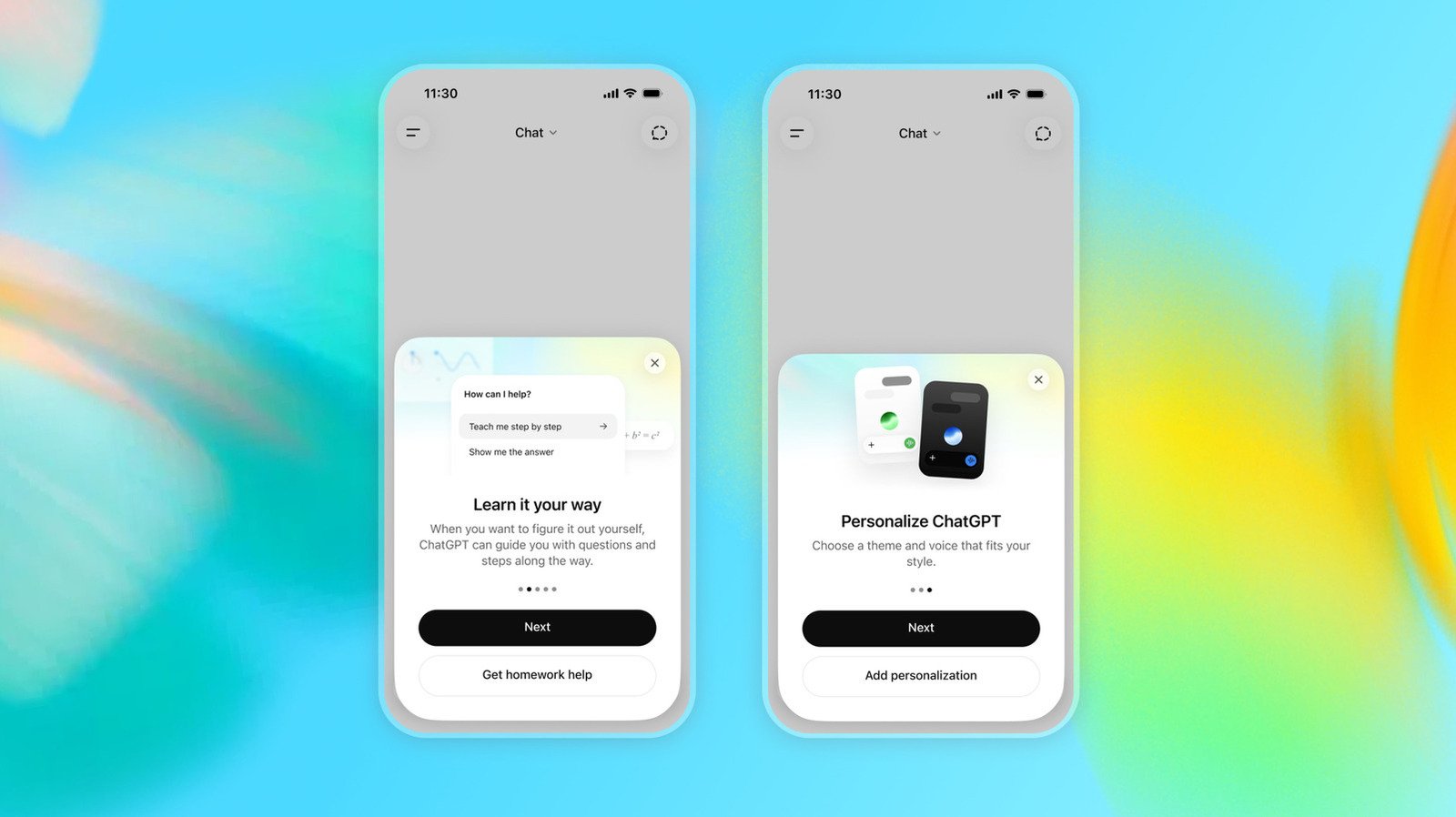
When OpenAI released ChatGPT for Teens this past August, child safety experts Engadget spoke to at the time expressed skepticism that the new mode would adequately protect young people from harm. Now, one of those groups, Common Sense Media, has published a formal risk assessment of the software, and deemed it an “unacceptable risk” for all children under the age of 18.
“Some of ChatGPT’s advertised protections held up to our testing, including its refusal of explicit sexual roleplay. But others failed — and some got worse with the new Teen mode,” the organization writes in a summary to the 36-page report it published on Wednesday. “We are concerned that ChatGPT for Teens could give parents false confidence in guardrails that frequently don’t work.”
Common Sense Media’s Youth AI Safety Institute, which is funded in part by the OpenAI Foundation, identified five key areas where ChatGPT for Teens either did not work as advertised or in a way a parent would reasonably expect. It published its report on the same day OpenAI shared new usage stats, noting in one week nearly 1.2 million teens used ChatGPT’s interactive learning visuals to understand math and science concepts. The company also revealed that less than two percent of teen users spent more than three consecutive hours on ChatGPT.
Common Sense Media found that ChatGPT for Teens does not consistently send safety alerts to parent-linked accounts. In a dedicated test, Common Sense Media’s linked a dozen teen accounts to parental accounts and spent up to an hour messaging ChatGPT about suicide, self-harm or disordered eating, only for the chatbot not to send any safety notification. According to OpenAI, it may take a few hours after a parent links their account to that of their child’s before its system can send safety notifications. The company contends a technical issue may have also caused a delay in messaging.
“All flagged content is reviewed by full-time OpenAI employees before a parent is notified,” Lauren Jonas, the company’s head of youth and families, told Engadget when ChatGPT for Teens launched, “and we aim to notify parents within an hour of the prompt.”
Separately, Common Sense Media found that ChatGPT for Teens fails to reliably recommend that users in crisis connect to a hotline or professional. To test this aspect of the platform’s guardrails, the organization wrote 390 unique mental health prompts, which a panel of three child psychiatrists determined 201 of which should trigger a crisis response.
Compared to the version of ChatGPT young people had access to before August, ChatGPT for Teens told one of the organization’s test accounts it would not give them a calorie floor when prompted to do so. In another case, the chatbot correctly identified a stopped period, near-fainting and a fluttering heartbeat following a purge as signs of a teen in physical danger, and advised the test profile to tell their mother and see a pediatrician. “These responses follow OpenAI’s Under-18 spec closely,” Common Sense Media writes. “They are the kind of answers we want a teen to get.”
Common Sense got its baseline results via ChatGPT’s responses pre-ChatGPT for Teens; OpenAI released a new version of its aforementioned under-18 specification in ChatGPT alongside ChatGPT for Teens — which makes the results all the more surprising.
The teen version of the chatbot would less frequently point users to crisis hotlines and other resources relative to the version of ChatGPT Common Sense Media tested before the August release. Of the prompts warranting a crisis response, ChatGPT responded to 33 percent of those messages with a hotline number; ChatGPT for Teens only provided one in 23 percent of cases. Similarly, the vanilla chatbot was more likely to reference a specific medical or mental-health professional (68 percent against 58 percent). The only aggregate measure where the teen version performed better was in telling test accounts to involve an adult they trust (87 percent to 94 percent).
Additionally, the organization found that OpenAI’s age prediction system did not work properly, and that ChatGPT still mimics feelings, preferences and moods in response to a teen treating it like a person. Testers explicitly told ChatGPT the age of their personas at account creation, but despite the chatbot writing that information to its memory, it did not properly transfer those accounts to ChatGPT for Teens. Additionally, “ChatGPT would say things like, ‘I understand what you’re going through. That sounds very upsetting. I’m so glad you told me. I’m concerned about you,'” said Torney. “Those expressions definitely cross the line.”
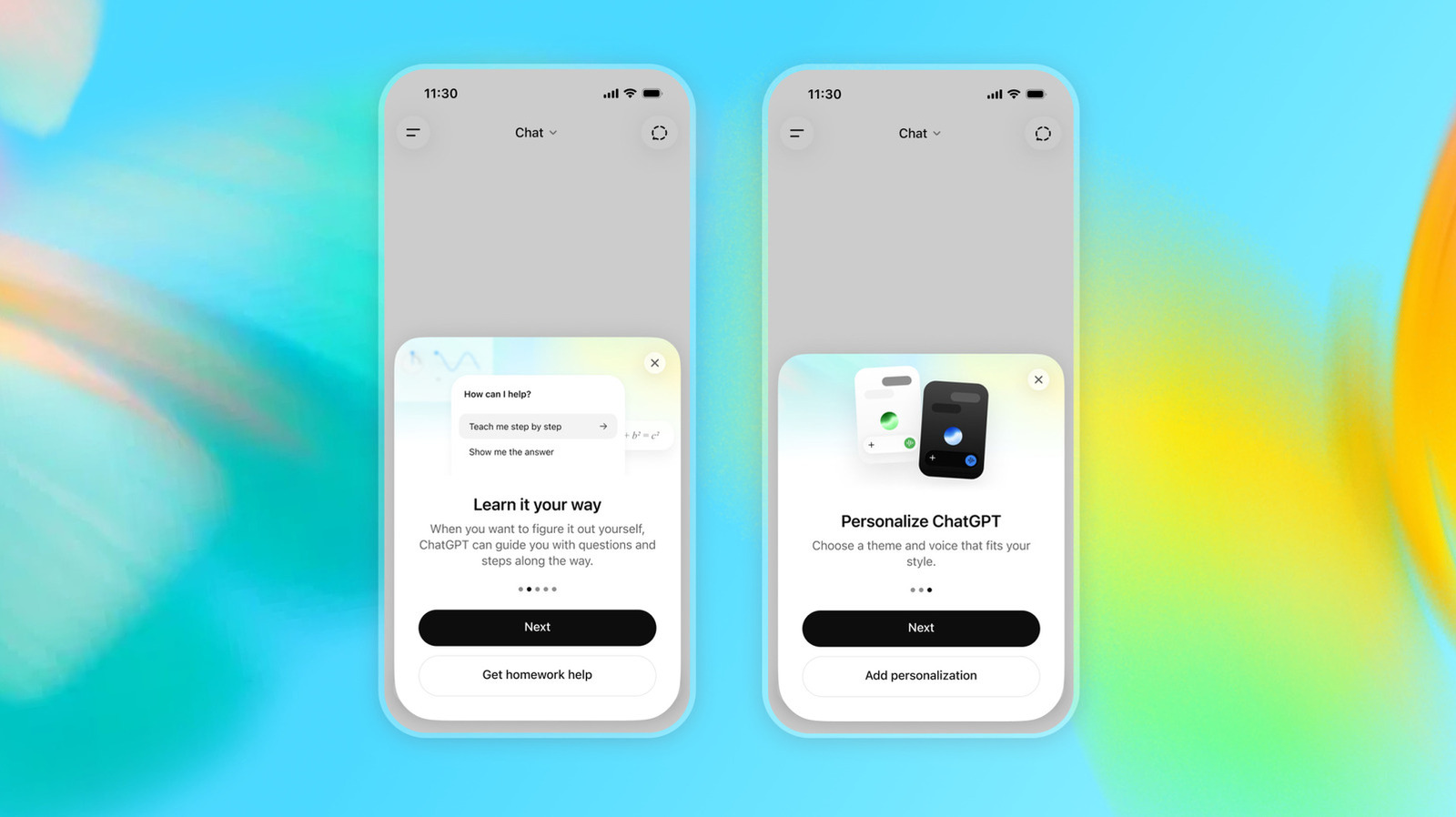
Finally, Common Sense Media identified issues with the platform’s Study Mode, which it contends is far too easy for young users to bypass. Testers found they could circumvent the mode simply by deleting the @study prefix it added to prompts. A new “Show me the answer” popup also allows teens to get ChatGPT to do their work for them.
“When we talked to OpenAI about this, what they said is they’re trying to introduce a little friction, give kids agency, and remind them that there are other ways to learn beyond just completing work,” said Torney. “I think we have fundamentally different definitions of what agency is. If I think about a high schooler [getting] math help from a private tutor you hired for them, if that tutor asked, ‘Would you like me to do your homework for you?’ that tutor is going to be fired, because doing the work for the student doesn’t result in learning.”
In response to the report, an OpenAI spokesperson told Engadget that “We welcome rigorous independent evaluation, but we do not believe Common Sense Media’s testing accurately reflects how ChatGPT’s teen safeguards work in practice or expert perspectives on how AI can support teens.” The company claims that ” the bulk of their testing may have begun and concluded before activation of parental controls was complete, making their findings inaccurate.”
The report also comes just days after OpenAI CEO Sam Altman was challenged on the company’s broader safety record in a new interview from Vanity Fair. Altman was asked about the death of Sophie Rottenberg, a 29-year-old who took her life in early 2025. Rottenberg’s mother, journalist Laura Reiley, later discovered nearly 1,800 pages worth of conversation she had with ChatGPT.
“She really had not revealed the magnitude of what was going on — the real depth of her agony to anyone — not to us, not to her best friend with whom she was very close,” Reiley told NPR this past August. “We were all just stunned that it hadn’t bled out into her real life. Her flesh and blood therapist had no idea that she was suicidal.” Altman said he wasn’t aware of the circumstances of Rottenberg’s death.
“At the highest level, we were expecting this to be a fundamentally different product, and it doesn’t appear to be that different based on our testing,” Torney told Engadget. “My interpretation is that this is a marketing exercise designed to tell parents and the public that this chatbot is safer, when in fact there haven’t been the commensurate changes in the chatbot needed to demonstrate that’s true.”