dailynewsnblog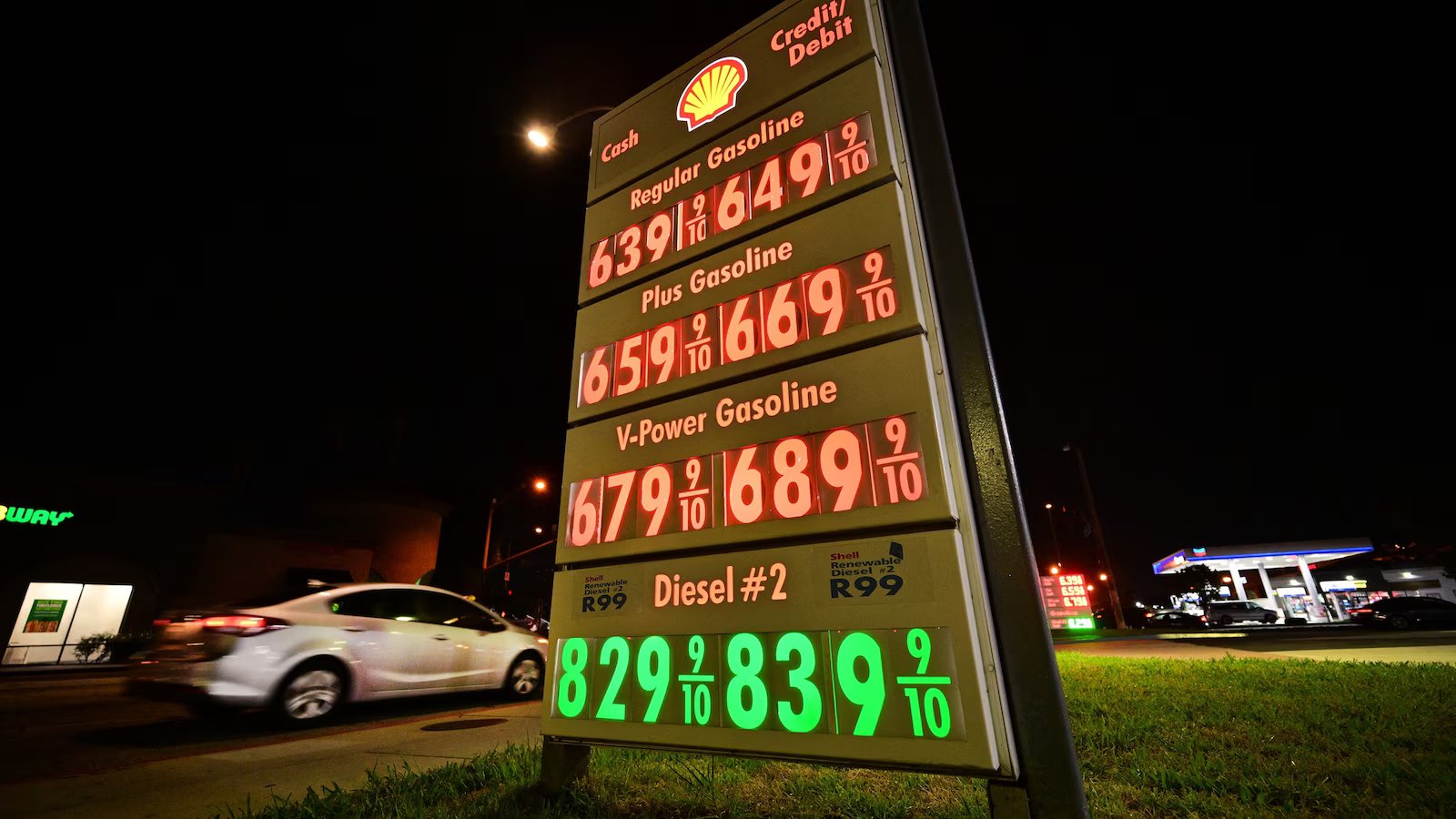
The average price for a gallon of diesel was still hovering around a record-high of $6.43 as of Friday morning, according to the latest data published by GasBuddy.
The historic increase in the price of diesel comes amid continued disruption in the Strait of Hormuz — sparked by the U.S.-Israeli attack on Iran in February — and Russia’s ongoing invasion of Ukraine, which in recent years has seen an intensification of long-range Ukrainian attacks on Russian oil facilities.
The sustained increases in oil and diesel prices have prompted concerns of rising costs across all sectors of the economy — from fuel and energy costs for drivers and homeowners to increased prices of food and travel as producers and companies grapple with narrowing margins.

Diesel prices are displayed above $8 per gallon at a gas station in Los Angeles, on Sept. 17, 2026.
Frederic J. Brown/AFP via Getty Images
The nationwide average price for a gallon of regular gas was at $4.47 as of Friday, according to GasBuddy — up $1.53 since the U.S. war with Iran started.
Rising prices are of particular concern for those households reliant on heating oil. They could face winter bills more than 31% higher than last year, according to a report published earlier this week by the non-profit National Energy Assistance Directors Association.
Even for those who do not heat their homes using oil, overall winter heating costs are expected to rise by more than 8.7% this year, the NEADA report said.
As of Friday, oil prices were edging lower but remained above $100 a barrel. Brent crude oil prices, a benchmark for global trading, were around $103 per barrel, down roughly 1.3%. WTI crude oil, used as the North American benchmark, was trading at around $102 per barrel down 0.4%.
Brent crude oil prices, a benchmark for global trading, were around $103 per barrel as of Friday morning, down roughly 1.3%. WTI crude oil, used as the North American benchmark, was trading at around $102 per barrel down 0.4%.