dailynewsnblog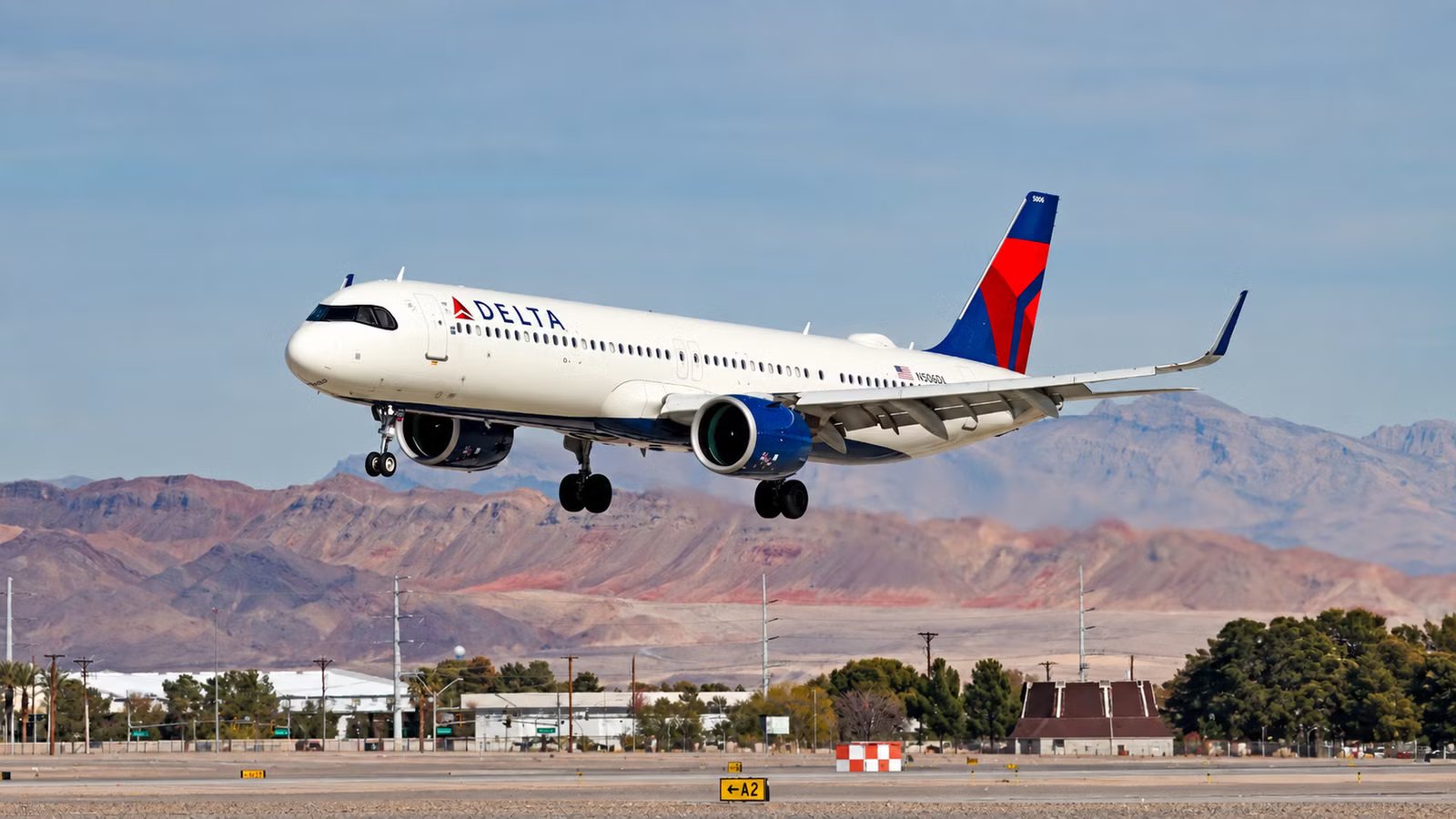
 Delta Air Lines is making another significant push in Southern California. The airline announced three new routes on Friday, two from
  Los Angeles International Airport (LAX) and one from Salt Lake City International Airport (SLC), alongside increased frequencies on seven existing LAX services. The additions come as Delta prepares for its largest-ever Los Angeles schedule, with the airline set to operate more than 200 peak-day departures to nearly 70 destinations in summer 2027.
The announcement is particularly notable because of where Delta is adding capacity. A new route to Philadelphia will put the carrier head-to-head with  American Airlines on a route to one of American’s biggest hubs, while additional flights to Boston, Seattle, Houston and other cities will increase the usefulness of Delta’s LAX network for local passengers. This is just the latest shake-up at LAX, where Delta, American and
  United Airlines all maintain major operations, but none has been able to achieve the dominance typically associated with a US hub.
Delta Is Adding Three New Routes

Delta’s latest expansion comprises two new LAX routes plus a third from Salt Lake City. Twice-daily Los Angeles-Monterey and daily Salt Lake City-Monterey flights will begin on December 19, operated for Delta Connection by SkyWest Airlines with Embraer E175s. The bigger addition comes next year in June, when Delta will begin daily Los Angeles-Philadelphia service with an Airbus A321neo.
Route | Distance | Start Date | Frequency | Equipment |
|---|---|---|---|---|
Los Angeles — Monterey | 266 miles (428 km) | December 19, 2026 | 2 daily | Embraer E175 |
Salt Lake City — Monterey | 606 miles (976 km) | December 19, 2026 | Daily | Embraer E175 |
Los Angeles — Philadelphia | 2,409 miles (3,876 km) | June 7, 2027 | Daily | Airbus A321neo |
 Philadelphia International Airport (PHL) is easily the most strategically interesting addition. American is currently the only airline flying nonstop between LAX and PHL, offering six to eight daily departures, depending on the date. Philadelphia is, of course, a major American hub serving more than 120 destinations and functioning as the airline’s principal transatlantic gateway. Delta’s single daily flight won’t come close to matching American’s frequency, but it fills a conspicuous hole for Los Angeles-based Delta customers, as well as passengers on
  SkyTeam airlines at LAX.
The Monterey flights serve a different purpose, restoring markets that Delta previously operated, rather than opening completely new territory. Delta last served Monterey from Los Angeles in 1999 and from Salt Lake City in 2008, and the revived services strengthen its coverage of California and give Monterey access to connections through both hubs.
Amy Martin, Vice President of Network Planning at Delta, portrayed the additions as part of a broader commitment to the Golden State rather than isolated route launches.
“We’re continuing to invest in more ways for customers to experience everything California has to offer. With new service to Monterey from both Los Angeles and Salt Lake City, alongside our continued growth at LAX, we’re creating more opportunities for customers to connect to the places they want to go while building on our long-term commitment to Los Angeles and the West.”
Delta Will Exceed 200 Daily Departures From LAX

The two new LAX routes are only part of the expansion. Delta is also adding one additional daily round trip on seven existing LAX routes: Raleigh–Durham International Airport (RDU) and Cincinnati Northern Kentucky International Airport (CVG) increase from one to two daily flights;  Houston George Bush Intercontinental Airport (IAH) and San Antonio International Airport (SAT) from two to three;
  Boston Logan International Airport (BOS) and
  San Diego International Airport (SAN) from four to five; and
  Seattle-Tacoma International Airport (SEA) from seven to eight daily flights.
The increases will be phased in between April and July 2027, substantially boosting frequency across transcontinental, Texas, and West Coast markets rather than just adding more dots to Delta’s route map.
Loading map…
Drag to explore
The resulting scale is substantial. Delta said back in March that it had expanded its lead as LAX’s largest carrier, operating 166 peak-day departures to 61 destinations from the airport in 2026. By next summer, Delta will exceed 200 daily departures to nearly 70 destinations, a more than 20% year-over-year increase.
Not all that growth is contained in Friday’s announcement. Delta has recently added LAX service to Hong Kong, Shanghai, and Chicago, while Vancouver and Newark will be starting in the coming months. Its Oceania operations have also expanded, now including Brisbane and Melbourne alongside Sydney and Auckland. Perhaps most excitingly, new nonstop service to Manila’s Ninoy Aquino International Airport (MNL) is scheduled to launch three times weekly in March, before becoming daily in June, making it the only US carrier flying to the Philippines.
United Still Has The Edge In Long-Haul Flying From LAX

According to LAX’s latest traffic figures covering January–July 2026, Delta handled 8.35 million LAX passengers, or 19.7% of the airport, ahead of United at 17.7% and American at 16.1%. Delta also ranks first in revenue operations. So while Delta leads and is clearly intent on closing the gaps, with just three percentage points separating the legacy carriers, none of them “own” LAX as a hub.
Delta’s expansion also doesn’t mean it leads United in every category. Its strength at LAX is built on the back of its domestic network, which is not entirely surprising given that United has the “distraction” of operating another major California hub at  San Francisco International Airport (SFO). But using the same data, United flew 64% more international passengers than Delta, and even American narrowly edged the Atlanta-based carrier.
Operator | Domestic Passengers | International Passengers |
|---|---|---|
Delta Air Lines | 7,631,277 | 722,028 |
United Airlines | 6,317,343 | 1,181,861 |
American Airlines | 6,083,350 | 736,196 |
However, on pure scale, Delta appears to be widening its lead and claims it will offer more flights, seats, and premium seats from LAX than any other airline next summer. The premium part matters, as that’s what makes Delta the most profitable US airline. Delta generated $22.1 billion in premium ticket revenue in 2025, nearly matching its $23.4 billion Main Cabin business, while premium revenue grew the fastest. That’s why Delta is explicitly adding more premium capacity on its aircraft, chasing high-value transcontinental and international passengers from LAX.
Delta also has a substantial ground-product advantage to support this. Its $2.3 billion LAX Sky Way project transformed Terminals 2 and 3, it now has dedicated Delta One check-in and private security, and LAX became the first airport with two Delta One Lounges. By 2028, Delta expects its four LAX lounge spaces to exceed 60,000 square feet with room for more than 1,000 customers. So while United may still offer more long-haul destinations (for now), Delta is combining increasingly dense domestic frequencies, a growing international operation, and major terminal investment as it pushes beyond 200 daily flights.