dailynewsnblog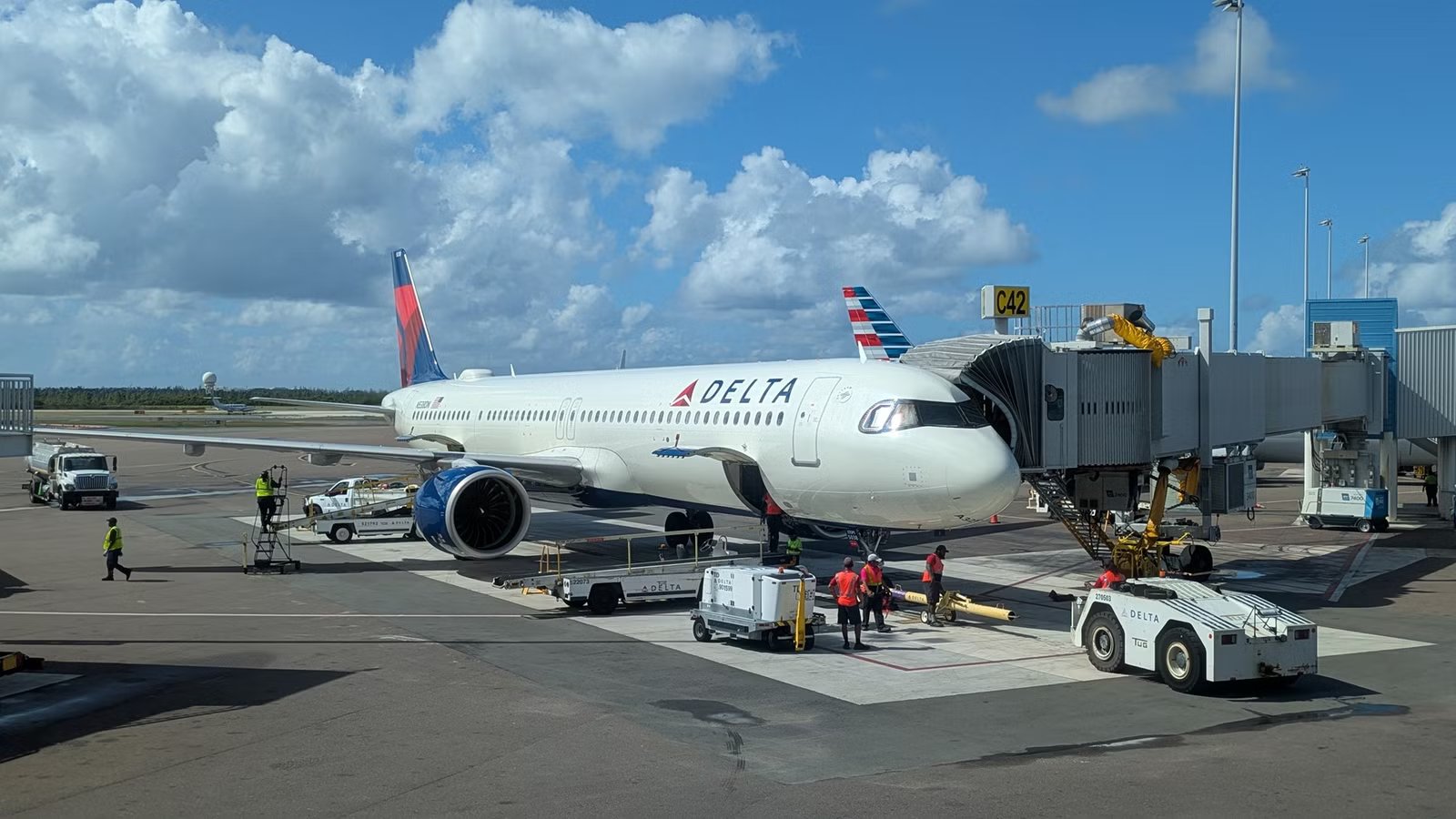
 Delta Air Lines flyers will have to be patient as the airline’s long-awaited premium Airbus A321neo fleet will remain without lie-flat business class seats until at least 2028, extending a delay that has already disrupted the carrier’s transcontinental strategy for more than three years. The airline had originally planned to launch the aircraft with an upscale cabin configuration in late 2024, but certification problems tied to its next-generation business class seats have repeatedly pushed the timeline back.
In the meantime, Delta will place several of the aircraft into service using a temporary layout featuring 44 domestic first class recliner seats instead of the intended Delta One suites and Premium Select cabin. The interim setup allows the airline to keep the jets operational during peak travel periods while certification work continues, though it significantly alters the passenger experience Delta originally envisioned for its premium narrowbody fleet.
Certification Delays Continue To Stall Premium Rollout

The affected aircraft are part of Delta’s specialized “3NF” A321neo subfleet, a premium-heavy configuration designed primarily for high-yield domestic routes such as New York to Los Angeles and Boston to San Francisco. Unlike Delta’s standard A321neos, which seat nearly 200 passengers, these jets were configured with only 148 seats to prioritize premium demand. Plans called for 16 Delta One lie-flat suites in a private 1-1 configuration, providing each seat with windows and direct aisle access. They would be followed by 12 Premium Select recliners, and expanded Comfort+ seating.
The central issue remains certification of the aircraft’s new business class product, widely believed to be the Safran VUE reverse herringbone seat. Industry observers say the certification process has become unusually prolonged because of technical and regulatory challenges associated with adapting widebody-style premium seating to a narrowbody aircraft platform. Similar delays have reportedly affected other airlines considering the same seat product.
Delta executives have publicly acknowledged the delay but offered limited detail about the specific technical hurdles involved. Chief Commercial Officer Joe Esposito recently indicated that the lie-flat product remains in development and testing, with entry into service now expected “in about two years,” effectively pushing deployment into 2028 at the earliest.
Delta A321neo Fleet Cabin Configurations by Seat Count | |||
|---|---|---|---|
Aircraft | Delta One | Premium Select | Main Cabin |
3NF | 16 | 12 | 120 |
Current Fleet | Domestic First | Main Cabin | |
3NP | 44 | 120 | |
3NE | 20 | 174 | |
Source: AeroLOPA | |||
Temporary Fix Alters Passenger Experience

To avoid leaving completed aircraft idle indefinitely, Delta opted to place the jets into service with an unconventional temporary interior. Instead of installing alternative lie-flat suites, the airline expanded its domestic first class section to 44 recliner seats, stretching across the front 11 rows of the aircraft. The arrangement creates one of the largest domestic premium cabins currently operating on a US narrowbody jet.
The aircraft will be operated on premium-heavy domestic routes from  Hartsfield-Jackson Atlanta International Airport(ATL) to markets including Los Angeles, San Diego, Seattle, and San Francisco. Delta said the temporary solution was necessary to ensure the aircraft could operate during the busy summer season despite unresolved seat certification issues. Structural limitations tied to the aircraft’s preinstalled seat tracks reportedly made a complete redesign impractical.
Passenger reaction has been mixed. Some travelers have welcomed the increased availability of premium seats, particularly on competitive transcontinental routes where upgrades are often difficult to secure. Others have criticized the recliner-style seats for lacking the comfort and privacy expected on long domestic flights. Traveler discussions have also raised concerns about service logistics, including boarding congestion and cabin staffing with such a large first-class section.
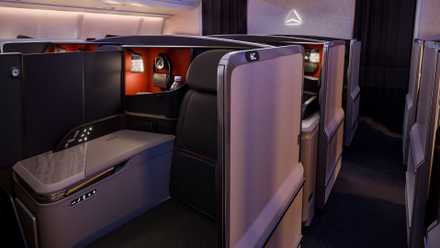
Delta Teases ‘Mini First Class’ To Rival American & United’s Front-Row Suites
Delta’s plans to offer a select number of larger business class suites falls in line with industry trends.
Broader Implications Of Delta’s Strategy

JetBlue Airways with Mint and  United Airlines with its new A321neo “Coastliner” configuration. Competitors have increasingly invested in premium narrowbody aircraft equipped with fully flat beds for transcontinental operations, raising pressure on Delta to deliver a comparable product. JetBlue’s Mint-equipped Airbus A321 fleet (cabin pictured above) has already established a strong presence in premium coast-to-coast markets.
For Delta, the delay underscores broader challenges facing the aviation industry beyond aircraft manufacturing itself. Cabin suppliers, certification bottlenecks, and supply chain disruptions have increasingly become weak points in airline fleet programs, even after aircraft are delivered. Several of Delta’s A321neos reportedly spent more than a year parked in storage awaiting resolution before the airline finally approved the temporary recliner configuration. For now, the airline’s most ambitious narrowbody cabin project remains grounded by a certification process that has become one of the industry’s most visible interior program delays in recent years.