dailynewsnblog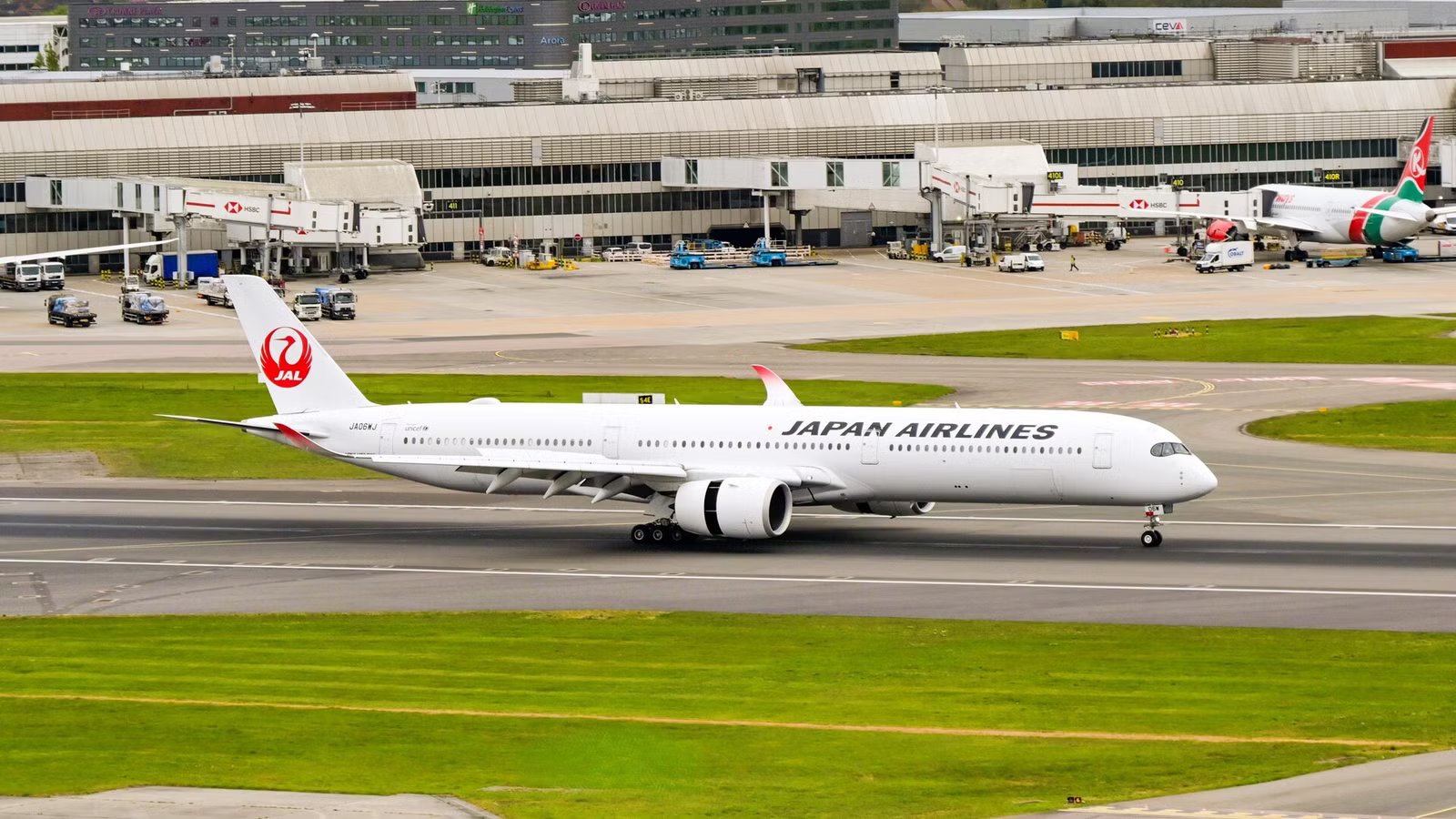
An Airbus A350-1000 from Japan Airlines (JAL) has taken to the skies for the first time in more than seven months after being damaged in a ground collision at  New York JFK Airport (JFK). The aircraft, registered JA10WJ, operated a test flight from JFK on July 29 before returning to the airport approximately three hours and 43 minutes later.
The flight represents a significant step toward returning one of JAL’s newest long-haul aircraft to commercial service. However, the airline has not confirmed that JA10WJ has completed all required post-flight inspections or announced when the aircraft will leave New York and rejoin its operating fleet in Japan. JAL had previously linked its expected return to planned A350-1000 schedule changes later in 2026.
JA10WJ Returns To The Air

Flightradar24 data shows that JA10WJ operated as flight JL8181, departing JFK at 12:39 PM on July 29. The aircraft landed back at JFK at 4:21 PM, giving it an airborne time of approximately three hours and 43 minutes.
The A350-1000’s unusual flight number and JFK-to-JFK routing indicate that this was a test flight conducted following the completion of extensive repairs. It was the aircraft’s first recorded flight since arriving in New York from  Tokyo Haneda Airport (HND) as flight JL4 in early December 2025, and subsequent damage while it was parked there for maintenance. The July 29 flight took place 227 days after the December 14 collision, and 238 days after the A350 originally arrived at JFK.
A post-maintenance flight does not necessarily constitute a formal return to service. JAL and the maintenance organizations involved will likely examine data from the flight and conduct further inspections before the aircraft is approved to operate passenger flights. The next step could be another test flight, or a ferry flight from JFK to Japan. JAL has not yet published a schedule for JA10WJ’s departure from New York.
How Was The A350-1000 Damaged?

The A350-1000 was undergoing normal maintenance at JFK when it was involved in a ground incident. The collision occurred at approximately 00:40 local time on December 14, 2025, while JA10WJ was parked in a designated maintenance area. JAL said that an Airbus A330 operated by another airline was being towed when it contacted the A350-1000’s left-side cockpit window. Maintenance personnel were present, but no injuries were reported.
The Aviation Safety Network identified the other aircraft as Hi Fly Airbus A330-200 9H-ALC, which was operating for Israeli carrier Arkia. While JAL originally stated that its right wing “contacted the left-side cockpit window,” it was subsequently revealed that it not only severely damaged the A350’s cockpit windows, but also the left pitot tube and the lower area around its first left-side passenger door. JAL has not released a complete technical description of the damage or the subsequent repairs performed at JFK.
Timeline Of The Grounding | |
|---|---|
Date | Event |
July 17–18, 2025 | JA10WJ leaves Toulouse following delivery and arrives at Tokyo Haneda |
July 29, 2025 | Aircraft enters commercial service on a Haneda–Dallas/Fort Worth flight |
December 3, 2025 | JA10WJ arrives at JFK from Haneda as flight JL4 |
December 14, 2025 | A towed Airbus A330 strikes the parked A350-1000 |
December 17, 2025 | JAL announces delays and aircraft substitutions |
December 24, 2025 | Further cancellations and equipment changes are announced. |
June 11, 2026 | JAL incorporates JA10WJ’s expected return into future fleet plans. |
July 29, 2026 | JA10WJ operates test flight JAL8181 from JFK |
What is clear from the amount of time spent on the ground for repairs is that the damage involved more than a straightforward window replacement. It likely required extensive inspections and repairs around safety-critical sensors, fuselage structure and the passenger-door area. This becomes even more complicated when it involves a new composite aircraft far away from its home maintenance base, turning what initially appeared to be a localized incident into a grounding lasting nearly eight months.
The Grounding Significantly Disrupted JAL’s Flagship Fleet

The loss of JA10WJ was particularly significant to the airline because JAL was still building its relatively small A350-1000 fleet. The carrier currently operates 11 A350-1000s as its international flagship, with a further two set to be delivered over the next year. These operate alongside 17 Airbus A350-900s which are currently used for high-capacity domestic routes, with an additional 20 on order to supplement the international fleet from fiscal 2027.
The JAL A350 Fleet | |||
|---|---|---|---|
Variant | Aircraft in service | Aircraft on order | Primary role |
Airbus A350-900 | 17 | 20 | Domestic trunk routes and future international expansion |
Airbus A350-1000 | 11 | 2 | International flagship |
Total | 28 | 22 | — |
As a result, the grounding of JA10WJ quickly impacted JAL’s wider operation. The airline initially announced delays to 16 flights, with the longest delay reaching 15 hours and 55 minutes, and 3,144 passengers affected. It subsequently announced 22 additional cancellations through January 30 and aircraft changes on 50 flights, affecting routes including New York, London, Chicago, Dallas/Fort Worth and Paris.
JA10WJ’s return will therefore restore valuable flexibility. The latest flight scheduling suggests that its return is planned for the Fall, with it scheduled to operate on the twice-daily flights from Haneda to  London Heathrow Airport (LHR) beginning October 1. The successful test flight this week is therefore an important milestone as JAL looks to resume full operations with its A350-1000 international flagship.