dailynewsnblog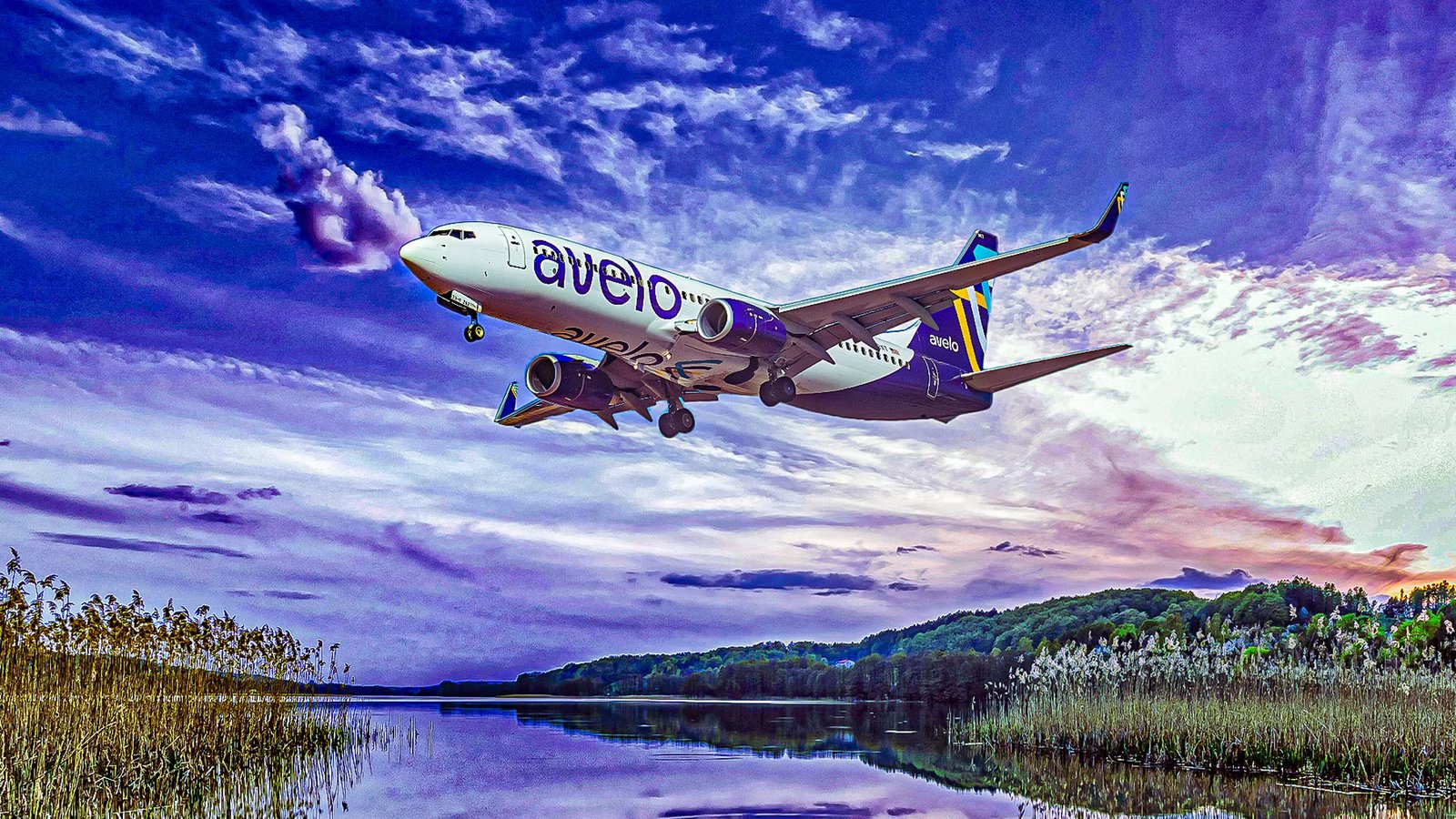
Dallas is finally getting a third commercial airport, and its first airline is going big from the start. Avelo Airlines has announced plans to launch scheduled passenger service from McKinney National Airport (DTX), giving the fast-growing northern side of the Dallas-Fort Worth Metroplex a new commercial gateway with nonstop flights to five leisure destinations.
The launch turns McKinney from an intriguing airport-development story into a live test of whether North Texas can support meaningful commercial service beyond  Dallas/Fort Worth International Airport (DFW) and Dallas Love Field (DAL). Avelo will open a base at the airport, market it to passengers under the DTX code (it was previously TKI), and begin flying in November, timed with the opening of McKinney’s new passenger terminal.
Avelo Will Launch McKinney With 5 Routes

Avelo’s first McKinney schedule is focused squarely on leisure demand. The airline will connect DTX with Las Vegas’  Harry Reid International Airport (LAS) and four Florida destinations:
  Fort Lauderdale-Hollywood International Airport (FLL), Southwest Florida International Airport (RSW) in Fort Myers,
  Orlando International Airport (MCO), and Tampa International Airport (TPA). Service begins on November 11 with Fort Myers, followed the next day by Las Vegas and Orlando, and then Fort Lauderdale and Tampa a week later.
Destination City | Launch Date | Weekly Frequency | Operating Days |
|---|---|---|---|
Fort Myers | November 11 | 2x weekly | Wednesday, Saturday |
Las Vegas | November 12 | 4x weekly | Monday, Thursday, Friday, Sunday |
Orlando | November 12 | 5x weekly | Monday, Thursday, Friday, Saturday, Sunday |
Fort Lauderdale | November 19 | 5x weekly | Monday, Thursday, Friday, Saturday, Sunday |
Tampa | November 19 | 4x weekly | Monday, Thursday, Friday, Sunday |
The routes will be operated with 184-seat Boeing 737-800 aircraft, giving Avelo a sizable amount of initial capacity from a brand-new commercial airport. This is not just a token experiment with a handful of weekly flights. Avelo says it will base two 737-800s at DTX, making McKinney its fifth focus city after the airline pruned its network to just four crew bases earlier this year. The move is expected to create more than 100 local jobs for pilots, flight attendants, aircraft technicians, and airport personnel.
The launch also gives Avelo a useful first-mover advantage in a unique gap in one of the country’s largest metro areas. Rather than battling for attention at DFW or Love Field, the airline can position itself as Collin County’s hometown airline, offering travelers in McKinney, Plano, Frisco, Allen, and surrounding communities a closer and simpler alternative. CEO Andrew Levy says that for a low-cost carrier built around nonstop flights and secondary airports, that is a powerful pitch:
“Avelo was built for moments like this, and we are thrilled to be the launch and anchor airline at McKinney. As a proud Texas-born company, we are excited to grow our presence in North Texas and Collin County, one of the fastest growing areas in America.”
Why McKinney Fits Avelo’s Playbook

The fit between Avelo and McKinney is unusually clean. Avelo has built much of its network around airports that are easier to use than the dominant airport in a major region. That strategy is visible in places such as Tweed New Haven Airport (HVN), Wilmington (ILG), Lakeland (LAL), and Concord (USA), where the airline has tried to turn overlooked airports into convenient local gateways.
McKinney fits the bill perfectly. A smaller facility that promises passengers an ultra-efficient experience with just minutes from curbside to gate, it nevertheless sits on the north side of Dallas in one of the fastest-growing and most affluent areas in the US. For anyone living in the northern suburbs, it is a significantly more attractive option than driving further to the far more congested airports downtown.
McKinney Advantage | Why It Matters For Avelo |
|---|---|
Fast-growing Collin County catchment | Gives Avelo access to affluent northern DFW suburbs without relying on DFW or Love Field. |
Smaller airport experience | Supports Avelo’s pitch around convenience, shorter airport journeys, and easier parking. |
Lower-risk initial infrastructure | Four gates and expandable facilities allow service to begin without building a huge terminal first. |
Leisure-heavy route map | Las Vegas and Florida fit Avelo’s low-frequency, price-sensitive demand model. |
Based aircraft from day one | Signals a deeper commitment than a simple outstation or seasonal experiment. |
Airport opening timed with launch | Gives both Avelo and McKinney a clean marketing story around a new travel option. |
This is also the kind of airline that McKinney was hoping to attract first, having designed a commercial business model that is designed to be especially attractive to smaller carriers that want to avoid the high costs of existing facilities. For Avelo, that means the best of both worlds, with a large local catchment and manageable operating costs, as well as plenty of room to build awareness with travelers willing to try a new airport for the right nonstop route.
The initial destination list reflects that logic. Florida and Las Vegas are easier to sell from a new airport than complex connecting itineraries or business-heavy trunk routes. They give Avelo access to vacation, family, snowbird, and long-weekend demand, while allowing the airline to run frequencies that fit its fleet and aircraft-utilization model. McKinney gets recognizable destinations; Avelo gets a low-cost platform in a massive market.
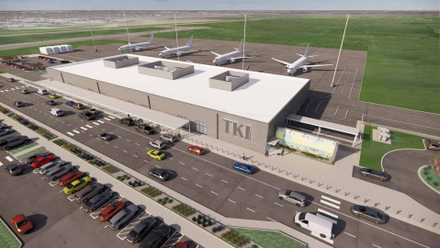
Dallas’ Third Airport Is On Track To Open By Year-End
An exclusive interview with the airport director at McKinney National Airport.
Could Other Airlines Follow Avelo To McKinney?

The next question is whether Avelo’s launch makes McKinney more attractive to other airlines. Two airlines that definitely won’t be interested are  American Airlines, which has its mega-hub at DFW, and
  Southwest Airlines, where Love Field remains its North Texas stronghold. But McKinney’s proposition is different: it can become a convenient third-airport option for specific airlines, routes, and travelers.
One airline that must be looking very closely at the opportunity is Breeze Airways, which has built its business on operating from secondary and underserved airports. The carrier currently only operates a single route from DFW to Provo, and a shift to DTX would allow it more opportunities for expansion in Dallas at a lower cost. However, Breeze may prefer building depth elsewhere at its larger bases like Raleigh–Durham International Airport (RDU) before entering another North Texas airport.
Allegiant Air is another prospect. The leisure-focused budget carrier has no presence at either of the existing Dallas airports, so DTX would present a unique low-cost opportunity for it to connect North Texas with its base in Las Vegas and its six bases in Florida. Similarly, JetBlue only has limited seasonal service from DFW to Boston and Fort Lauderdale, and DTX would offer the New York-based carrier an opportunity to expand and increase frequency in the Dallas region.
However, the challenge that any new entrant will face is that Avelo has a first-mover advantage, and has already planted its flag on five of the major leisure routes from North Texas. It also gives DTX exactly what it needs as it opens its new terminal later this year: a committed airline, based aircraft, familiar destinations, and a clear customer proposition. The airport does not need to become another DFW to succeed. It only needs to prove that enough travelers will choose a closer, easier airport when the destination, price, and schedule line up. Starting in November, that theory finally gets tested.