dailynewsnblog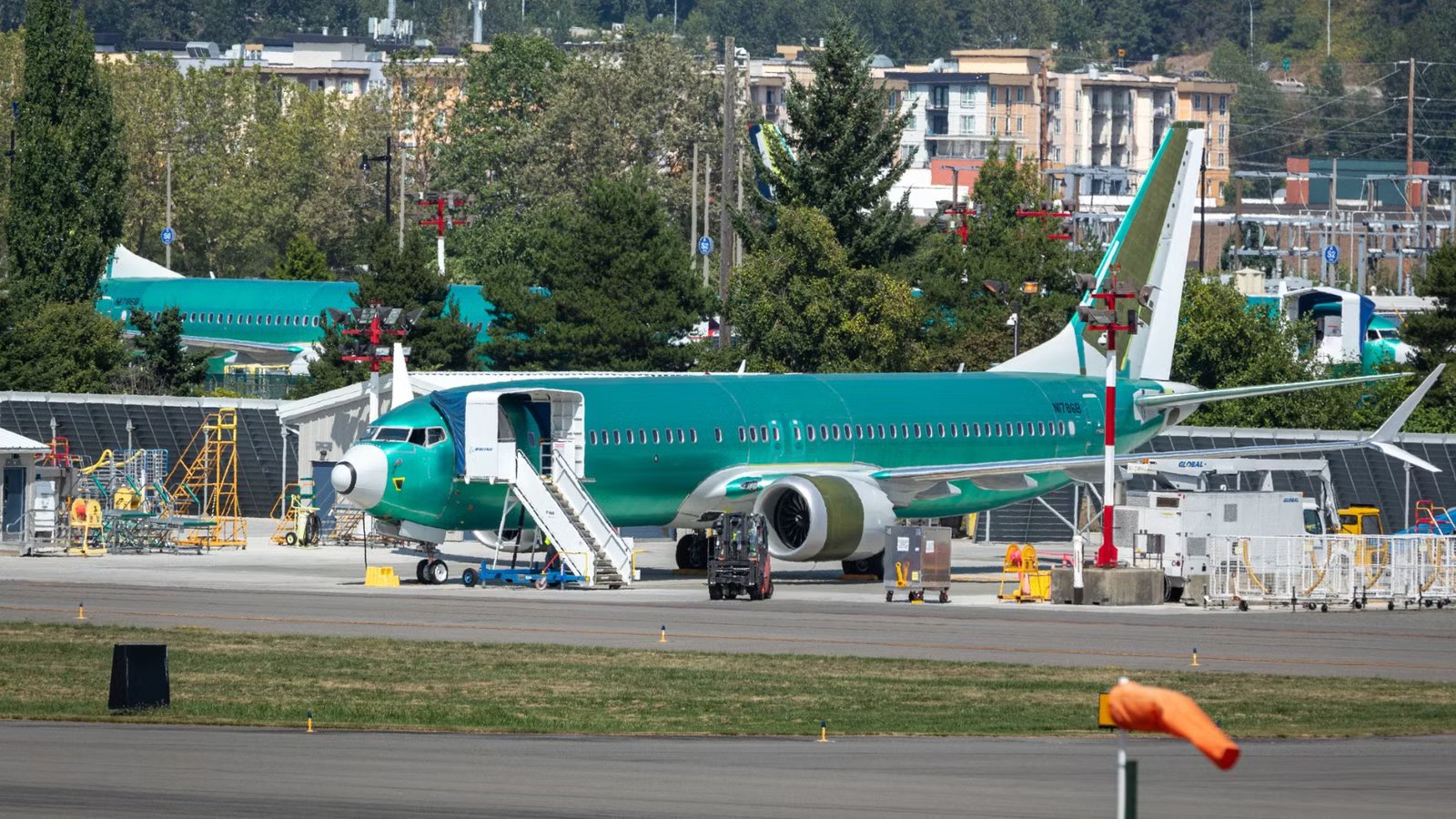
As Q2 2026 comes down to the wire,  Boeing has had a major internal network disruption that threatens to impact the reporting of financial and production results on the last day of the fiscal quarter. The figures are anticipated with high hopes, given that Q1 was one of the best performances that the company has displayed in years.
As the assembly line has ramped up to increase deliveries, the inability to complete documentation to fully report manufacturing results could artificially deflate the planemaker’s output. Initially reported by The Air Current, the effect of the IT outage has reportedly impacted both the commercial and defense sides of the business.
Turbulence On Boeing’s 2026 Climb

Following the unprecedented 20-month grounding of the Boeing 737 MAX family and major deceleration of the assembly line to correct quality assurance, Boeing has steadily worked toward ramping up output. The 737 MAX line holds the greatest potential to increase delivery rates for Boeing, but other issues such as the delayed certification of the 777X and long-running labor strikes at its Air Dominance division in St. Louis have also kept numbers down until recently.
With the upcoming certification of the 737 MAX 10, Boeing aims to increase deliveries to 53 per month as the backlog for the longest variant of its iconic twin jet is nearly 1,500 deep. Simultaneously, negotiations with the union have restored business as usual at the defense plants that produce the F/A-18E/F Super Hornet, EA-18G Growler, and F-15EX Eagle II. Boeing also won the contract for the Next Generation Air Dominance, or F-47, in early 2025, and its advanced carrier-capable drone, the MQ-25A Stingray, also recently entered low-rate initial production.
With so many programs spooling up to greater capacity than the company has seen since before the 737 MAX crisis, the results of Q2 hold eagerly awaited data for industry analysts around the globe. The IT issues are ongoing, but there is hope that they will be resolved in time to prevent distortion of Q2 reporting. A spokesperson for Boeing responded to Simple Flying with this statement on the current status of the ongoing situation:
“We experienced an unplanned IT outage that affected some computer systems and applications. The cause of the outage is understood – we have no reason to believe it is due to a cyberattack – and our IT team is working to bring all systems back online.”
Catch what other flight trackers miss
Emergency squawks, holds, NOTAMs — live signals, no signup.
Open tracker
Catch what other flight trackers miss
Emergency squawks, holds, NOTAMs — live signals, no signup.
Open tracker
Everything Riding On The 737 MAX

The remaining two variants of the 737 MAX family, with four total, are expected to be certified this year, and the company has tooled up to begin much higher-rate output. The initial delivery cap of 38 737 MAX jets has been increased after consolidating the supply chain and proving QA is fully above board to the Federal Aviation Administration.
In late 2025, the FAA raised the delivery cap to 42, and then again in May of this year raised it to 47. The as-yet untapped capacity of the MAX 10 order book, along with the MAX 7 backlog that is several hundred deep as well, would put the planemaker back on track to not only achieve industry-leading production but also attain its goal of $5 billion annual free cash flow.
If Boeing can raise its deliveries of 737 MAX narrowbodies to 53 per month, the company may have a chance to regain the title of best-selling airliner of all time after the Airbus A320 snatched it late last year. The results of Q1 for Airbus have shown a reversal of fortunes, with the company struggling to overcome supply chain bottlenecks.
Boeing Crushes Airbus In Orders & Deliveries: A Dominant Start To 2026
Boeing’s stunning January performance has the aviation world buzzing. What’s behind their sudden surge?
Growth In The Defense, Space, And Security Portfolio

Boeing has consistently reported financial performance with its defense projects for the last several years, notably the Next Generation Air Force One program being the most unprofitable. However, the F-47 sixth-generation fighter jet development promises to be a multi-billion-dollar revenue source that will produce income for the company for decades to come. A series of strikes last year slowed down production, but successful negotiations with the union have restored operations in 2026.
The total Defense, Space & Security backlog sits at almost $85 billion, providing a strong contribution to the company’s total record backlog of nearly $695 billion. In addition to the new F-47 contract, Boeing still has large orders for the KC-46A Pegasus, the new T-7A Red Hawk trainer made in a joint venture with Saab, as well as its legacy fighter jet series.
Although the Super Hornet line is winding down, the Eagle II monthly deliveries are expected to increase from one jet to two, with the assembly line sold out for the next decade. In addition to the 80 US Air Force orders, Boeing has over 250 foreign military sales deliveries to fulfill. The stronghold of Defense Aerospace in St. Louis also produces ordnance like the Harpoon anti-ship missile and Joint Direct Attack Munition, which are in high demand.