dailynewsnblog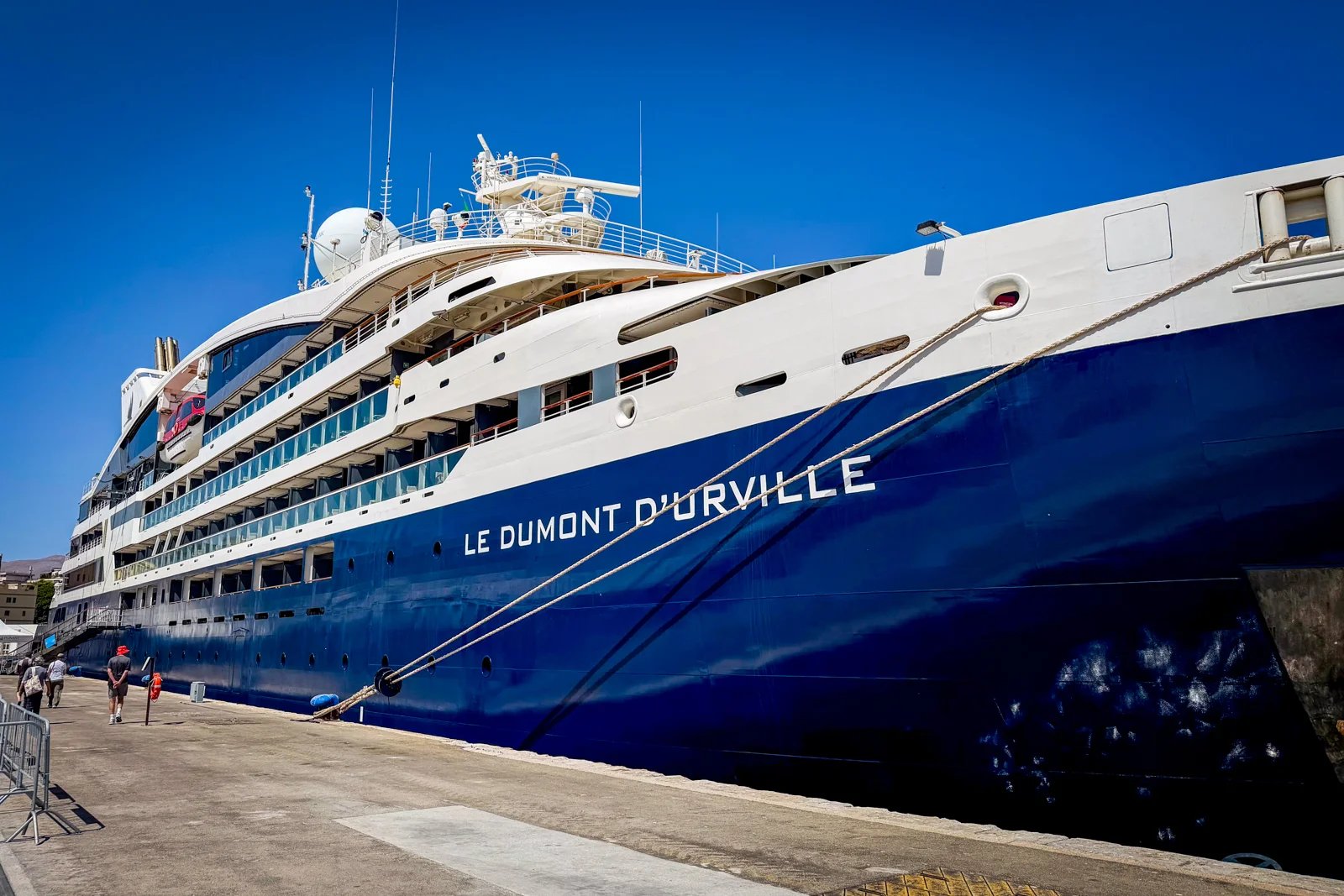
I had forgotten how much I loved learning about the Greeks.
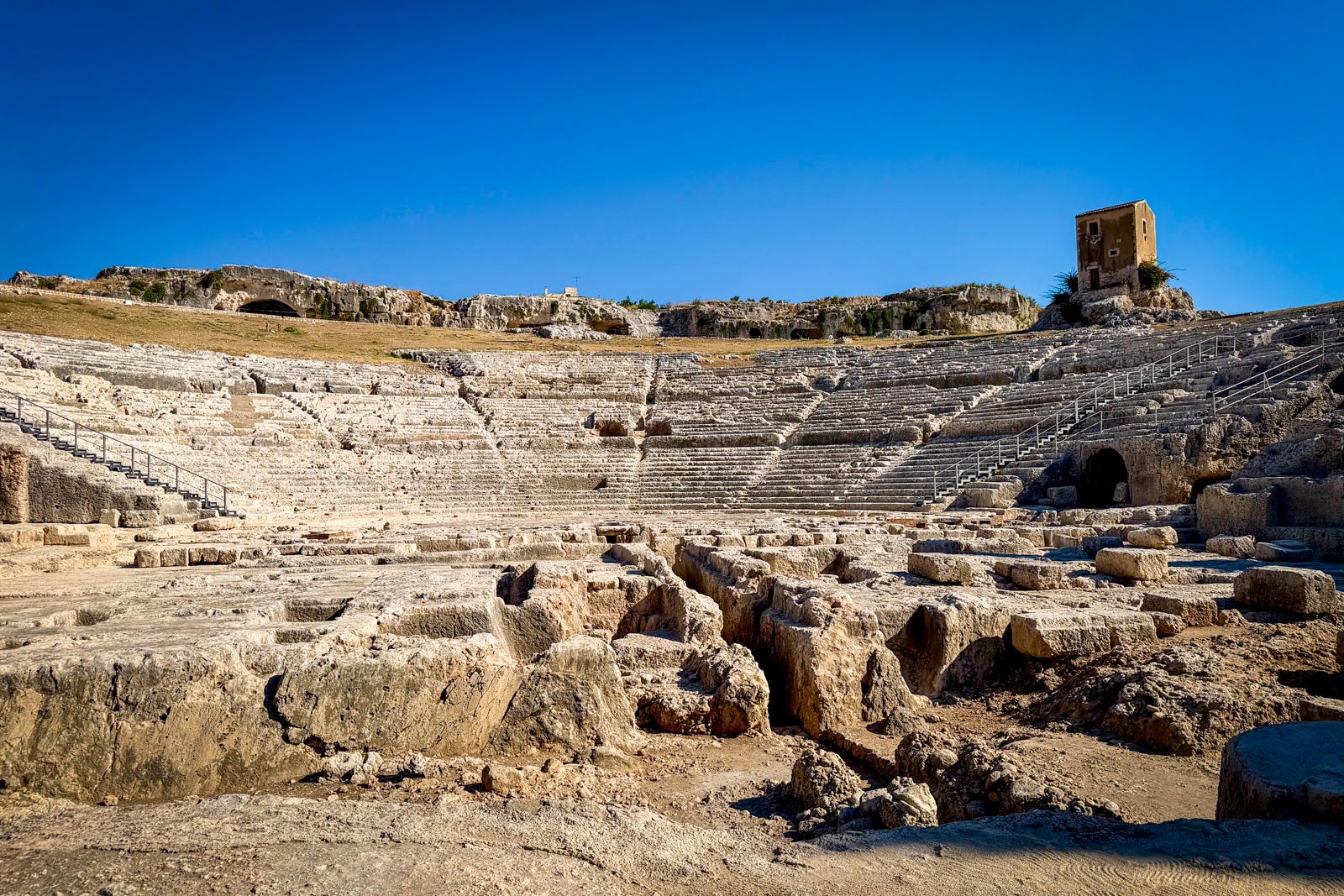
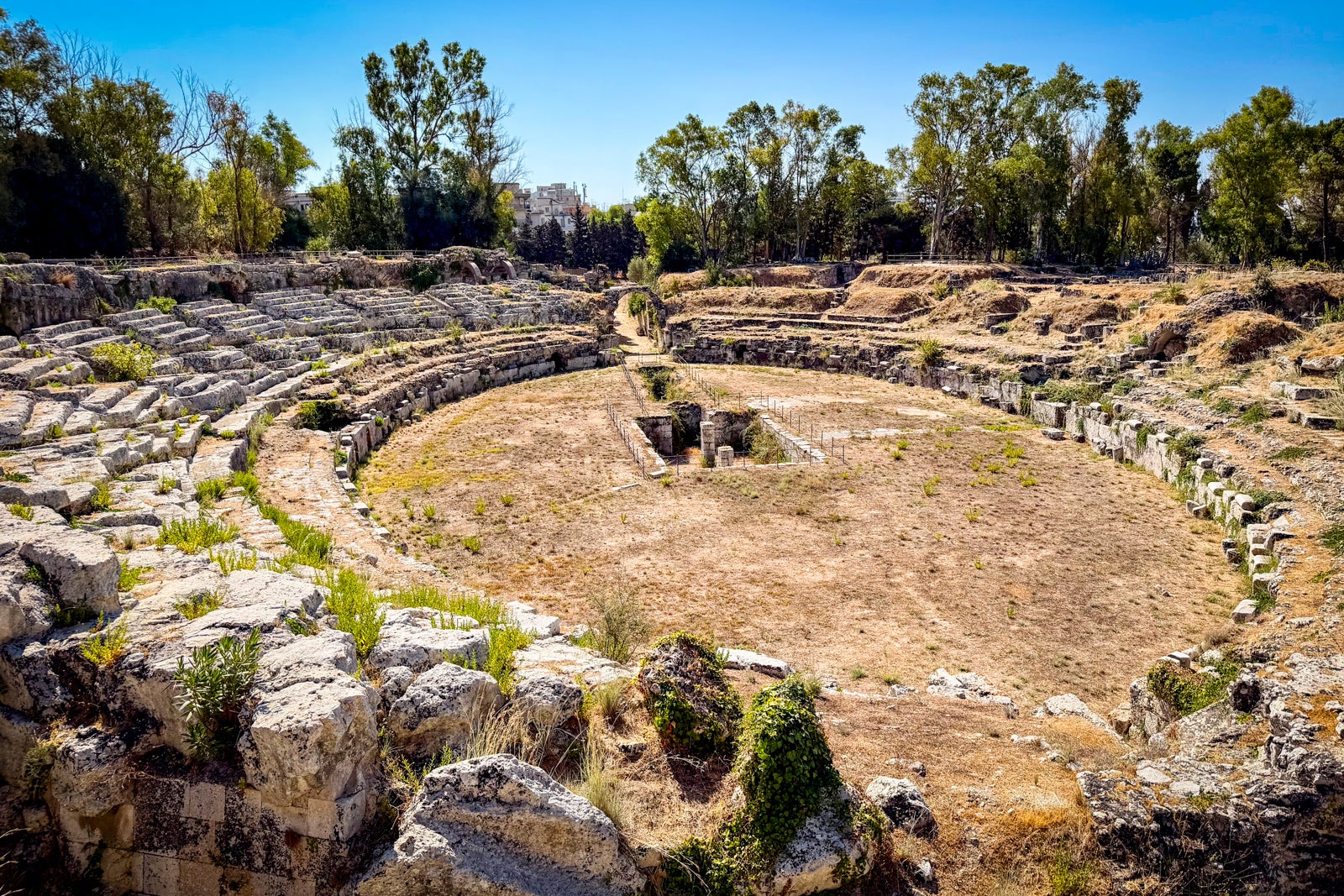
Our guide, Natale, is leading us through the spectacular ruins of ancient Syracuse — the famed Greek city state along the southeastern coast of Sicily — regaling us with tales of its riches and power.
It was, as he notes, so wealthy and strong that it defeated the most iconic of Greek powers, Athens, during the Peloponnesian War. It was also home to Archimedes, the legendary Greek polymath famous for figuring out how levers work and calculating the value of Pi.
“People think he lived in mainland Greece, but he was born and lived right here,” Natale, a local, says with obvious pride as he moves us toward the site’s monumental Greek theater.
Some of what Natale is telling a dozen other passengers and me from the small Ponant Explorations vessel Le Dumont d’Urville are things I knew from my years studying history. Some of it is new to me. But either way, it is history coming alive in a way it only does when you’re able to walk through the very places where it happened. And I am finding I can’t get enough of it.
1 of 2
2 of 2
Luckily, it is just one of many days like this for my fellow passengers and me as we circle Sicily on a relatively new cruise itinerary that focuses on the island’s history, culture and natural wonders in an unusually comprehensive way.
Dubbed A Circumnavigation of Sicily — With Smithsonian Journeys, the eight-night voyage is part of a growing collection of deeply educational new voyages designed by Ponant in alliance with Smithsonian Journeys — the 55+ year old educational travel program of the Smithsonian Institution.
As I am seeing firsthand, the sailings feature not just in-depth daily touring with local guides of a sort you often don’t get when cruising, but also the teachings of notable experts from academia who are along to explain what passengers are seeing.
Drawing mostly highly educated, intellectually curious retirees (or “lifetime learners,” as Ponant executives like to call them), they are, in short, the perfect cruises for the sort of traveler who would think of nothing more wonderful than spending hours buried in one of the 22 museums of the Smithsonian Institution.
Sailing with experts
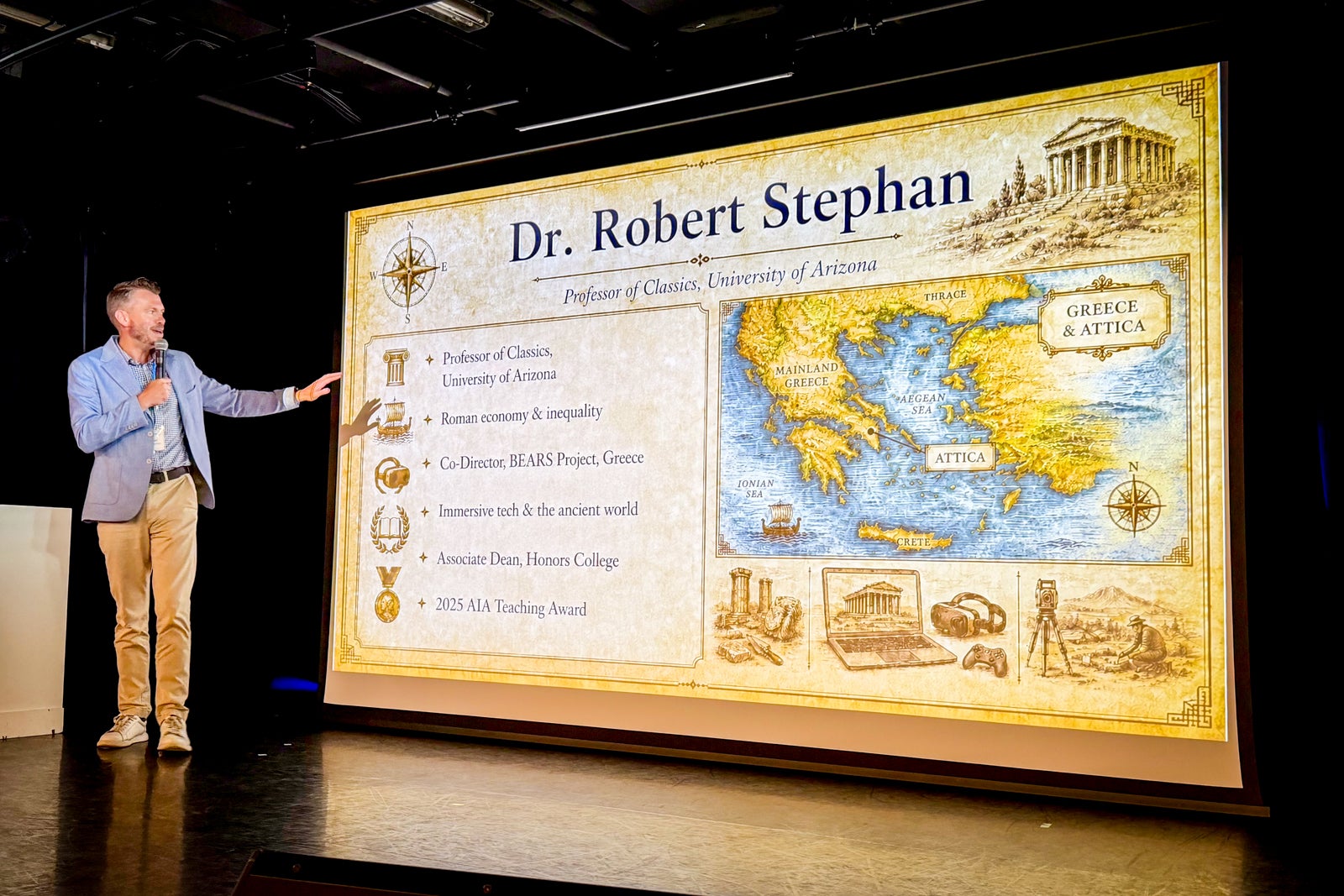
At the heart of these new Smithsonian Journeys sailings on Ponant vessels, as I am experiencing them, is the presence of two Smithsonian Journey experts — in this trip’s case, art historian Aneta Georgievska-Shine and archaeologist Rob Stephan.
As we sail from port to port, these two engaging and personable scholars, who hail from the University of Maryland and the University of Arizona, respectively, offer near daily lectures — six between them over eight days — that prepare us for the stunning historical sites, art and culture that we will be encountering.
1 of 2

2 of 2
Just before our arrival in Syracuse, for instance, Georgievska-Shine offers an overview of the dramatic Sicilian Baroque style in art and architecture, preparing us to see the marvel that is the city’s Baroque-fronted Roman Catholic cathedral (Santa Maria delle Colonne). As Georgievska-Shine notes, it was built directly over the city’s ancient Greek Temple of Athena — the monument’s giant Doric columns are still visible in its facade.
In another lecture in advance of the visit, Stephan mesmerizes passengers with tales of Syracuse’s role in the Peloponnesian War, including the city’s crafty use of ships lashed together with chains to trap the Athenian fleet in the harbor and essentially annihilate them.
It is the context that makes all the difference as we tour Syracuse’s historic sites.
Related: The ultimate guide to Ponant ships and itineraries
In addition to lecturing, these experts also join passengers for predinner cocktails, meals and on various excursions with local guides during port stops, continuing the discussions that begin during their formal presentations — and offering even more insight.
Stephan, for instance, went along in my small tour group led by local guides as we explored the Greek and Roman ruins of Syracuse and, later, the city’s famed archeological museum, often stopping to answer questions from individual tourgoers or noting significant things that he was seeing to the group.
At the archaeological museum, he notably paused in front of a large aerial photograph of the city to show us where the chains that doomed the Athenians stretched across the harbor entrance. Natale, our local guide, then showed us where our ship was docked within that harbor.
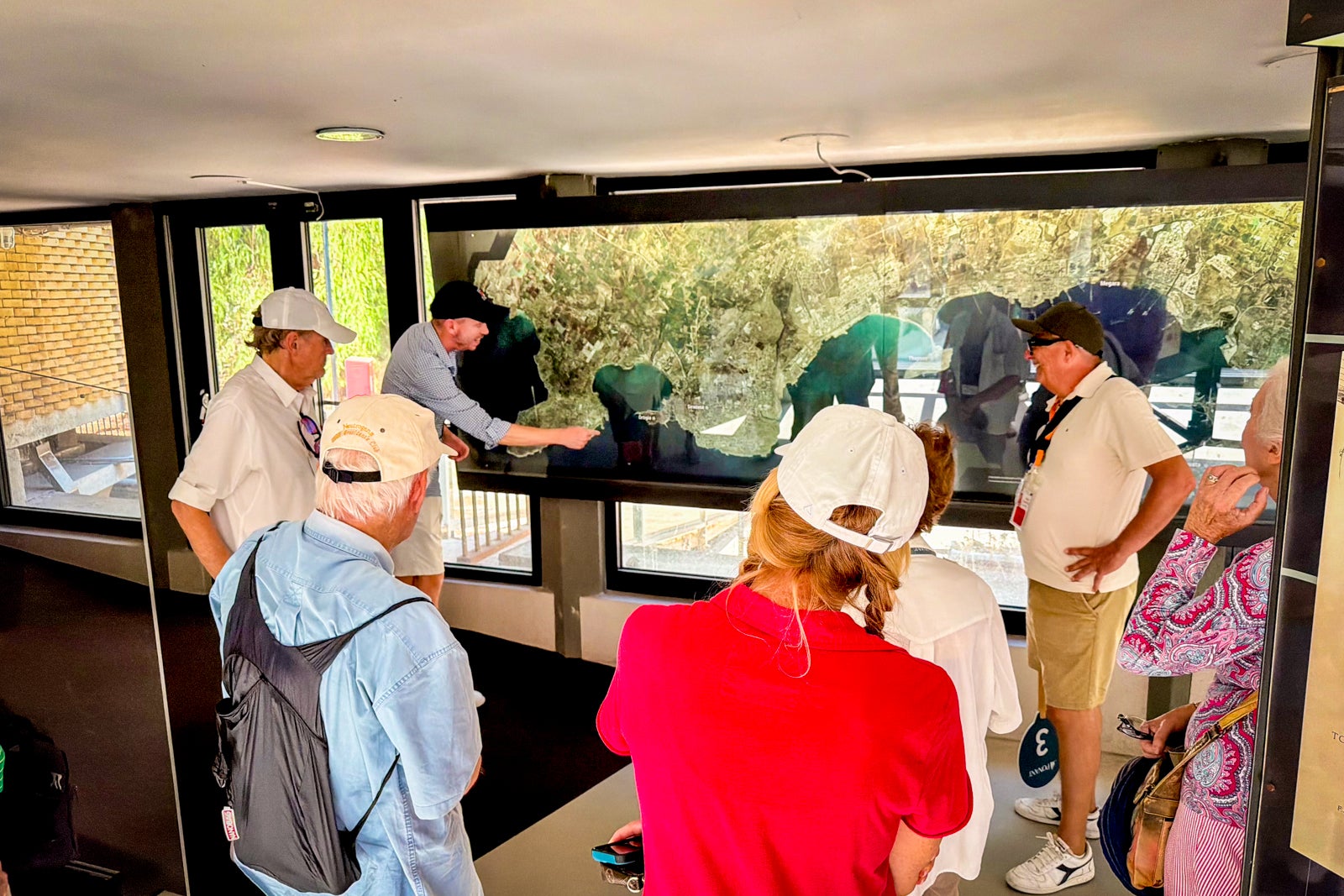
It was another small piece of context that added to our understanding.
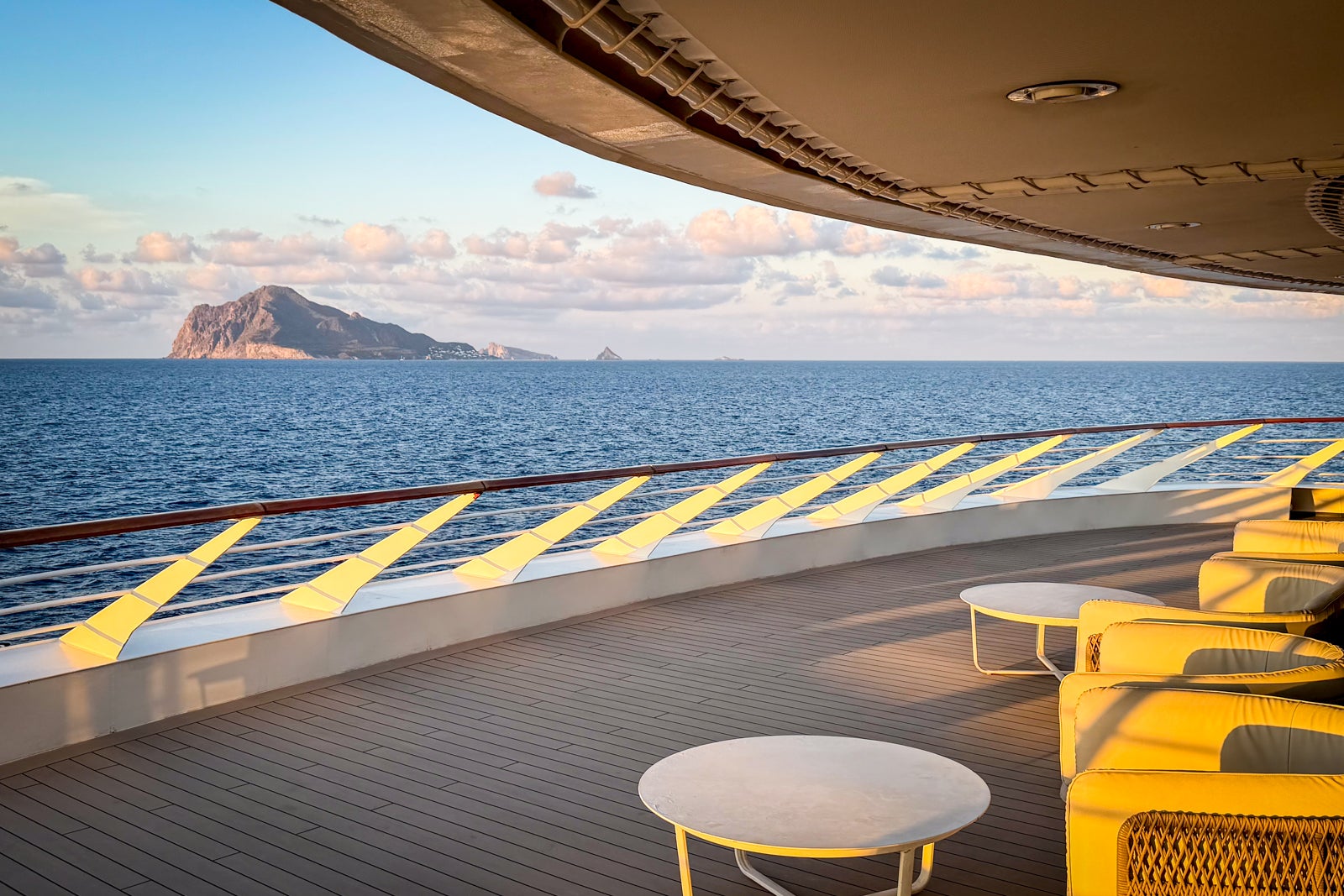
Later, back on board, I took the time to head to the outside decks of the ship and gaze over the sweeping natural blue bay that forms the harbor of Syracuse. It is peaceful now. But if I had been there 2,400 years ago, I would have been looking out over one of the great turning points of history.
Sure, you can read about this all in a book. But there’s nothing like seeing it in person.
Curated tours, included in the fare
To sail on one of Ponant’s voyages in alliance with Smithsonian Journeys is, in a nutshell, to experience a luxury vacation (Ponant ships are quite upscale and pampering) that also has all the elements of a university-level symposium — not just on board the vessel but during port stops.
In one of the standout features of the trips, nearly every port call brings the choice of at least two and sometimes up to four included-in-the-fare tours that are carefully curated by Smithsonian Journeys and Ponant to emphasize educational and local experiences rather than just traditional sightseeing.
Related: We sailed Ponant’s icebreaker to the North Pole. It was epic
On this particular itinerary, that often means daily guided tours to some of the most iconic historical sites of the Greek and Roman eras — as we learn during the trip, Sicily was a crossroads of empires during those times — with a few medieval and Renaissance gems thrown in for good measure.
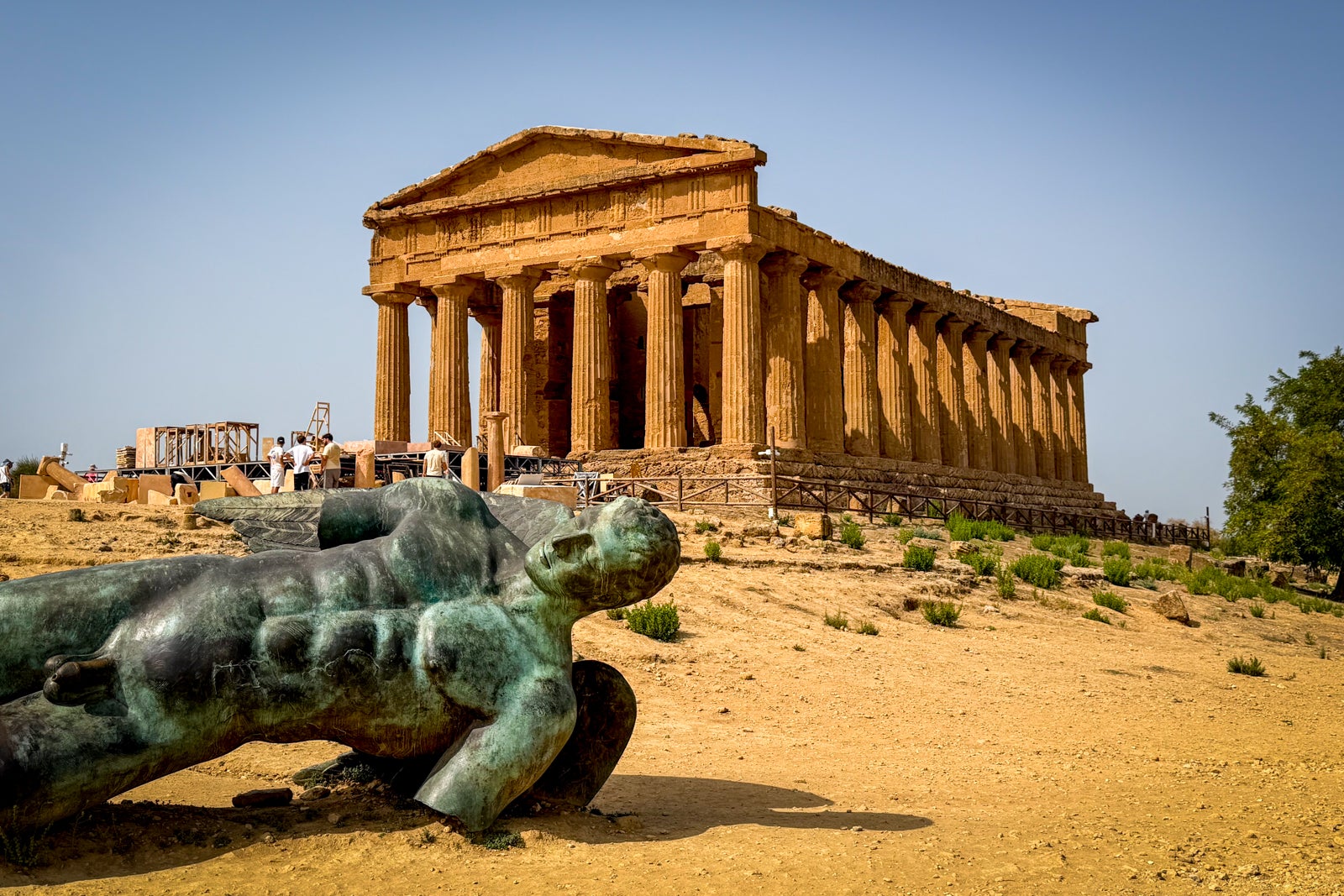
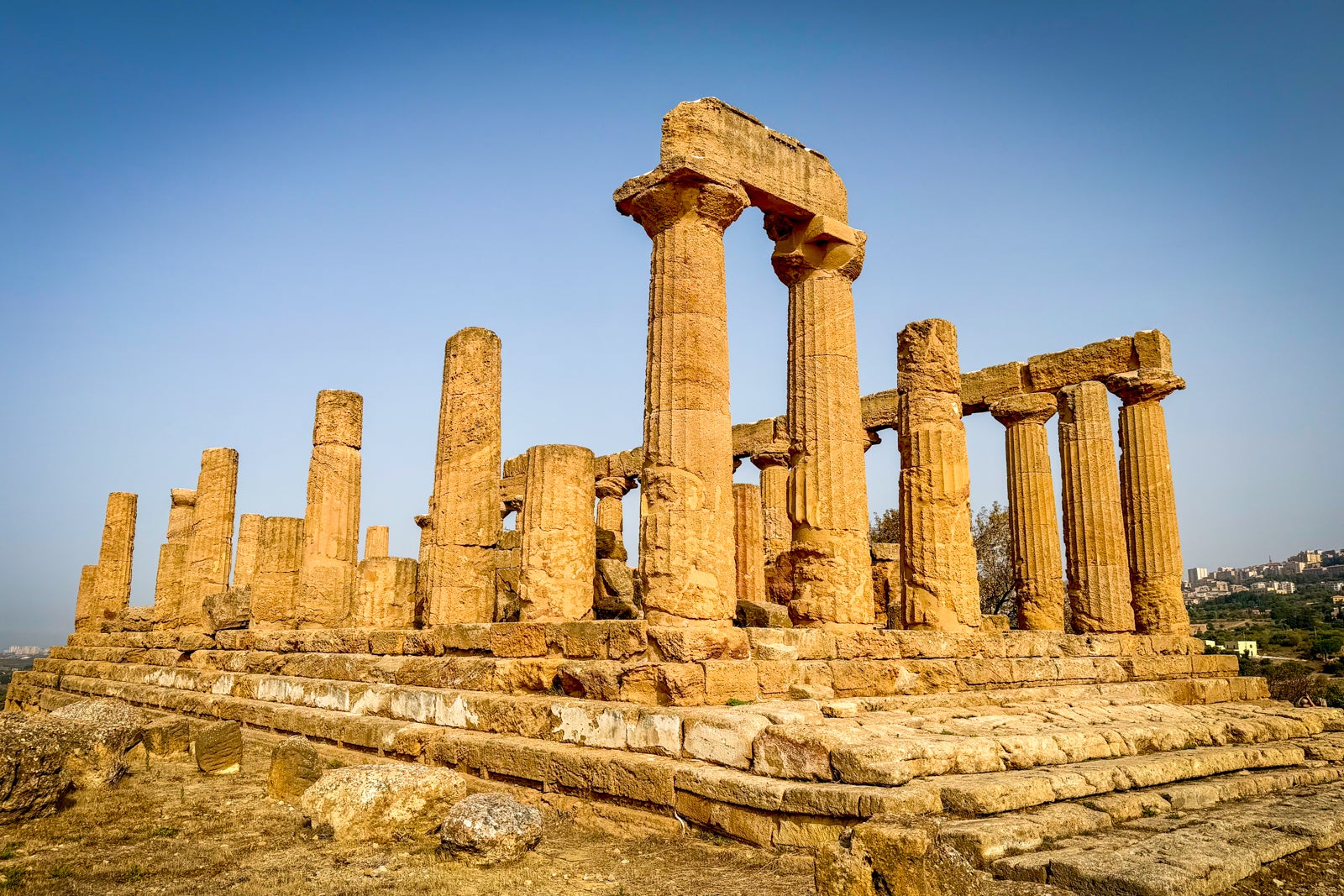
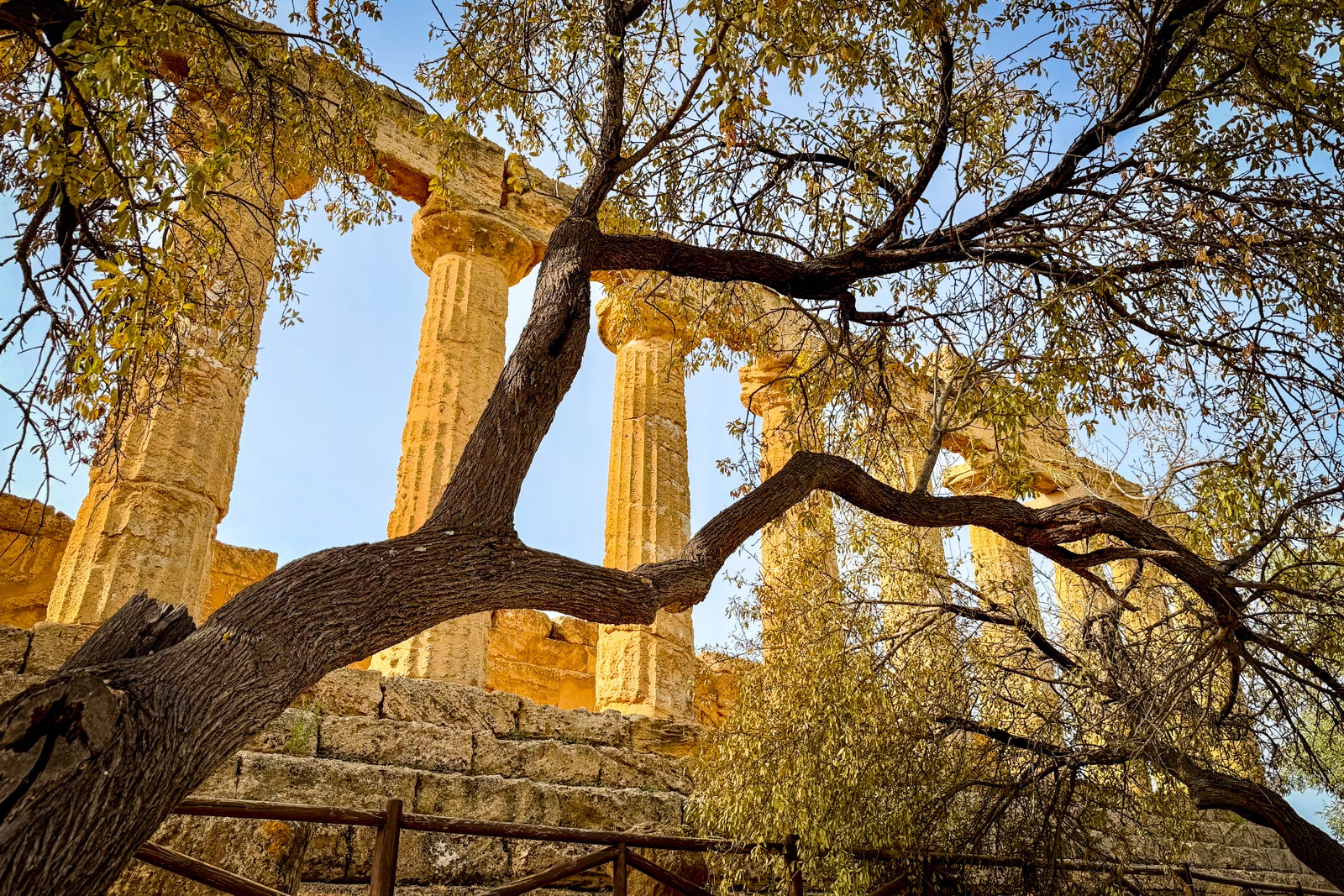
During a stop at tiny Porto Empedocle (population of about 16,000) on the south side of the island, for instance, most of us head out with expert guides to the monumental Valley of the Temples of Agrigento, where we take in perfectly preserved Greek temples that rival anything you’ll find in Greece.
1 of 3
2 of 3
3 of 3
During the Greek era, as my guide explains, Agrigento was one of the biggest and richest cities in the world. Later, as we also learn, it was the site of an epic clash between the Romans and Carthaginians.
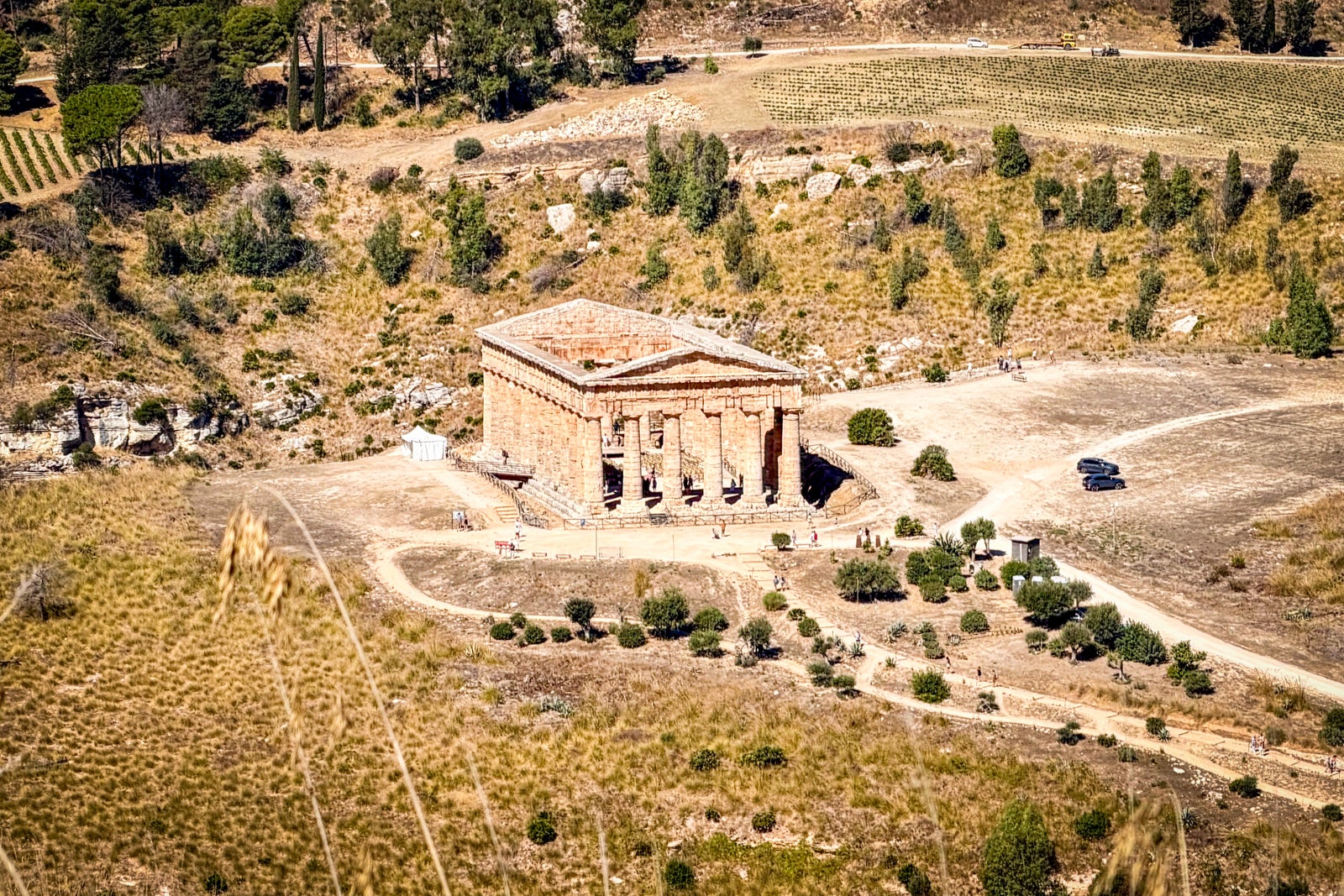
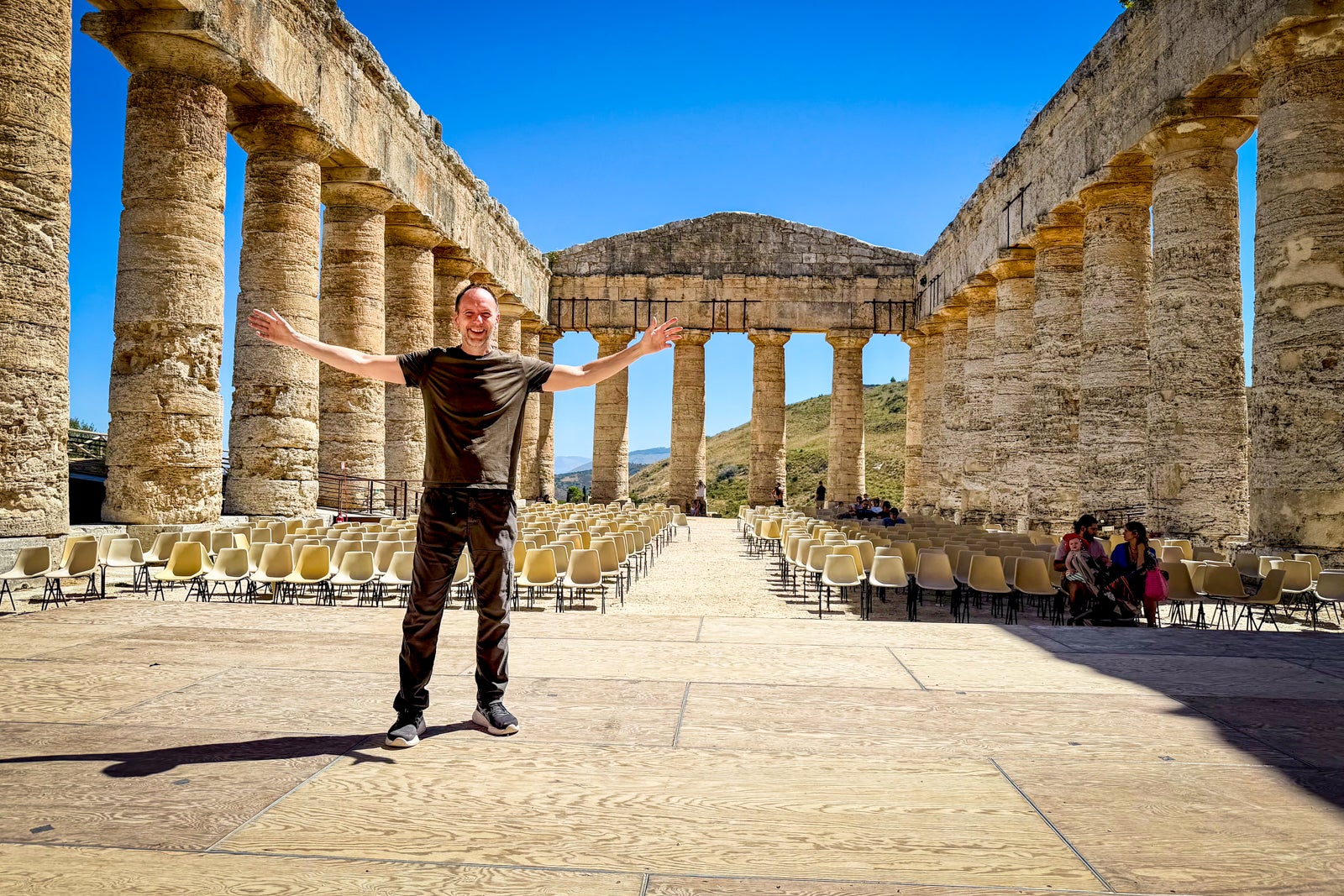
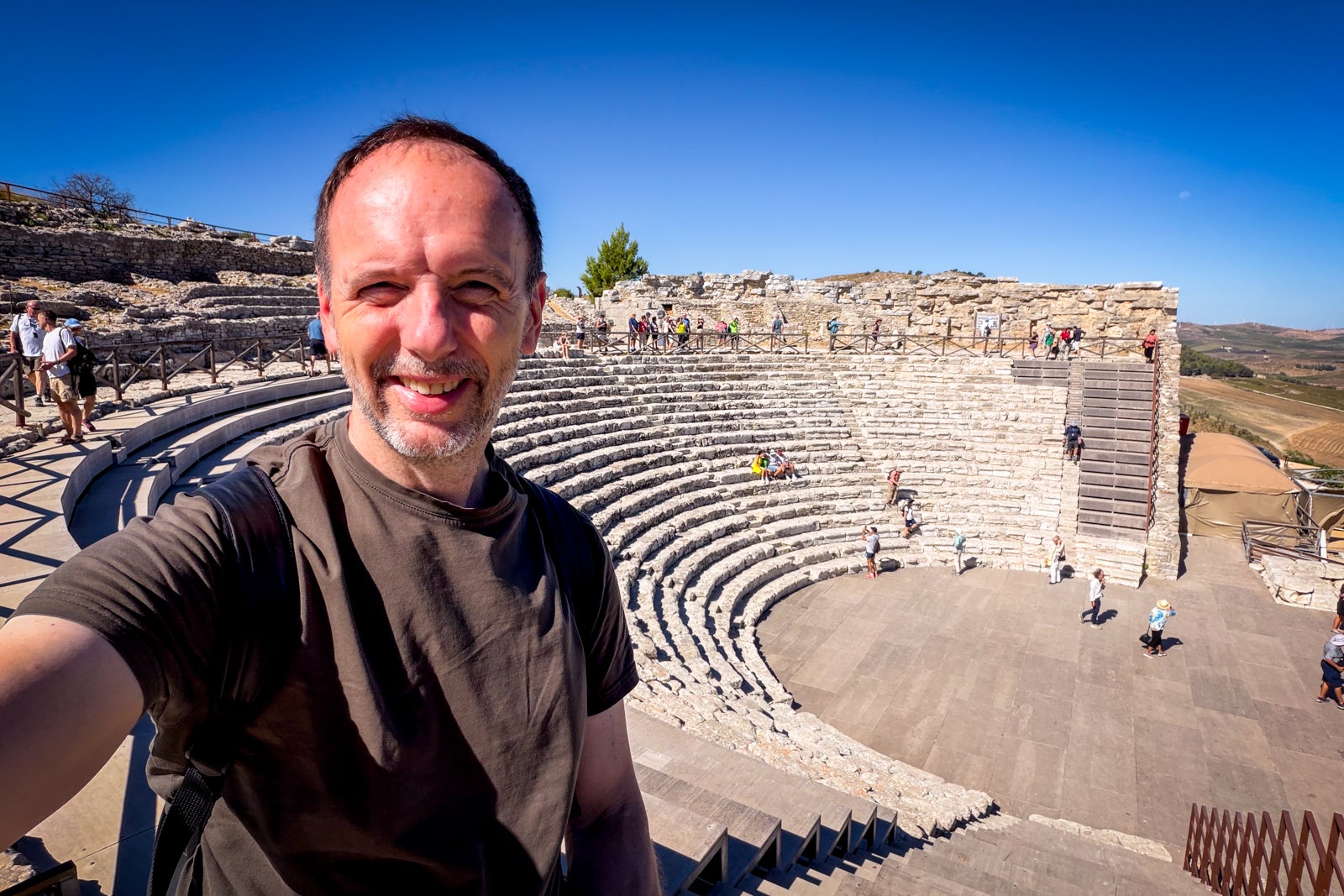
A couple of days later, during a port stop at Trapani (population about 55,000) on the western side of the island, my tour pick for the day brings me to the ruins of Segesta, a hub for the Elymians — an ancient, non-Greek civilization that adopted Greek cultural styles. Up close, we see it’s home to one of the world’s best-preserved Doric temples and an impressive ancient theater that is still used today.
1 of 3
2 of 3
3 of 3
Later that same day, we head up impossibly winding roads to the perched-on-a-mountain-peak medieval town of Erice. From here, nearly a thousand years ago, the Normans (yes, the Normans, from far-away northern France) once ruled the region. How they got here is another key topic for discussion.
The stop in Syracuse, on the southeastern side of the island, comes a few days later, after full days visiting Palermo, Sicily’s capital, and the island of Lipari, just off the northern coast of Sicily (one of seven small islands, the Aeolian Islands, that officially are part of Sicily).
1 of 2
2 of 2
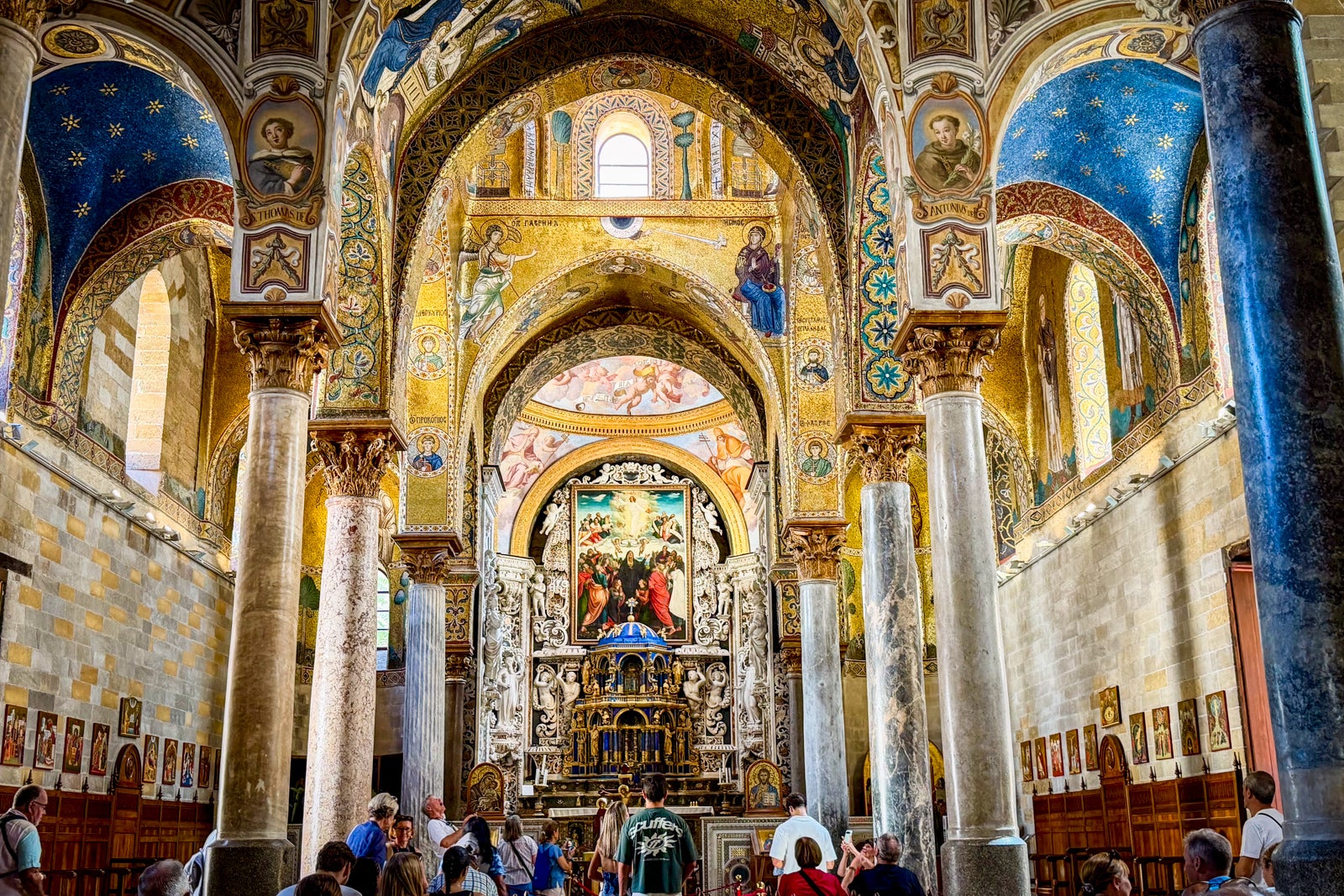
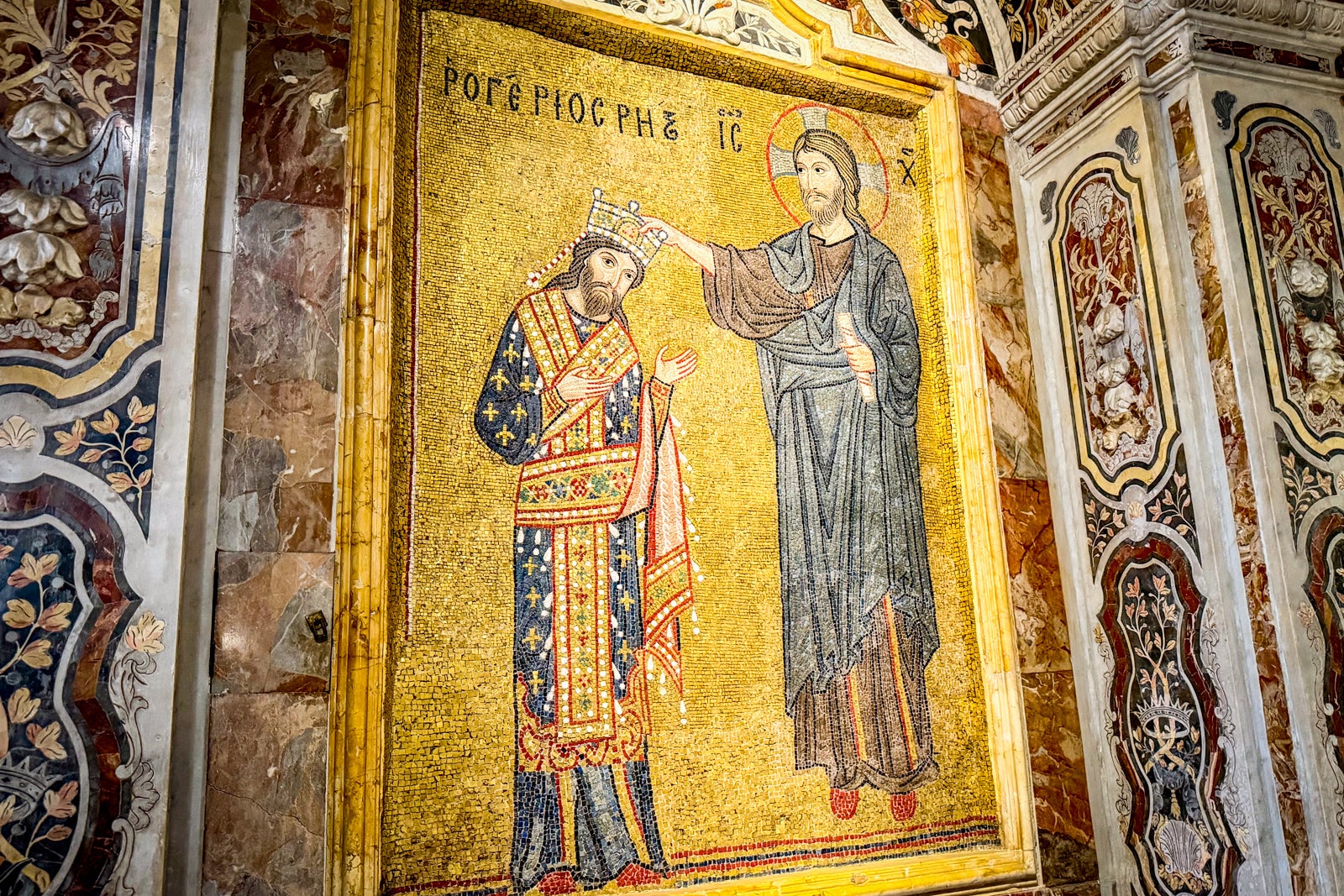
The Palermo stop, for me at least, brings a guided visit to the city’s spectacular, gold mosaic-lined Church of Santa Maria dell’Ammiraglio (a UNESCO World Heritage site that dates to 1143), a walk through local street markets, a local food tasting and a private tour of the Palazzo Conte Federico — the latter, fabulously, by a member of the family who lives there.
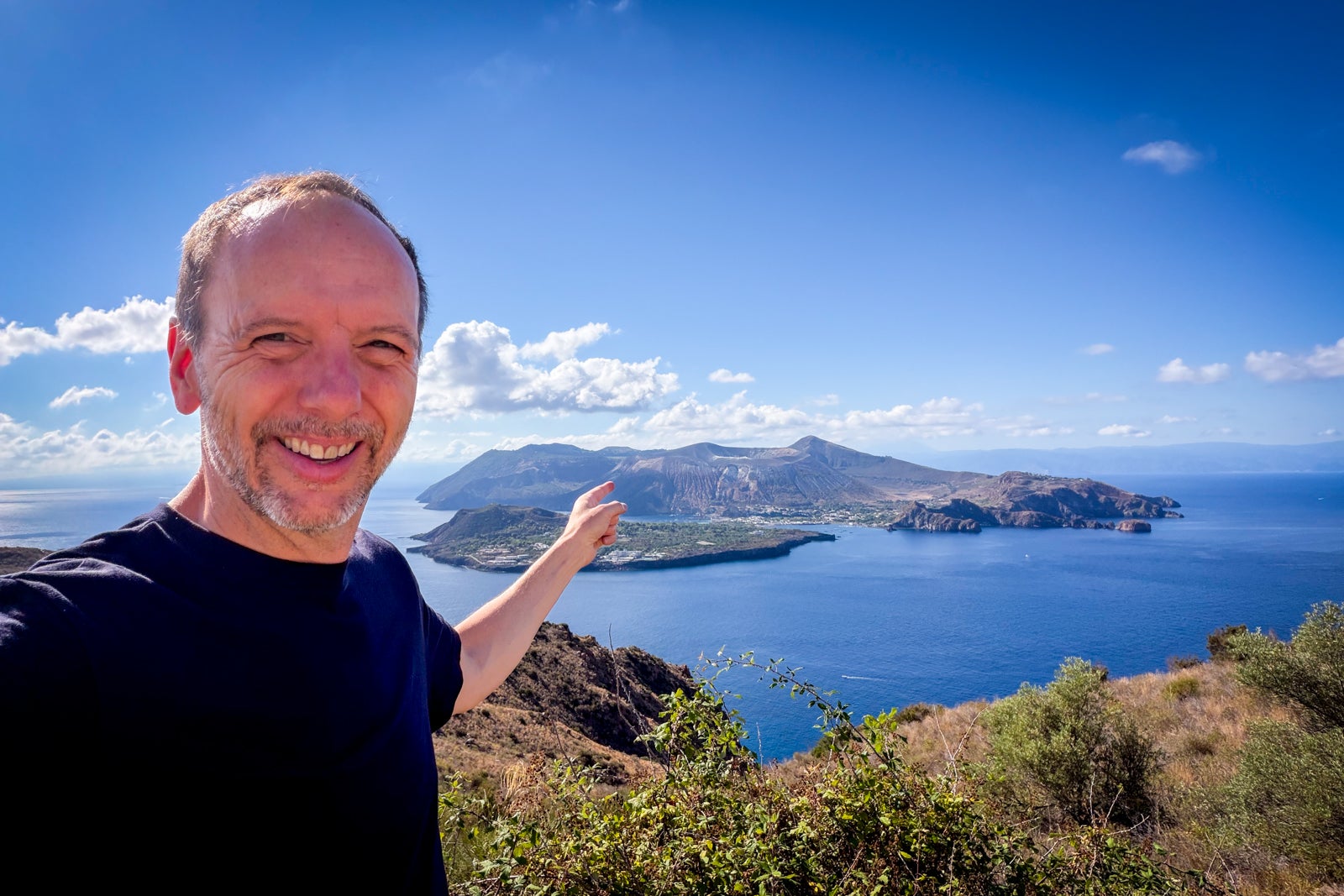
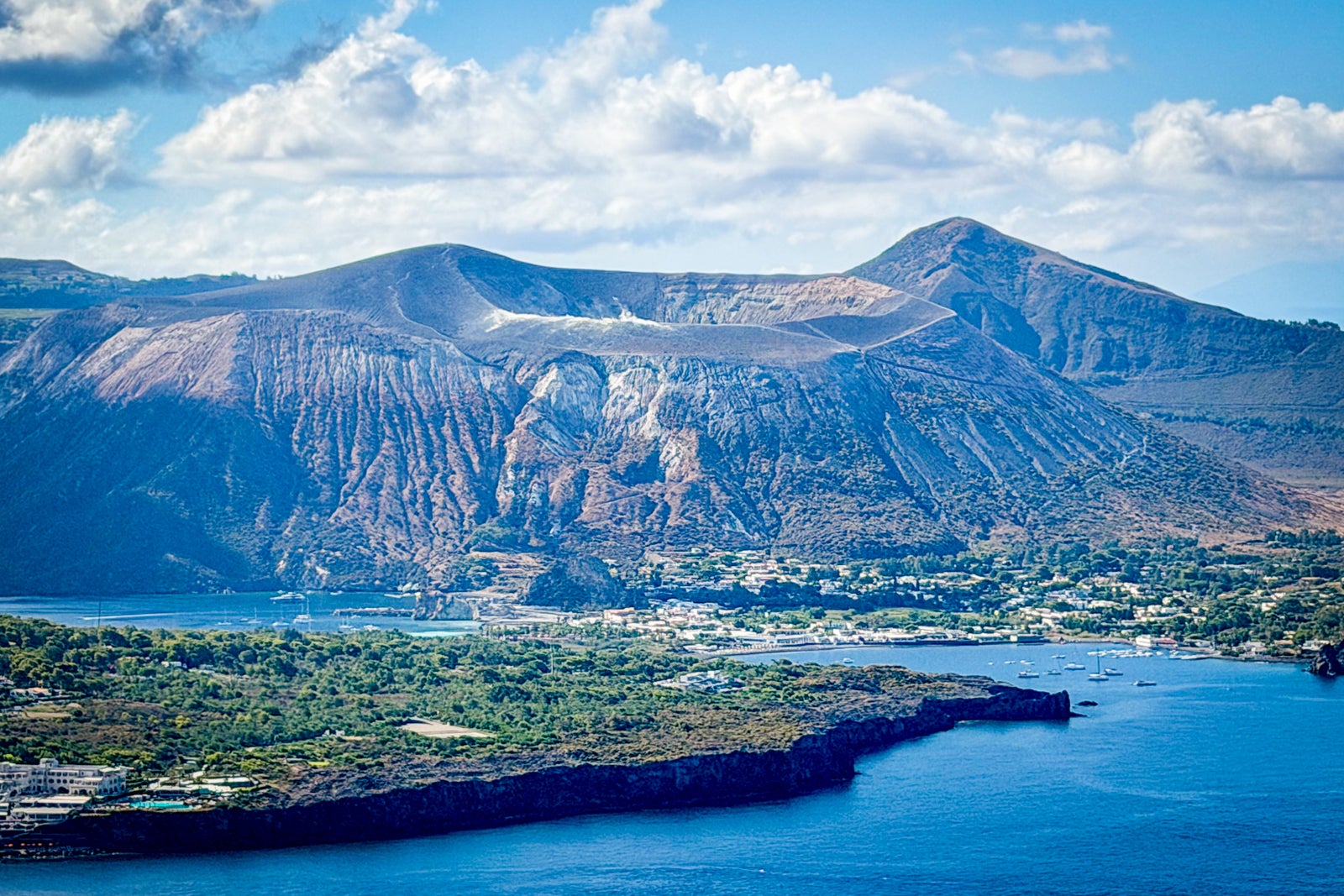
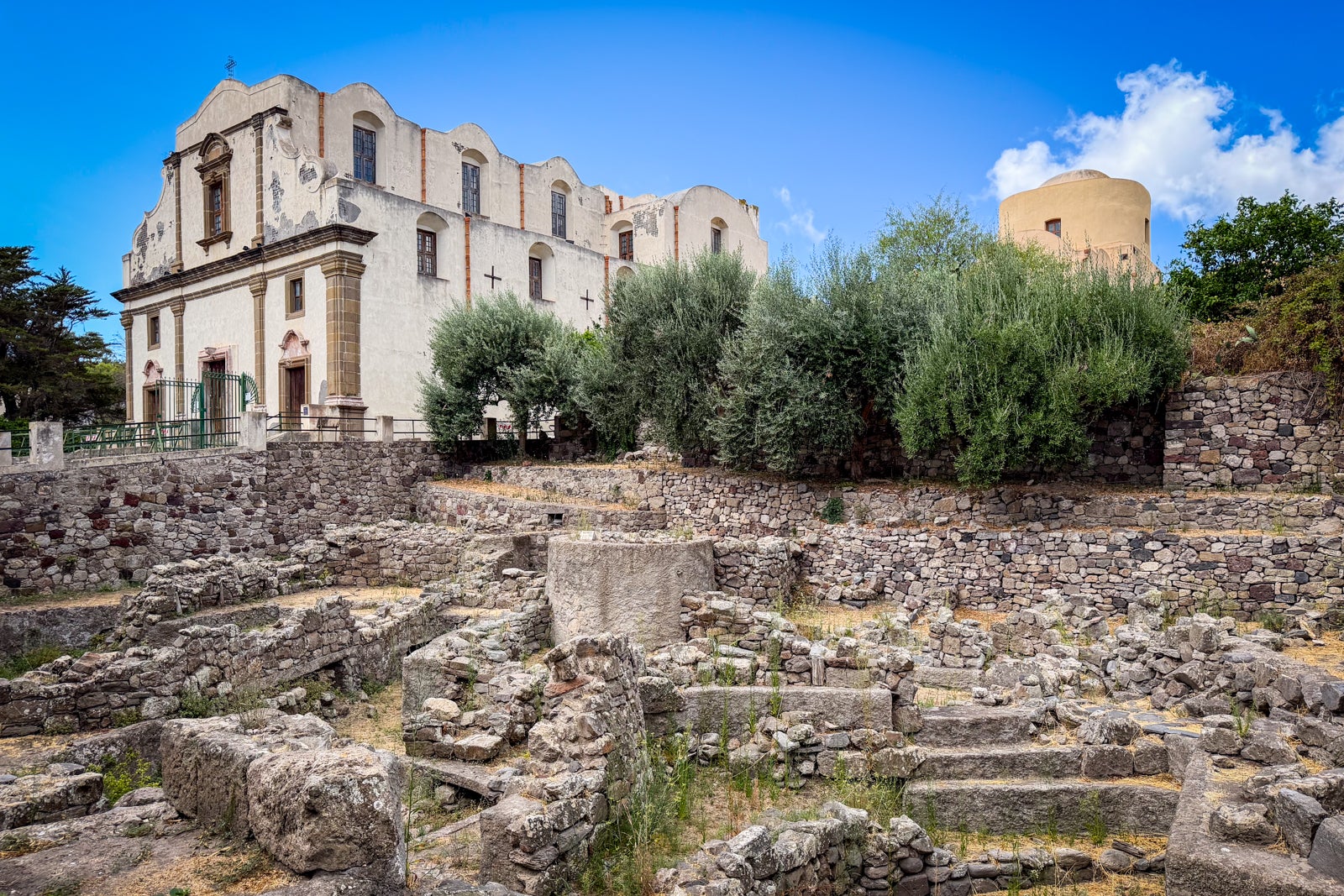
In Lipari, we drive up to the island’s high point to view the smoking crater of Volcano Island nearby and visit another archeological complex.
1 of 3
2 of 3
3 of 3
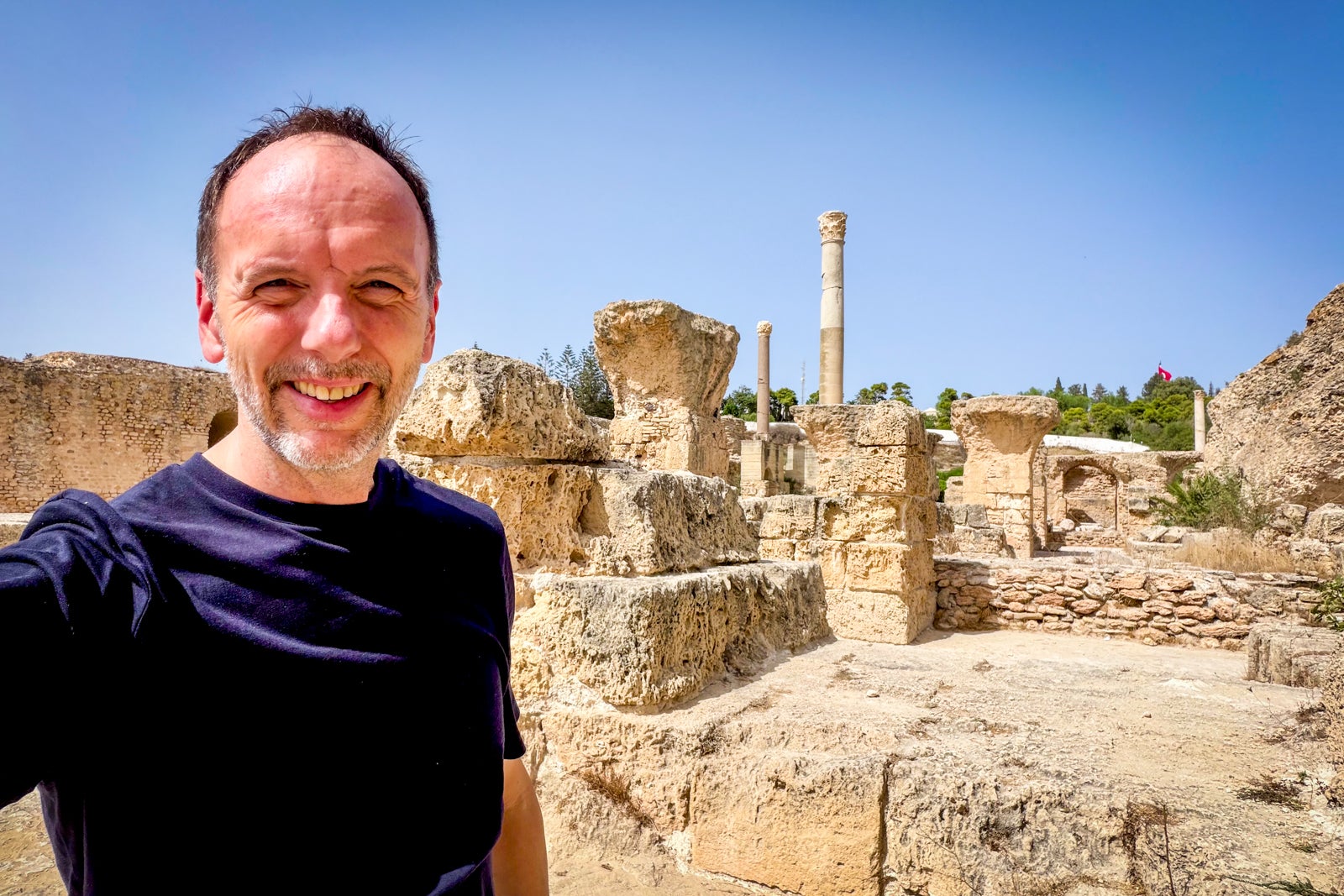
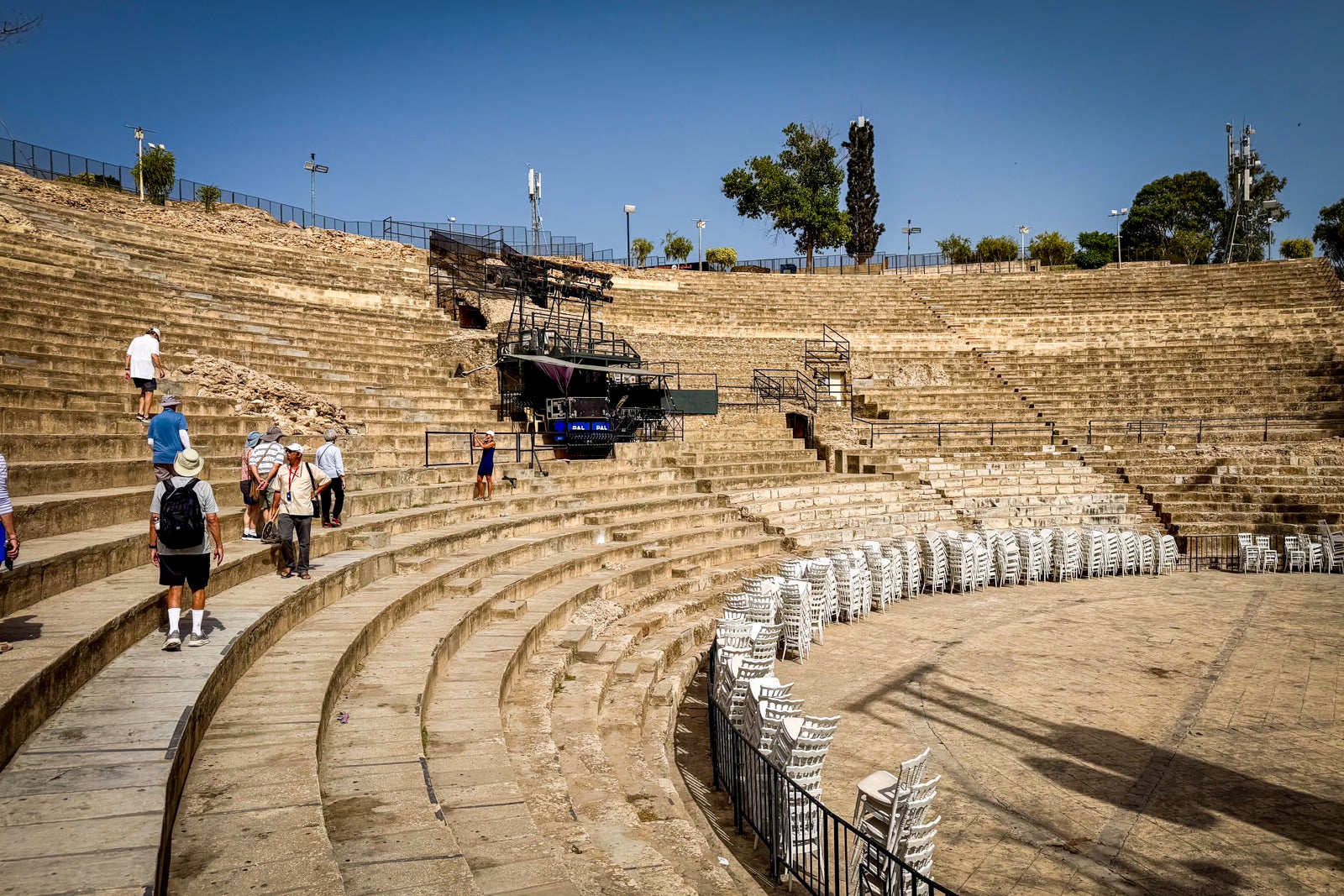
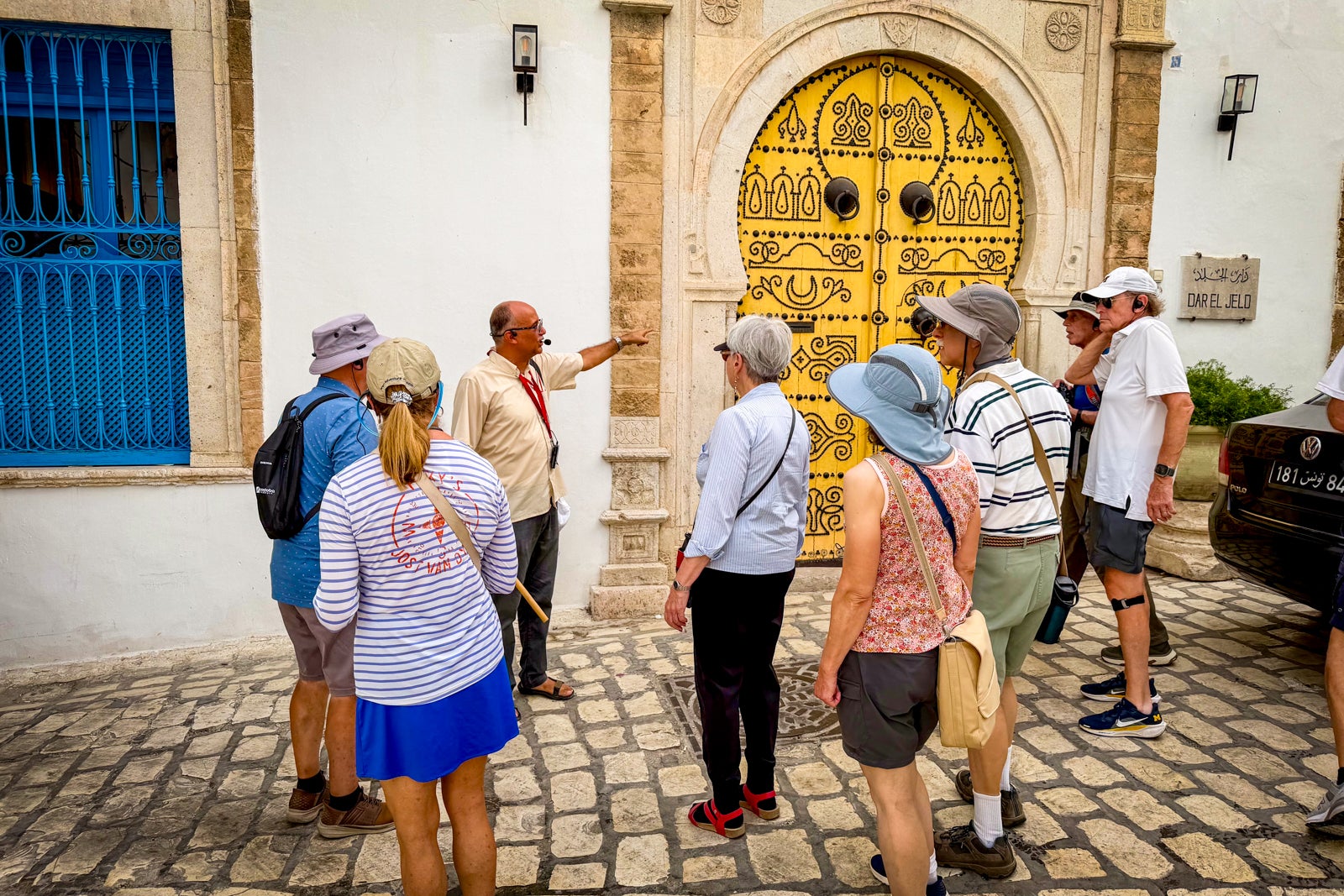
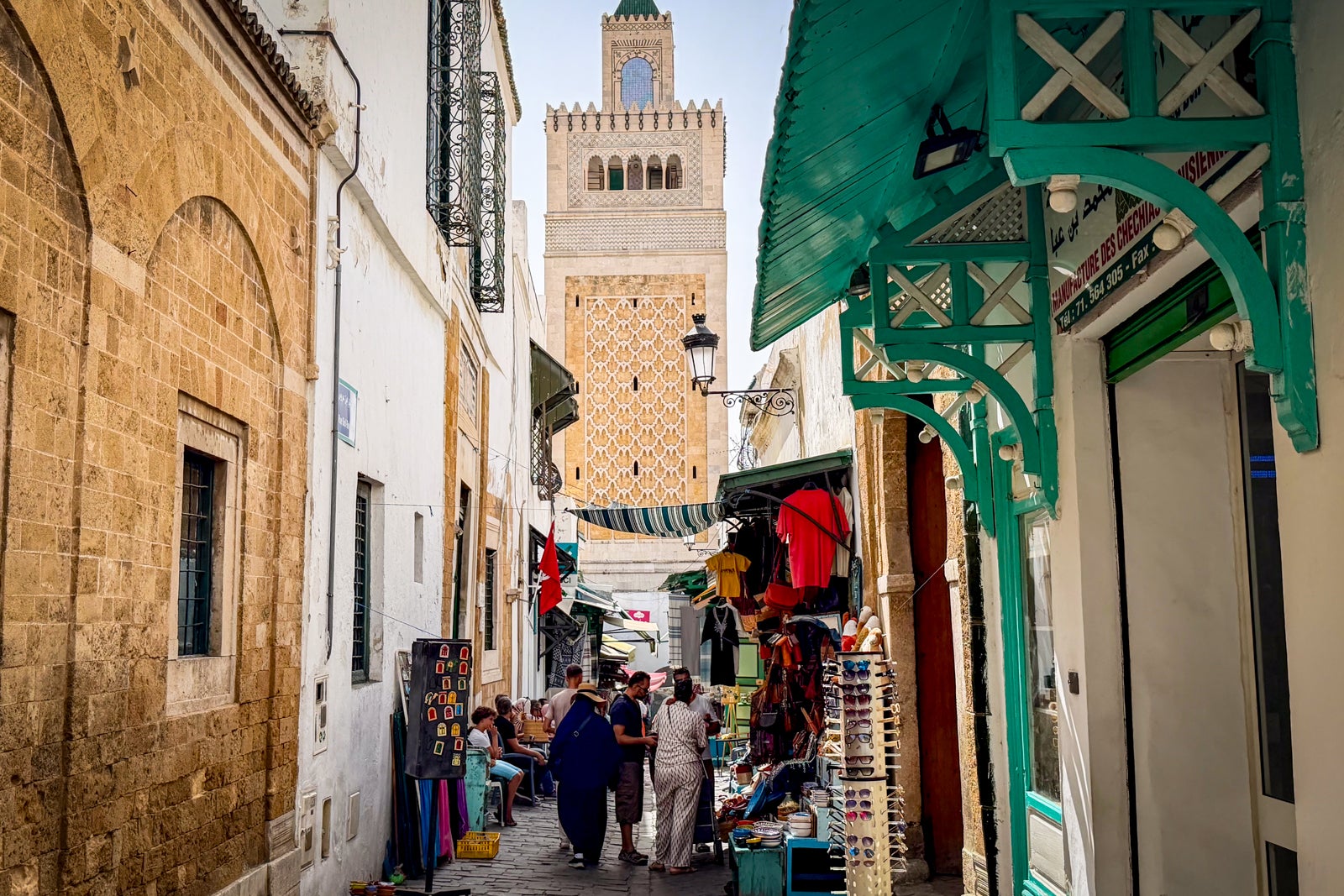
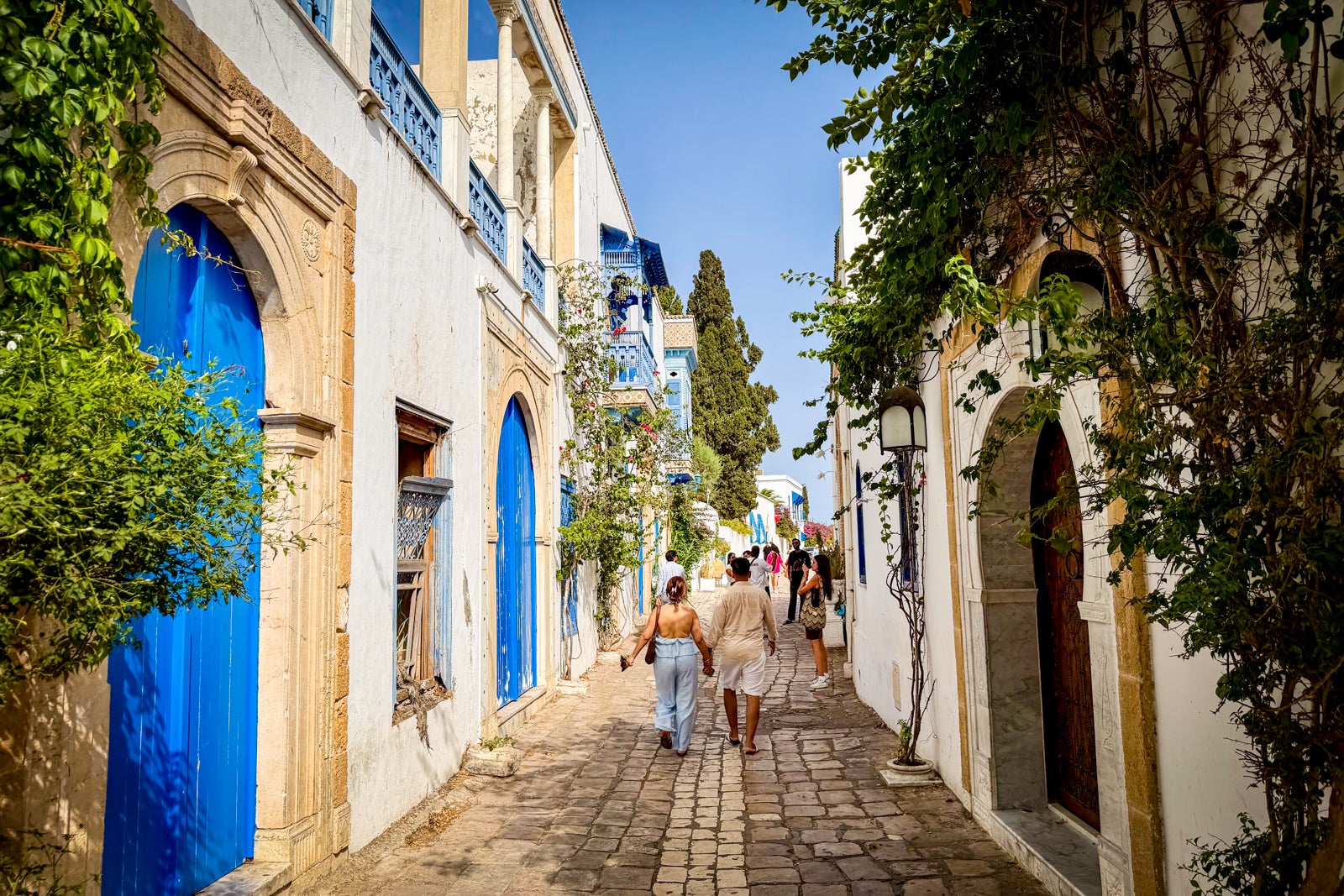
One other stop on the voyage, the only one outside of Sicily, is the port of Tunis in Tunisia, where we learn about its ties to Sicily and the Roman and Greek worlds during a visit to the ruins of ancient Carthage, the Roman Empire’s great rival. The stop also offers the chance to walk through the city’s historic Medina and, for some of us, a moving visit to the North Africa American Cemetery and Memorial — the final resting place for thousands of Americans killed in North Africa during World War II.
Intertwined through history, Tunisia and Sicily face each other across a narrow choke point in the Mediterranean that is less than 100 miles wide. We sail to it for just a day between our stops in Porto Empedocle and Trapani for guided tours that add more depth to what we are learning.
1 of 6
2 of 6
3 of 6
4 of 6
5 of 6

6 of 6
That each of these tours, some of which are full-day outings with multiple stops and lunches at local restaurants, is included in the fare is notable — something rare in cruising.
A visit to a natural wonder
Learning about the history and culture of the places that Ponant ships visit on sailings in alliance with Smithsonian Journeys is just part of the experience. The trips also have a focus on natural wonders.
On our sailing, that means, among other things, the option of an all-day tour to Sicily’s massive Mount Etna, the tallest active volcano in Europe.
Rising an astounding 11,165 feet, pretty much straight up from sea level, Mount Etna is a sight to behold even from a long distance.
On the day we visited, we anchored just off of Giardini Naxos, a small coastal town nearly 16 miles from the mountain’s summit as the crow flies. But despite the distance, the mountain seemed to fill the sky. Sweeping open the drapes to my cabin after I awoke that morning, I could clearly see the smoke rising from its pointy summit — a fascinating sight.

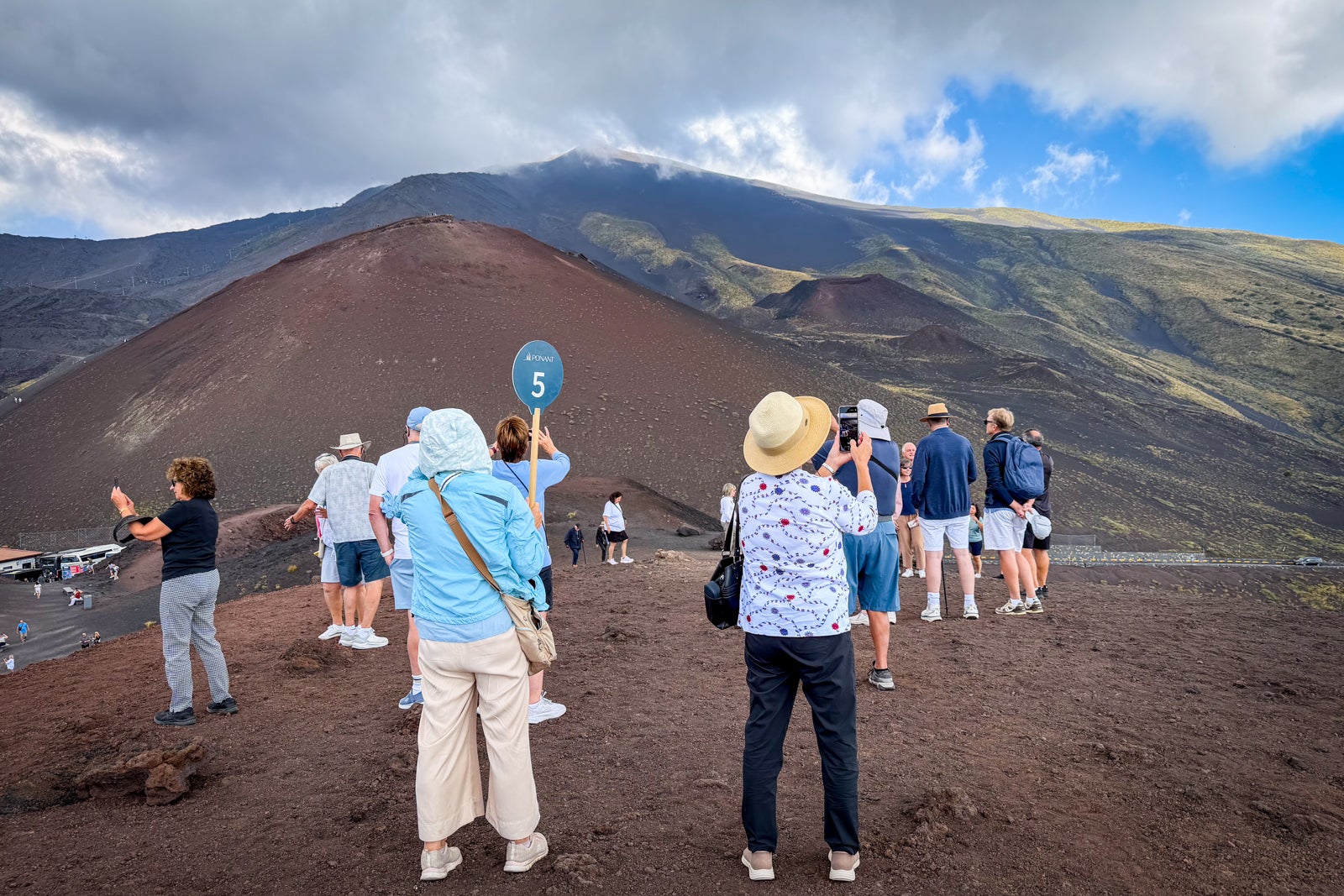
Even more fascinating was the experience of driving up the side of the mountain in a tour bus with a small group of fellow passengers to an altitude of roughly 6,400 feet — as far as you can go by vehicle.
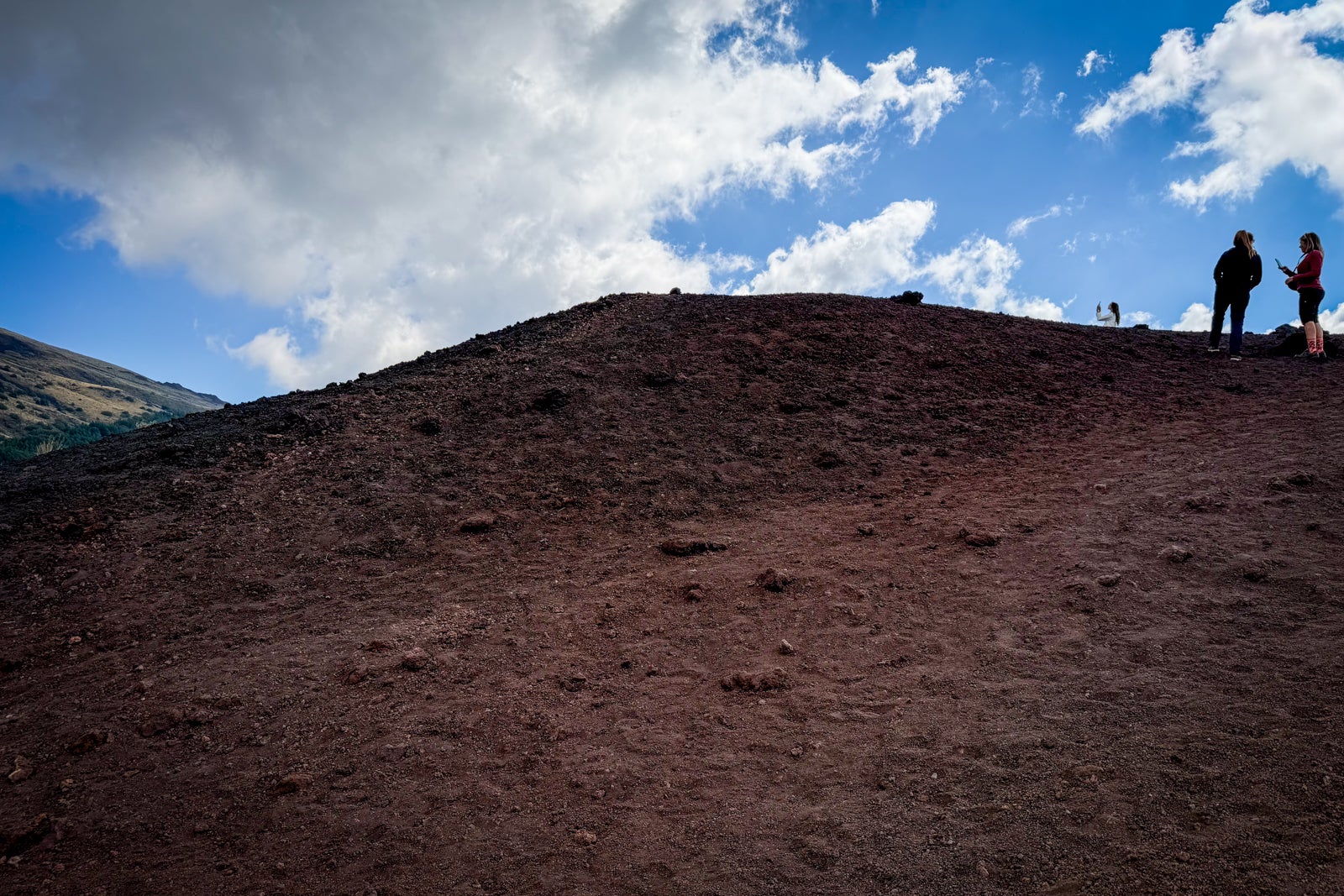
It’s a drive that first takes you past a cultivated ring of vineyards, citrus groves, orchards and olive trees that thrive in the volcano soil, followed by a higher-altitude belt of dense woodlands that abruptly transitions into a striking, otherworldly moonscape of dried-up lava flows and craters.

1 of 4

2 of 4
3 of 4
4 of 4
After driving as far as we could, we emerged from our bus in this last zone for more than an hour of exploring, delighting in a hike around one of the small, no-longer-active craters.
At this high altitude, not only was the air noticeably thinner but the temperature a blissful 67 degrees — 20 degrees lower than the steamy 87 degress of Giardini Naxos below. That said, there was super-hot lava somewhere underneath us. Or maybe above us. Thankfully, we didn’t get to see it up close.
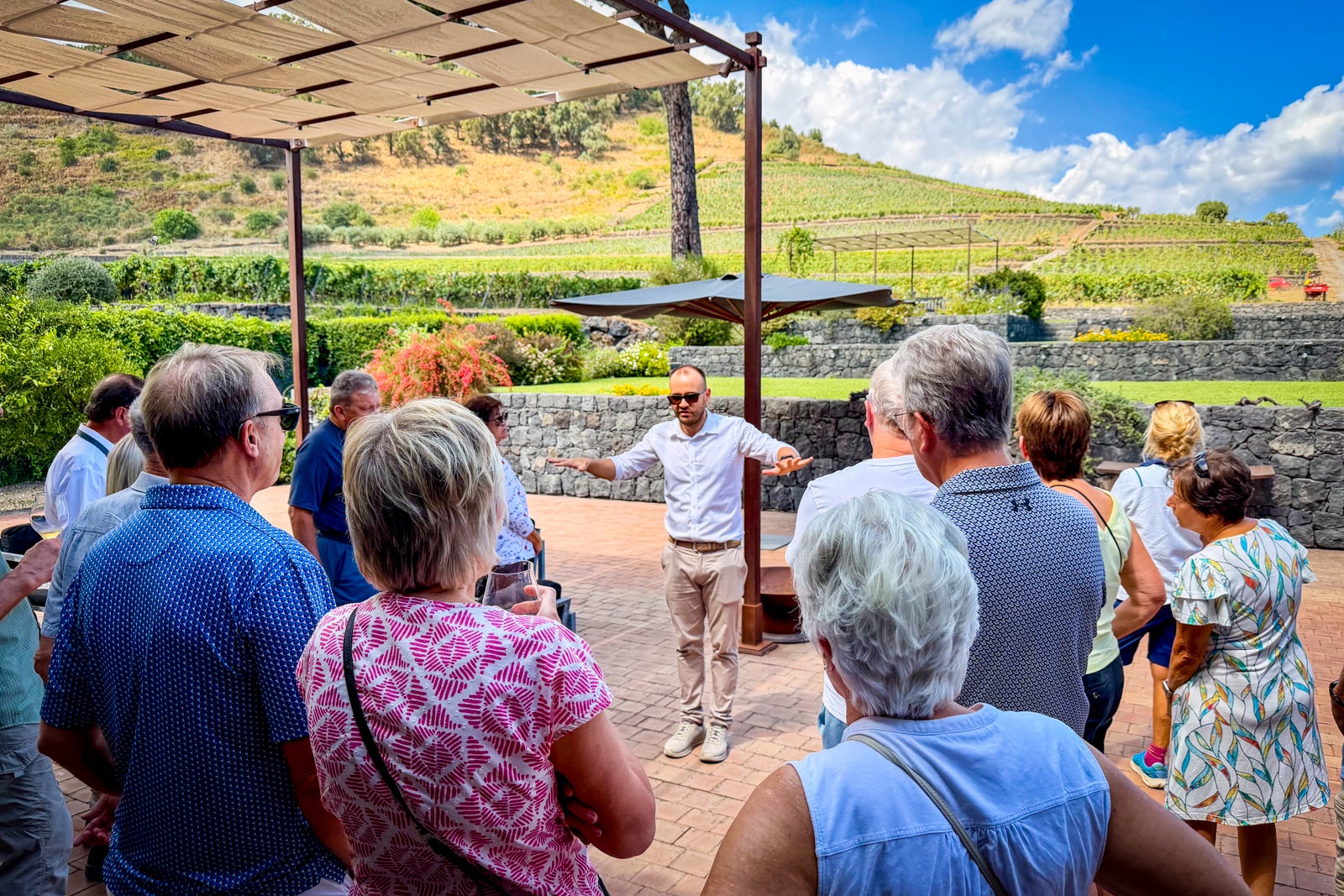
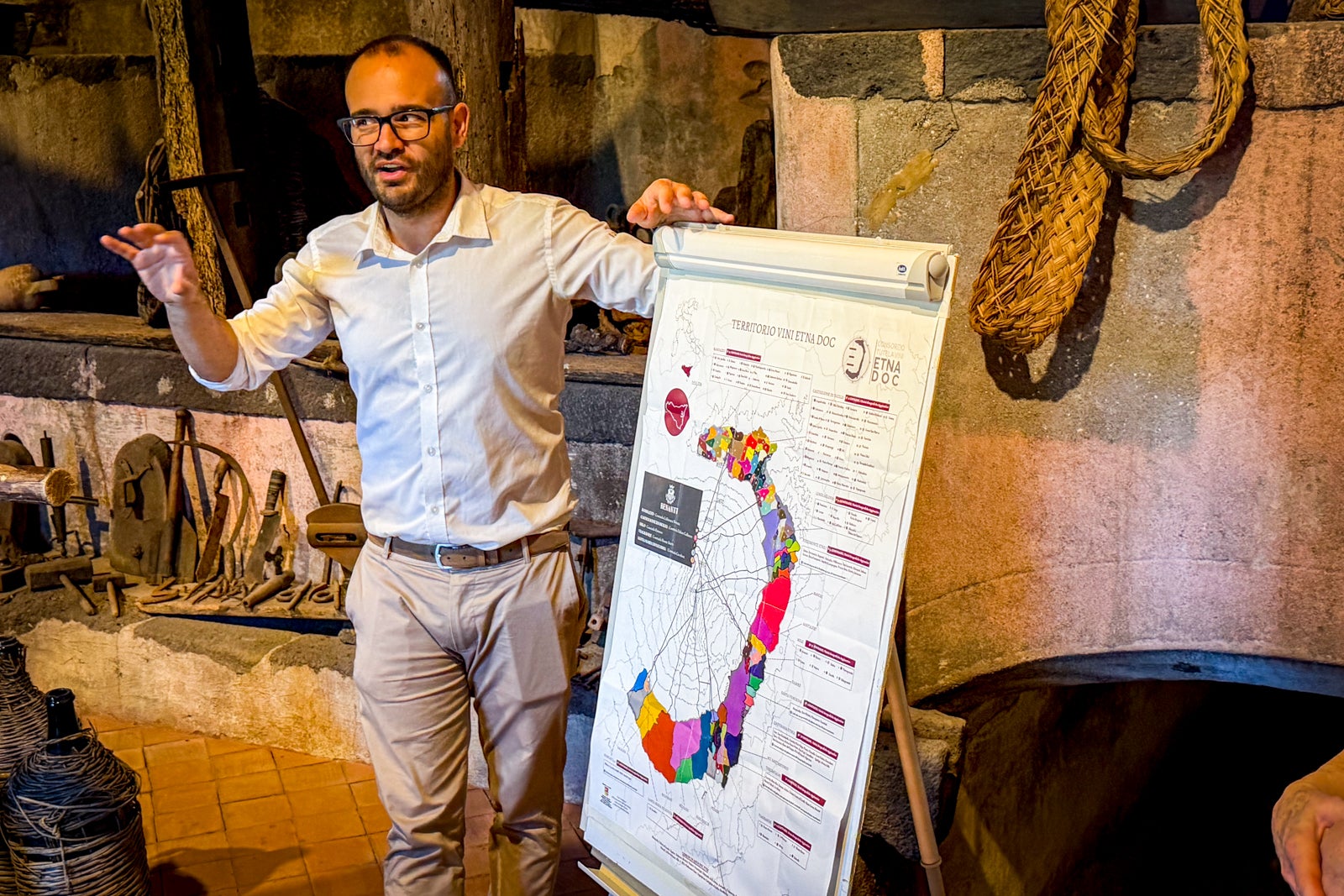
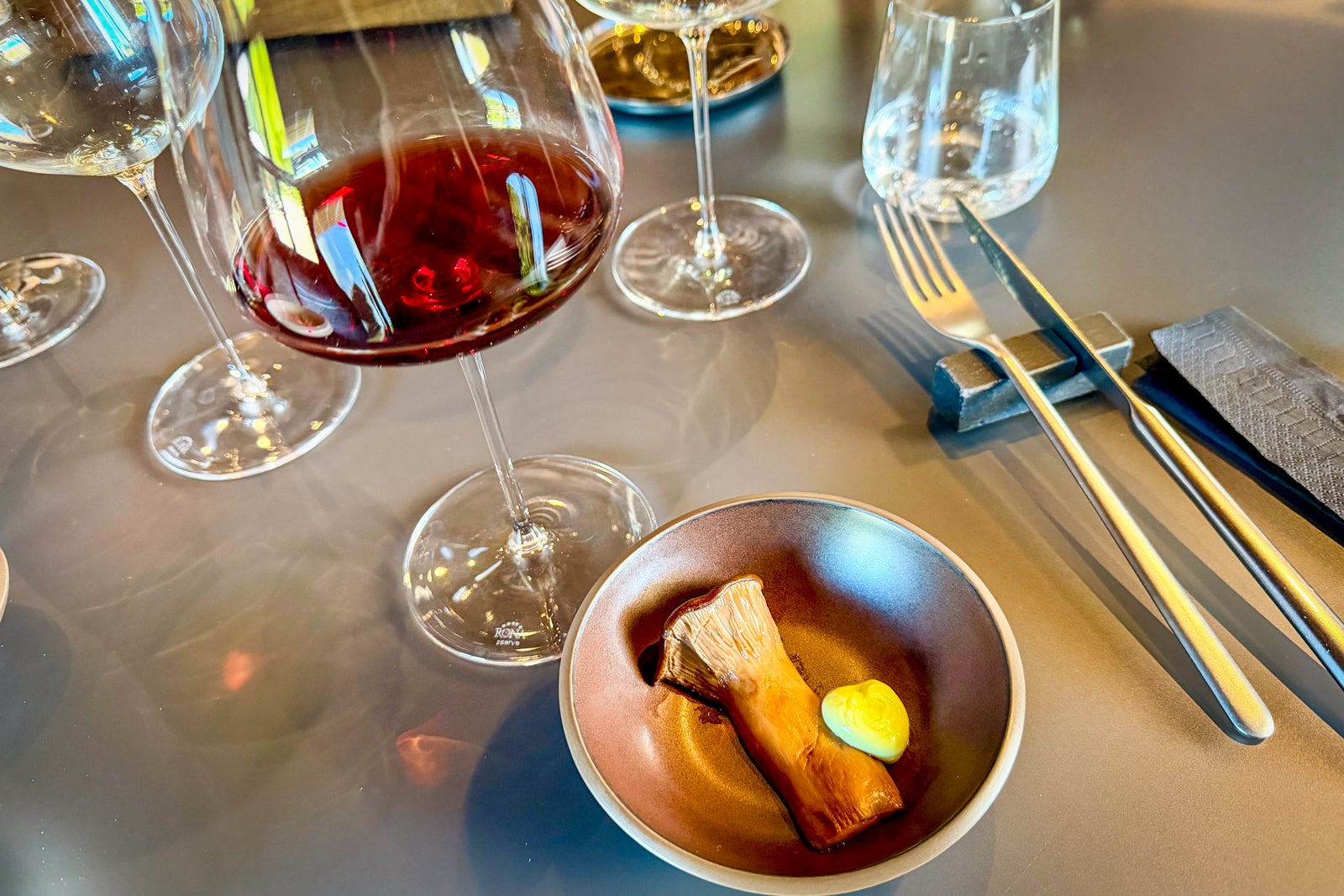
And we didn’t stay too long. Heading back down and around to the mountain’s southeastern slope, we continued our Mount Etna touring with a visit to one of the best-known wineries in the area, the Benanti Winery, for a tour and lovely sit-down wine and food tasting. Winemaking, as we learned, is a big thing around Mount Etna.
1 of 3
2 of 3
3 of 3
The latter is another element of the Ponant Explorations and Smithsonian Journey cruises: incorporating the local sights, sounds and tastes into the tours in every port.
Intimate, luxurious small-ship cruising
In addition to offering many learning opportunities, the experience of being on one of Ponant’s sailings with Smithsonian Journeys is luxurious, as mentioned above.
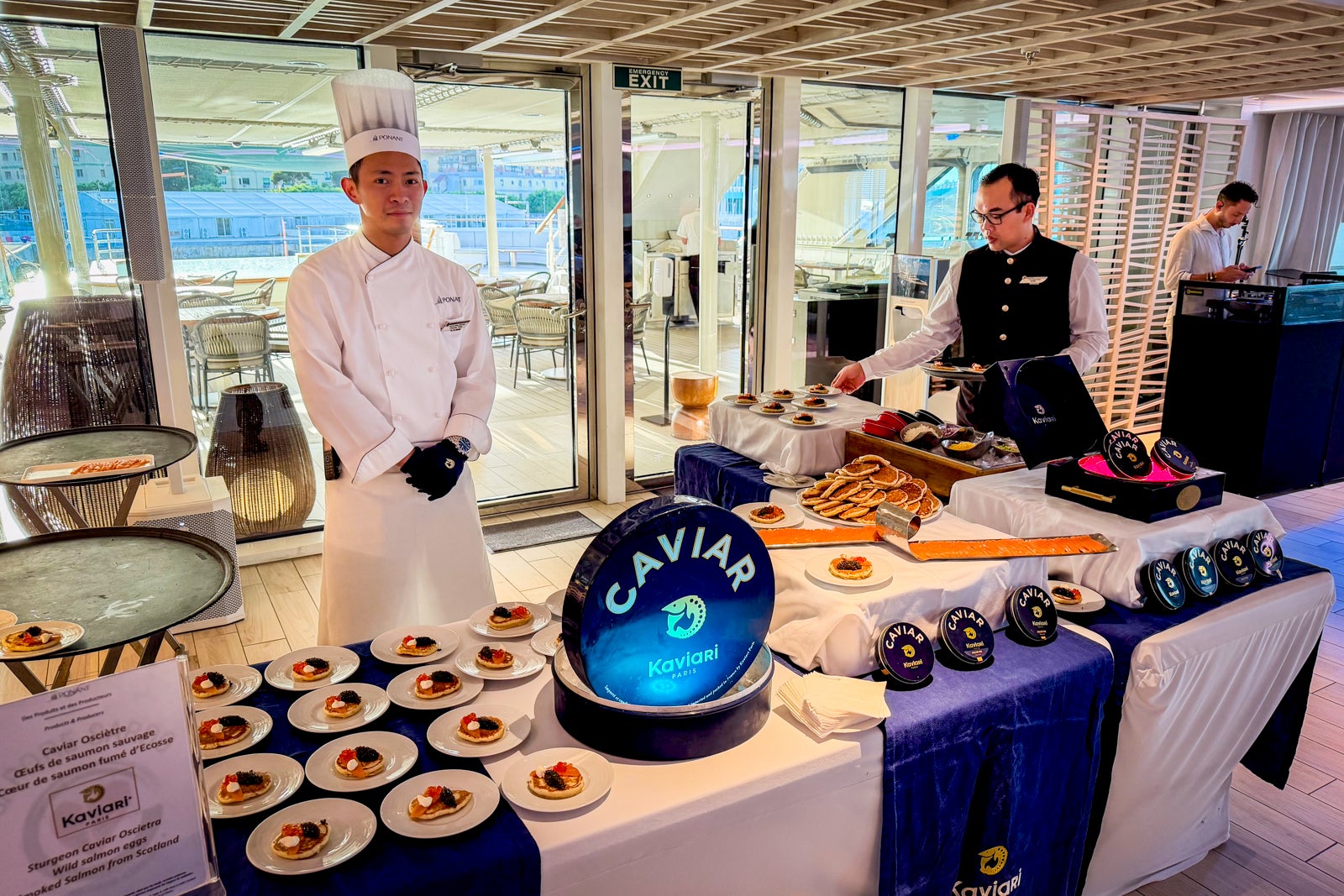
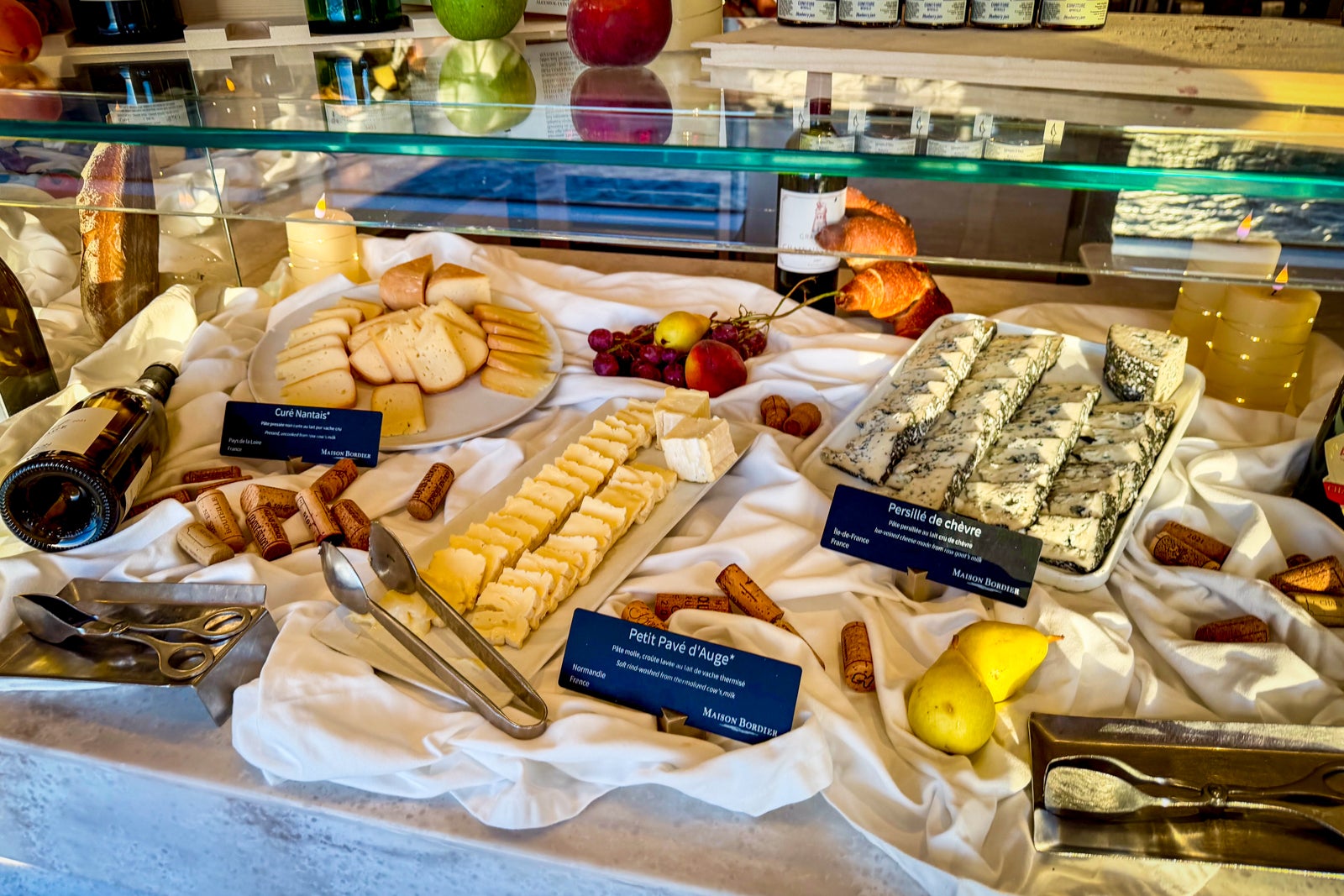
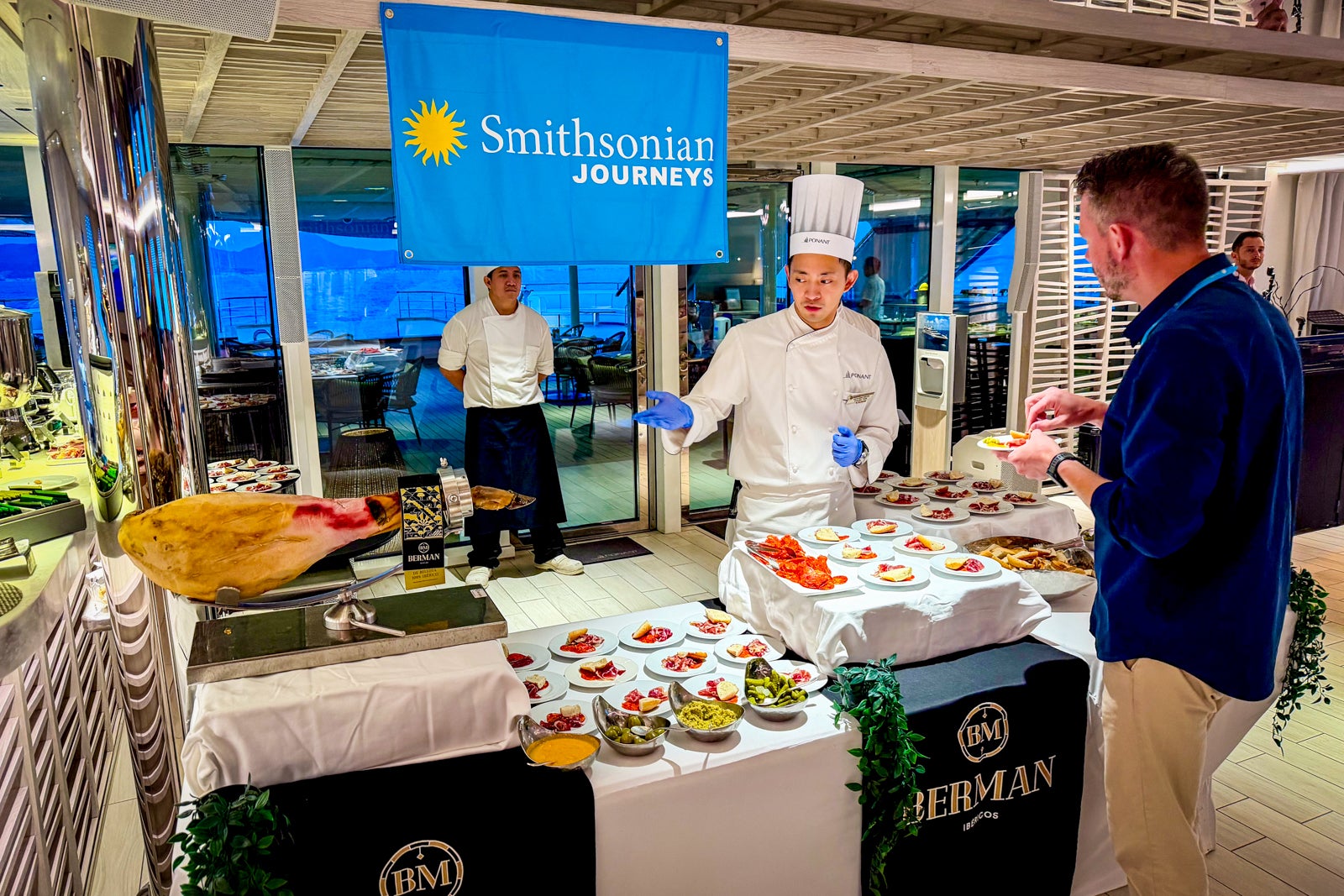
During our sailing, we were treated to such luxury touches on board as a caviar tasting with flowing Champagne in the ship’s main lounge one night before dinner and an elaborate “buffet of cheeses” — all gourmet — another night in the main restaurant.
1 of 3
2 of 3
3 of 3
Headquartered in France, Ponant is an upscale cruise brand known for its high-end French hospitality and, in particular, its small, almost yacht-like vessels that offer an intimate, boutique hotel-like experience at sea.
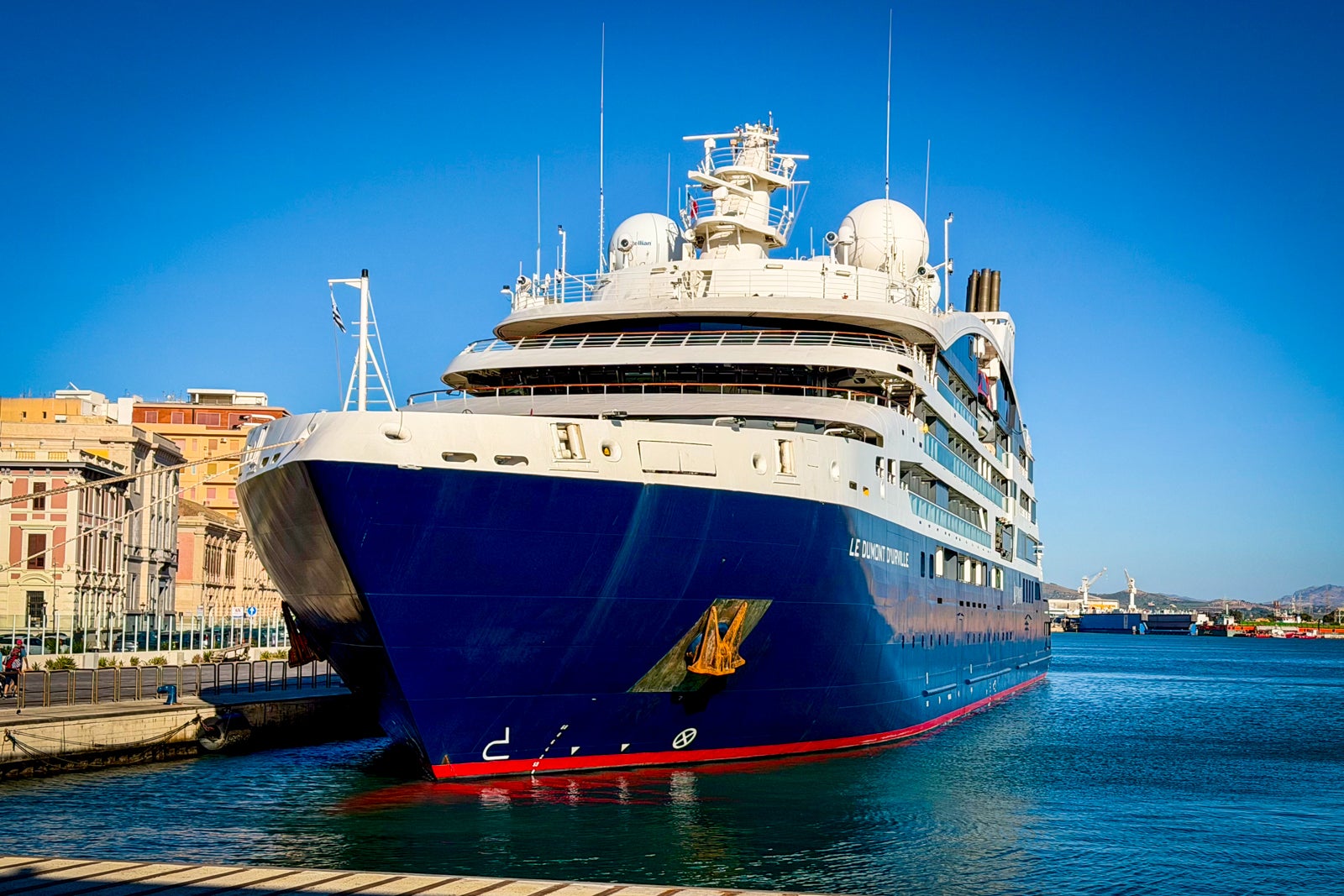
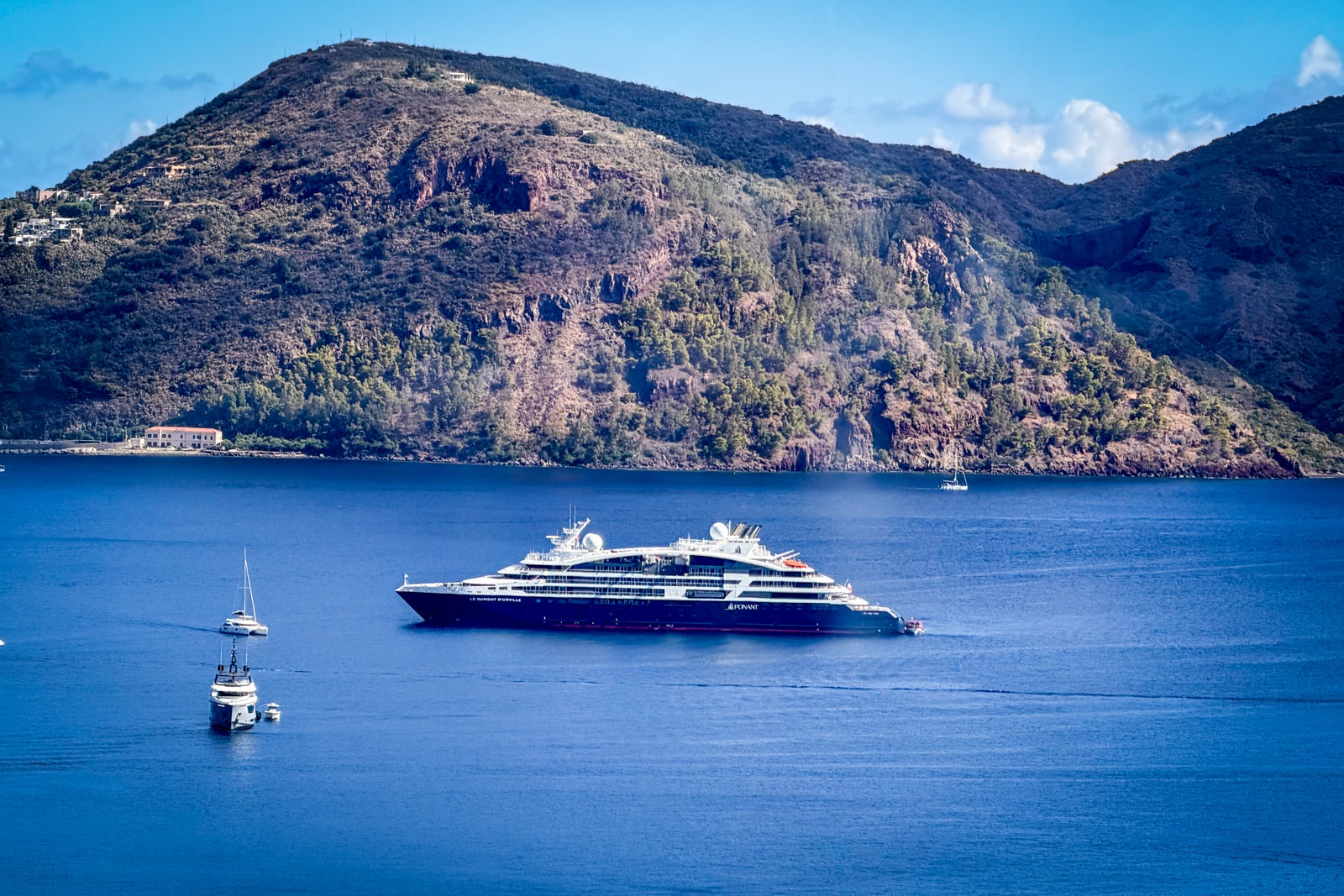
With just 92 cabins, Le Dumont d’Urville is typical of Ponant’s ships — small and intimate but also chic in its design, with a high crew-to-passenger ratio that results in outstanding service.
Indeed, on my sailing, the crew on board outnumbered the passengers, 122 to 117.
Related: The 4 types of Ponant ships, explained
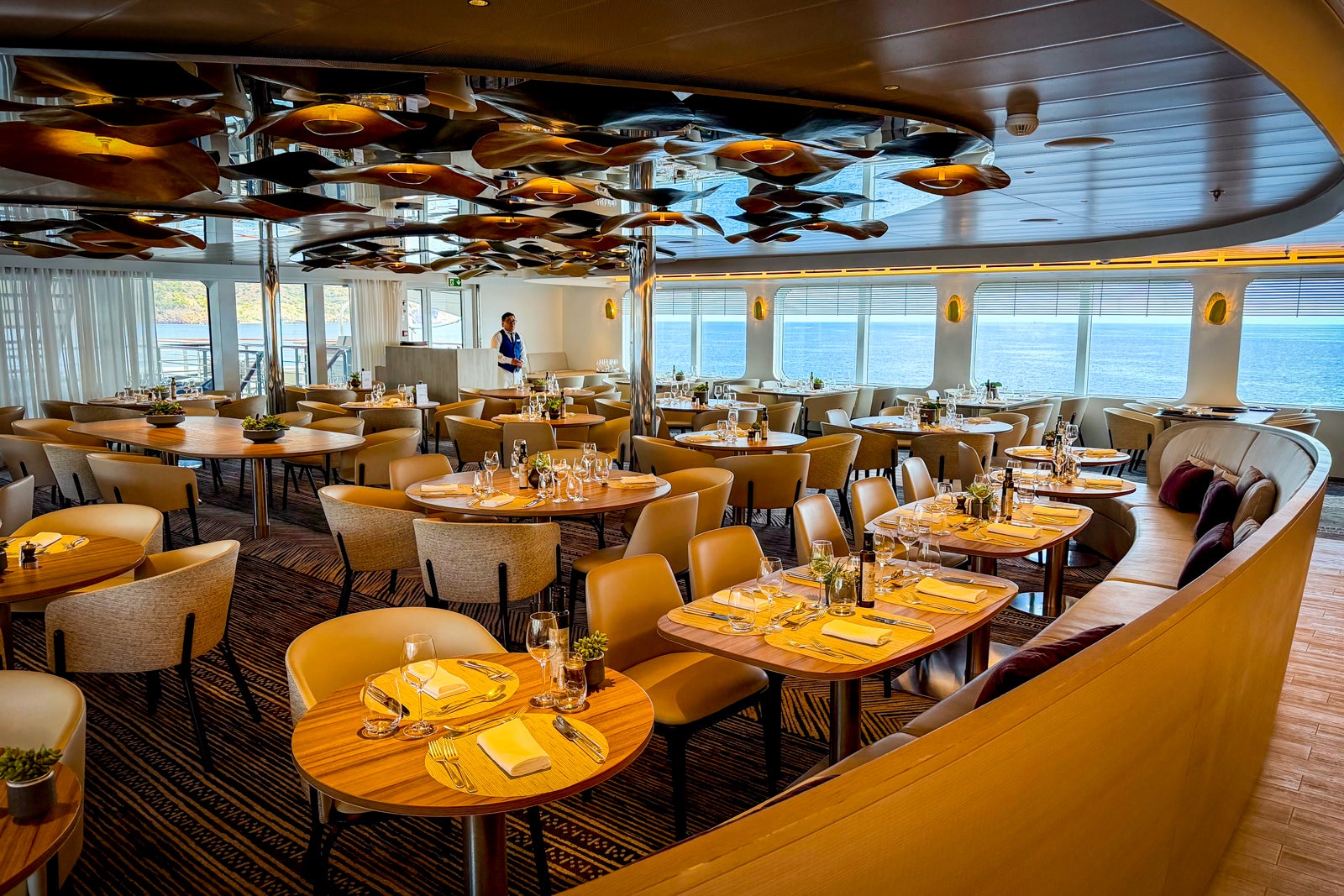
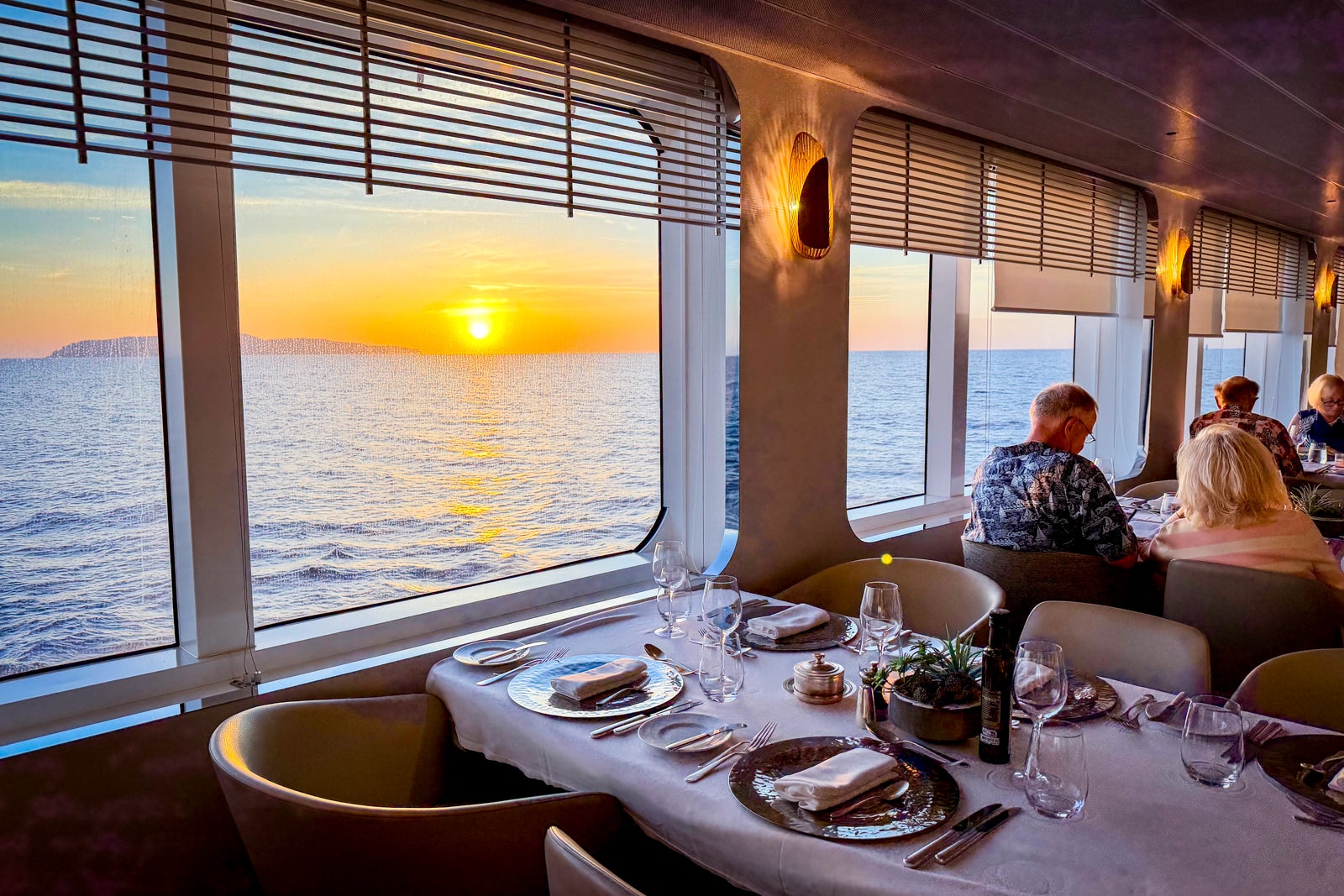
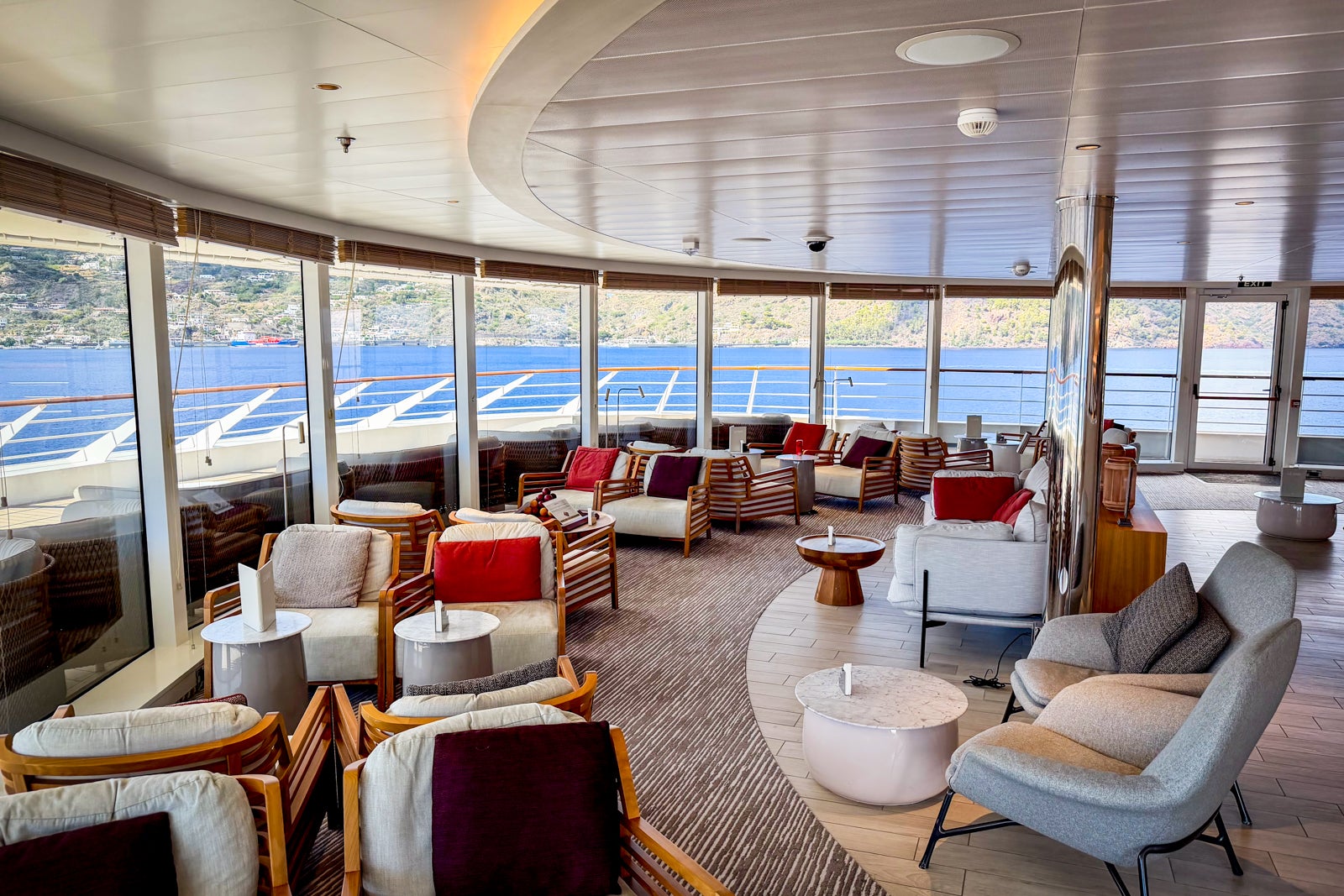
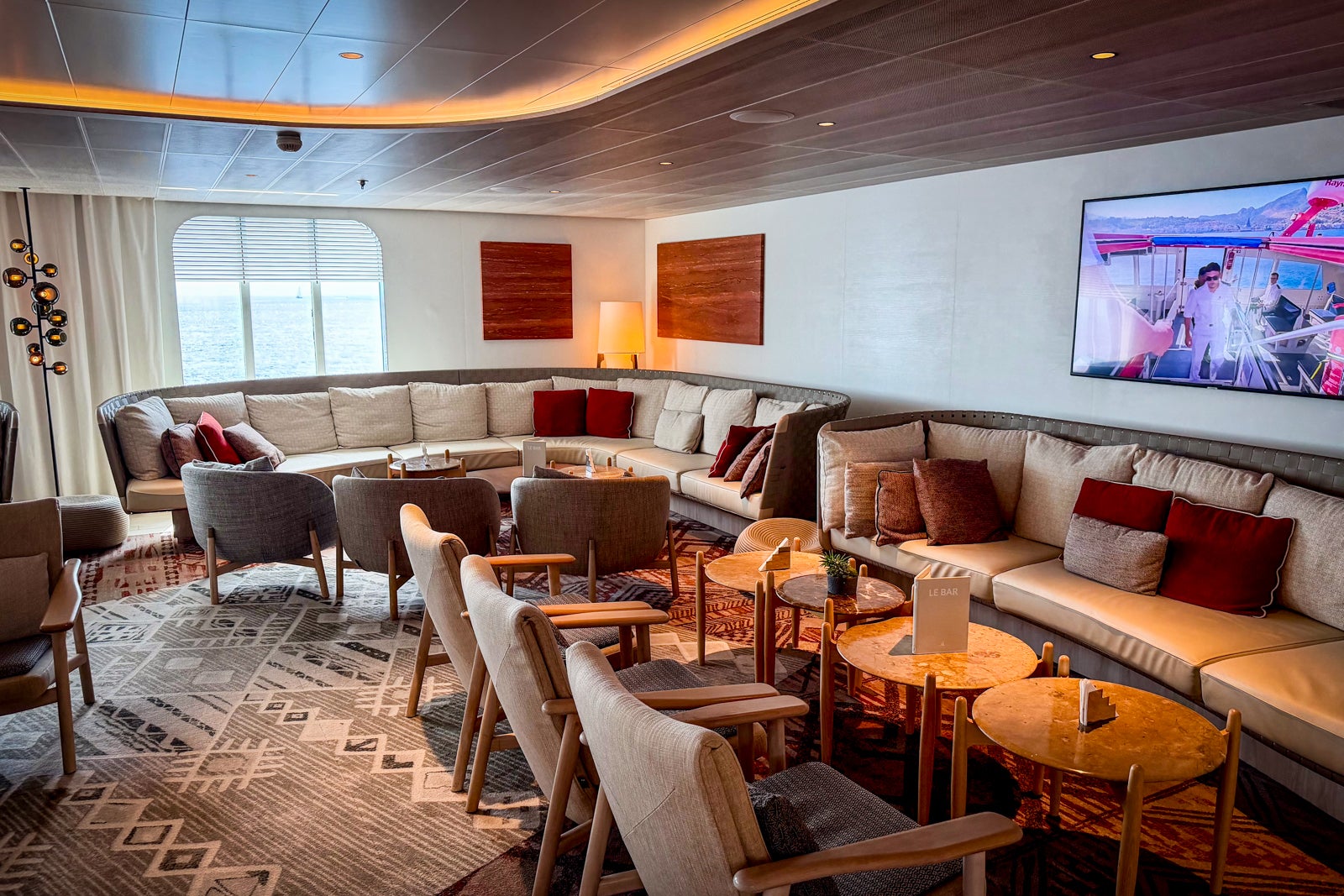
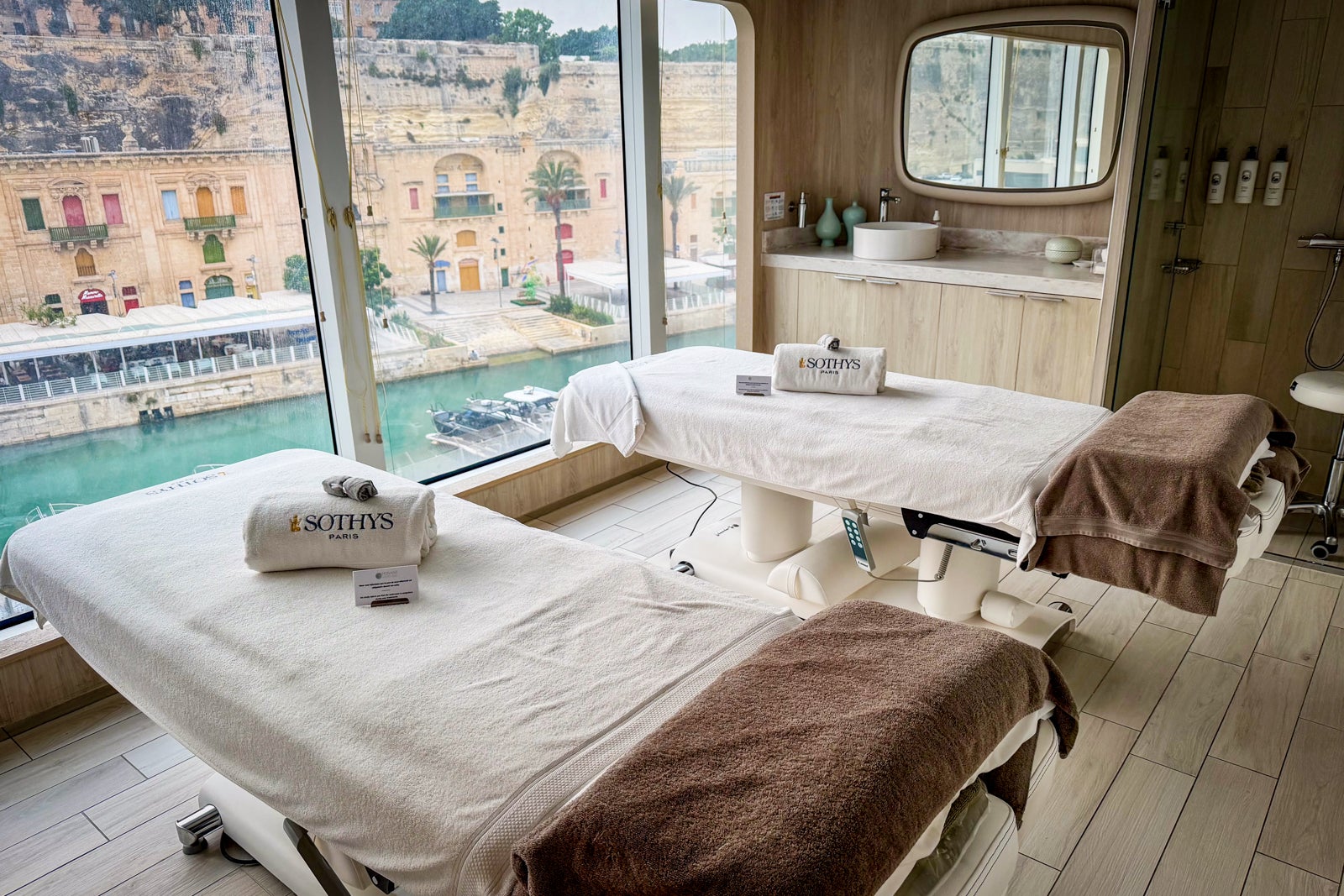
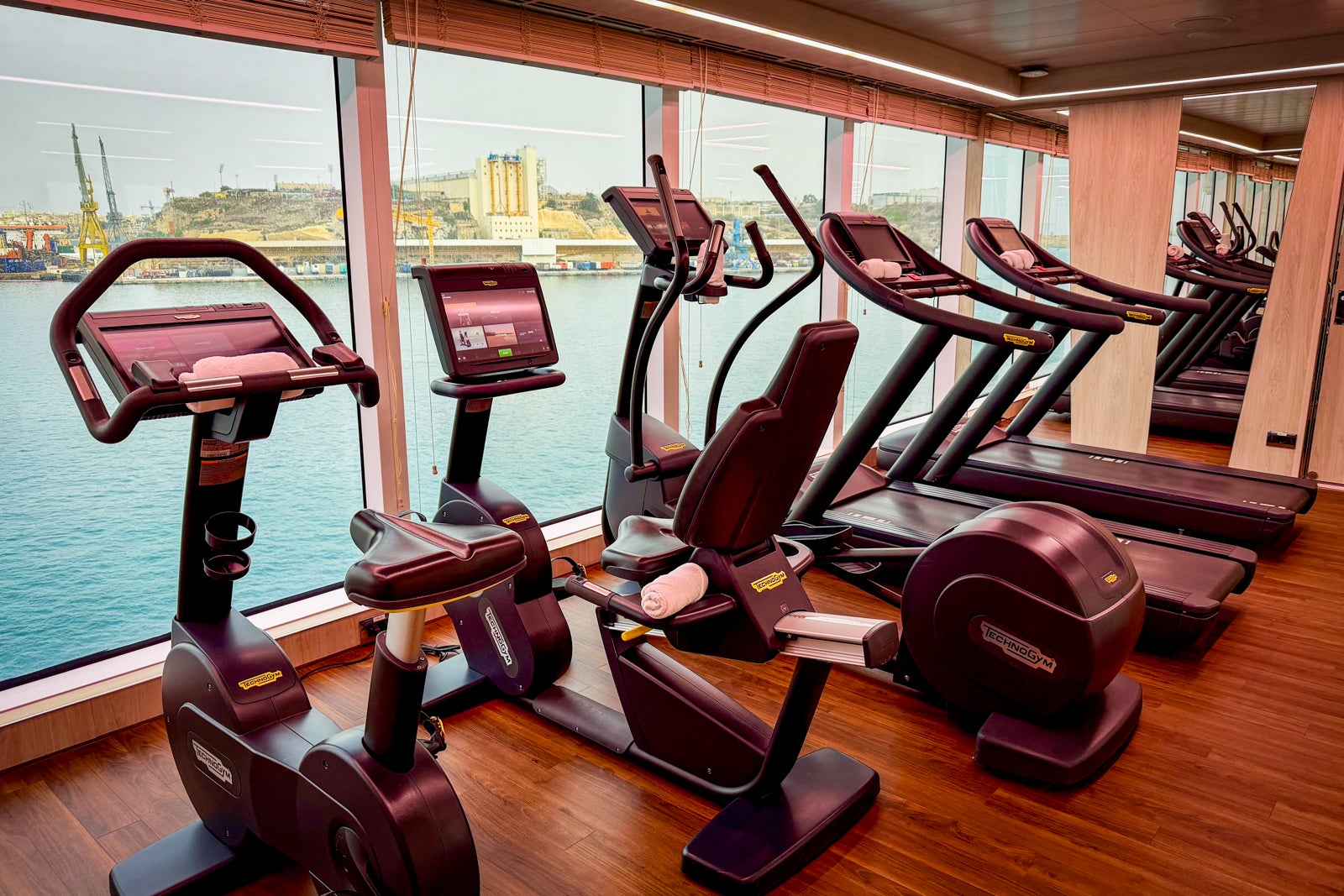
The ship, like most of those in the Ponant fleet used for sailings in alliance with Smithsonian Journeys, offers two restaurants serving quality, often French-influenced cuisine (one of which is a casual outdoor eatery), a cozy lounge and bar where all but top-shelf drinks are included in the fare, and a solid array of wellness venues, including an outdoor infinity pool and a small spa offering a range of pampering treatments.
1 of 6
2 of 6
3 of 6
4 of 6
5 of 6
6 of 6
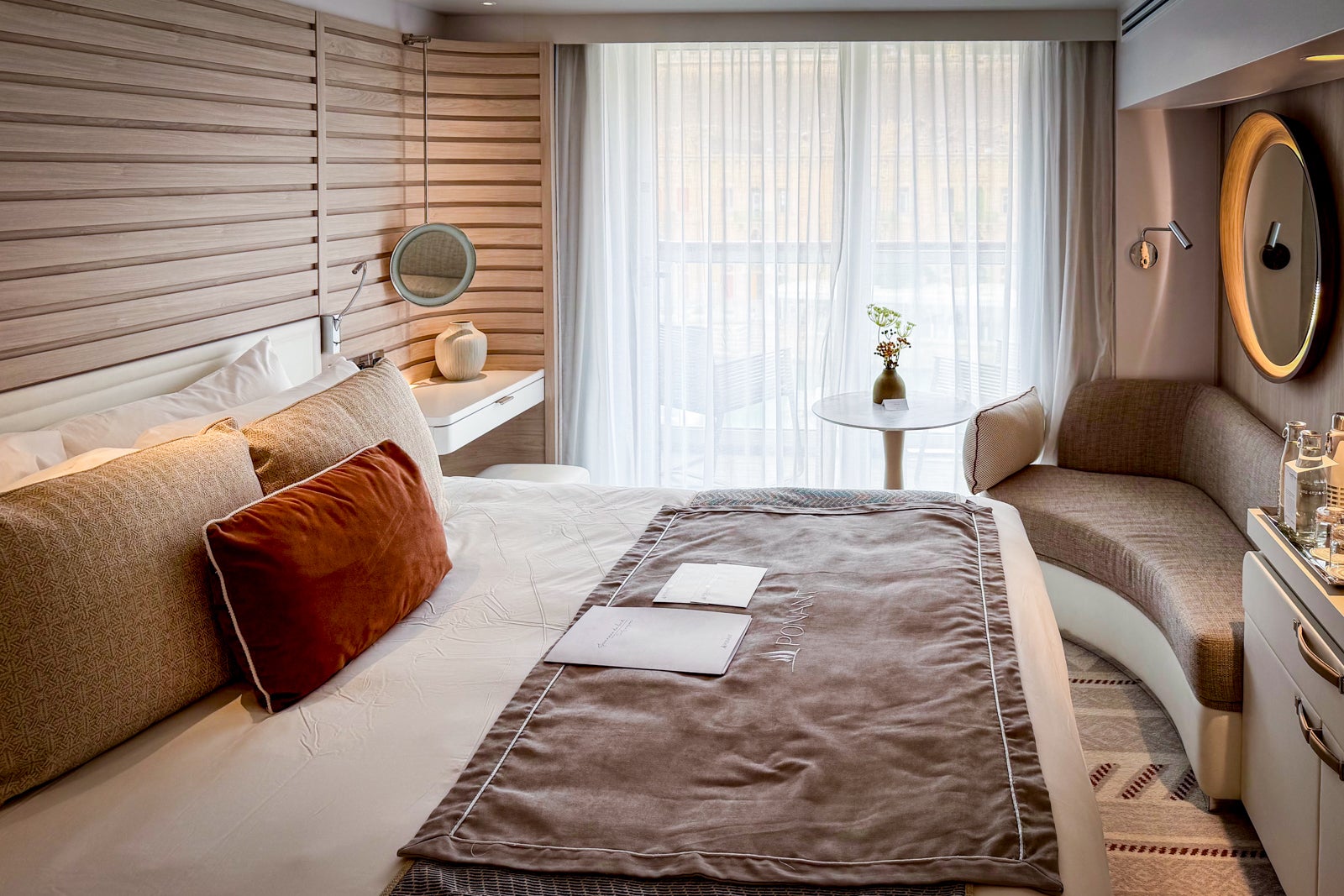
Cabins on the vessel are modern, spacious and comfortable, with a stylish French minimalist design and luxury touches such as premium French linens. Every cabin has a full balcony.
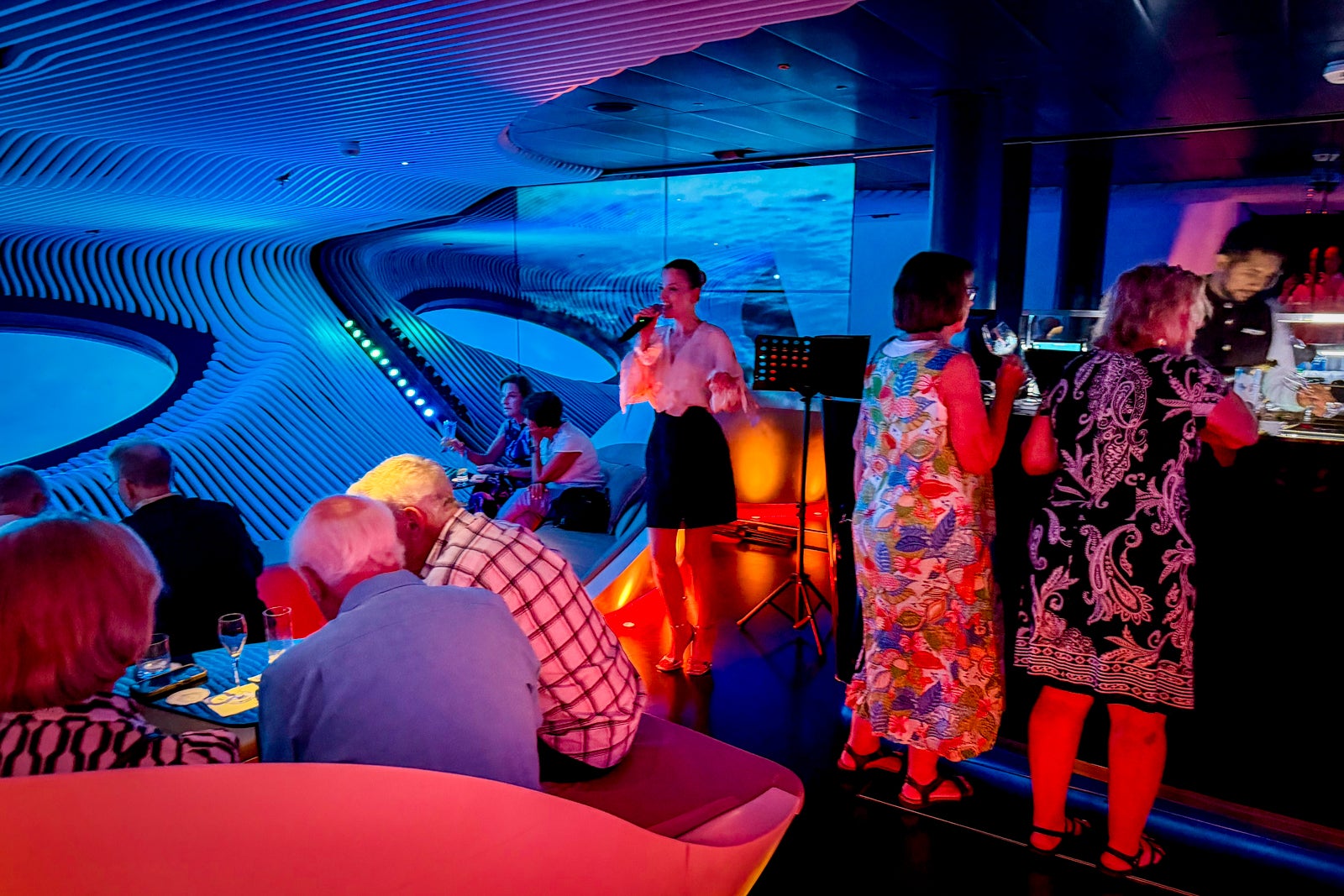
The vessel also has one of the most unusual lounges on the high seas, a below-the-waterline hideaway called the Blue Eye, which boasts two massive underwater windows shaped like whale eyes.
The idea is that, as the ship is moving, you feel like you’re looking out from inside a whale — and I’ll say for the record, you sort of do. Or maybe that’s the wine that they serve down there, talking.
1 of 1
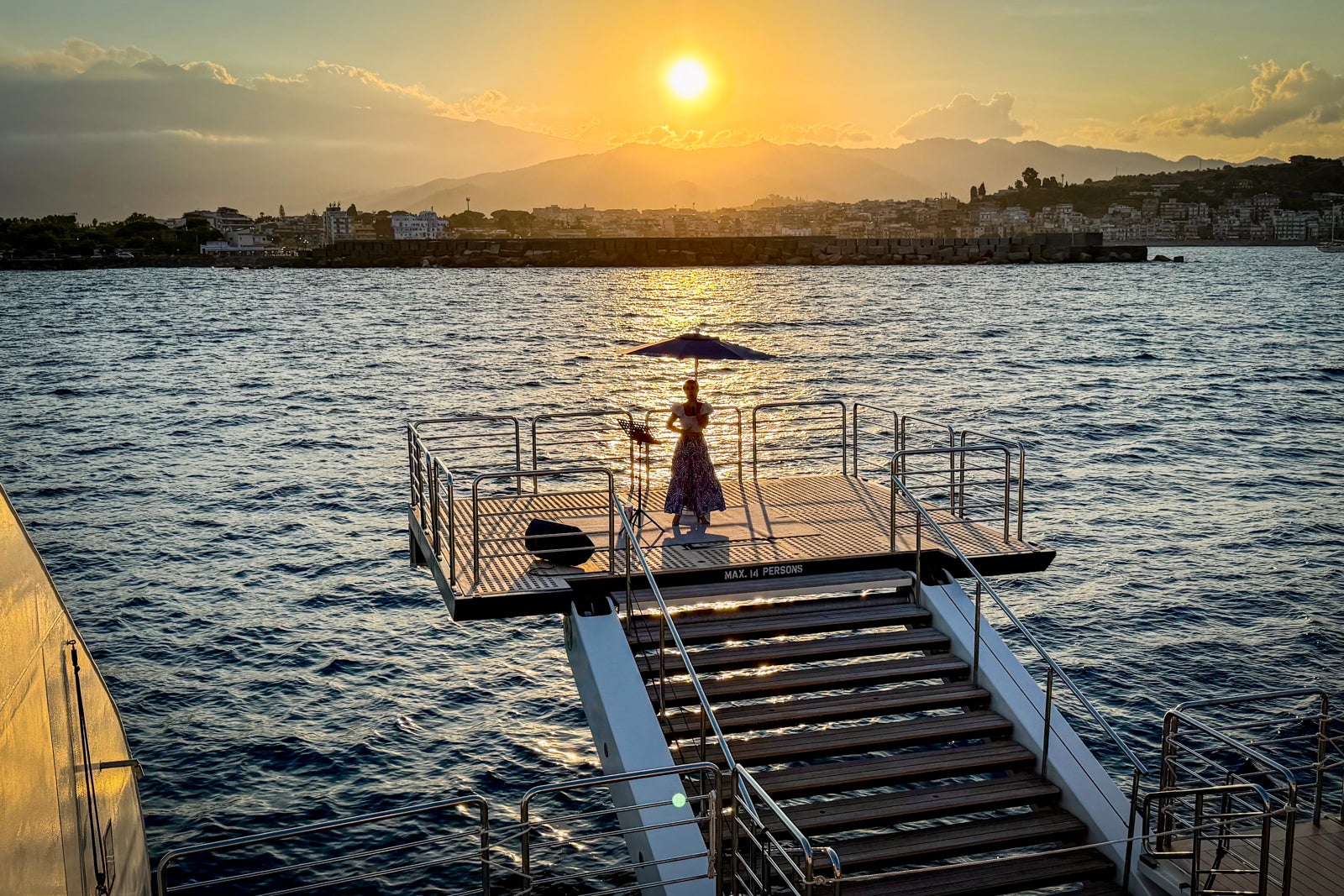
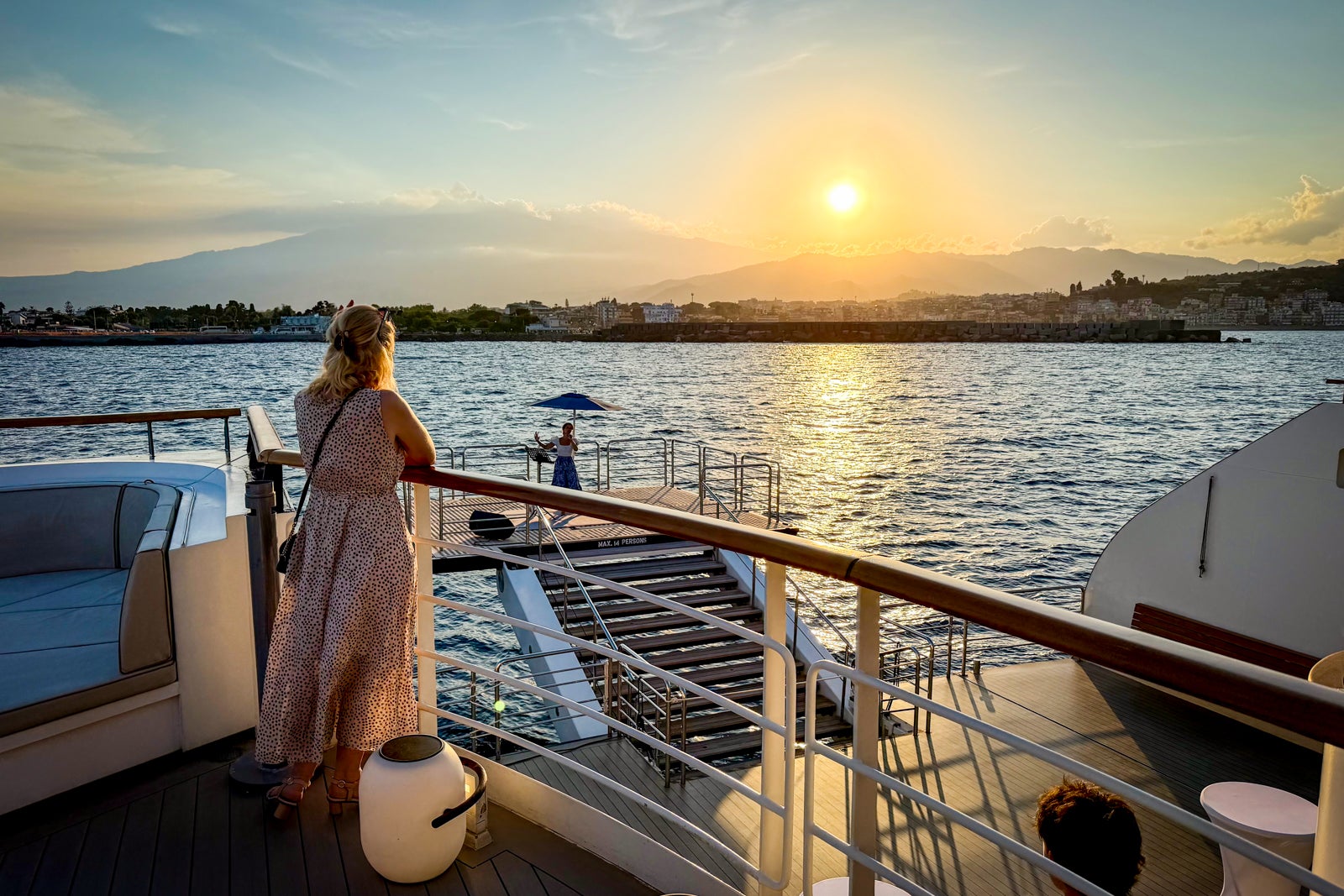
Another amazing space is the fold-out, fold-in marina at the back of the ship, which, on some sailings, is used for watery playtime while the ship is anchored in a bay.
On our sailing, the captain rolled it out to serve as a stage for a truly spectacular surprise predinner outdoor performance by the ship’s lead singer, who serenaded us with Italian opera tunes as we noshed on Mediterranean appetizers and watched the sun set behind Mt. Etna in the distance.
1 of 2
2 of 2
Le Dumont d’Urville is one of six Ponant vessels (known as the Explorers-class vessels) with a similar design, many of which are used for Smithsonian Journeys sailings.
An expanding program
First unveiled in 2022 with just a handful of trips, Ponant’s alliance with Smithsonian Journeys for cobranded voyages has been growing rapidly.
This year’s program included 36 departures across the globe — up roughtly 50% from just two years ago — and a far wider array of itineraries than in the past.
Among notable and popular itineraries unveiled in 2026 was a seven-night “Panama and Costa Rica by Sea: The Natural Wonders of Central America” routing that included a visit to the Smithsonian Tropical Research Institute’s open-air Punta Culebra Nature Center.
1 of 3
2 of 3
3 of 3
Other returning favorites were eight-night voyages in the Great Lakes, seven-night Greek islands trips and a 10-night sailing to Antarctica that was accompanied by renowned polar explorer Ann Bancroft, the first woman to cross the ice to both the North and South Poles.
New routes for 2027 include a 10-night Sea of Cortés expedition out of Cabo San Lucas, Mexico, that will lean heavily into marine biology and conservation.
Unlike standard Ponant sailings, which are bilingual with announcements in both French and English, and often draw a large number of French passengers, sailings in alliance with Smithsonian Journeys are aimed at English speakers with only English spoken on board and draw mostly Americans.
As noted above, these Americans (on my sailing, there were also a handful of Brits, a New Zealander couple and one passenger from Belgium) are mostly retirees — often people in their 60s, 70s and 80s.
In addition to the expert speakers who accompany every sailing, the ships also sail with two dedicated Ponant travel directors who ensure all aspects of the Ponant and Smithsonian Journeys program run seamlessly.
Related: The 5 best destinations you can visit on a Ponant ship
Bottom Line
Ponant and Smithsonian Journeys offer immersive, educational cruise itineraries focused on history, culture and natural wonders, making them a wonderful option for intellectually curious travelers who want to learn while exploring the world.
Drawing mostly retirees, the sailings notably feature Smithsonian Journeys expert lecturers from academia who teach passengers about what they’re seeing, along with highly curated tours with local guides to offer the most in-depth experience.
Notably, complimentary shore excursion options are included in the fare, and the onboard experience is high-end, as is typical for Ponant, a specialist in upscale, small-ship voyages. Passengers can expect an intimate, small-ship experience with attentive service, gourmet dining and stylish, spacious cabins.
Planning a cruise? Start with these stories: