dailynewsnblog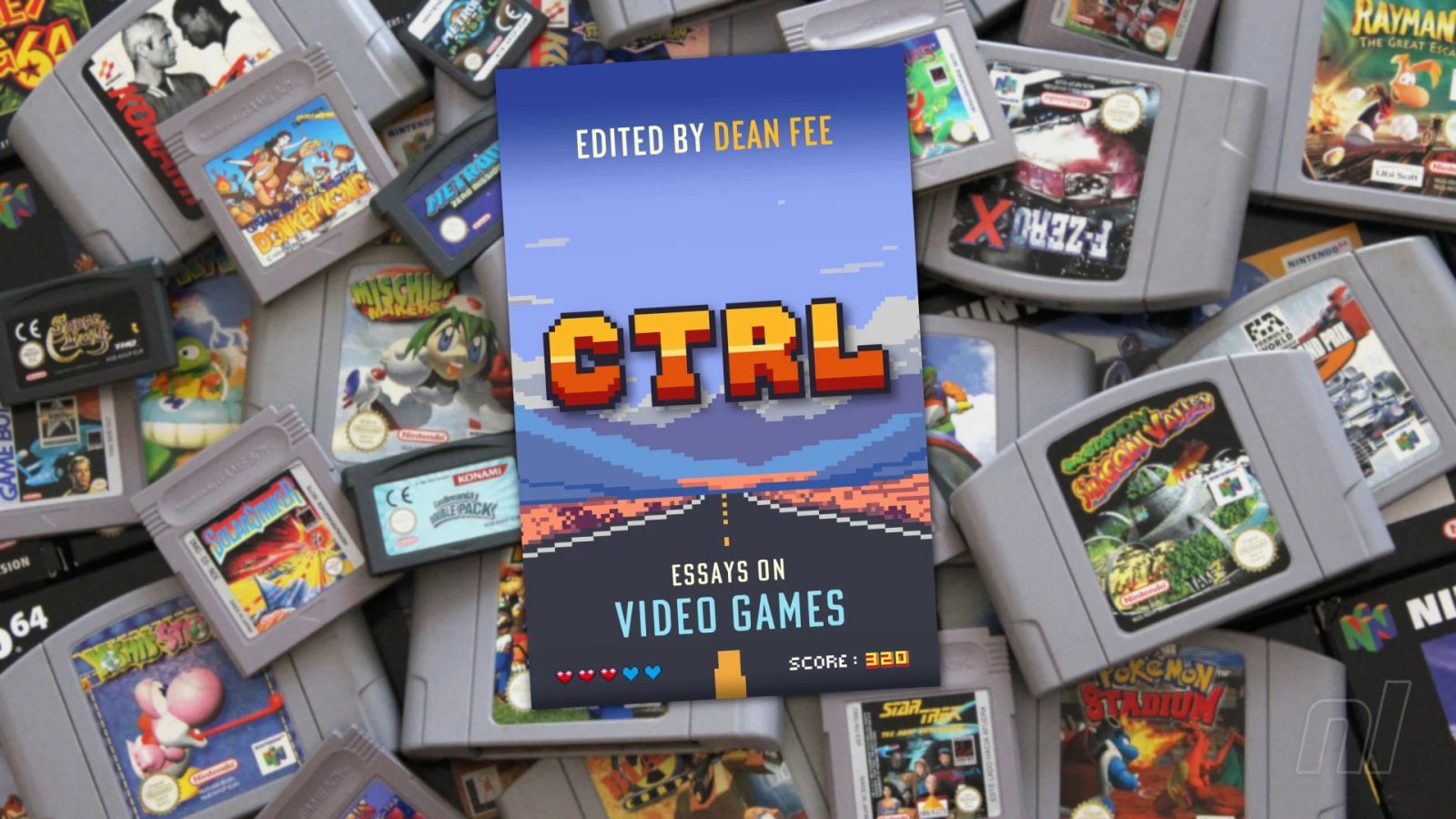

CTRL: Essays on Video Games is an anthology examining the cultural impact and effects of gaming through deeply personal reflections. Edited by Dean Fee, it’s a brilliantly varied collection filled with memories and illuminating accounts that run the emotional gamut. Lilliput Press kindly sent me an early copy and I finally managed to catch up with it on a recent break, devouring the book in a couple of sessions. For anyone who enjoys entertaining, brutally honest writing, it comes highly recommended.
Fee collects essays from 14 writers, including novelists, poets, and game designers. Some pieces focus on a single title, while others touch on multiple games and moments. Contributors include John Patrick McHugh, Róisín Kiberd, Brenda Romero, Anna Loughran, Rob Doyle, and Stephen Sexton, all exploring the positive — and negative — effects games can have.
Setting the book’s frank and self-examining tone from the beginning, McHugh’s schoolboy obsession with Final Fantasy IX immediately strikes a chord. Not just through his description of hearing the game’s melodies in bed, his “head fried” after hours of trance-like consumption, but with confessional memories of awkward adolescence and occasional cruelty that elevate things to a level that much writing about games hopes to reach but rarely hits.

McHugh frames his childhood in County Cork through an Irish lens which characterises many of the essays and flows through the anthology. Elsewhere, Rob Doyle takes us on a life trip from Jet Set Willy to Superhot. Úna-Minh Kavanagh gives us a glimpse behind the curtain as a game producer (after breaking into the industry with an Irish-language localisation for Among Us), examining the incredible upheaval and uncertainty of the industry over the past half-decade or more. Donal Fullam chronicles the development and ethos behind 2024’s Mega Dreoilín, a game that brilliantly fuses the mechanics and aesthetics of 16-bit Mega Drive classics with a housing crisis narrative (check it out on itch.io).
There’s no time wasted here ‘defending’ video games or entreating art-world gatekeepers for a seat at the table, and it’s one of CTRL’s greatest strengths. Games, as with all art, are part of our daily joys and struggles, and they’re presented here with the appropriate cultural importance and mundanity of any ubiquitous art form. Encompassing both “the good and the bad” is a stated aim in the blurb, and while veins of classic gaming nostalgia occasionally appear, that’s never the point of a piece. There’s no ‘Oh, remember the music in that bit? So good!’ here.
Brenda Romero takes us on a tour of her childhood home in ‘Chasing Lilacs’, chronicling significant life events in a beautiful piece that dovetails her memories and game design experience (it’s built around a floor plan of the house) into an account of her life long before she moved to Galway. Jon Dunthorne recalls his time writing a complex branching narrative for a project that never saw the light of day – and for which he’s prevented from discussing with any specificity, not that the essay suffers for it.
This isn’t just dry historical analysis or “Game X was a classic because it introduced revolutionary mechanic Y”. These pieces consistently go deeper, exploring how the marriage of game design and the context of playing forges lifelong joy- and sorrow-ful associations, social and personal. That context and ingrained nostalgia are key but, again, it’s not wistfulness for the sake of it. “In writing about this video game,” says McHugh, “I am writing about me as a boy playing this video game.”
Some authors look back through the prism of a single game: Lisa McInerney’s discusses of Fallout: New Vegas’ Dead Money expansion; Chandrika Narayanan-Mohan finds parallels with Wanderstop protagonist Alta; Anna Loughran considers identity and memory during a playthrough of Aspyr’s Tomb Raider remaster; Roísín Kiberd delves into DOOM’s hellish depths; and Darragh McCausland’s painfully personal identification with Disco Elysium’s Harry Du Bois is a particular highlight.
You’ll almost certainly see yourself reflected in any number of these pieces, and beyond conjuring recollections of the games that affected you decades ago, you’ll finish each essay desperate to dive into every game mentioned, passion kindled by the writing to (re)explore them firsthand.
Yes, CTRL reminisces about the emotions of poring through manuals and guidebooks, sponging up anything related to the game in your time away from it. But it goes much deeper, too, poking at the line between unbridled enthusiasm and destructive obsession that any intoxicating creative work can elicit, acknowledging and celebrating the artistry of the medium and its effects on us all.
Thanks to Liam at Lilliput for sending this over. CTRL: Essays on Video Games is available from The Lilliput Press and various European booksellers. It will be published in the US in August.
Please note that some external links on this page are affiliate links, which means if you click them and make a purchase we may receive a small percentage of the sale. Please read our FTC Disclosure for more information.