dailynewsnblog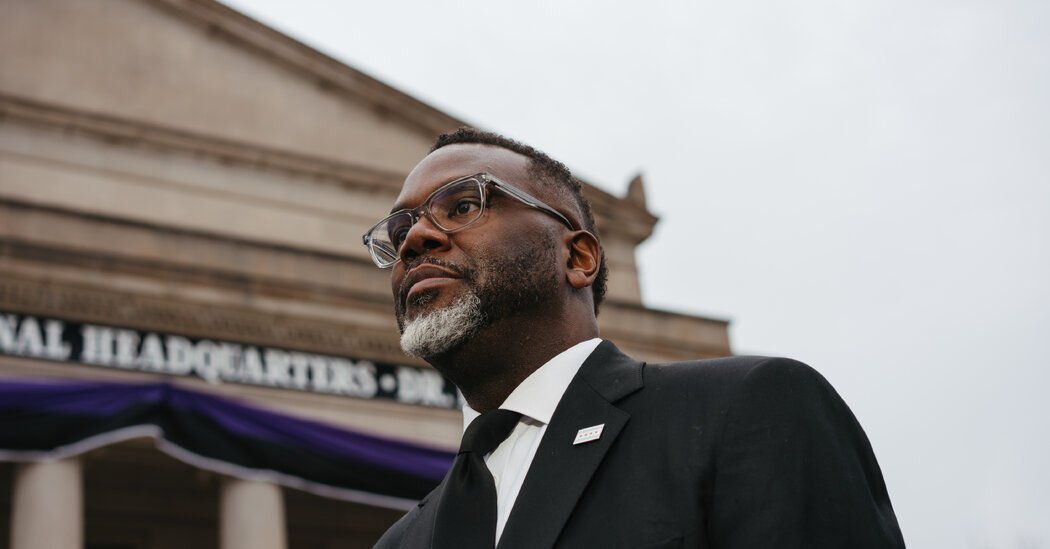
Well-known Democrats are lining up to run for mayor of Chicago. There is Mike Quigley, the North Side congressman. There is Susana Mendoza, the state comptroller. And as of Sunday, there is Alexi Giannoulias, the Illinois secretary of state, who entered the race with a large trove of campaign funds.
Yet the growing field, which includes several other candidates with varying levels of fame and funding, remains in limbo. Mayor Brandon Johnson, whose approval ratings have plummeted, has not said whether he plans to seek a second term. And until he does, the contours of the election in February will not be clear.
Mr. Johnson’s single term leading America’s third-largest city has been defined by clashes with the Trump administration, steep declines in violent crime and struggles to get his progressive agenda through the City Council.
He shocked the city’s establishment in 2023 by rising from relative obscurity to the mayor’s office with the backing of the powerful Chicago Teachers Union. A progressive Democrat, Mr. Johnson has called for increasing taxes on large corporations and on high-value property sales, as well as for exploring reparations and a city-owned grocery store.
But Mr. Johnson’s support has eroded, and a re-election campaign would be difficult. At a news conference last week, he aggressively defended his record while sounding uncertain about his future.
“I just want to hold onto the city of Chicago a little bit longer, just so that when the politics come, we would have fully embraced the moment that we’re in,” the mayor told reporters. “Think about it: There are fewer homicides than we’ve experienced in 60 years. I want to hold onto that.”
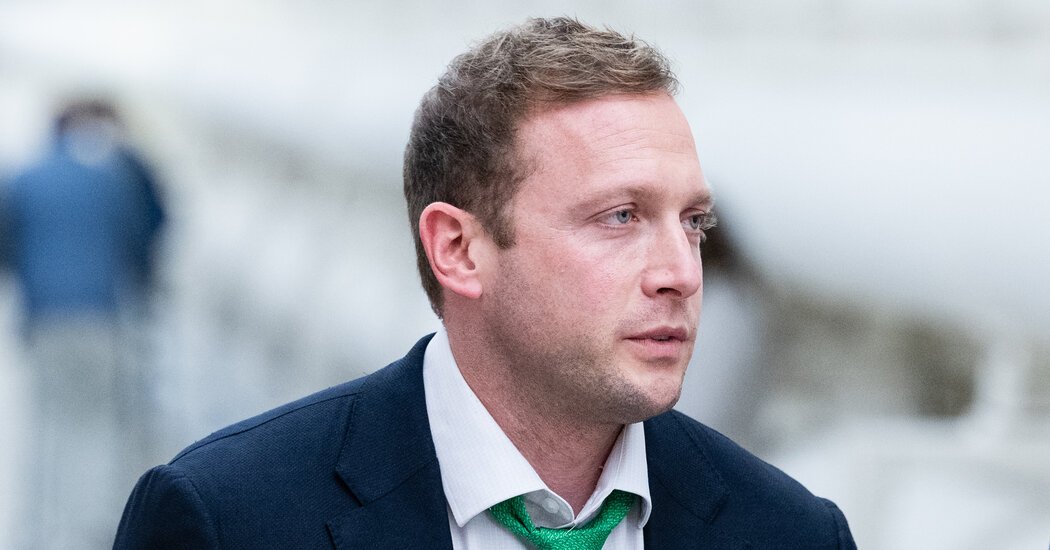
His prospective successors are not waiting. Mr. Giannoulias, who announced his long-rumored campaign in a video message on Sunday, pitched himself as someone who could restore confidence in local government.
“I am maniacally bullish about Chicago’s future, but we need to demand better from City Hall,” he said in the announcement video, adding that “I want my four young daughters and everyone else’s kids to grow up in a great city that isn’t constantly struggling under its own inaction.”
Other candidates are also introducing themselves to voters, staking out their lanes in a crowded field and gathering the petition signatures that are due this fall to qualify for the ballot.
Ms. Mendoza, who is running to the right of Mr. Johnson, described herself in an interview as “pro-law-and-order,” while also supportive of gay rights and abortion rights. She said the city needed to pivot away from a “blizzard of incompetence” and aggressively tackle long-festering fiscal problems, even if doing so required sacrifices.
“We need to look at how we go about saving our pension system,” Ms. Mendoza said, adding: “That’s going to require honest and difficult conversations with people who have never been accustomed to hearing ‘no.’”
Mr. Johnson’s political vulnerabilities are clear. He has collided repeatedly with the limits of Chicago’s woeful finances and with a bloc of City Council members that has rejected many of his spending proposals. In 2024, he failed to convince voters to increase a real-estate tax to fund homelessness programs.
A recent poll from the University of Chicago’s Mansueto Institute for Urban Innovation found that 23 percent of Chicagoans approved of the mayor’s job performance and that 14 percent wanted him to run for re-election, a precarious starting point for any campaign. Mr. Johnson’s campaign fund-raising has also been limited, with about $630,000 available as of earlier this summer. Mr. Giannoulias, who is also seeking re-election as secretary of state in November, reported around $21.8 million in his campaign account.
Still, the incumbency is a powerful tool, and Mr. Johnson, a former teacher and union organizer, has accomplishments he could run on.
Mr. Johnson led Chicago as the city successfully hosted the Democratic National Convention. He opened mental health clinics. And after inheriting a city where migrants bused north from the border were sleeping on the floors of police stations, his administration eventually restored a sense of order and helped find many of them places to live.
Mr. Johnson’s most significant legacy may be an easing of a murder crisis that has long haunted Chicago and caused damage to the city’s reputation. Homicides have dropped in many major American cities since the pandemic. In Chicago, homicides are down 36 percent from four years ago, according to Police Department data, though the reductions have leveled off in recent months. Shooting incidents have been nearly halved.
Still, violence remains a top issue for voters, especially in neighborhoods far from downtown where gunfire is part of the nighttime soundtrack. Mariela Lopez, a Southwest Side resident, said she did not support Mr. Johnson four years ago and wanted to see more done to improve public safety.
“You hear shootings going on all the time,” said Ms. Lopez, who signed Ms. Mendoza’s nominating petition after listening to the candidate speak at her workplace. “I mean, on paper it looks better, but I don’t feel like it’s safer.”
Byron Sigcho-Lopez, a City Council member who shares some of Mr. Johnson’s policy goals, credited the mayor with making investments in housing and said he believed Mr. Johnson would have a path to re-election. But, he added, Mr. Johnson would have to overcome a fund-raising deficit and rethink his communications strategy.
“I think the mayor can enter the race and know that he will be an option for working people,” said Mr. Sigcho-Lopez, a democratic socialist. “He will be an option for those who are disenfranchised, who are looking to change the city from the years of neoliberalism.”
Mr. Johnson gained national prominence last year when the Trump administration flooded his city with immigration agents and tried to deploy the National Guard on Chicago streets. The mayor defended Chicago’s policy of limiting cooperation with federal officials on immigration enforcement, describing Mr. Trump as a “tyrant.” The president at one point called for Mr. Johnson to be jailed.
The mayor’s response to the immigration enforcement campaign was generally well-received in heavily Democratic Chicago. But Mr. Johnson, a former county commissioner, was already struggling to preserve the political coalition that propelled him into office.
If any candidate receives more than 50 percent of the vote next February, they will clinch the mayor’s office. Otherwise, the top two candidates will advance to a runoff election in April.
Nicholas Sposato, a conservative member of the City Council, described Mr. Johnson as a friend even though they disagree on many policy issues, including policing strategy and the decision to end a contract for gunshot detection technology. On the Northwest Side, which he represents, Mr. Sposato said voters “don’t feel like things are going great.”
Despite their policy differences, Mr. Sposato said he was convinced that the mayor would seek another term, and that he would be formidable.
“I can only tell you one person that’s going to be in a runoff for sure, and that’s Brandon Johnson,” Mr. Sposato said, adding that “I don’t know why he’s being so coy — he’s got his own reasons, I guess — but he’s running again.”
Others are far less convinced that Mr. Johnson is going to get in. And however the field shakes out, Chicagoans have noted, perceived front-runner status at this stage in the race might mean little come next year.
After all, the city’s last two mayoral elections were won by candidates who presented themselves as political outsiders and had not been favored to win.
“The truth about Chicago politics,” said Joanna Klonsky, a longtime political strategist in the city, “is that conventional wisdom is usually useless. Anything can happen.”