dailynewsnblog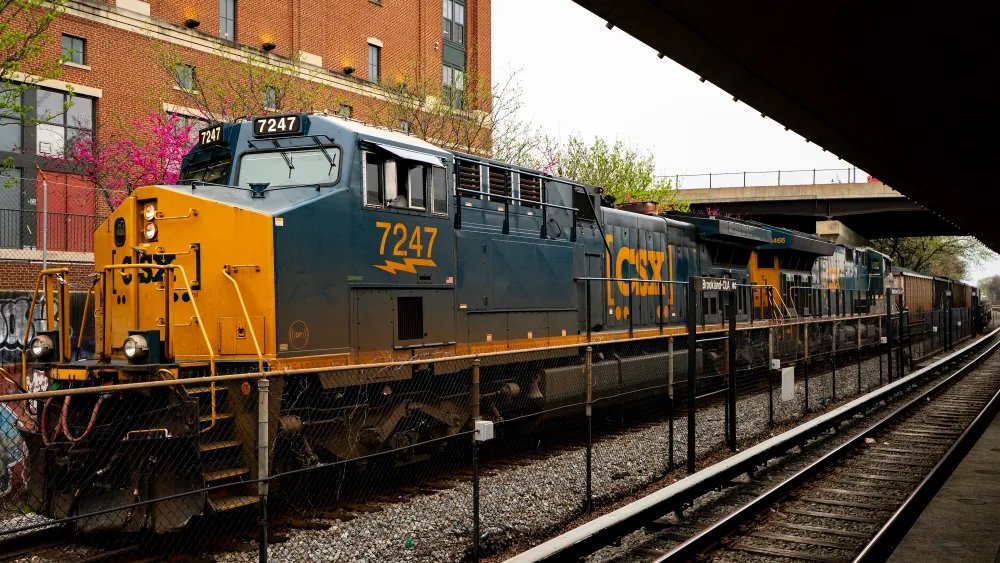
Escalating fuel costs have led CSX to raise its top-line outlook for 2026, with the Class I railroad expecting mid-single-digit revenue growth for the year.
The railroad industry could get a bump in volumes as businesses seek to save on diesel fuel costs, which have significantly increased in the wake of the war in Iran.
With the Strait of Hormuz seeing traffic plummet to a near standstill over the past few months amid concerns about Iranian attacks on ships, crude oil prices remain roughly 40 percent above pre-war levels as of Thursday afternoon. As of Monday, diesel prices nationwide are roughly $5.40 per gallon, up 41.8 percent from $3.81 per gallon on Feb. 23.
“Shippers are looking more to rail conversion as they weigh the impacts of higher fuel and trucking costs,” said Maryclare Kenney, CSX’s chief commercial officer, said during the company’s earnings call Wednesday. Along with the costs, Kenney highlighted tighter trucking supply as a tailwind to freight conversions.
Trains can generally travel farther on a gallon of fuel than trucks, with Kenney saying that the prices “increase the value proposition of rail.”
“In terms of truck conversion opportunities, I’d say we’re more optimistic today than what we probably were in January, primarily in our domestic intermodal business,” Kenney said.
Intermodal volumes, which involve the transport of freight from a truck to a railroad, grew 6 percent in the first quarter to 757,000 units moved on a 5 percent revenue increase to $518 million. Domestic intermodal largely led the volume growth in the quarter, with international shipments coming in “relatively flat” to prior-year levels.
The intermodal success follows that of trucking and transportation company J.B. Hunt, which set a record for first-quarter volumes on 3 percent growth.
The updated full-year outlook for CSX outpaced January’s projections of low-single-digit revenue growth for the year, assuming stable fuel prices.
The higher-than-expected energy prices will begin to lift fuel-related revenues starting in the second quarter, according to CSX CEO Steve Angel.
CSX still expects operating margins to expand in the range of 200 to 300 basis points (two to three percentage points) from year-ago totals, but now forecasts the growth to trend toward the higher end.
However, the higher expenses that come with the fuel prices are expected to pressure margins in the second quarter.
Free cash flow is expected to grow by more than 60 percent in 2026, outpacing prior estimates of at least 50 percent growth.
For the first quarter, revenue totaled $3.5 billion, increasing 2 percent from the year prior on a 3 percent upturn in volumes to 1.56 million units.
The revenue increase was driven by the intermodal volume growth, higher merchandise pricing, increased fuel surcharge revenue and higher domestic coal revenue, the company said, partially offset by lower export coal revenue.
Net income is $807 million, or 43 cents per diluted share.
CSX could see a further improvement in volumes with the planned completion of the Howard Street Tunnel clearance project, which will cut down off east-west transit times between Chicago and Baltimore by one day and open up new service between the southeast and northeast. The final bridge clearance project in Baltimore is expected to be finished next week.
For 2026, the railroad expects 100 new or expanded customer facilities to enter service. These projects are expected to contribute roughly 50 percent more volume at full ramp than the 85 projects completed last year.
Angel commented on the proposed $85 billion merger between Union Pacific and Norfolk Southern, calling it “a long process.” The railroads are set to file their revised merger application to the Surface Transportation Board on April 30.
“I would look at any industry consolidation and say that if you’re in that industry, there’s going to be some challenges you got to go manage,” said Angel. “There’s going to be some opportunities to capitalize on. I suspect if this merger goes through, we’ll see both. It’s going to take a good bit of time. We don’t know what the end result’s going to be.”